Ability combinations give an action roguelite room to vary from one run to the next. A single upgrade can be useful on its own, but combinations become memorable when one effect creates an opening for another. For an original game inspired by Hades, define what each ability does, how effects interact, and how players can recognize a synergy while combat is moving quickly.
Give abilities clear roles and triggers
Start by naming the job of each ability. One might control space, another apply a damage-over-time effect, and a third reward precise timing. Describe the trigger as well as the payoff: when the player dashes, after a hit, while an enemy is marked, or when a resource is spent. These rules help players predict how an upgrade will behave before they invest in it.
Keep the early ability set small. If several upgrades all increase damage in nearly identical ways, their choice may feel cosmetic. A compact set with different jobs makes future combinations easier to understand. Write a short interaction table that lists triggers, affected targets, duration, and whether effects can repeat or stack.
Hades’ official Steam listing says players can choose from dozens of powerful Boons that enhance their abilities and grow stronger across unique escape attempts. This supports a high-level reference to ability upgrades across repeated runs. It does not establish any specific effect pairing for an original design, so use your own combat goals and rules.
Define how effects combine
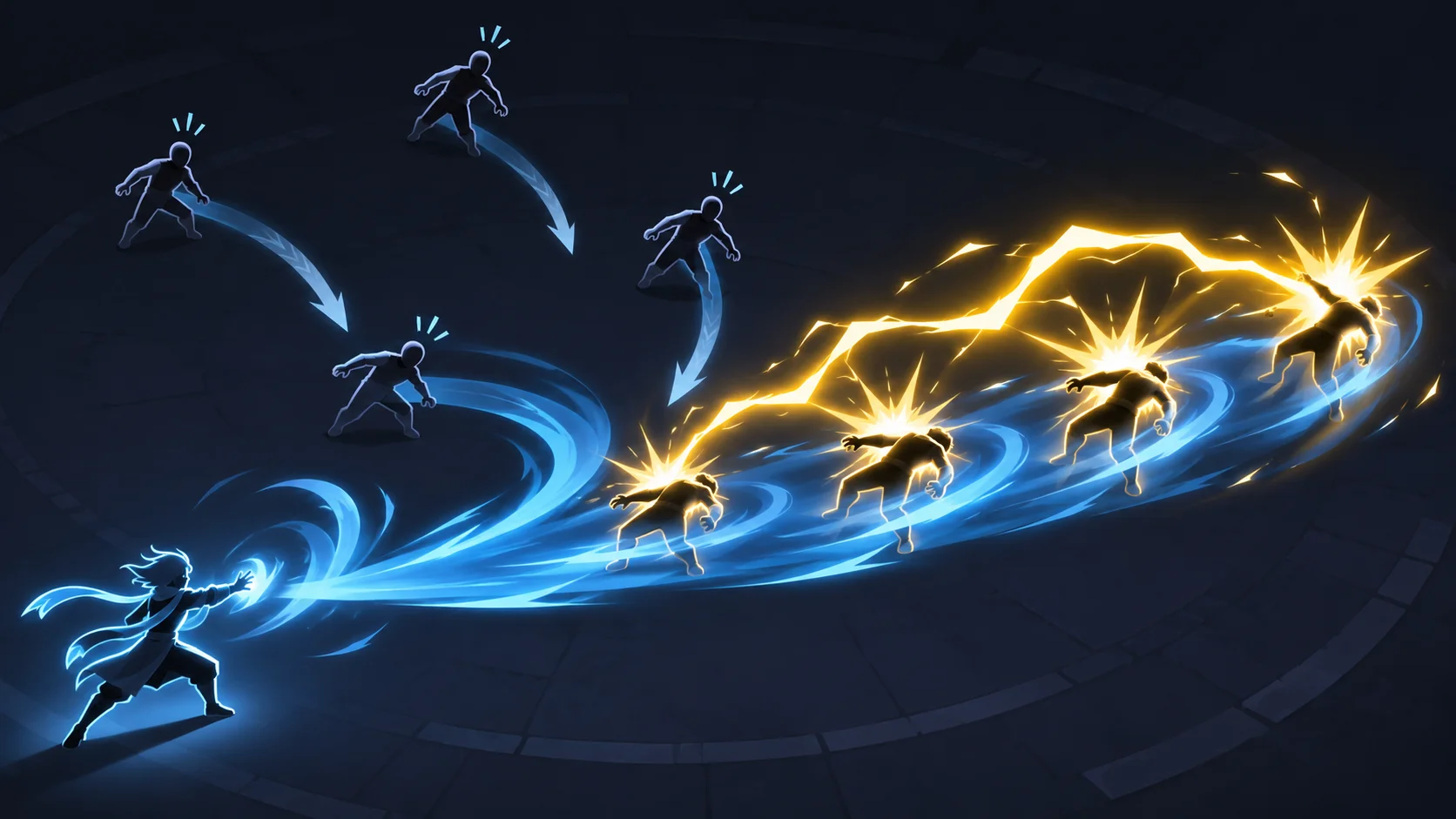
Decide whether one effect can set up another. A pull may gather enemies, giving a follow-up area attack more value. A mark could make a later strike easier to aim. A defensive ability might convert a well-timed block into a brief opportunity to counter. Each combination should have a readable cause and result so players can notice the relationship during play.
Specify interaction rules before adding many upgrades. Can the setup effect apply to every enemy or only nearby targets? Does the follow-up trigger once or once per target? Can a status effect refresh itself? What happens when the player selects two upgrades with the same trigger? These edge cases determine whether combinations stay predictable or create unintended loops.
Build a synergy matrix. Put abilities across two axes and label each pair as direct synergy, neutral, or competing. A direct synergy should create a new opportunity; a neutral pairing can still support different play styles; a competing pair should have a reason to coexist, such as one offering safety while the other offers speed. This helps identify a set where only one build works.
Present build choices with readable feedback
When offering an upgrade, explain its trigger, target, and most important limitation in plain terms. If it interacts with an ability the player already has, describe that relationship where the choice appears. A concise preview can say that a pull groups nearby enemies for the next area attack. It should not imply guaranteed damage if the result depends on distance or timing.
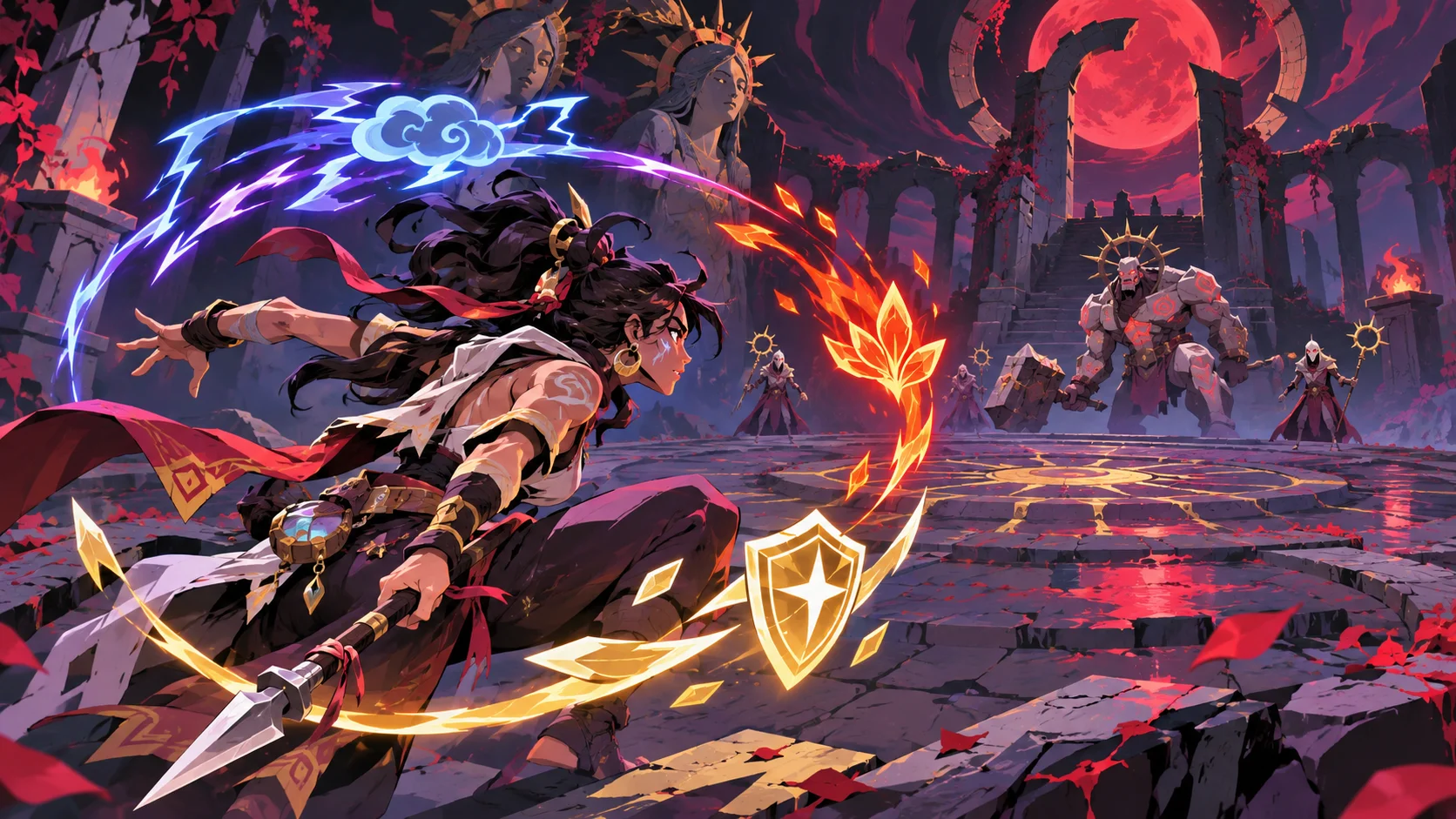
After selection, reinforce the effect during play. Use a consistent visual cue for the trigger and a different cue for the payoff, such as a brief outline followed by a burst. Keep effects readable against enemies and the environment. If a combination creates too much screen clutter, reduce the number of simultaneous particles rather than hiding the feedback entirely.
Make it possible to inspect the current build between encounters. Group upgrades by role or action, and show what has changed from the player’s starting kit. This helps players reason about new options and understand why a combination performed well. It also makes the system easier to explain in a tutorial without showing every possible pairing at once.
Test synergy, redundancy, and balance
Prototype a representative set of builds and test them against different enemy patterns. Record time to defeat, damage taken, resource use, and how often an ability triggers. Check whether one pairing scales much faster than the others or lets the player bypass intended combat choices. A synergy can feel powerful without ending every encounter instantly.
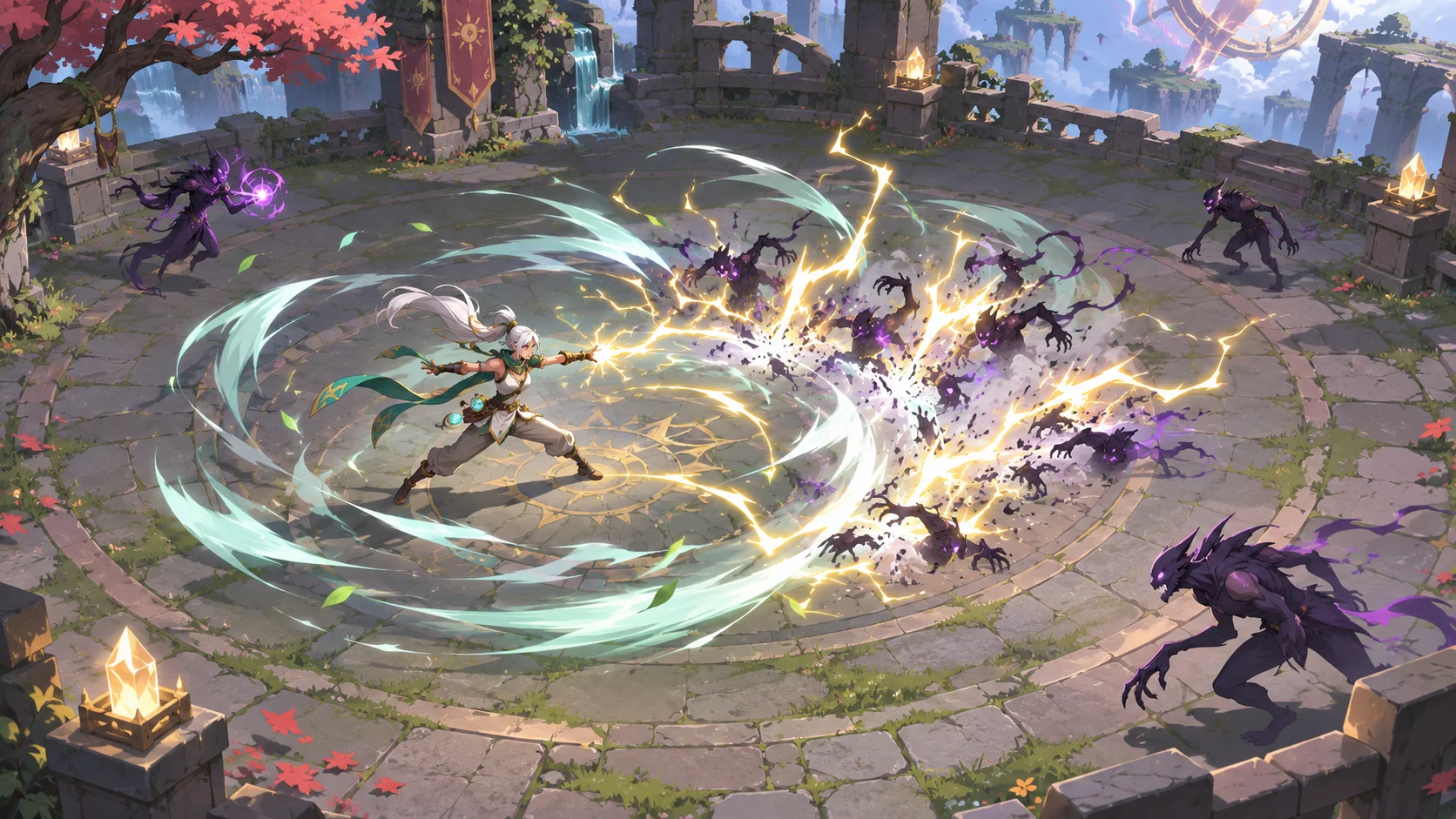
Test for redundancy as well as overpowered combos. If two upgrades solve the same problem in the same way, clarify their roles or make one change the player’s approach. If a combination is too weak, improve its trigger reliability, add a useful secondary effect, or offer it in a run context where it matters. Change one variable at a time and compare results.
Ask players to describe why a combination worked. If they only notice the burst but cannot connect it to the setup, strengthen the cues or simplify the interaction. AI can help brainstorm ability names, trigger alternatives, or test scenarios, but the combat prototype determines how effects feel. You can use Seele’s AI game maker to start an original action roguelite prototype, then adjust builds after hands-on playtests.
Frequently asked questions
How do you design ability combinations for a roguelite?
Give each ability a clear role and trigger, then define how one effect can create an opportunity for another. Test combinations across different enemy patterns and explain the interaction when players choose an upgrade. Keep the initial set small enough to compare options and identify what makes a pairing distinctive.
How should two ability effects interact?
Specify the trigger, target, duration, stacking rule, and repeat behavior for both effects. Make the setup and payoff visually distinct, and confirm players can tell why the interaction occurred during a fast encounter. These rules also prevent unexpected loops and help players predict whether an interaction will repeat.
How do you prevent ability combinations from becoming overpowered?
Test representative builds with varied enemy patterns and track damage, safety, and encounter time. Look for runaway triggers, unlimited stacking, and combinations that erase counterplay, then adjust one rule at a time. Check whether the combo still has a meaningful limit or timing window after its strongest upgrade.
How can players understand a build during combat?
Use consistent cues for each trigger and payoff, keep effects visible against the arena, and let players inspect their upgrades between encounters. If a combination is hard to explain, simplify its rules or feedback. Use short, repeatable animations and sounds so the relationship remains legible without covering enemy cues.