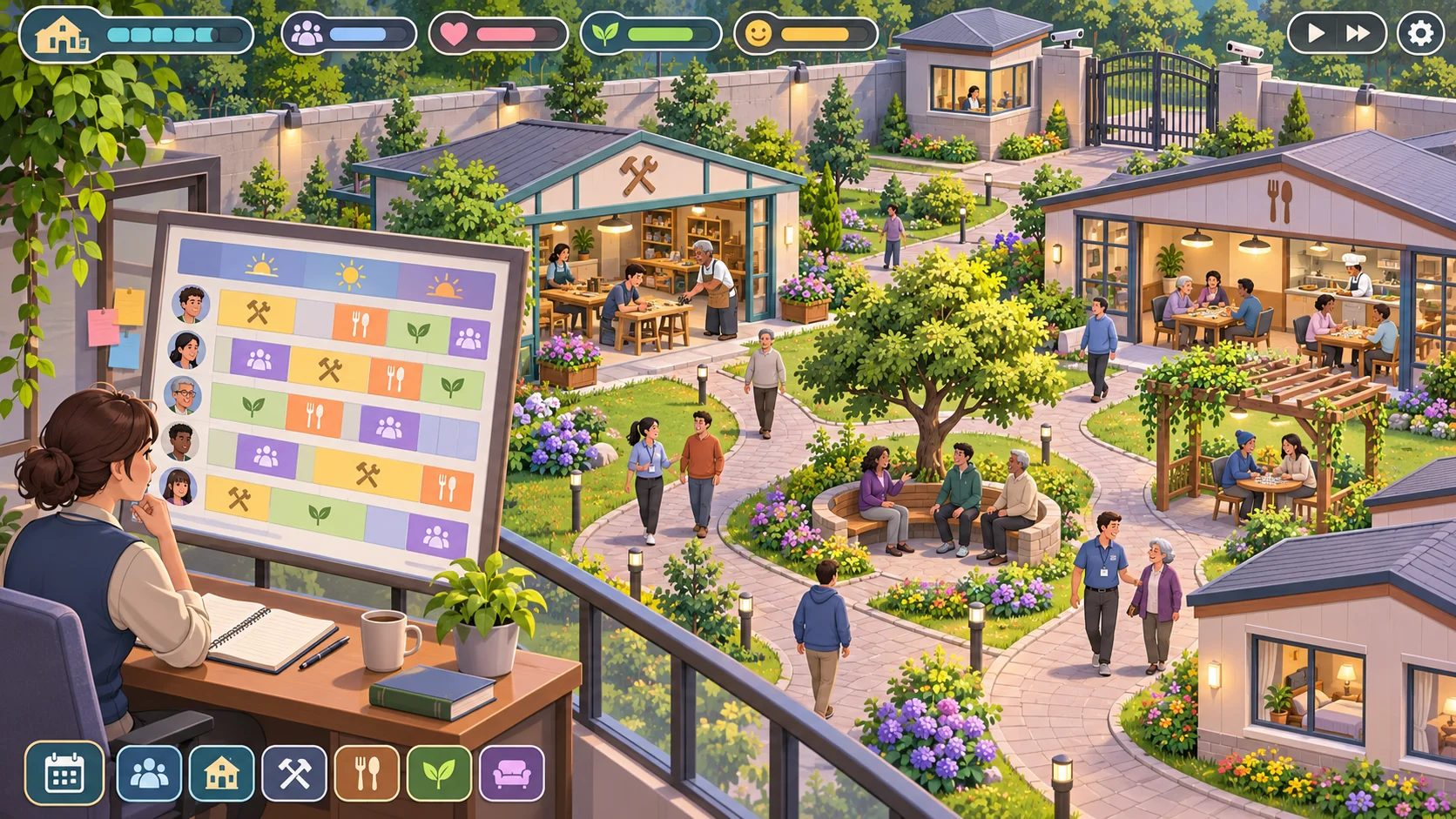
Follower management can turn a settlement into a community the player wants to understand and protect. For an original action management game, followers should have readable strengths, needs, and reactions that make assignments feel personal without burying players in chores. Cult of the Lamb’s official store page describes building a loyal community of woodland Followers. Use that broad premise as context, then choose a task and care system that fits your own game.
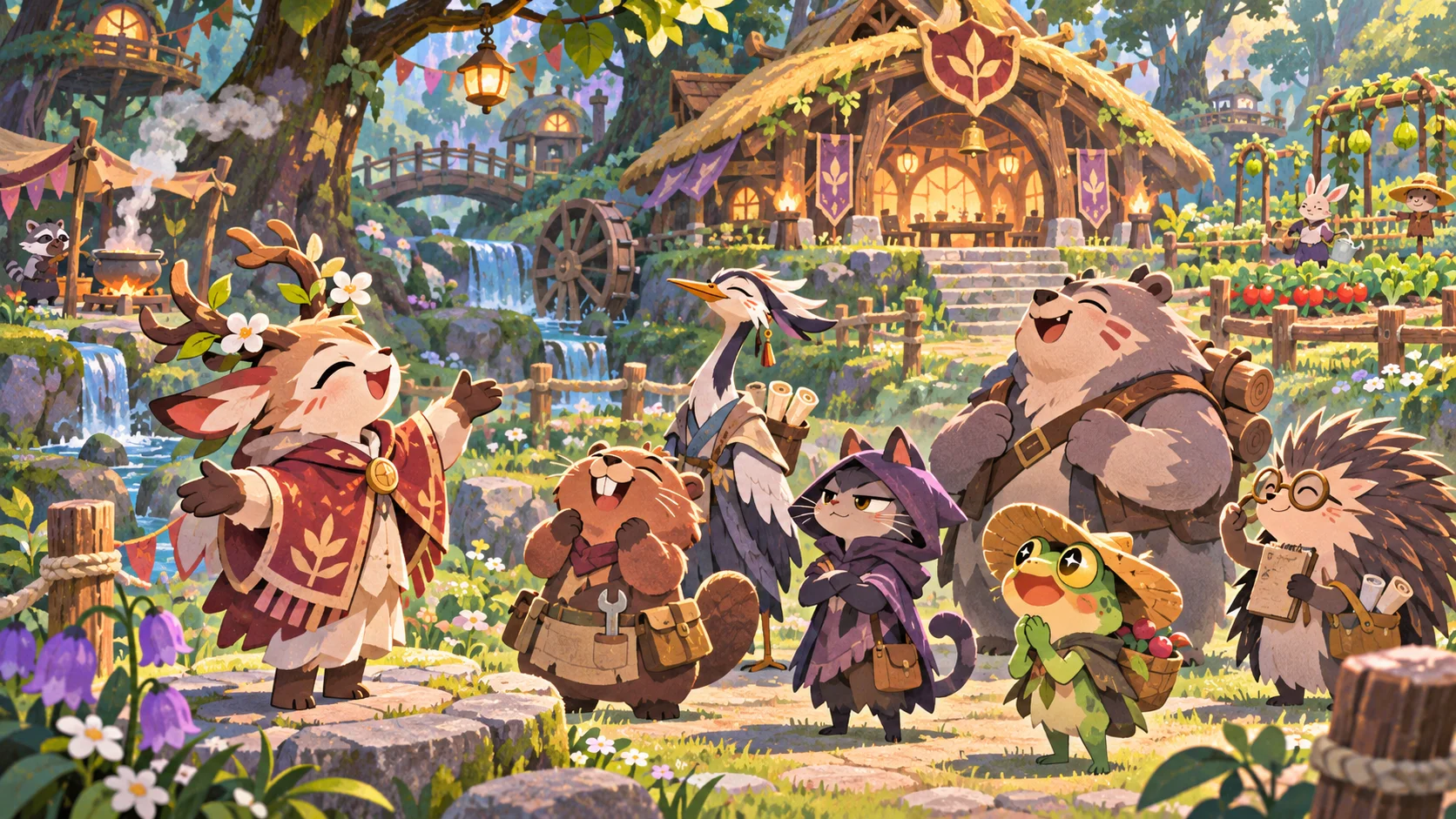
Give followers readable traits and needs
Start with a few traits that affect how a follower behaves or helps. A character might learn crafting quickly, prefer outdoor tasks, or be more reliable when working with a friend. Show the trait through a short description, icon, or visible behavior. Avoid giving every follower a long list of stats that players must inspect before making a simple assignment.
Needs should create a reason to care, not a constant alarm. A follower might need rest after a demanding task, help when injured, or social contact after time alone. Use understandable signals and give the player a reasonable window to respond. If every need becomes urgent at once, the settlement can feel like a failure-management screen instead of a living place.
Let personality appear in small ways. A worker might celebrate a completed project, ask to change roles, or react to a new structure. These moments can make followers feel distinct without requiring branching dialogue for every state. Keep important gameplay information clear: flavor should add character while players can still understand a task, need, or consequence.
Assign tasks with clear consequences
Make assignment simple enough to use often. A player could choose a follower and then select a task, or choose a station and assign a suitable worker. Show the expected output, duration, and any relevant risk before confirming. If a task uses a skill or trait, explain how that changes the result. This helps players make choices instead of guessing which assignment is best.
Let assignments reflect player priorities. A settlement may need food, construction, crafting, or exploration support at the same time. When a follower moves from one task to another, show what will stop and what will begin. Avoid silently canceling progress. If a worker can be interrupted, preserve partial work or explain why a task must restart.
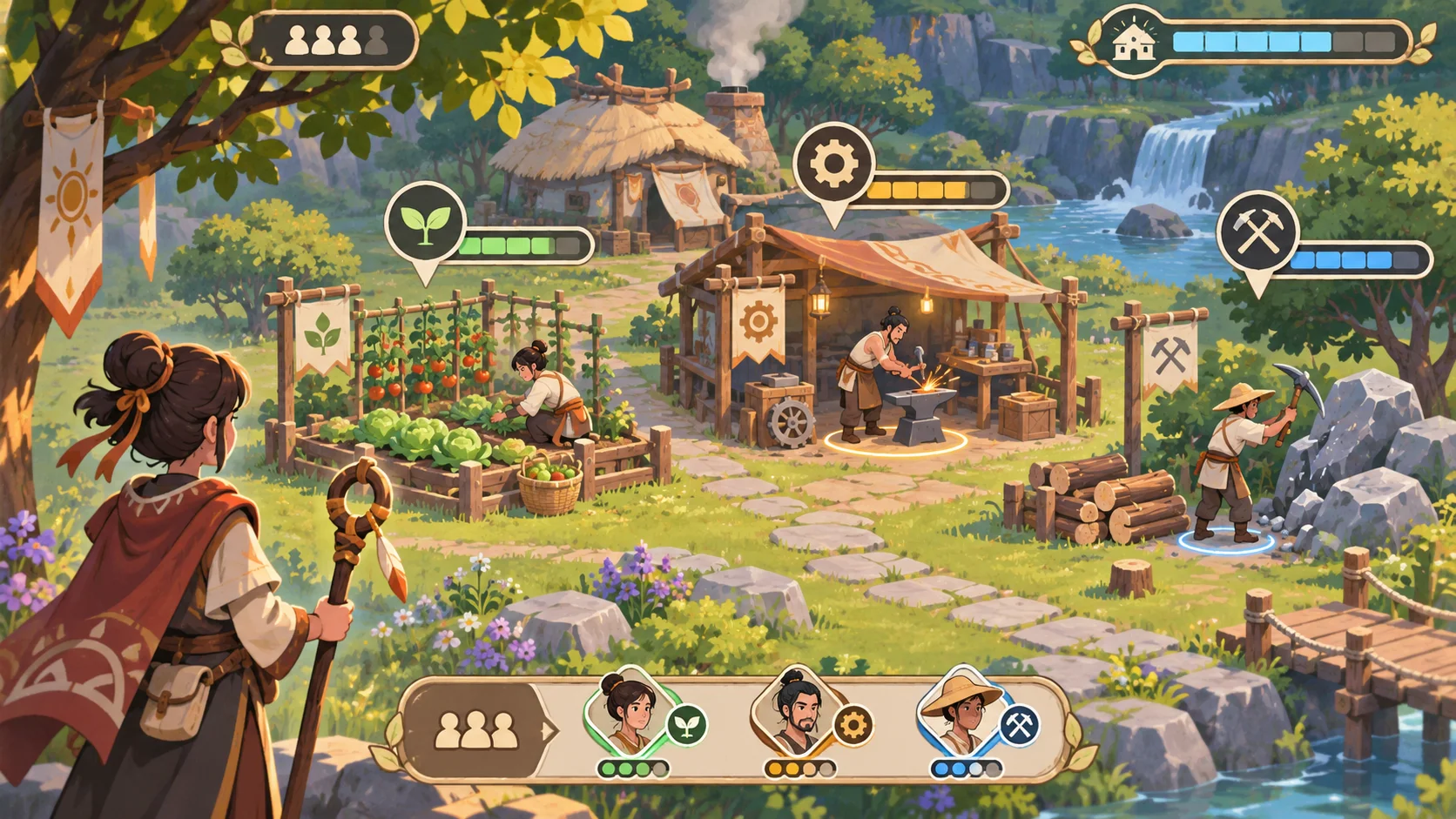
Provide basic defaults for repetitive work. A follower might return to a familiar station after completing a short job, or a player could set a simple priority such as “keep food stocked.” Defaults reduce repeated clicking, but make them visible and easy to change. Automation should help players manage a growing community while they still choose the goals that matter.
Scale community routines with automation
A small group can support direct assignments. As the settlement grows, the same interaction repeated for every follower becomes tedious. Add tools that scale with community size: role presets, work zones, assignment queues, or automatic reassignment when a job completes. Introduce one tool at a time and let players see what it will change.
Keep automation bounded. A broad instruction such as “do useful work” can produce surprising results if players cannot control priorities. Let players set a few clear rules and see which followers are affected. Provide an undo or recent change summary for group assignments, especially when a choice moves several characters at once.
Consider what happens when a follower cannot complete a task. They might be tired, missing a material, blocked by another worker, or unable to reach a station. Explain the cause and suggest an action. If they wait, let players know whether waiting is safe or whether the task is stalled. Silent failure makes the player blame the character or the system without knowing what to fix.

Test care, recovery, and assignment flow
Playtest common settlement moments: add a new follower, assign a job, handle a need, move someone to a new role, and recover after a mistake. Observe whether players can predict the outcome and tell who is waiting, working, or resting. If they repeatedly open detail panels to understand simple states, surface the essential information where the decision happens.
Measure assignment time and task completion, but also watch whether players form favorites or remember individual stories. If characters feel interchangeable, strengthen a small number of visible traits or interactions. If players become anxious about every need, slow the routine, reduce simultaneous alerts, and make recovery more forgiving. The aim is meaningful care, not continuous optimization.
Test what happens after a long break or a failed expedition. Followers may have completed work, need attention, or be waiting for a resource. Summarize important changes on return and prioritize what needs a decision. Avoid presenting a wall of warnings when the player opens the settlement again.
Steam’s official Cult of the Lamb listing describes building a loyal community of followers and references follower progression. It does not define a template for your game’s exact assignments or needs. Use your own prototype to decide how work, care, and action progression interact. SEELE’s documented game-creation capability can help start from a natural-language game idea; test follower assignment with actual players and adjust the routine based on what they understand.
Frequently asked questions
How do you make followers feel distinct?
Give each follower a small number of visible traits that affect work, relationships, or reactions. Let those traits appear in behavior and short feedback, not only in a menu. Keep the differences useful to a player decision, and avoid adding so many statistics that every assignment becomes a spreadsheet exercise.
How should players assign follower tasks?
Make the task, expected output, duration, and relevant consequences clear before confirming. Let players choose either from a follower or from a station, then show what will change when an assignment is moved. Use simple defaults for repeated work and keep priorities easy to inspect and adjust.
How can follower needs avoid becoming chores?
Give needs readable signals, reasonable response windows, and forgiving recovery. Limit how many urgent issues appear at once and let routine work continue without constant supervision. Use needs to create moments of care or story rather than requiring the player to check every follower after every short action.
What happens when a follower cannot work?
Show the reason, such as fatigue, a missing material, or an inaccessible station, and explain what the player can do next. Preserve progress where possible and make recovery states visible. Players should understand whether a follower is safely waiting or whether a task needs immediate attention.
Prototype a small community with three roles, visible needs, and a recovery path. Explore an AI game creation starting point for an original action management concept.