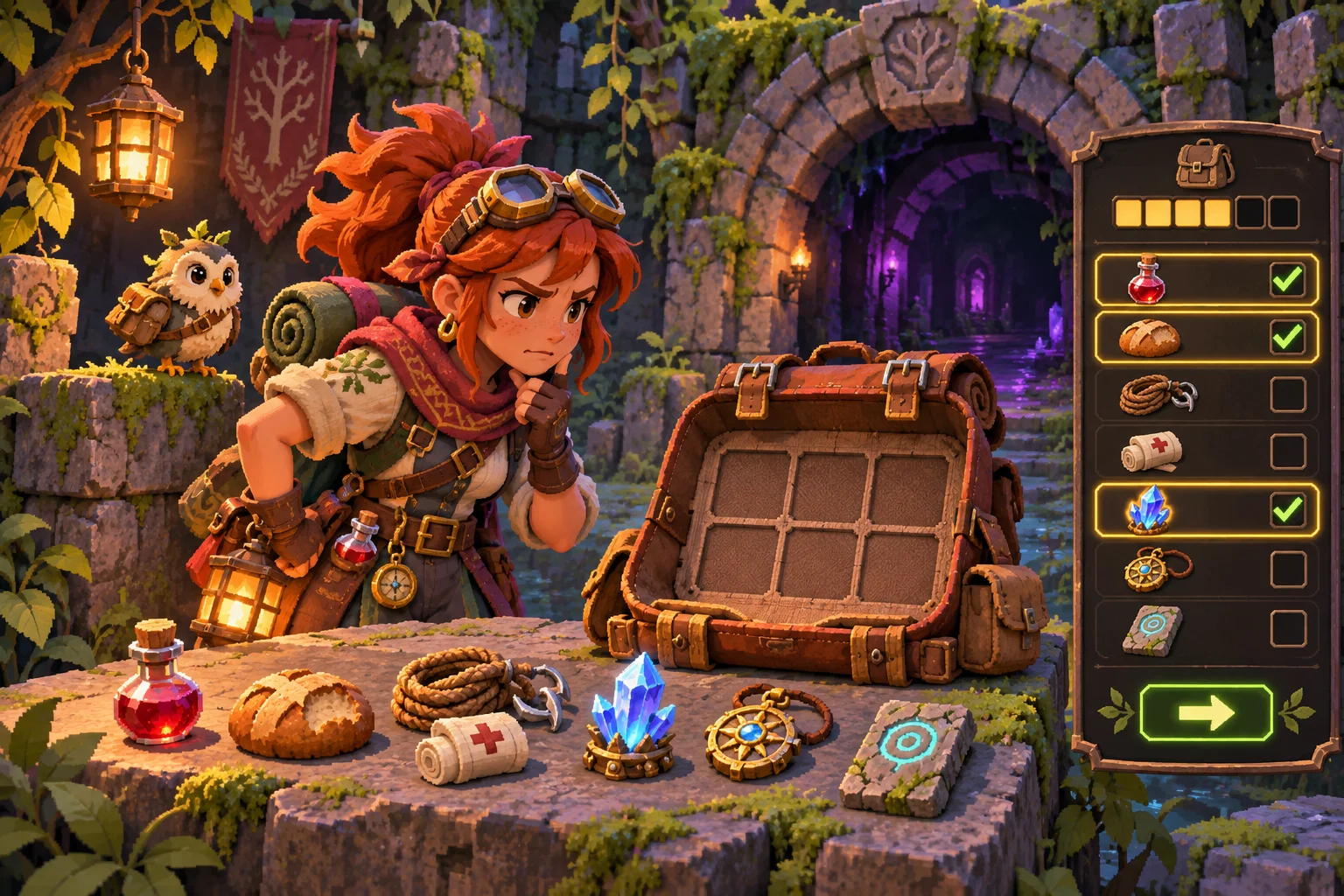
Automatic combat works when players can connect a result to decisions they made while preparing a build. Backpack Battles’ official Steam listing describes buying and crafting items, arranging them in a backpack, and then battling; it also notes item shapes, sizes, prices, and rarities. This guide uses that public premise only. Its combat model is an original design proposal.
Separate preparation from resolution
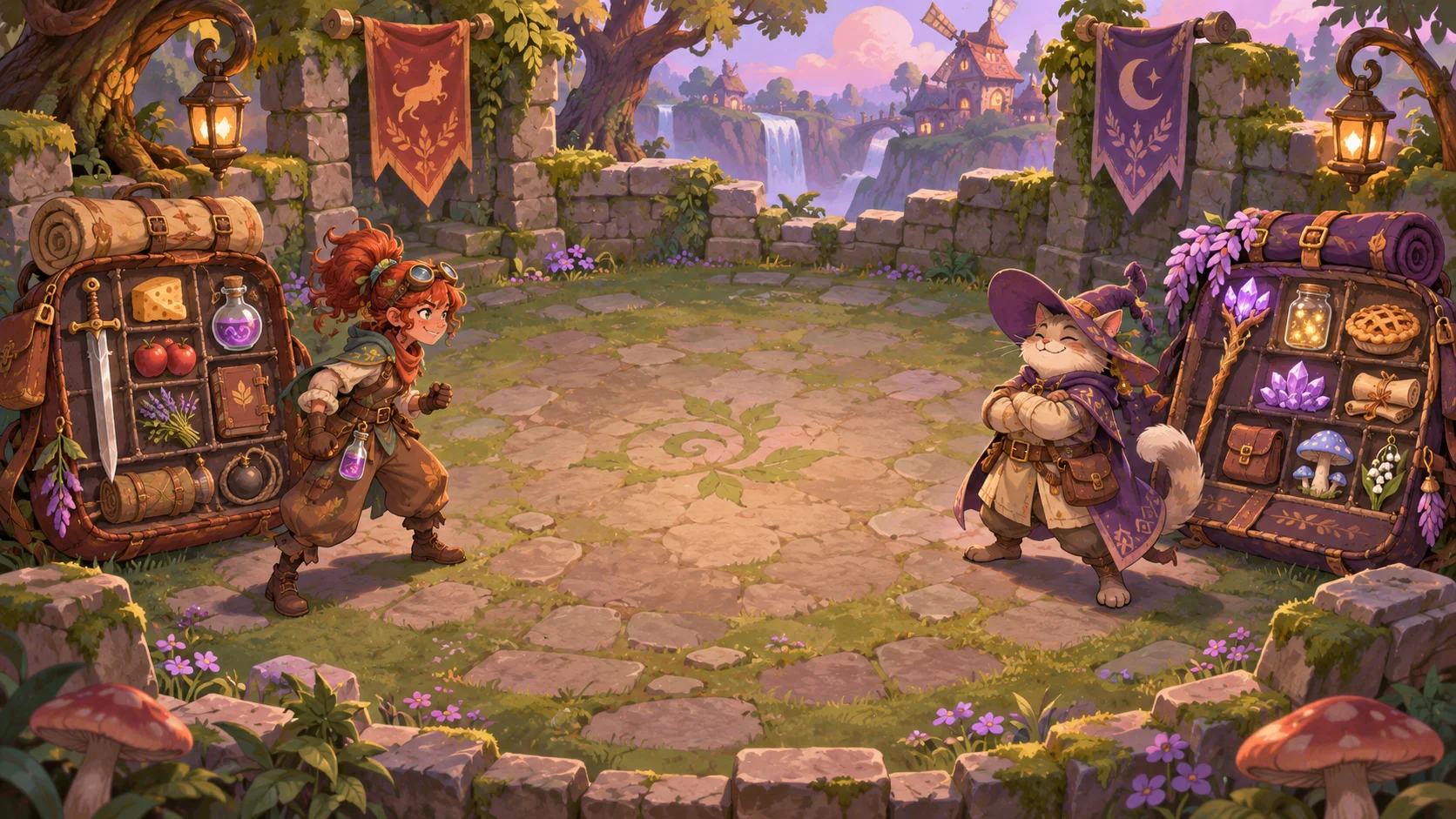
Make the boundary between loadout preparation and combat explicit. At the start of a round, snapshot each player’s equipment, item positions, stats, and available resources. Resolve the battle from those snapshots so a late inventory change cannot affect an action halfway through. This stable start state gives both players and designers a reliable basis for explaining results.
List the state that combat can change: health, shields, cooldowns, charges, status effects, and item durability if your design uses them. Decide which values reset between fights and which persist. A compact state table prevents an item from silently retaining a charge or losing a resource in a way the player cannot see.
Choose the length and stop conditions for a fight. A battle might end when one side is defeated, a turn limit is reached, or a draw condition occurs. If repeated healing can create an endless loop, define a limit and explain it. The goal is not realism; it is a match that resolves consistently and ends for a reason players can inspect.
Specify trigger and targeting rules
Every item effect needs four parts: when it activates, what it can target, what it costs, and what happens when that target or resource is unavailable. A shield might activate before damage and protect its owner; a charm could trigger after a hit and select the nearest opponent; a potion might require a charge and choose its user. These examples are original rules, not reference-game mechanics.
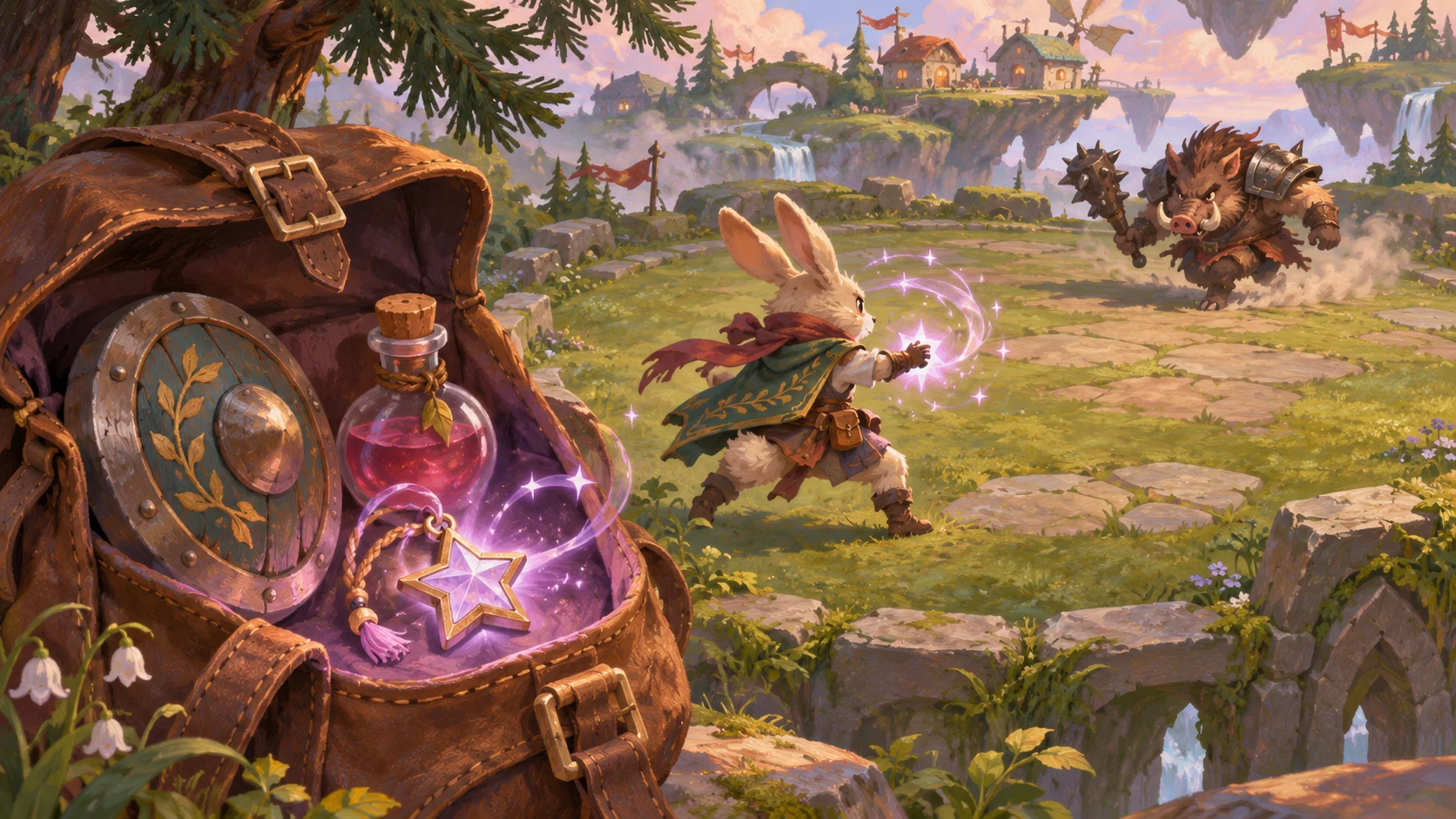
Write one global event order. For example: start-of-round effects, speed-based actions, damage, defeat checks, then end-of-round cooldowns. Define tie-breaking with a stable rule such as item slot order or owner speed followed by slot. Avoid letting file order, random iteration, or rendering timing decide which effect wins.
Targeting should also be consistent. If “nearest opponent” can tie, define whether to choose lowest health, a fixed side, or an explicit random choice. For fallback behavior, decide whether an item waits, loses its activation, or selects a secondary target. Surface that rule before players need to debug a surprising battle.
Make outcomes reviewable
A short combat log should identify the trigger, source item, target, and state change. “Charm activated” is not enough; players need to know who it chose and what changed. Keep repeated low-impact actions compact, but preserve the event order so players can trace a decisive turn. Use distinct icons or silhouettes if names alone become difficult to scan.
Offer a replay from the saved start snapshot. The replay should reproduce the same event sequence, including tie-breakers and random seeds where applicable. Let players pause at a result and inspect the loadout, item positions, health, and active effects. A replay is a diagnostic tool that connects preparation to outcome.
Balance build choices with repeatable tests
Create a matchup matrix with baseline builds, focused synergies, and counter-builds. Run the same starting states repeatedly so a change in item timing or target rules can be compared fairly. Track more than win rate: record which items never activate, which combinations dominate preparation, and which losses players describe as impossible to understand.
Test chain reactions, simultaneous defeat, full resource exhaustion, ties, missing targets, and an item whose target disappears before activation. Then add intentionally awkward loadouts to confirm the rules remain stable. When a matchup feels unfair, inspect whether the problem is item power, unclear information, or a trigger order the player could not anticipate.
Use SEELE AI’s game-studio capability to start from an auto-battler concept, then manually compare the prototype with the written combat contract. Verify the item sequence, target selection, and visible result in every test case. This capability description does not promise an automatic battle simulator or balanced combat.
For a related rule-system guide, see logical interactions in a puzzle game. To sketch an original combat prototype, start a game draft.
FAQ
How do you design automatic battles for an auto-battler?
Define a prepared loadout, a fixed combat start state, and explicit item triggers that resolve without hidden player decisions. Specify targets, resource costs, timing, and fallbacks. Then show players the sequence of events and let them compare the result with the choices they made during preparation.
Should automatic combat be deterministic?
Deterministic combat is easier to learn and debug because the same state produces the same sequence. If randomness is part of the design, expose its source and limit its range so players can make informed choices. In either case, make the outcome reproducible enough for a replay to explain what happened.
What should an auto-battler combat log show?
Show the trigger, acting item or unit, target, state change, and any condition that prevented an action. Keep routine events compact and emphasize decisive moments. Let players inspect the underlying loadout and replay the same battle so a loss teaches a build adjustment rather than feeling like an unexplained result.
How do you balance item-trigger combinations?
Test common builds, unusual combinations, and direct counter-builds across the same matchup seeds. Track whether items activate as intended, whether one trigger prevents others from acting, and how often a player can respond through preparation. Change one cause at a time, then replay the same cases to see whether the adjustment improved the decision space.