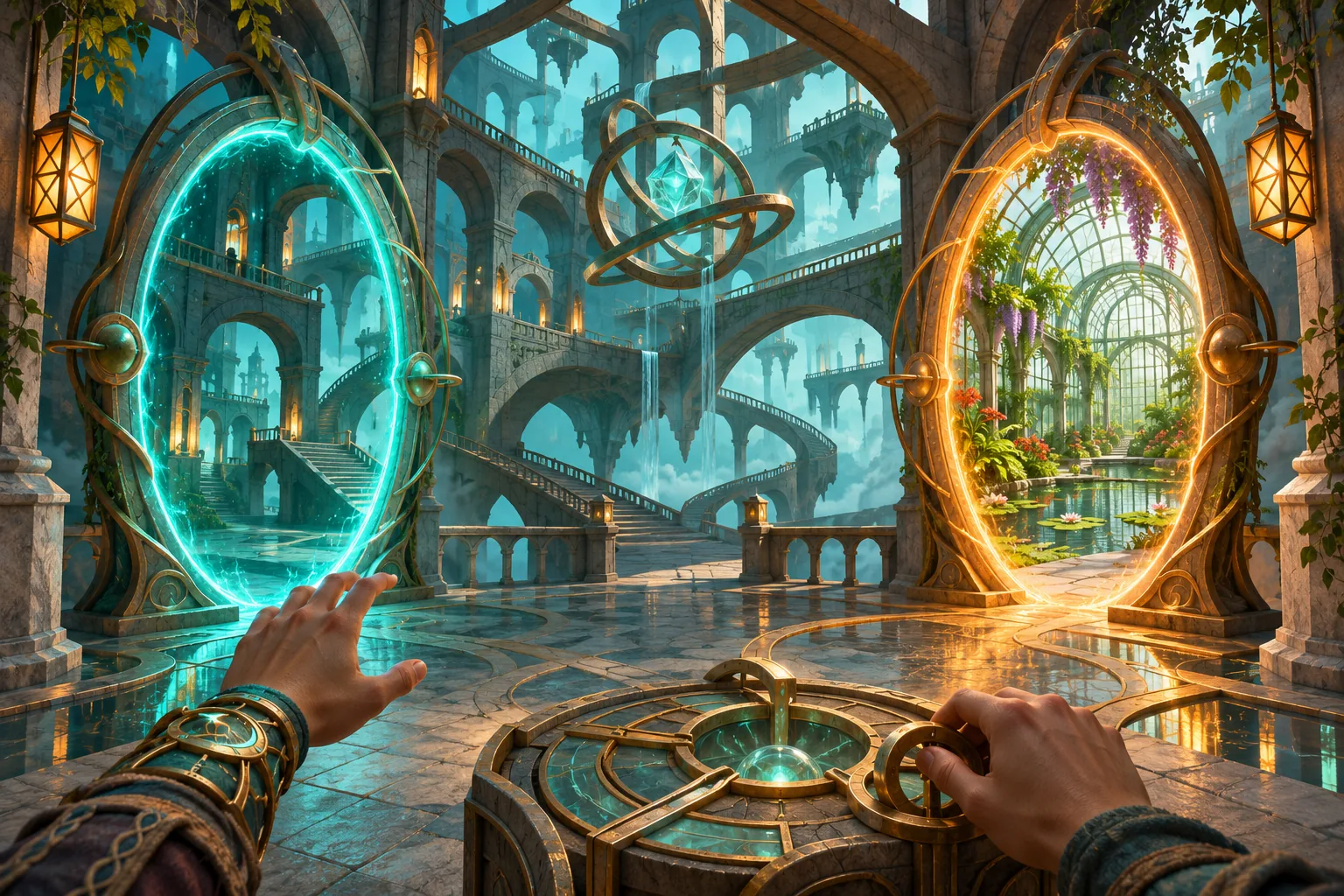
Rule-changing puzzles make the world itself part of the problem: a player alters a condition, then reads the consequences in the scene. Baba Is You’s official listing describes interactive rule blocks that can change how the game works. The grammar and examples below are original design guidance, not a description of its internal implementation.
Choose a small rule grammar
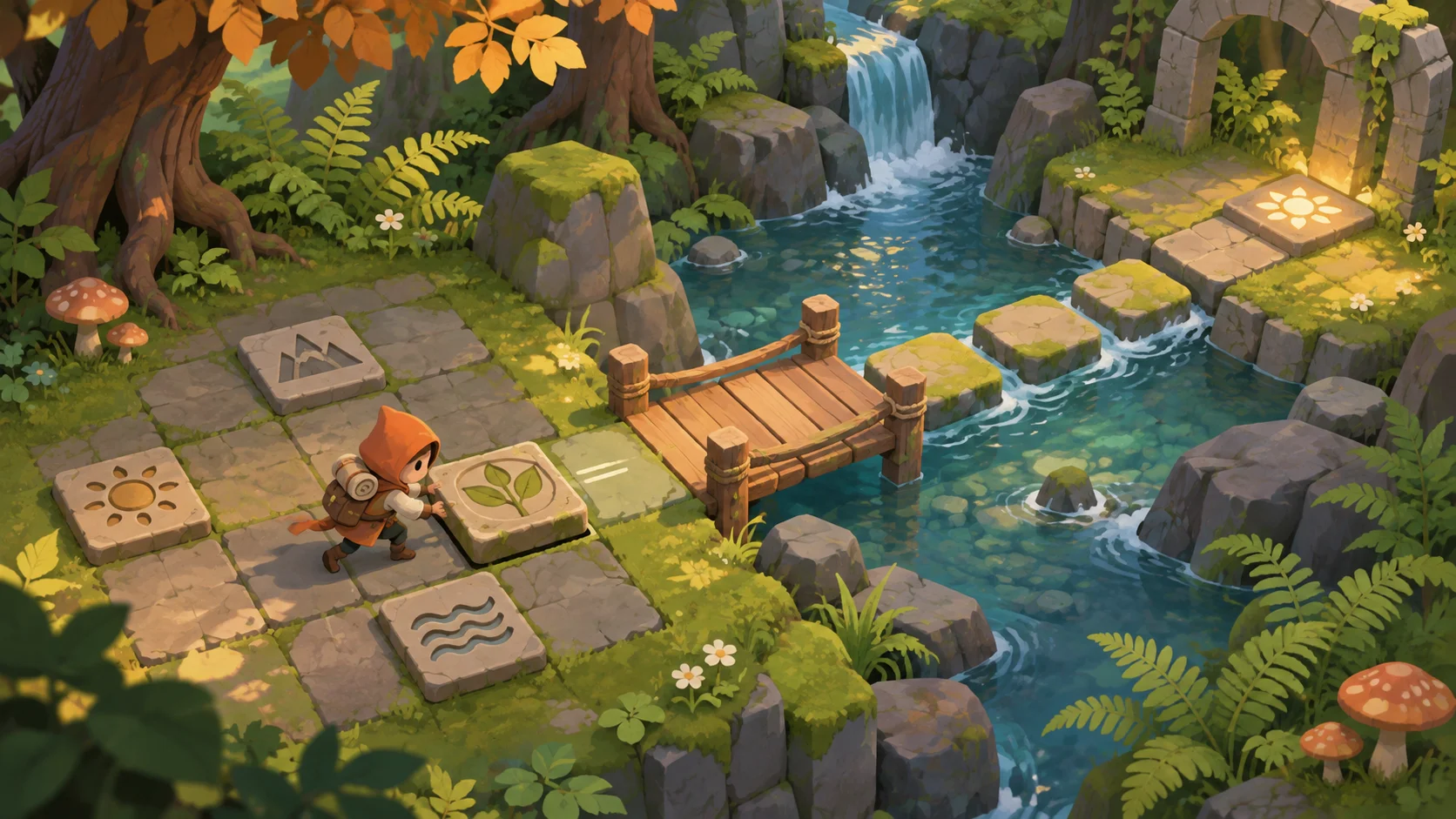
Begin with a limited vocabulary. An original forest puzzle might have object tokens such as BRIDGE, GATE, and MIST; relation tokens such as IS or OPENS; and properties such as PASSABLE or CLOSED. Decide which combinations are legal. If the player can move token tiles into a row, specify whether a rule needs three adjacent tokens or whether a condition can span a larger layout.
Write a grammar table before designing levels: token type, allowed neighbors, produced rule, and example of an invalid sequence. Keep syntax consistent across the puzzle set. A small vocabulary lets players learn the system, while new object types create fresh combinations without adding a new exception every level.
Separate rule clarity from discovery difficulty. A puzzle can make players work to find a tile or infer a useful arrangement, but once a sentence is formed the game should communicate what it governs. If a rule works only because of a hidden token category or special tile location, the challenge becomes remembering an undocumented exception.
Separate sentence parsing from effects
Treat a finished sentence as data, not as a direct collection of unrelated side effects. Parse the arrangement into a record such as “Bridge has property Passable,” including the source tile positions and the objects it applies to. Then update world capabilities from the complete set of rule records. This separation makes it easier to test which sentence caused a behavior.
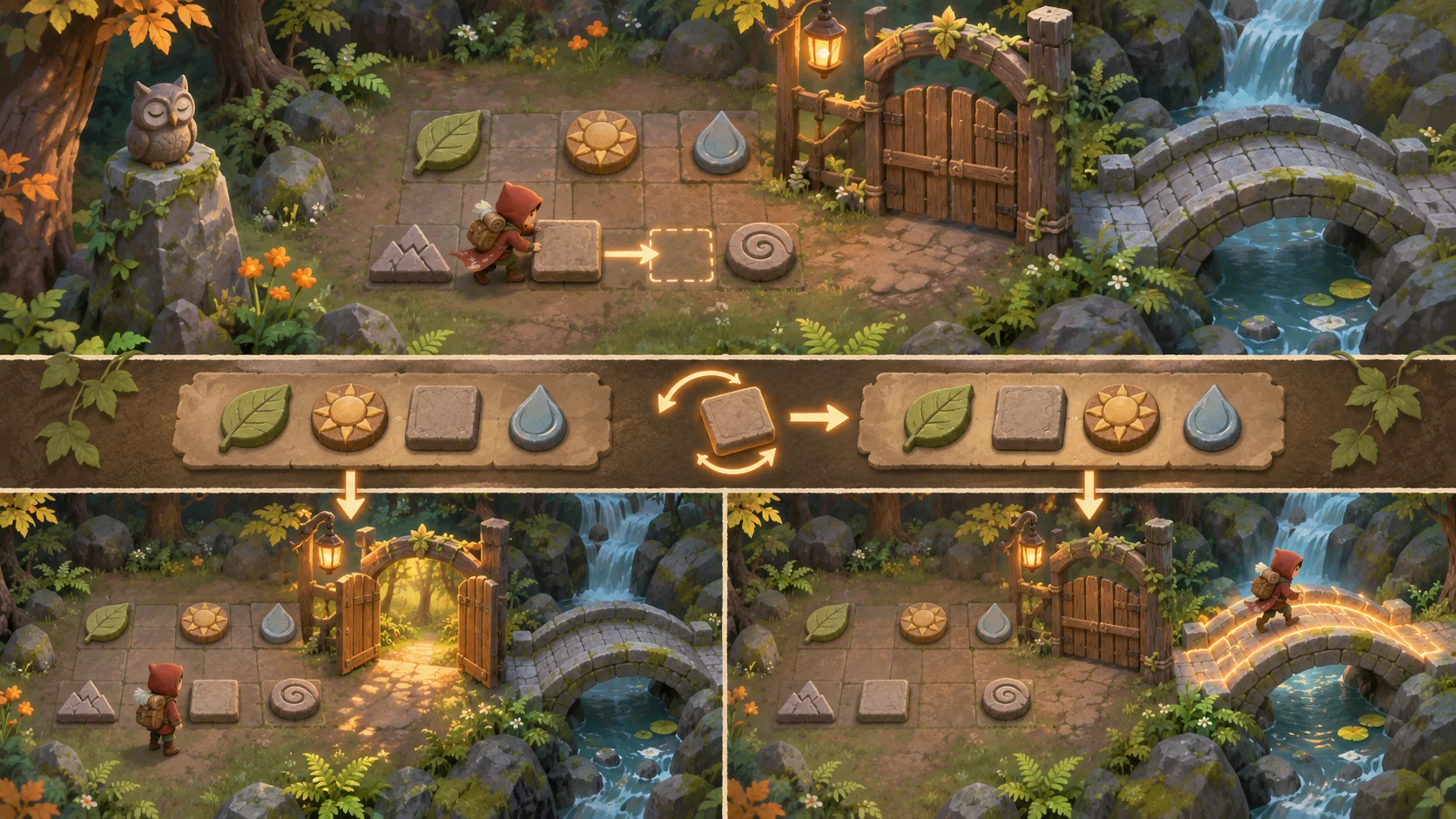
Define when the game recalculates. If a player drags the middle token away, should the previous rule stop immediately or after the move completes? Either can work, but choose one timing and use it everywhere. Preserve a stable state during animation so objects do not flicker between contradictory behaviors.
Use stable object identities for affected targets. A property such as Passable can change collision or traversal, while a rule like Gate Opens can change an interaction. Avoid mixing movement, appearance, and objective updates into one opaque rule effect. Smaller, explicit effects are easier to debug and easier for players to predict.
Resolve overlaps and invalid states
Two valid rules may govern the same object. Decide whether both properties apply, whether one has priority, or whether the combination creates a deliberate contradiction. If priority matters, show it in a consistent way such as rule order or a visible precedence marker. Do not let incidental tile coordinates decide which rule wins unless that relationship is taught.
An incomplete sentence should not quietly preserve part of its old behavior unless that is an explicit mechanic. Keep the previous state until a committed edit completes, then evaluate the new rule set. If the arrangement has no complete sentence, show which token or relation is missing and leave the world in a predictable state.
Add undo and reset early. Logic puzzles invite experimentation, so players need to recover from surprising interactions without restarting a long level. Ensure undo restores the tile arrangement and the derived world behavior together. Test a bridge that becomes passable, then loses its rule while the explorer stands nearby.
Make changes legible and testable
Show the link between each active rule and the objects it affects. A subtle outline, matched material, or response animation can identify the affected class without filling the screen with text. When an action fails, explain whether the object is blocked, unreachable, or no longer governed by the property the player expected.
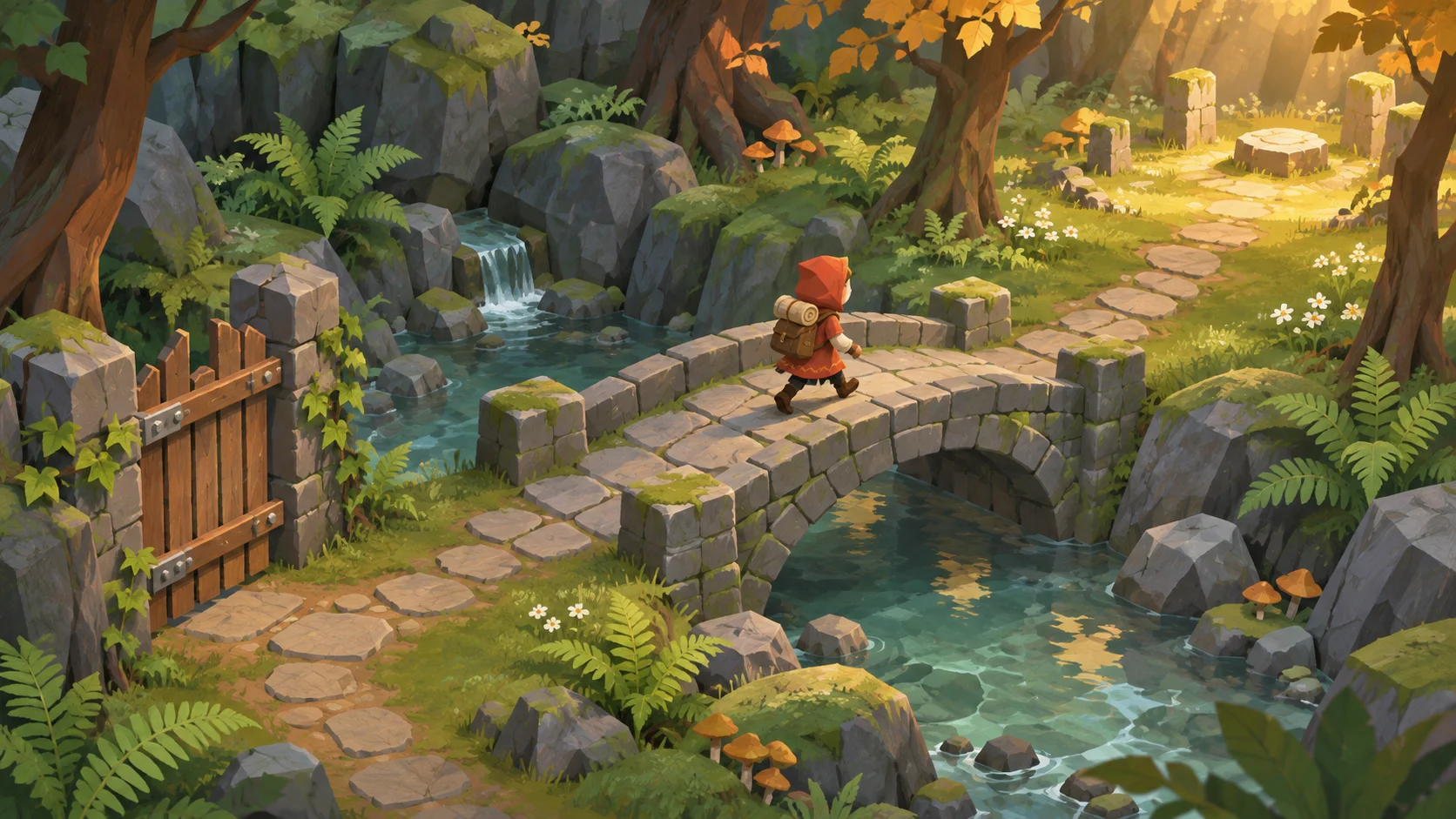
Test a rule transition matrix: create a valid rule, break it, make a competing rule, move a token during an animation, undo each change, and reset. Ask fresh testers to predict one consequence before they move a tile. Their explanation shows whether the visible rule and world response are connected in their mental model.
Use SEELE AI’s game-studio capability to begin from a written logic-puzzle concept, then inspect the draft against the grammar table. Confirm that the world state, token movement, and feedback match the intended interaction. Treat the prototype as a starting point; the capability does not establish that a particular parser or precedence system already exists.
For a related way to make alternate answers feel fair, read the multiple-solutions puzzle guide. To try an original concept, start a puzzle prototype.
FAQ
How do you design a rule-based puzzle interaction system?
Define a small set of object, relation, and property tokens, then specify when their arrangement forms a valid rule. Convert valid sentences into rule records and apply those records separately to world behavior. Keep the active rules visible and test what happens when players create, break, or replace a rule.
What should happen when a rule sentence is incomplete?
Treat an incomplete arrangement as a non-rule unless the design deliberately supports partial effects. Give a clear visual indication that the sentence is unfinished and keep the world state stable. Allow players to move tiles back into place, undo the last action, or reset the puzzle without losing the information they have discovered.
How should a game resolve conflicting rules?
Choose an explicit policy such as fixed priority, additive behavior, or a designed contradiction state. Apply the same policy every time and surface which rule currently controls an object. Test objects affected by two rules and make sure designers can explain the outcome without relying on an arbitrary placement accident.
How do you test a logic-changing puzzle?
Test each intended solution, incomplete sentence, conflicting rule, blocked movement, undo, reset, and a rule that changes during an animation or transition. Ask a new player to predict the result before acting. If their prediction differs from the game, improve the rule cue or feedback before adding more tokens and exceptions.