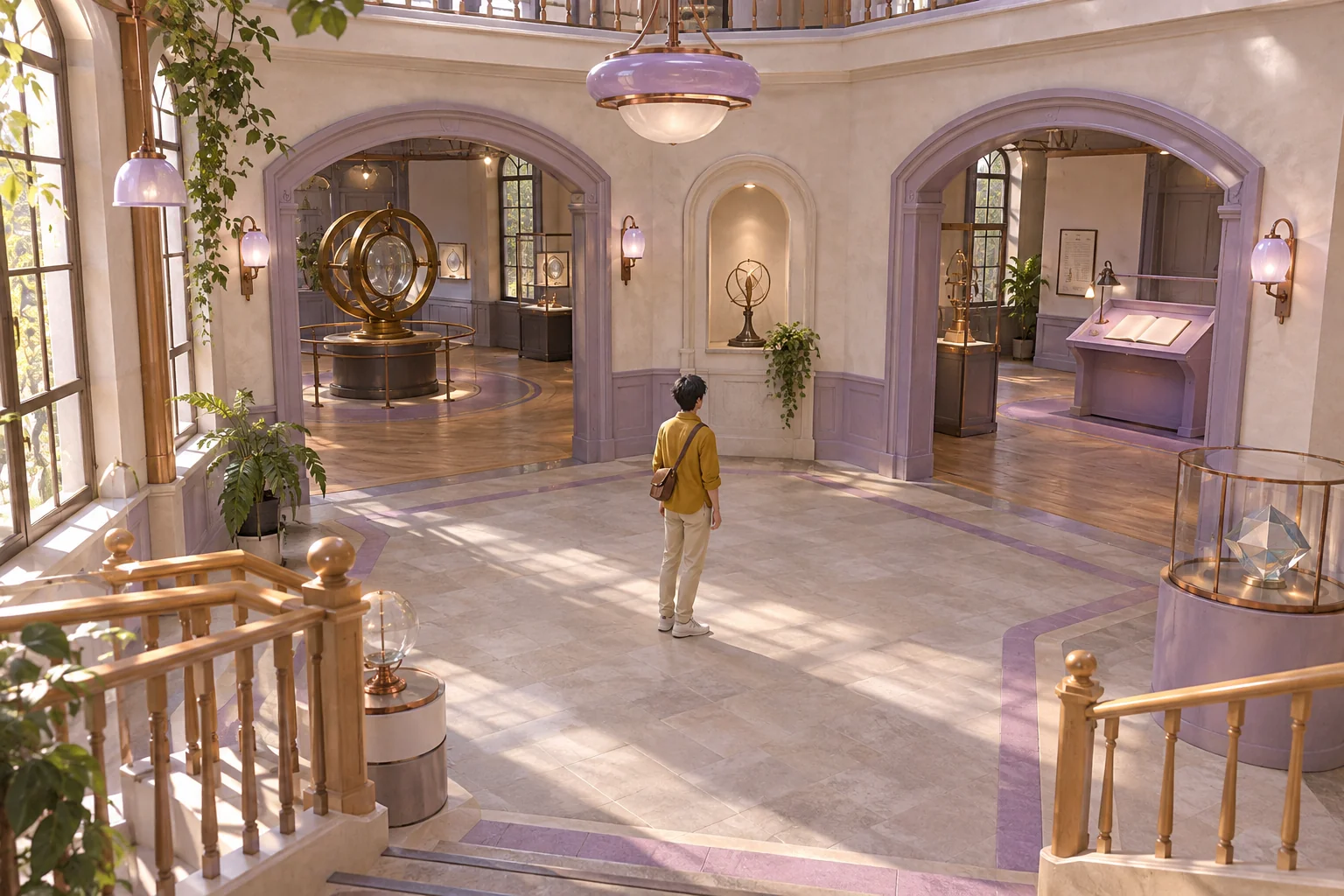
Treat behavior as evidence, not an answer
Phasmophobia is a cooperative psychological horror investigation game centered on gathering evidence. Quiet House is a separate fictional mystery game. Its presences, behavior table and deduction rules are original examples, not claims about Phasmophobia's entities or clues.
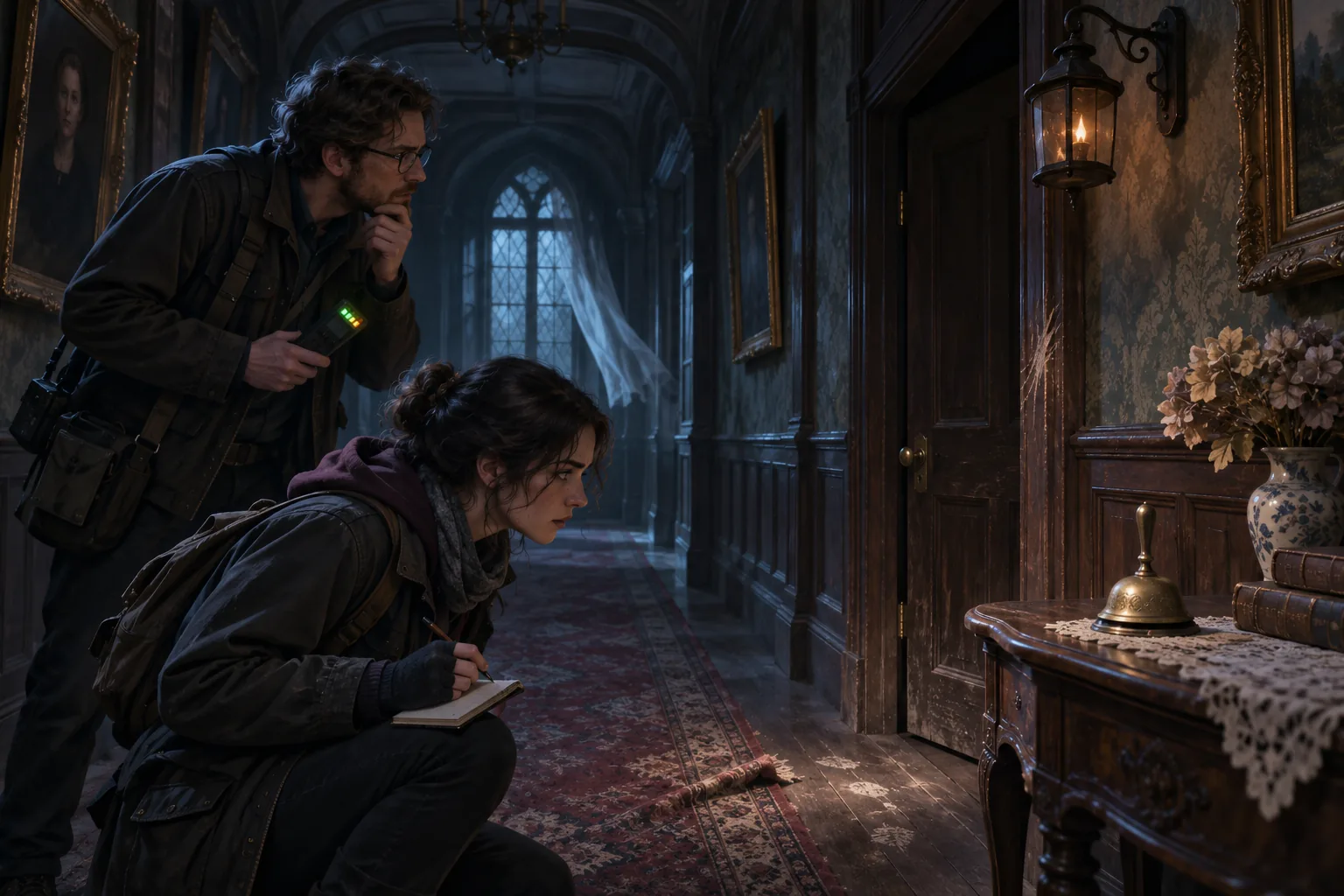
Track a two-event behavior sequence. In this prototype, the first observation is either Pause or Move after a bell rings; the second is either Dim or Doorway after a lantern is lit. Ash Bell maps to Pause–Dim, Hollow maps to Move–Dim, and Mirror maps to Pause–Doorway. One clue leaves multiple candidates; the ordered pair identifies one.
Keep event order and candidates visible
Store each observation with its event index and timestamp. After the first action, show the remaining two possible presences. After the second, compare the ordered pair with the table and show the matching candidate. If a sequence matches none, flag the evidence as inconsistent rather than forcing a result. Do not reorder observations or count the same event twice.
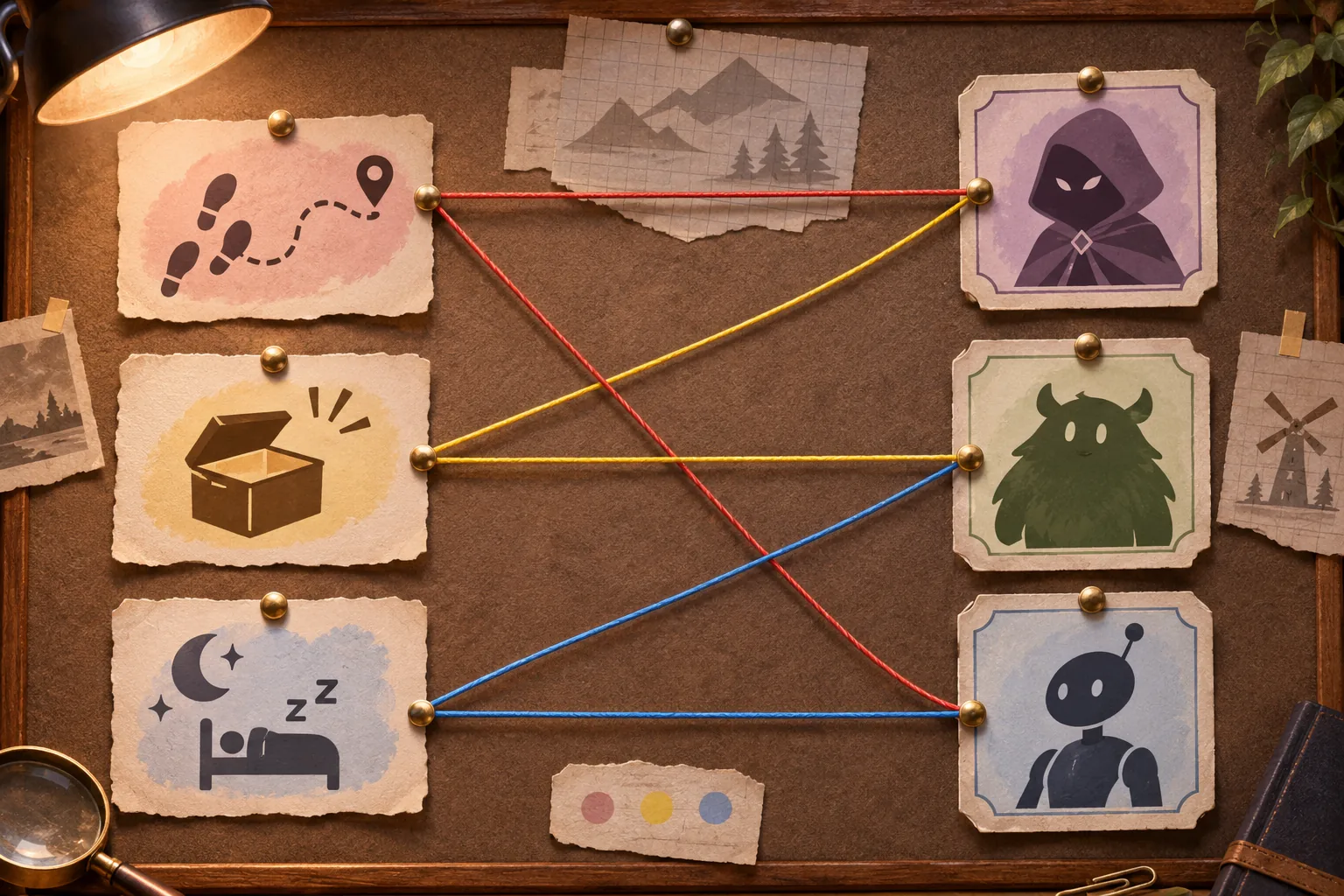
The rule test confirms Pause alone leaves Ash Bell and Mirror, while Pause followed by Dim returns only Ash Bell. Move followed by Doorway matches nothing and raises a conflict flag. Repeating the first event ID is ignored. These checks verify sequence matching, not whether the behaviors feel sufficiently distinct in play.
Make uncertainty part of the investigation
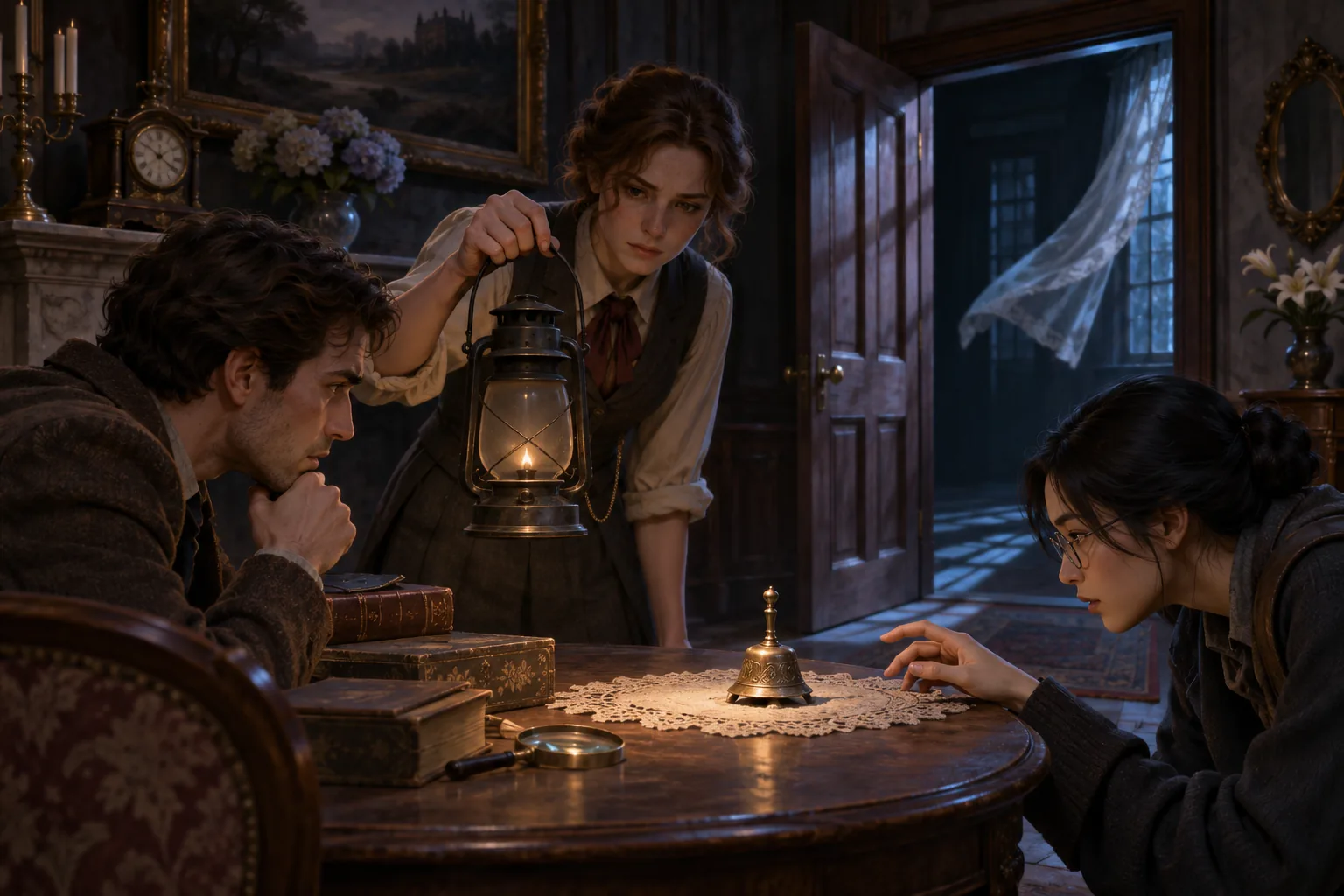
Show the first clue as provisional and allow the team to gather another observation. Keep the behavior table in a notebook the player can inspect after discovery. If evidence conflicts, offer a recheck prompt and retain the raw observations so a mistaken deduction can be traced.
Test the clue table before adding more profiles
Represent each presence as an ordered behavior sequence and each event as a unique observation record. Godot Resource can store original profile definitions; SEELE AI Game Maker is a starting point for a prototype. Phasmophobia offers broad genre context only and does not validate Quiet House's fictional behavior table.
Create an original investigation game with three presence profiles: Ash Bell is Pause then Dim, Hollow is Move then Dim, and Mirror is Pause then Doorway. Record each observation with an event ID and order. One observation shows multiple candidates; two matching actions identify one. Ignore duplicate event IDs and flag unmatched sequences as conflicting evidence.
Create an original investigation game in SEELE · Phasmophobia on Steam
Frequently asked questions
How can behavior clues support a deduction?
Define a small profile table and compare observations in order. Quiet House gives each fictional presence a two-action sequence, so the first clue leaves candidates open while the next can identify one. Showing the remaining candidates helps players understand how the evidence changed the result.
Why should an investigation preserve event order?
A behavior sequence can mean something different when actions are reversed. Store event IDs and indexes so the same observations always resolve the same way. Duplicate event IDs should not count twice, and unmatched sequences should be shown as a conflict for review instead of producing a forced guess.
What should a first behavior-deduction test include?
Test one partial clue, each valid two-action sequence, an unmatched sequence and a repeated event ID. Confirm that partial evidence leaves more than one candidate and that a valid pair resolves exactly one. These checks validate the table logic, not the difficulty or suspense of the investigation.