Give the crew clues, not perfect answers
Lethal Company is a cooperative horror game about scavenging abandoned moons. Black Signal is a separate fictional salvage game. Its sensor, clues and threat rules are original examples, not claims about Lethal Company.
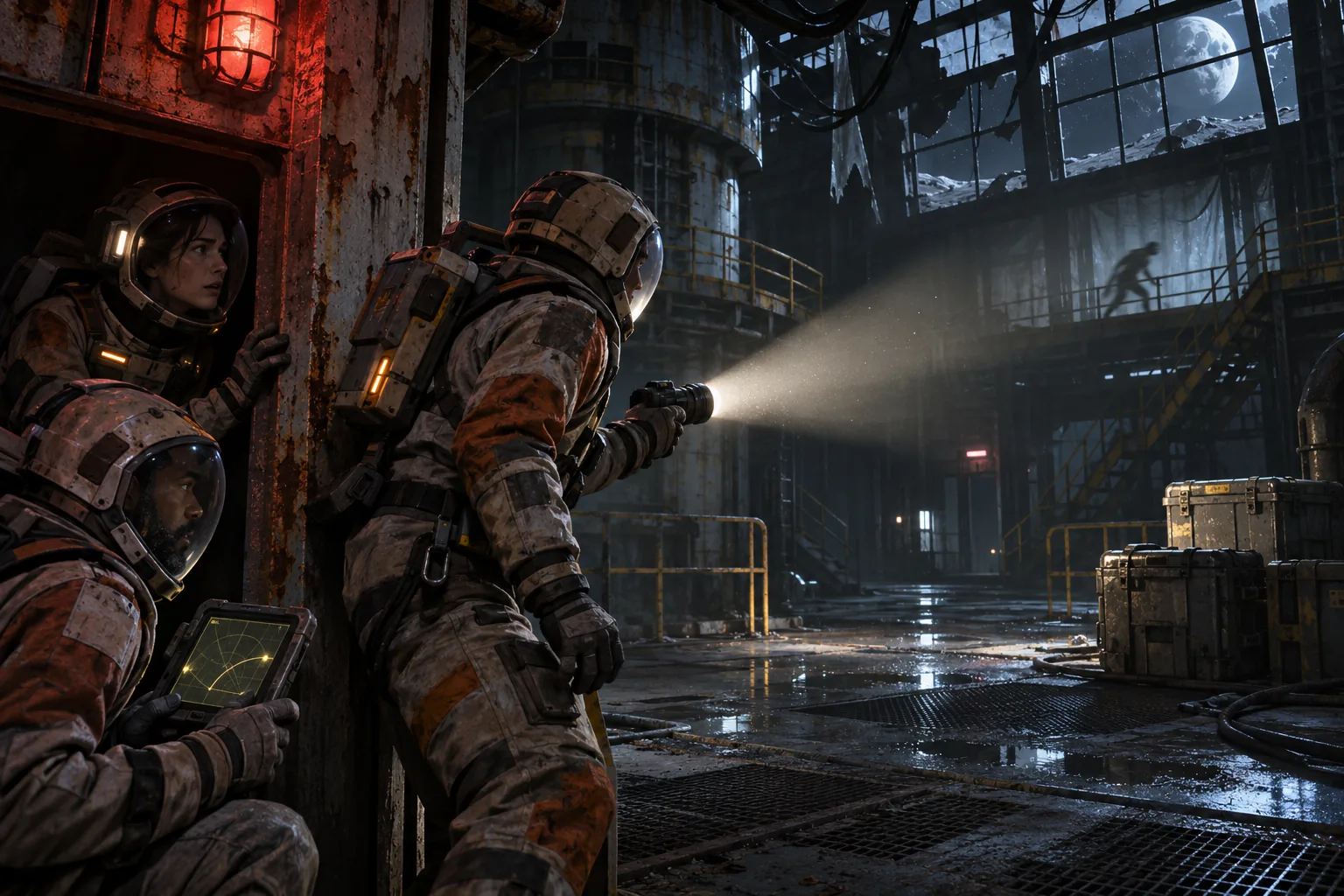
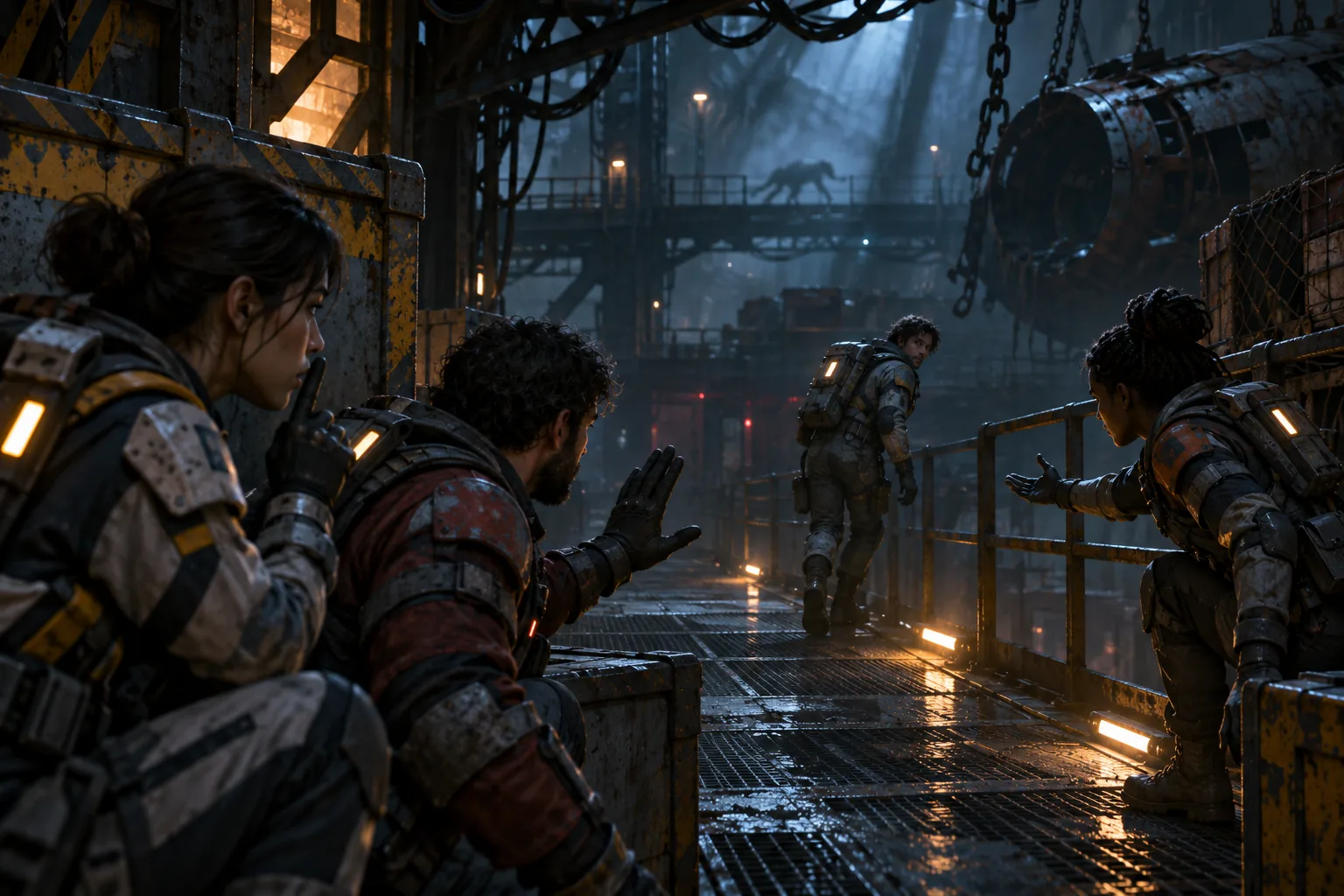
Mark each unexplored room Unknown. A scout can spend one sensor charge to reveal a provisional clue: vibration, cold draft or metal scrape. A clue narrows possibilities but does not mark the room safe. A second, different clue raises confidence to Strong; a physical search can confirm Clear or Threat. Keep these states visible to every teammate.
Track evidence separately from the conclusion
Store the room state and its evidence list as separate fields. Repeating the same scan adds no confidence. A distinct clue changes confidence from Provisional to Strong, while only a completed physical search can set Clear or Threat. If the team leaves without checking, preserve the unresolved state for their next visit.
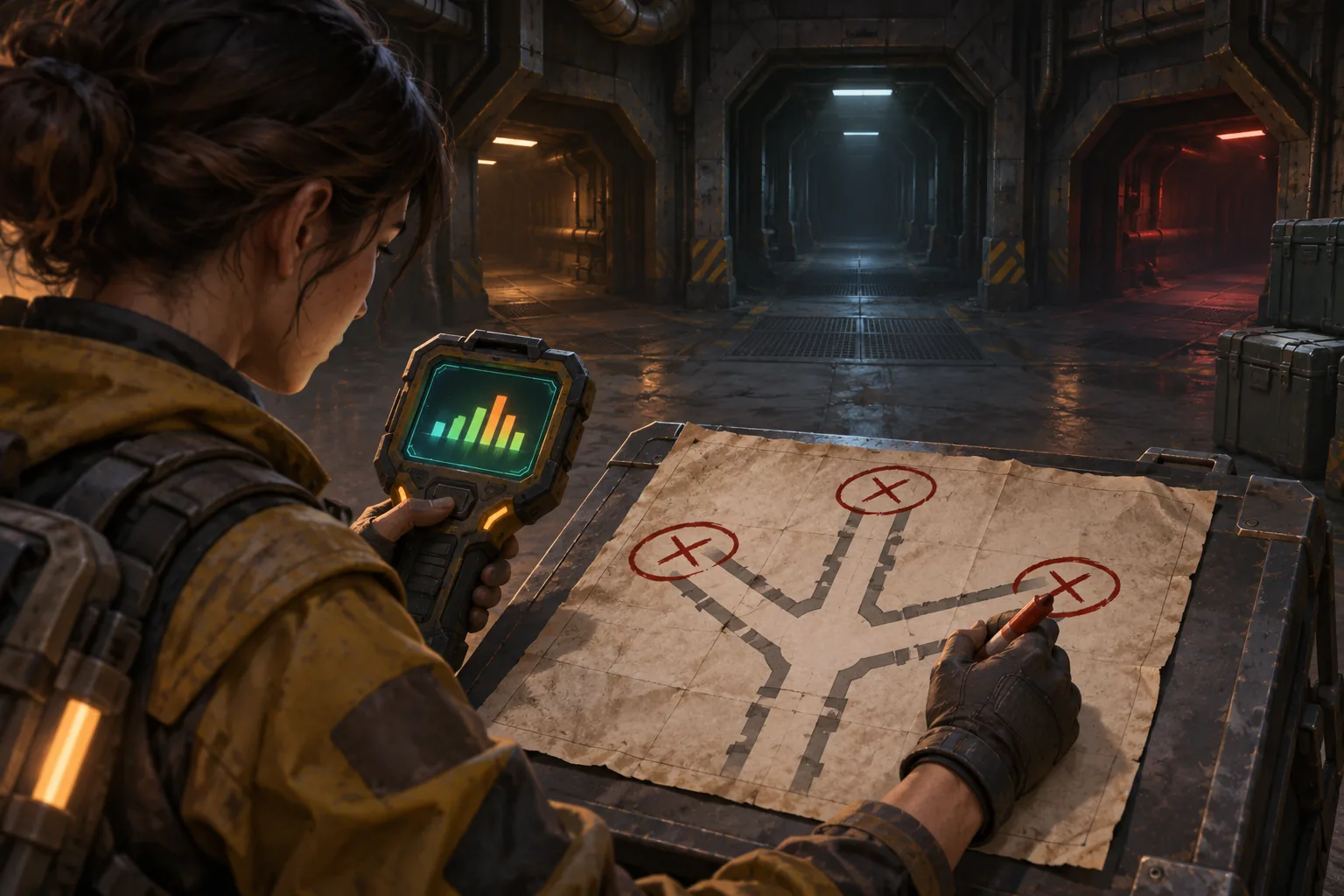
The deterministic test begins with Unknown, records a vibration clue and expects Provisional, then repeats that clue without a change. A cold draft adds independent evidence and raises confidence to Strong. The room remains unresolved until a physical check. This verifies information handling, not whether the clues feel frightening or fair.
Let teammates share the same uncertainty
Show clue source, confidence and last scan time on the shared map. Use a distinct marker for “Strong evidence” rather than “Safe,” and retain the unresolved label until the room is searched. A teammate can then choose to enter, wait for more equipment or leave the route for later.
Test uncertainty before adding more threats
Keep observations append-only and derive confidence from distinct evidence. Godot Resource can store original room observations; SEELE AI Game Maker is a starting point for a prototype. Lethal Company supplies broad co-op horror context only and does not validate Black Signal's clue probabilities.
Build an original co-op salvage game with Unknown, Provisional, Strong, Clear and Threat room states. One sensor charge reveals a clue. A repeated clue does not increase confidence; a second distinct clue changes Provisional to Strong. Only a physical search sets Clear or Threat. Share clue text and confidence with all teammates, and never label Strong evidence as safe.
Create an original co-op horror game in SEELE · Lethal Company on Steam
Frequently asked questions
How can a horror game show incomplete information?
Separate observed clues from the room's true state. Black Signal records clues and labels confidence Provisional or Strong, while keeping the conclusion unresolved until a physical search. This lets players make a decision from evidence without receiving a guaranteed safety signal.
Should repeating the same scan increase confidence?
Not in this prototype. Repeating an identical clue adds no new evidence, so confidence stays the same. A distinct clue can raise it one step. This makes the confidence change explainable and prevents repeated scanning from manufacturing certainty without new information.
What should a first uncertainty-system test cover?
Check the initial unknown state, a first clue, a duplicate clue, a distinct clue and the final physical confirmation. Ensure the shared map shows the same evidence and confidence to every player. These tests validate the state model; playtests are still needed to tune clue quality and tension.