Card synergies make drafting feel purposeful when players can see how one choice supports another. Each card still needs a readable role on its own, while combinations should reward planning without becoming mandatory. Slay the Spire’s official listing describes cards working together and relic effects enhancing deck interactions; the examples and balance framework below are original.

Give cards useful roles before combos
A synergy is a payoff for connecting pieces; it should not be the only reason a card is playable. Slay the Spire’s official Steam listing describes dynamic deck building, cards that work together, and relic effects that can enhance a deck through interactions. Those are public reference facts, while the card roles and balancing framework here are original.
Start by assigning each card a primary job: deal damage, prevent damage, draw, move a resource, alter timing, or create a setup condition. A card can serve more than one purpose, but players should understand its immediate value. Then define a small number of tags or effects that can connect cards without forcing every card into a single archetype.
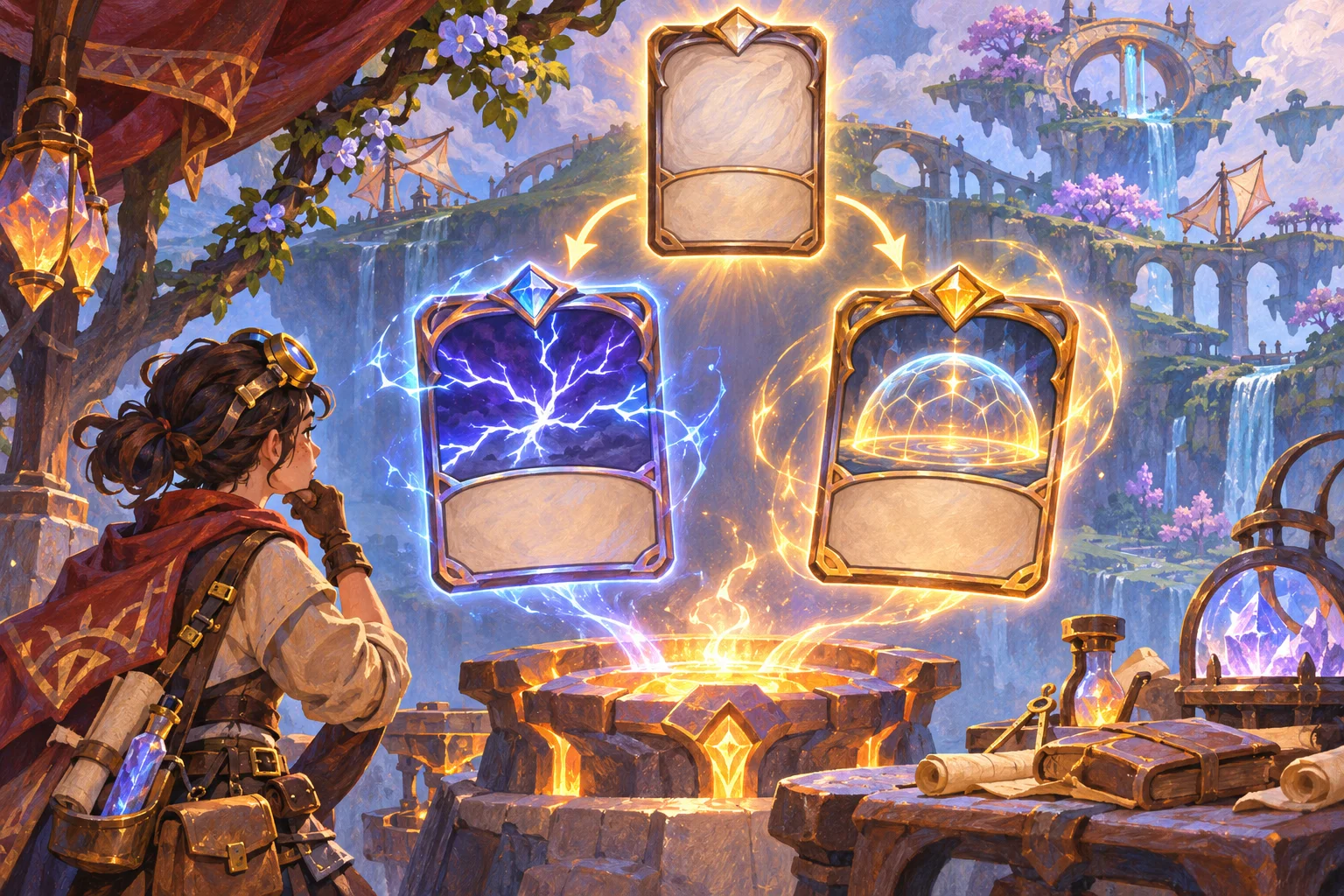
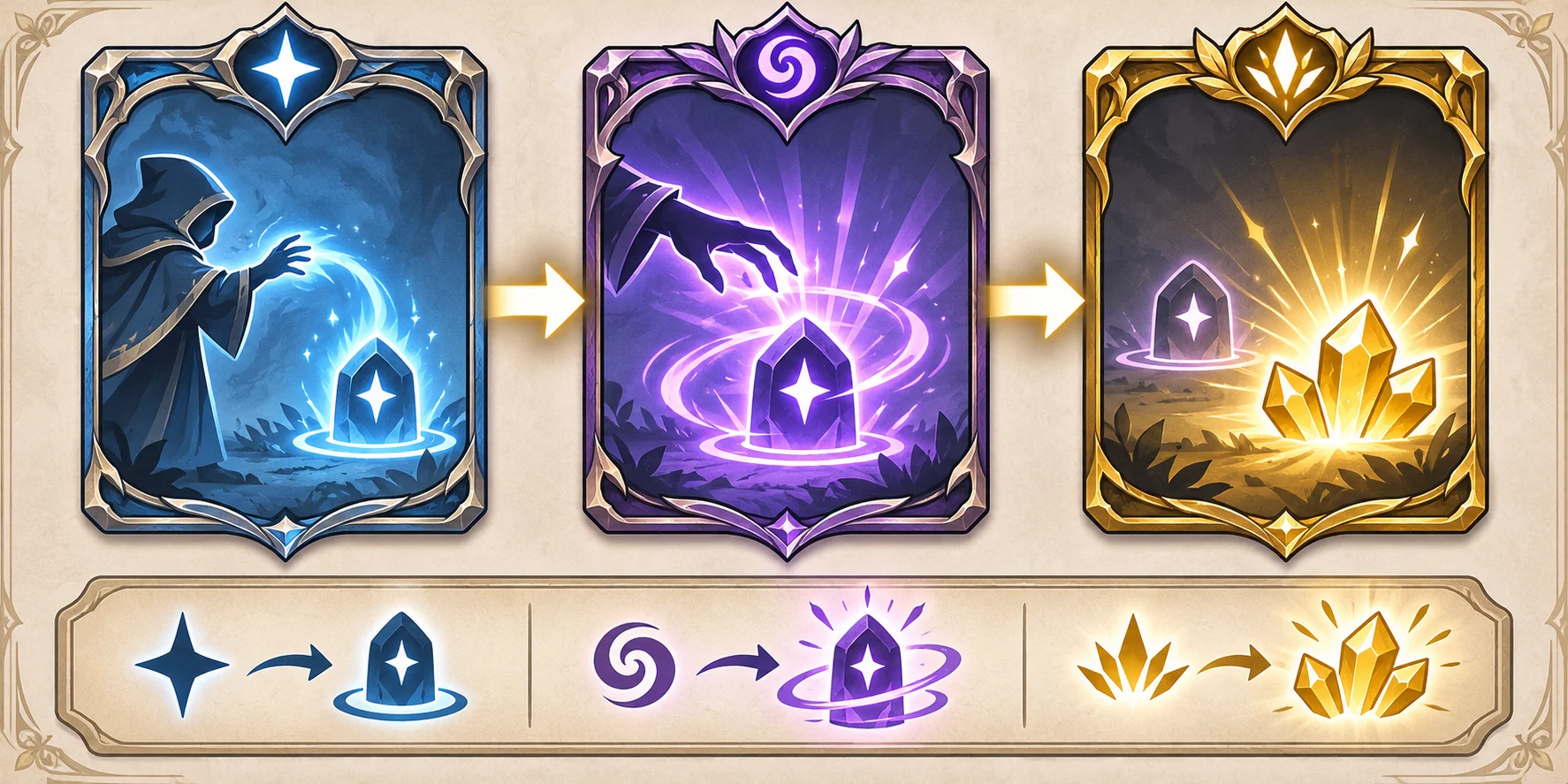
Write a synergy in three parts: setup, trigger, and payoff. For example, a fictional “mark” effect could enable a later card to gain precision, while a defensive stance might make the next counterattack stronger. The interaction should be visible in the card text and combat feedback, not dependent on an undocumented rule. Keep the example original and test the function before writing more variations.
Build synergies players can recognize
Players can learn an interaction when its conditions are stable and its payoff arrives soon enough to connect cause and effect. A setup card that creates a token followed several turns later by a subtle bonus can be hard to notice. Early synergies should resolve in the same turn or encounter and use consistent wording or iconography.
Use a small vocabulary for triggers. “When you block,” “after you draw,” or “the first time you spend focus” are easier to compare when the game applies each phrase consistently. Avoid inventing a new keyword for every individual card. If a synergy requires a special case, explain it where players make the choice and surface a clear response when it activates.
Visual feedback should confirm the interaction without overwhelming combat. A brief highlight, marker change, or sound cue can show the setup and payoff. After combat, let players inspect a short event summary or card log if they want detail. This is especially useful when multiple effects resolve from one action.
Control scaling and repetition risks
Synergies can grow multiplicatively when cards repeat, draw more cards, reduce costs, or trigger one another. Test the full sequence rather than judging each card in isolation. Calculate how much damage, defense, draw, and resource value a combo can produce, then simulate what happens when the player repeats it across multiple turns.
Watch for self-sustaining loops. A draw effect that returns its cost or a trigger that reactivates itself can remove meaningful decisions. A cap or once-per-turn condition may help, but it should match the fiction and be easy to see. If the interaction only becomes unsafe with a rare pairing, compare the excitement of that discovery with the effect on overall encounter difficulty.
Preserve a useful floor and a bounded ceiling. A partial combo should still contribute something, while the complete strategy should feel noticeably stronger without invalidating other drafts. Evaluate performance across different enemy patterns and resource availability, not just a single ideal test fight.
Test strategies across draft and combat
Draft choices shape whether a synergy can come together. Test a route where the player sees one piece early, another late, or never sees the intended partner. The deck should remain playable when a key card is absent, and choices should let the player pivot when rewards do not match an initial plan.
Track pick rates, card removal, encounter outcomes, combo frequency, and turns where players hold a card because its text is unclear. Pair those measures with observation: ask players to predict what will happen before a combo resolves. If the prediction differs from the result, improve wording or feedback before adjusting raw numbers.
Finally, compare multiple strategy paths against the same encounter set. A synergy should support a satisfying style, not become the only reliable answer. Keep a design table linking each card to standalone function, setup or trigger role, expected payoff, and tested edge cases. Update the table as cards change so the deck ecosystem remains coherent.

Related guide
For another way to connect system states with player choices, see the guide to state-driven colony incidents.
Frequently asked questions
How do you design card synergies in a deckbuilder?
Give each card a useful role on its own, then let a combination improve a specific plan through recognizable conditions. Define what one card sets up, what activates it, and what payoff follows. Check that the interaction still makes sense when players draw the cards in an unexpected order.
How can synergies stay optional?
Offer more than one way to solve common combat problems and make combo pieces useful outside their preferred pairing. Draft choices should let players pass on a synergy without making the rest of the run feel broken. Test decks that take only one piece and decks that build around the full interaction.
How do you prevent card combos from becoming overpowered?
Estimate the combo’s damage, defense, resource generation, and repeat potential across several turns. Test small and large decks, then look for loops that produce value without consuming a meaningful cost. Add caps or conditions only where they preserve the intended fantasy and remain visible to players.
How should players discover card interactions?
Use consistent keywords, visual motifs, and combat feedback to show how one effect enabled another. Let early interactions be low risk and easy to observe. After a combo resolves, briefly identify the setup and payoff so players can repeat or adapt it without relying on hidden rules.
Prototype card interactions
Use AI to enumerate candidate pairs and simulate test sequences, then evaluate the combat feel in a playable prototype. Designers should set the intended power budget and verify every trigger, cost, and payoff. Start a game project with Seele.