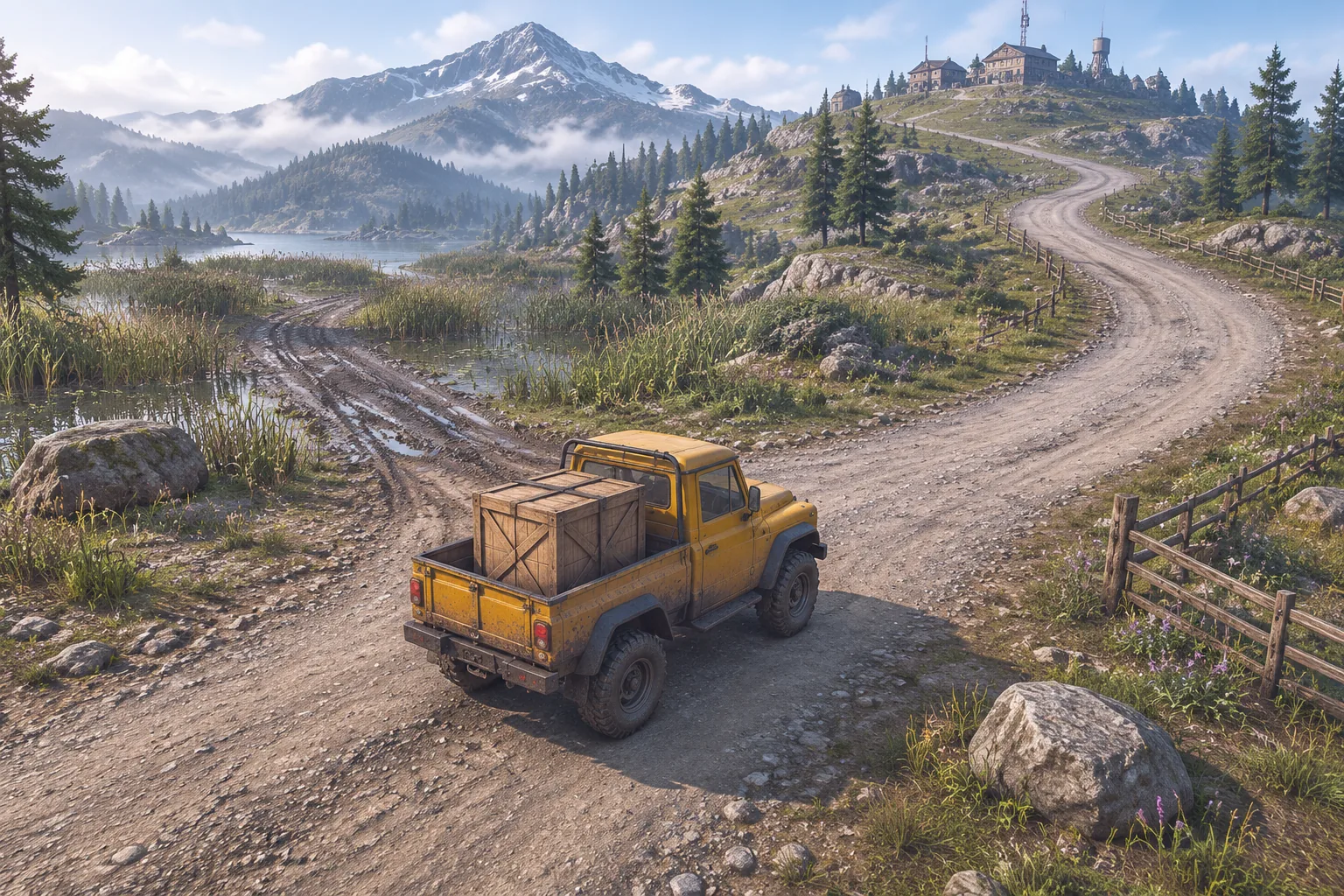
Cargo delivery connects vehicle choice to route risk and a concrete outcome. Saber Interactive’s official SnowRunner Steam listing describes driving through extreme open environments to complete challenging missions. That broad off-road mission context is the only reference fact used here; the delivery contracts, load model, and recovery advice below are original.
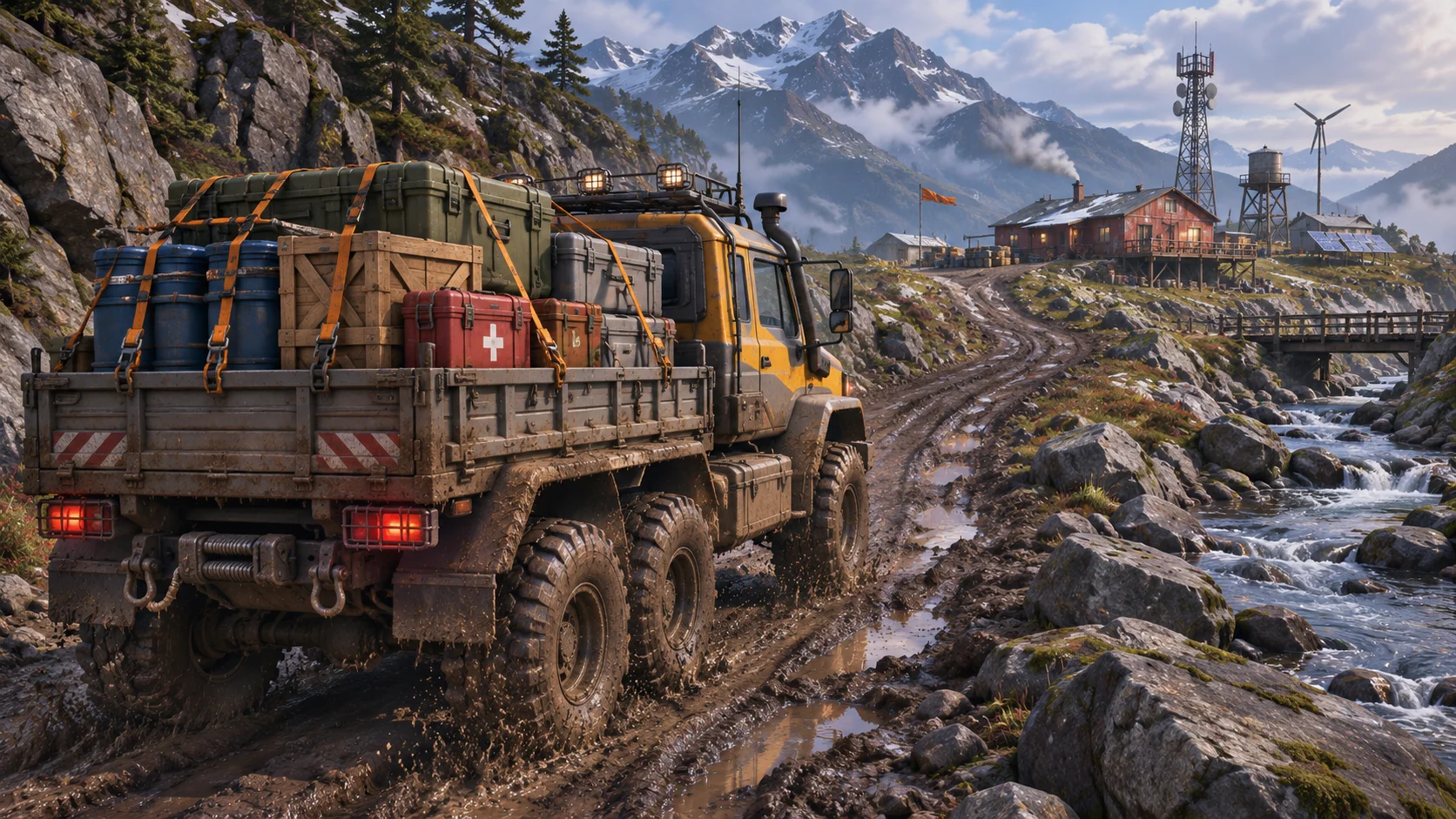
Define a delivery contract and destination
Make every cargo job a small contract: what must arrive, how much, where it goes, what condition it needs to be in, and whether there is a deadline. A remote worksite might request three sealed supply crates by the end of a day. That invented example gives the player a measurable goal without relying on a hidden score.
Show the contract before departure. The player should know if a fragile crate must remain intact, if partial delivery is accepted, and whether the route has a time limit. If the job rewards speed, say so. If the reward depends on condition, show the threshold in plain terms.
Track cargo at the unit level only when it creates a useful decision. A set of identical crates can use a quantity counter. A fragile instrument can have its own condition because the player may choose to secure or isolate it. Avoid creating complex inventory detail that does not affect how the trip is planned.
Match cargo, vehicle, and route constraints
Give cargo a few relevant properties: weight, size, fragility, and securing needs. Then connect those properties to vehicle capacity and terrain. A heavy load might reduce acceleration or use more fuel; a wide crate may require a flatbed; a fragile item may be damaged by hard impacts. Preview these effects before the player accepts the load.
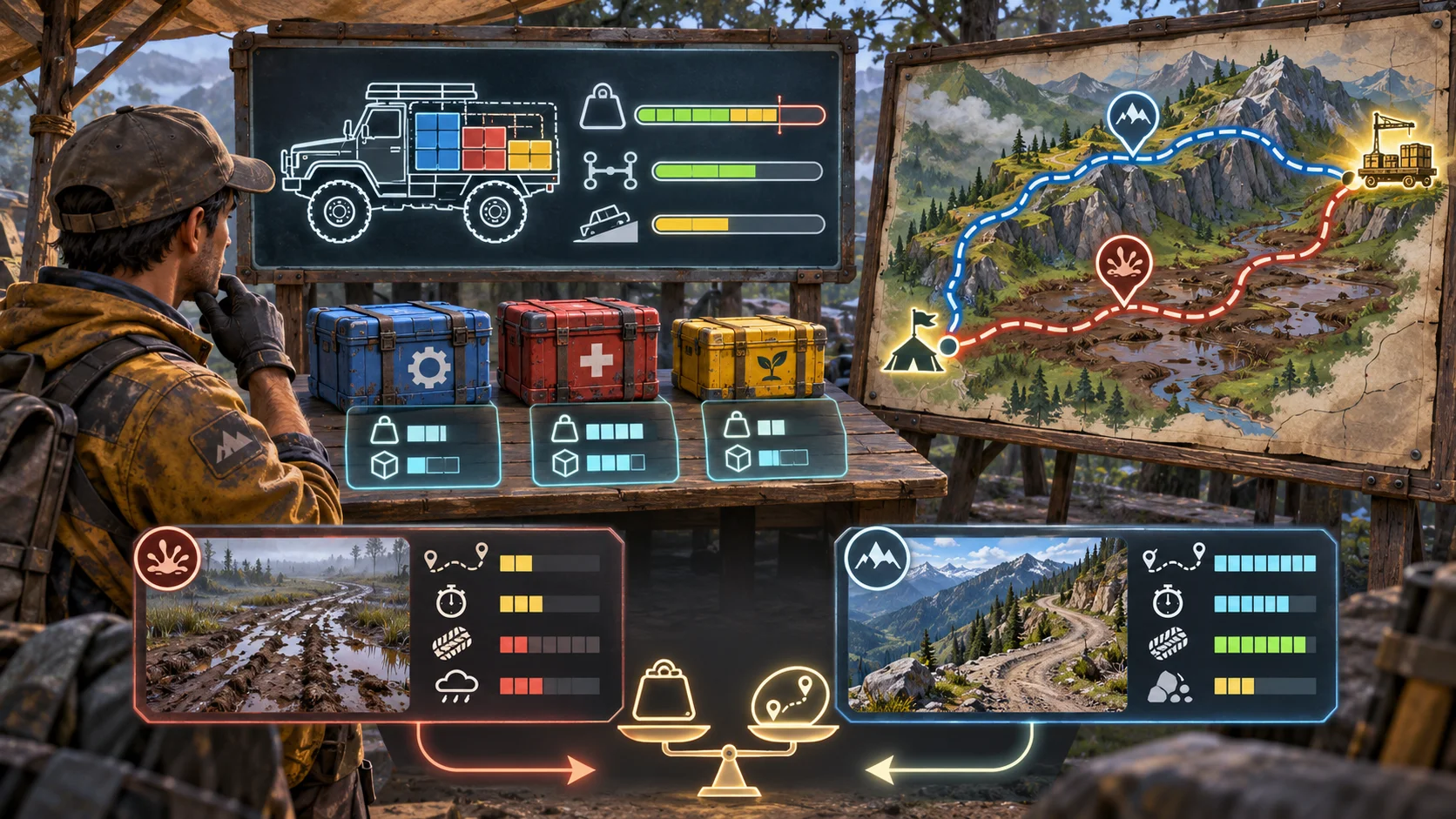
Use a route map that shows known hazards and support points. A short lowland path may cross deep mud; a longer ridge road may have a narrow bridge but better traction. Let the player compare distance, fuel, recovery access, and cargo condition risk. Mark uncertain terrain as uncertain instead of pretending the route is fully known.
Make cargo securing a clear preparation choice. A strap or stabilizer can reduce damage risk but take up a limited equipment slot or require extra loading time. Avoid a system where unsecuring a crate has no visible consequence until it breaks.
Make route planning and vehicle choice meaningful
Different vehicles should solve different constraints. A light truck can use a narrow trail but carry less. A larger hauler can move more cargo but needs stable roads and more fuel. Show these tradeoffs through a short vehicle comparison, not a mystery rating.
Let the player revise the plan before commitment. If a bridge is out, they can choose the longer pass or return to the depot for another vehicle. If the game includes recovery tools, explain their cost and when they can be used. A difficult route can create tension without removing the player’s ability to respond.
Resolve delivery, damage, and recovery fairly
At arrival, compare the cargo with the contract: quantity, condition, and timing. If a crate was lost, identify the event that caused it. A summary such as “one crate damaged during the steep descent” teaches the player more than a reduced reward with no explanation.
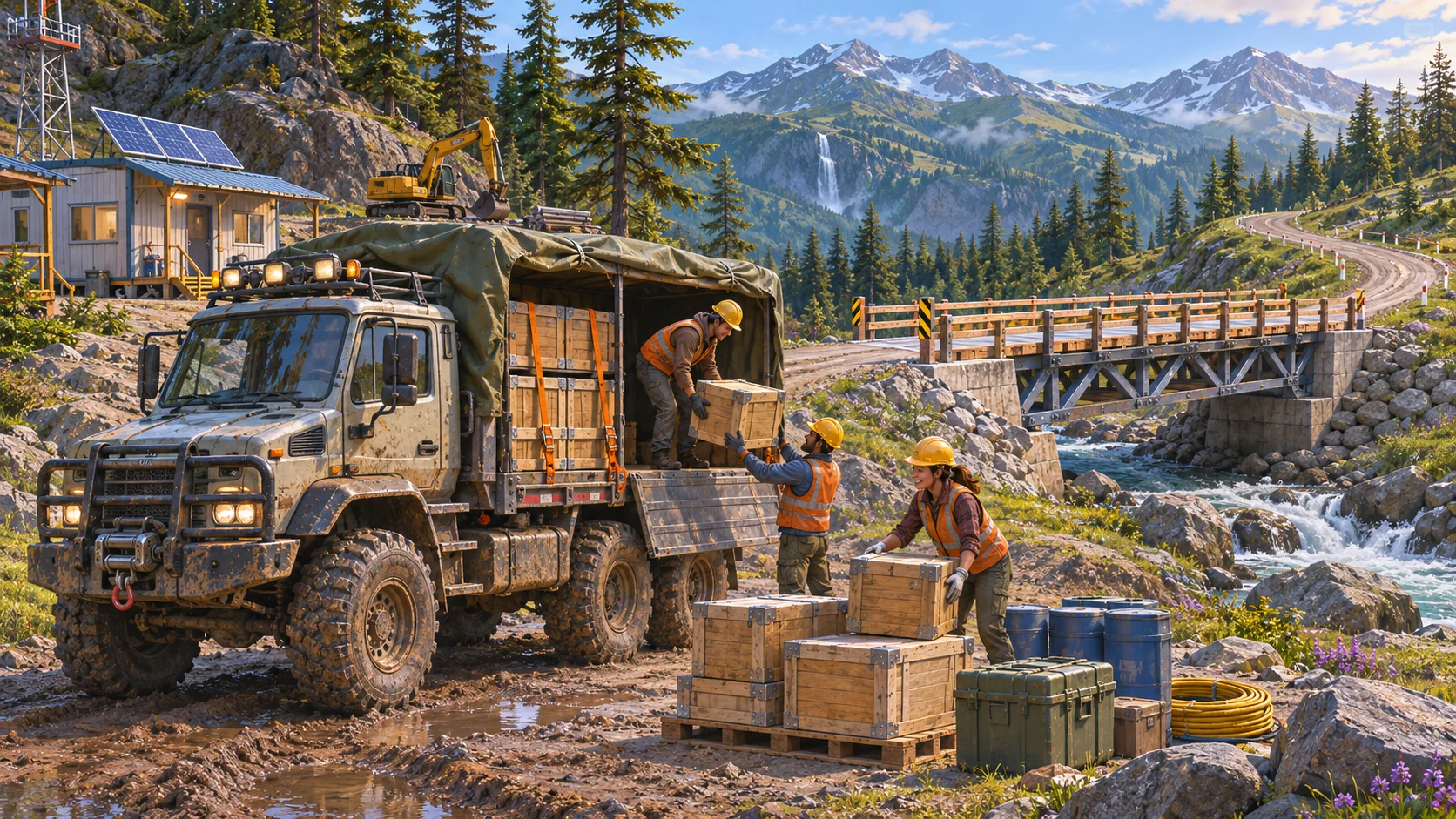
Include a recovery path for partial failure. A player may deliver the remaining crates, recover a damaged load, or abandon the job with a known cost. Let repairs or completed infrastructure change later route options so a hard trip can create future value.
Playtest several vehicle and route combinations on the same contract. Track completion, cargo condition, fuel use, recovery actions, and whether players understand the result. If only one truck or road can succeed, adjust the contract or explain why that option is required.
Use SEELE AI to draft an original off-road logistics game and verify load, route, and delivery behavior in the playable result. A generated scene does not prove cargo physics or contract scoring works. For a broader off-road concept, see the original off-road guide. Prototype an original logistics game.
FAQ
How do you build cargo delivery in an off-road game?
Give each contract a cargo type, quantity, destination, condition requirement, and any deadline. Match the cargo to a vehicle and route that can handle it. Show load limits and likely hazards before departure, then evaluate delivery against the contract so players understand what succeeded and what was lost.
How should cargo weight affect vehicle handling?
Keep weight effects readable: a heavier load can reduce acceleration, increase fuel use, or make steep climbs harder. Show the vehicle’s capacity before loading and preview how the cargo changes handling. Avoid combining several hidden penalties that make the same truck behave unpredictably.
What makes an off-road delivery route fair?
Show known terrain, fuel or repair access, and likely cargo hazards while preserving some uncertainty. Offer more than one viable route, such as a short muddy crossing and a longer stable road. Let players prepare, turn back, or recover if a route becomes difficult instead of causing an unexplained failure.
How should a game evaluate damaged cargo?
Compare the delivered quantity and condition with the contract requirements. Explain which event caused any loss, such as a hard impact or unsecured load, and make the consequences proportional to the mistake. Let players complete partial deliveries or recover the cargo when that fits the game’s intended challenge.