Build an original off-road delivery game around a route choice with a clear cost. In fictional Alder Pass, one truck must take a crate from a depot to a hill station. A gravel road has three short segments. A marsh shortcut has two expensive segments.
Start the truck with five fuel units and trace each route before adding terrain effects. The player can deliver along the road, while the shortcut leaves the truck halted halfway with its cargo still aboard.
Make one delivery the goal
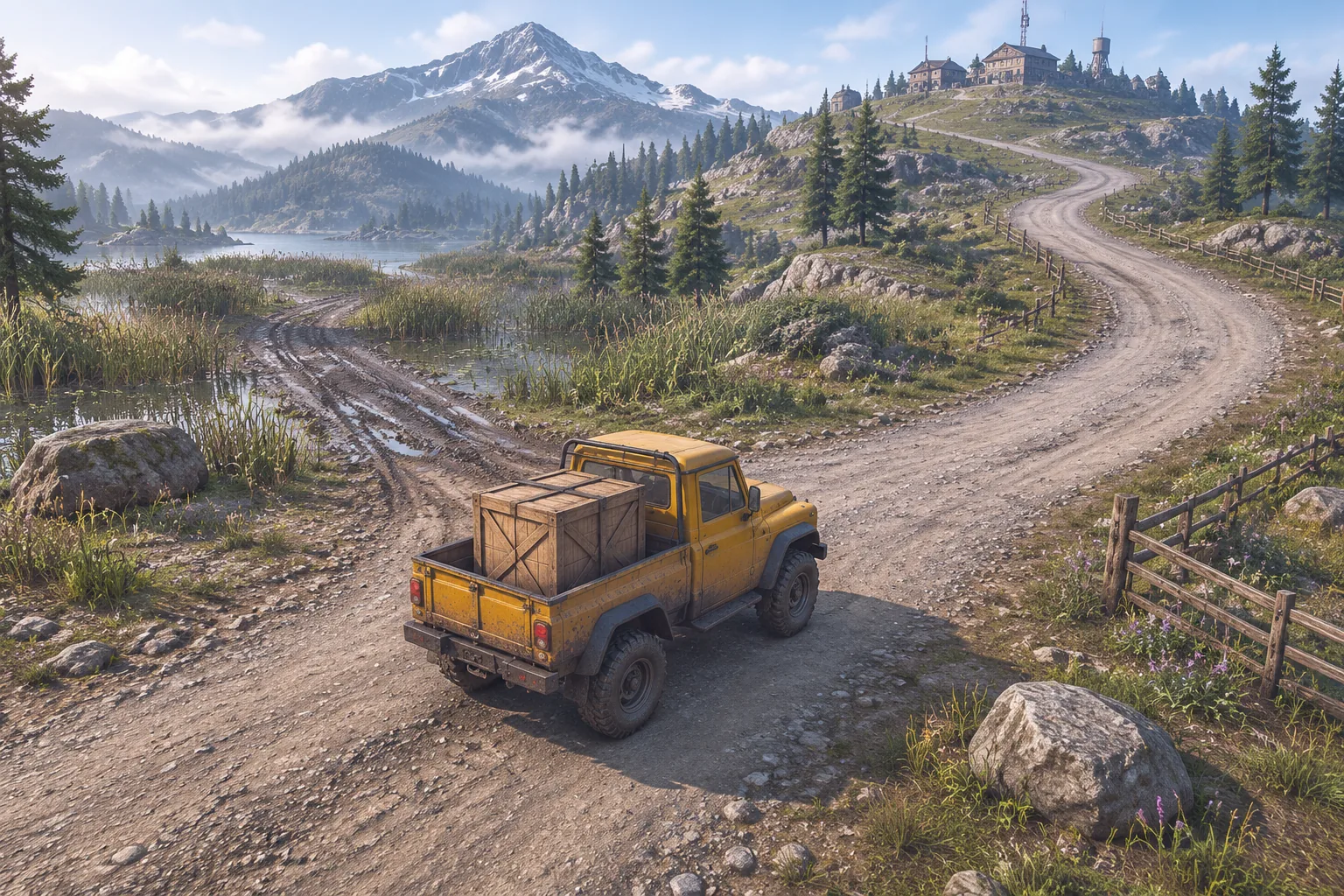
Focus Entertainment describes SnowRunner as an off-road experience involving heavy cargo and difficult terrain. A small original project can use the broad idea of planning a delivery, then define its own map, vehicle and rules.
The truck starts at Depot with one sealed crate and five fuel units. Hill Station is the destination. Each route is a fixed sequence of directed edges. The values in this example are abstract game costs, not fuel estimates for real vehicles.
Define the route and movement rule
| Route | Edge costs in order | Total if completed |
|---|---|---|
| Gravel Road | 1, 1, 2 | 4 fuel |
| Marsh Shortcut | 3, 3 | 6 fuel |
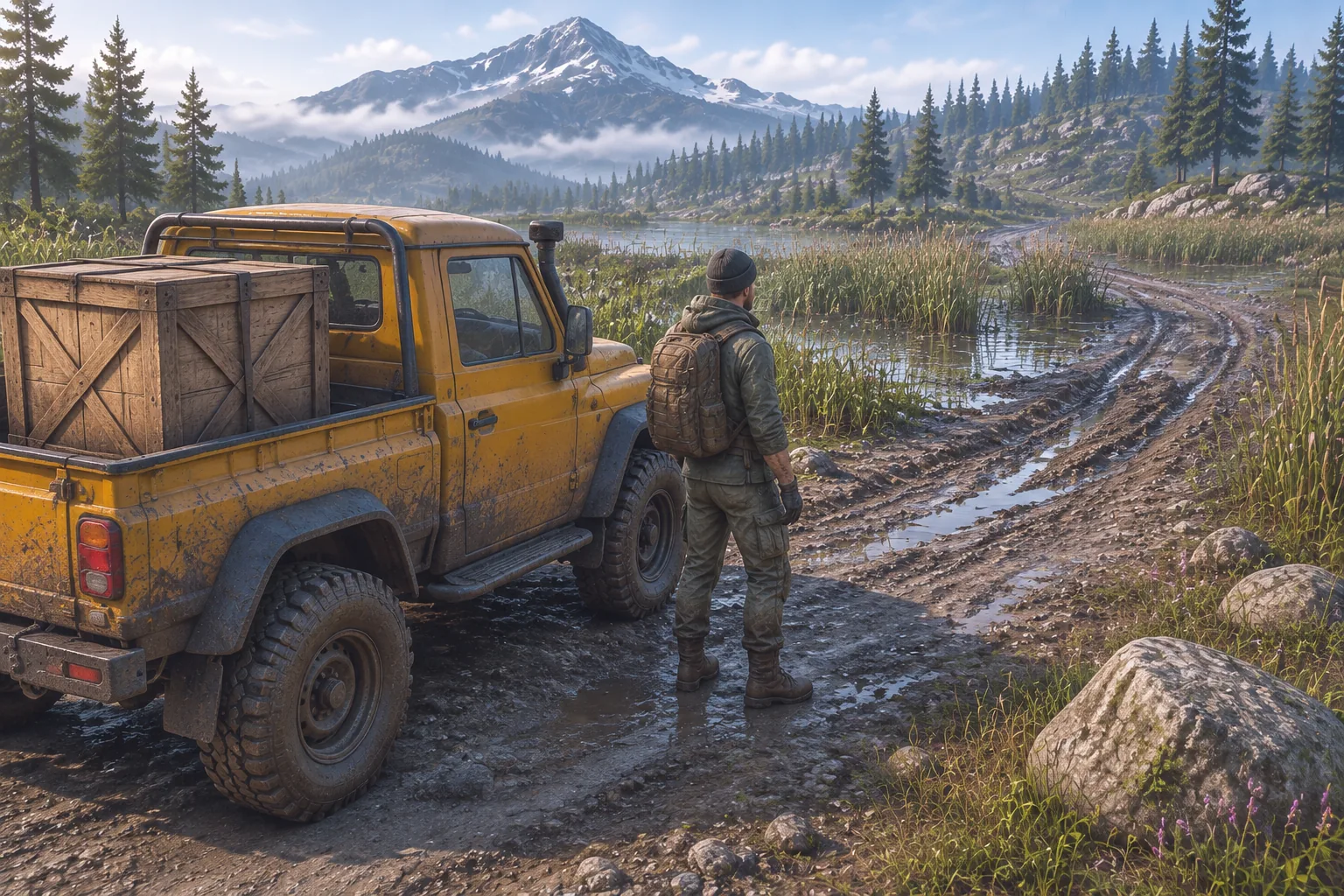
Before entering an edge, compare its cost with the current fuel. If fuel is at least the cost, subtract the full cost once and advance to the next node. If it is less, stop at the current node and show both the required and remaining fuel. Never subtract part of an unaffordable edge and never let fuel become negative.
When the truck reaches Hill Station with the crate, record one delivery and lock movement. Keep the crate on the truck if the route stops early. Give each movement action an ID, and ignore a repeated event with the same ID so one edge cannot charge twice.
Compare the two baseline routes
Reset to the depot before each attempt. The sequence below records fuel at the start and after each edge actually entered.
| Route | Fuel trace | Result |
|---|---|---|
| Gravel Road | 5 → 4 → 3 → 1 | Arrive with the crate and record one delivery. |
| Marsh Shortcut | 5 → 2 | Halt at the intermediate node. The next edge needs 3, so the crate remains aboard. |
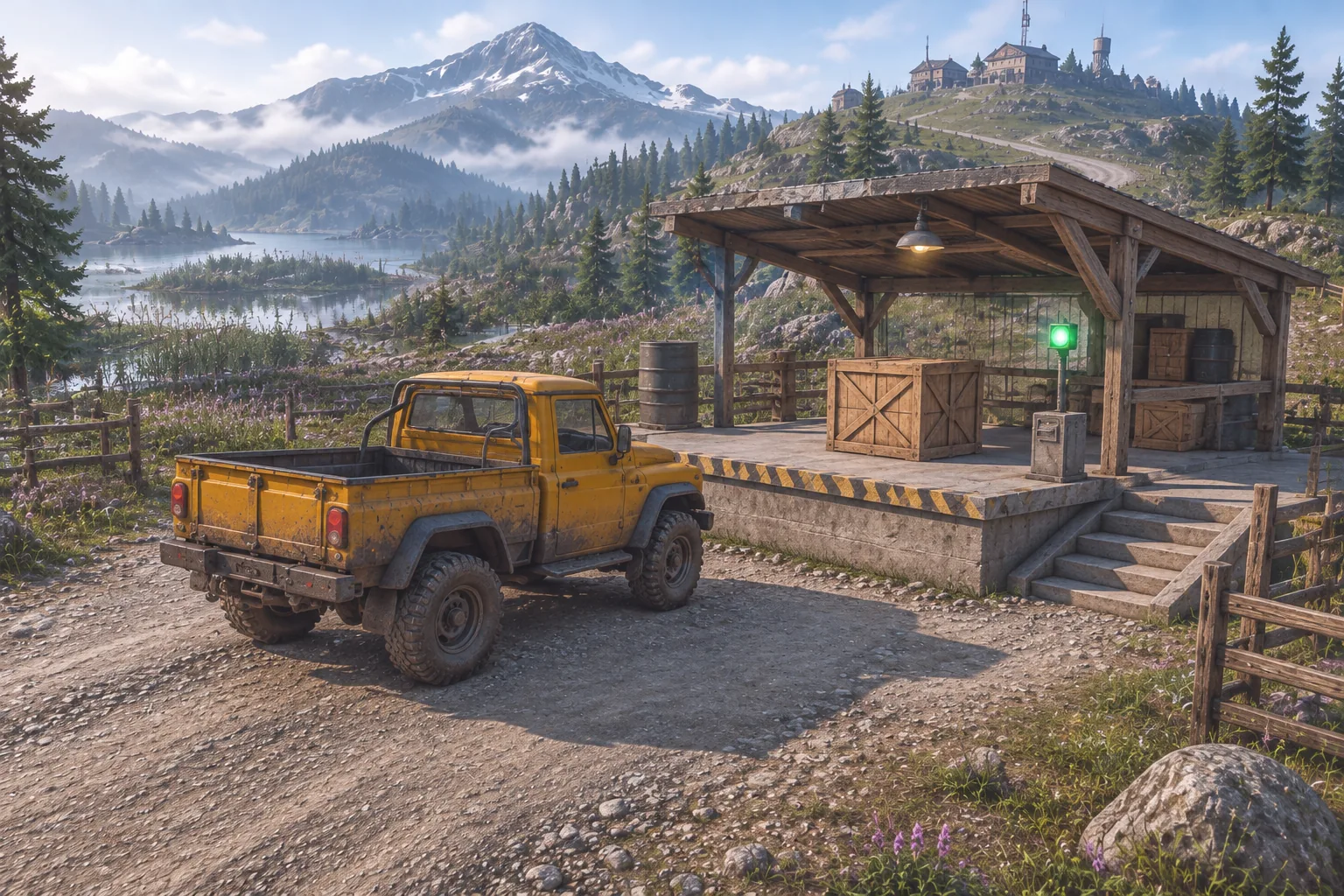
The shortcut has fewer edges but requires more fuel in this fixture. A useful interface exposes each edge cost before departure and keeps a trip log showing the selected route, current node, remaining fuel and cargo state.
Change the starting fuel and replay
Reset and change only the starting fuel from 5 to 6. The shortcut now traces 6 → 3 → 0 and delivers the crate. The last edge is allowed because the rule accepts fuel equal to the edge cost.
Check the boundary directly. If the truck halts with exactly 3 fuel before a cost-3 edge, the comparison is probably using a strict greater-than test. If the first baseline shortcut attempt ends with negative fuel, check whether affordability is tested before deduction.
Give AI the complete delivery fixture
Ask for a one-edge step control and a readable log. This prompt gives the builder enough detail to reproduce both routes and the boundary case.
Build an original browser off-road delivery game called Alder Pass.
Start at Depot with 5 fuel, one sealed crate on the truck and zero deliveries.
The destination is Hill Station. Let the player select one fixed route before departure.
Gravel Road has three directed edges costing 1, 1 and 2 fuel, in that order.
Marsh Shortcut has two directed edges costing 3 and 3 fuel, in that order.
Before entering an edge, require fuel at least equal to its cost.
On entry, subtract the full cost once and move to the next node.
If an edge is unaffordable, remain at the current node, keep the crate and show required and remaining fuel.
On arrival with the crate, record one delivery and lock movement.
Use unique movement action IDs. Ignore an already processed ID without deducting fuel again.
Baseline Road trace: 5, 4, 3, 1; one delivery.
Baseline Shortcut trace: 5, 2; halt at intermediate node, crate aboard, zero deliveries.
With only starting fuel changed to 6, Shortcut traces 6, 3, 0 and delivers.
Reset restores Depot, 5 fuel, one crate, zero deliveries and action IDs.
Display route costs, selected route, node, cargo, fuel and a chronological log.
Use original Alder Pass art and keyboard-accessible controls.
Replay all three cases from reset. Also send the same movement ID twice and confirm the second event leaves the node and fuel unchanged. See the first-build guide for adapting the fixture to another setting.
Build Alder Pass in SEELE AI Game Maker and check the route log before adding terrain animations or extra cargo.
Frequently asked questions
How many routes should my first delivery game have?
Start with two routes to the same destination and one cargo item. Give each route an explicit list of costs so a player can compare them before departure. A small map makes a stranded state and a successful delivery easy to check.
How should the game handle an unaffordable segment?
Check the current fuel against the complete segment cost before moving. If the truck cannot pay, leave it at the current node with its cargo and show the required and remaining amounts. Fuel should never become negative in this fixture.
Should exact fuel equality allow movement?
Yes, under the stated Alder Pass rule. A truck with 3 fuel can enter an edge costing 3 and arrive with zero. Test that boundary explicitly because using a strict greater-than comparison would incorrectly stop a valid delivery at the final edge.
How can I test whether movement is applied twice?
Assign each movement event a unique ID and remember which IDs were processed. Submit the same event twice and confirm that the second submission changes neither fuel nor position. Reset should clear the remembered IDs along with the rest of the starting state.