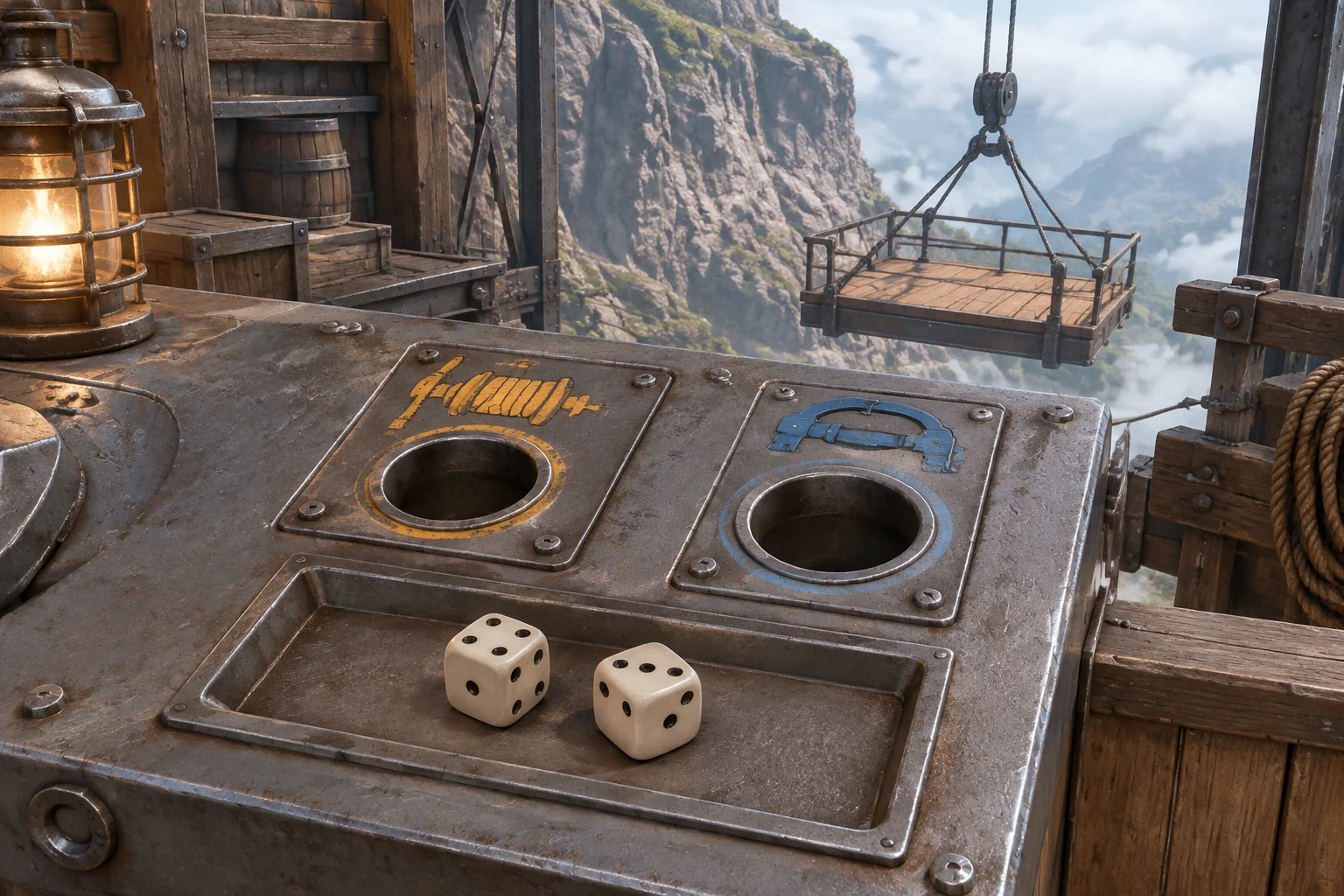
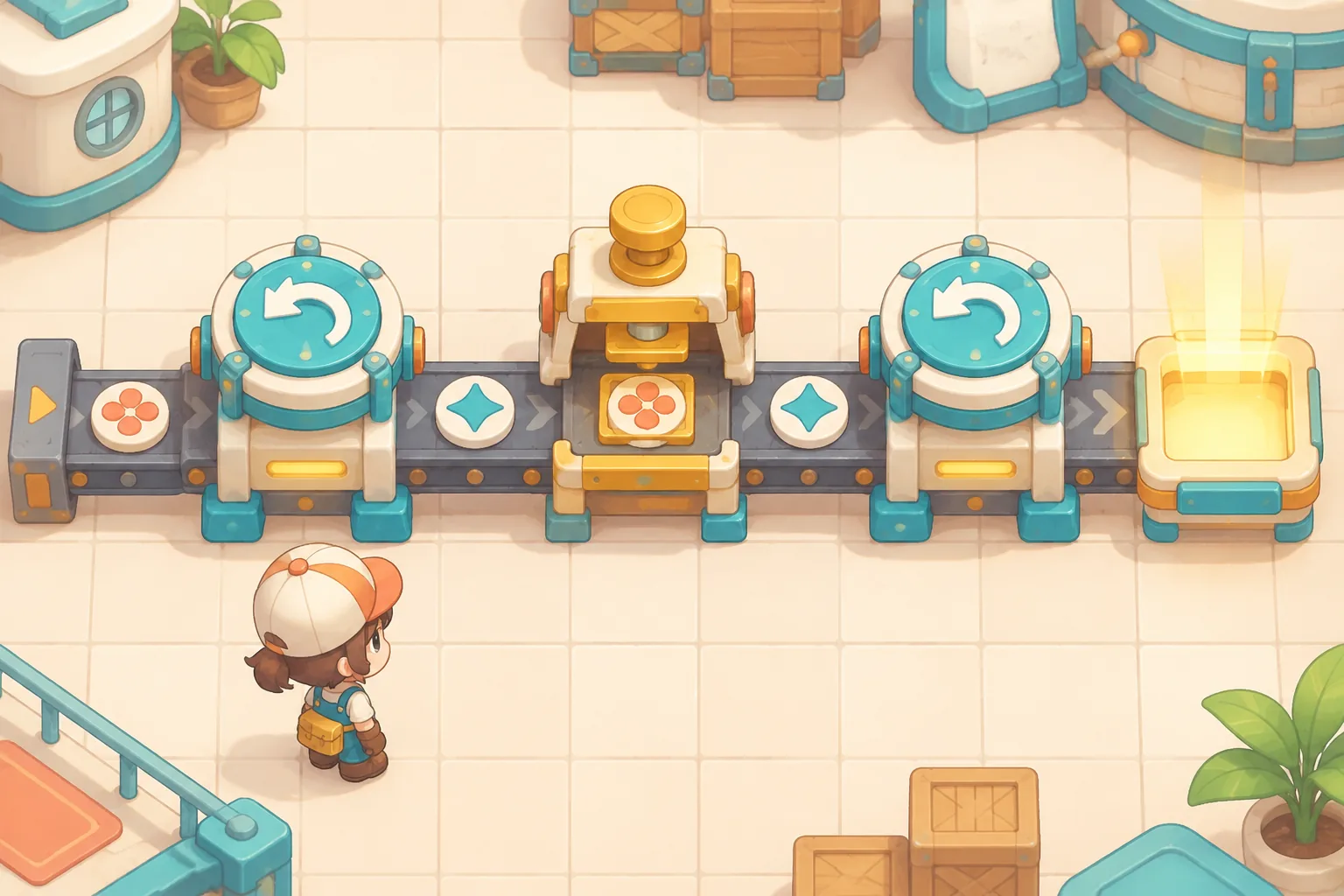
Build an original creature-care game around one shared daily goal. In the fictional Moonmoth Garden, two little moths need enough energy at dusk to create a lantern. The player has two portions of food and must decide how to share them.
Start with one day and a visible result. Comparing two care choices reveals how individual needs, shared resources and the timing of a reward fit together before you add a larger garden.
Choose a small care loop
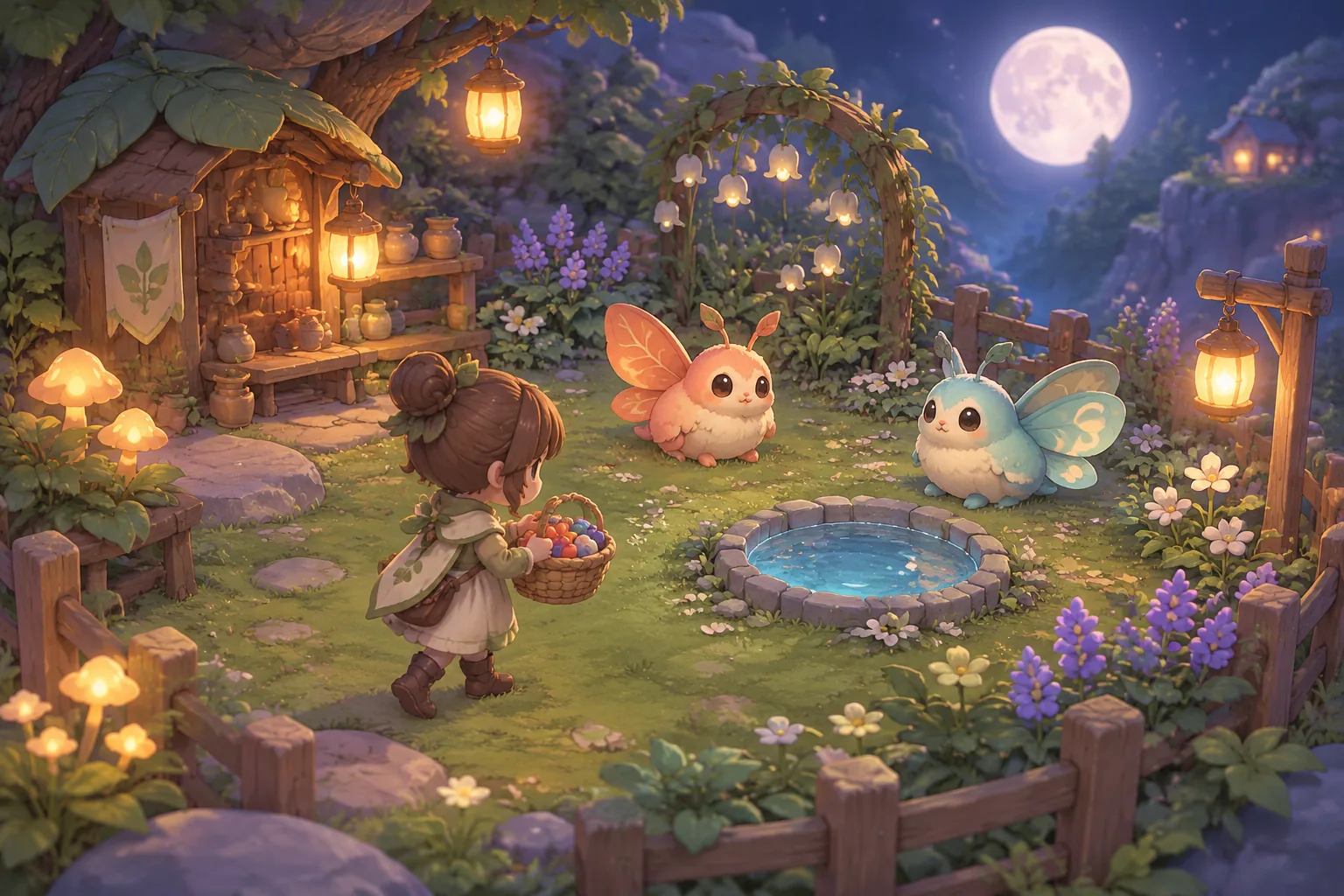
Monomi Park describes Slime Rancher as a game about collecting colorful slimes, growing crops and harvesting resources. Use that broad combination of care and collection as a starting point, then give your own creatures, setting and reward rules their own identity.
In Moonmoth Garden, Luma and Pip each start with energy 1. The player starts with two portions of food, one water unit and zero lanterns. Energy cannot rise above 3 or fall below 0. Both moths need at least 2 energy before dusk for the shared lantern reward.
Define care and dusk
| Step | Rule | Feedback |
|---|---|---|
| Feed | Consume one food portion and add 1 energy to the chosen moth, up to 3. | Show the chosen moth, remaining food and new energy. |
| End care | The player may end the care phase with food unused. | Show both energy values and move to dusk. |
| Dusk reward | If both energies are at least 2 and water is at least 1, consume one water and add one lantern. | Explain whether the energy and water conditions were met. |
| Dusk drain | After the reward check, reduce each moth's energy by 1, with a floor of 0. | Show the final energy values and lock care until reset. |
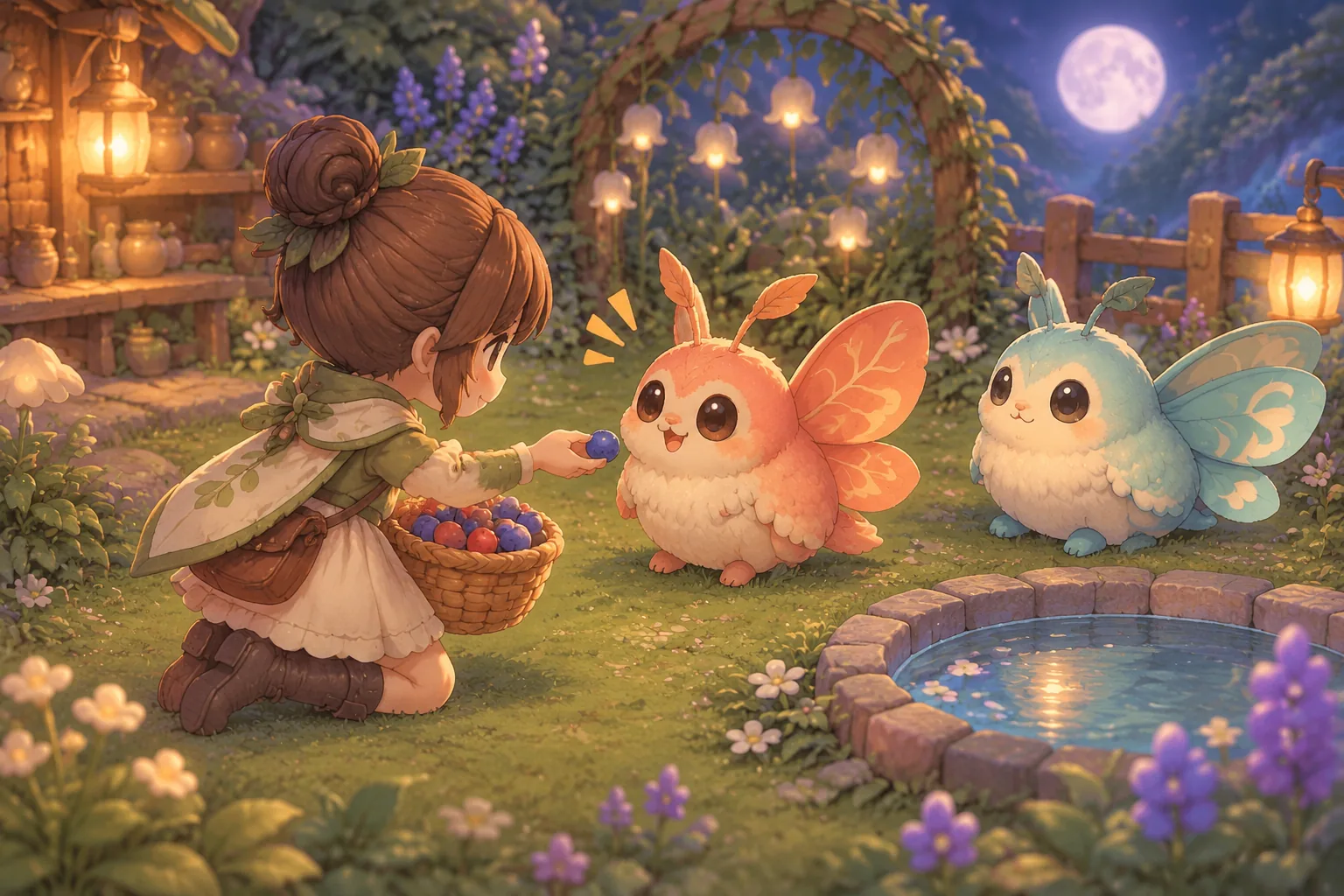
Reject feeding a moth already at energy 3 without consuming food. Give each care action an ID and ignore a repeated event with the same ID. These guards prevent a quick double submission from spending a portion twice.
Compare two care choices
Start each row from the original state. Energy pairs are ordered Luma, Pip. The reward uses the values before the dusk drain, so the final pair can be lower than the required threshold.
| Food choices | Before dusk | After dusk | Water and lanterns after dusk |
|---|---|---|---|
| Feed Luma, then Pip | Energy (2, 2), food 0, water 1 | Energy (1, 1) | Water 0, lanterns 1 |
| Feed Luma twice | Energy (3, 1), food 0, water 1 | Energy (2, 0) | Water 1, lanterns 0 |

In the first path, both moths meet the threshold while water is available. The reward consumes the water before energy drains. In the second, Luma has more energy but Pip is below the threshold, so water remains unused. Give the player a message naming the unmet condition rather than only showing an empty lantern counter.
Give AI the complete day
Describe the starting state, the order of checks and the expected results together. This prompt supplies a small loop that can be inspected one action at a time.
Build an original browser creature-care game called Moonmoth Garden.
There are two original lantern moths, Luma and Pip. Each starts with energy 1, with minimum 0 and maximum 3.
Start with 2 food portions, 1 water unit and 0 lanterns.
During care, feeding a chosen moth consumes 1 food and adds 1 energy.
Reject feeding at energy 3 without consuming food. Allow the player to end care with food unused.
Assign each care action a unique ID. Ignore repeated events with an already processed ID.
At dusk, first check whether both energies are at least 2 and water is at least 1.
If true, consume 1 water and add 1 lantern. Then reduce each energy by 1, minimum 0.
Finish the day and lock care. Reset restores both energies, food, water, lanterns and action IDs.
From reset, feed Luma then Pip: before dusk (2,2), food 0, water 1; after dusk (1,1), water 0, lanterns 1.
From reset, feed Luma twice: before dusk (3,1), food 0, water 1; after dusk (2,0), water 1, lanterns 0.
From reset, submit the same Luma feed ID twice: energy (2,1), food 1.
In a separate author fixture with 3 food, feed Luma twice then try a third feed. Reject the third at cap without spending food.
Show accessible labeled controls, each resource, action feedback, dusk result and original garden art.
Run the two care paths from reset. Then test a repeated action ID and the separately configured cap case. If the successful path receives no lantern, check whether the game is testing energy after the drain instead of before it.
Use the first-build guide to adapt this small fixture. Build Moonmoth Garden in SEELE AI Game Maker and verify the daily loop before adding more creatures.
Frequently asked questions
How many creatures should my first care game have?
Start with two creatures and one shared goal. A small cast lets you compare individual needs without managing a large inventory. In Moonmoth Garden, two energy values and a shared water unit explain whether the fictional lantern reward is available at dusk.
Why check the reward before the daily drain?
The order defines which energy values count toward the reward. In this fixture, both moths can qualify at energy 2 and finish the day at energy 1 after the drain. Show the intermediate check so the player can understand the result.
How can I prevent a repeated feed from spending food twice?
Give each care action a unique ID and remember processed IDs until reset. If the same event is submitted again, leave the moth's energy and food count unchanged. Test that behavior separately from a deliberate second feed with a new ID.
How should I test the energy cap?
Use a separate author fixture with enough food to reach the cap and attempt one more feed. The extra action should be rejected without consuming food. Restore the normal starting resources before comparing the two main care paths in the article.