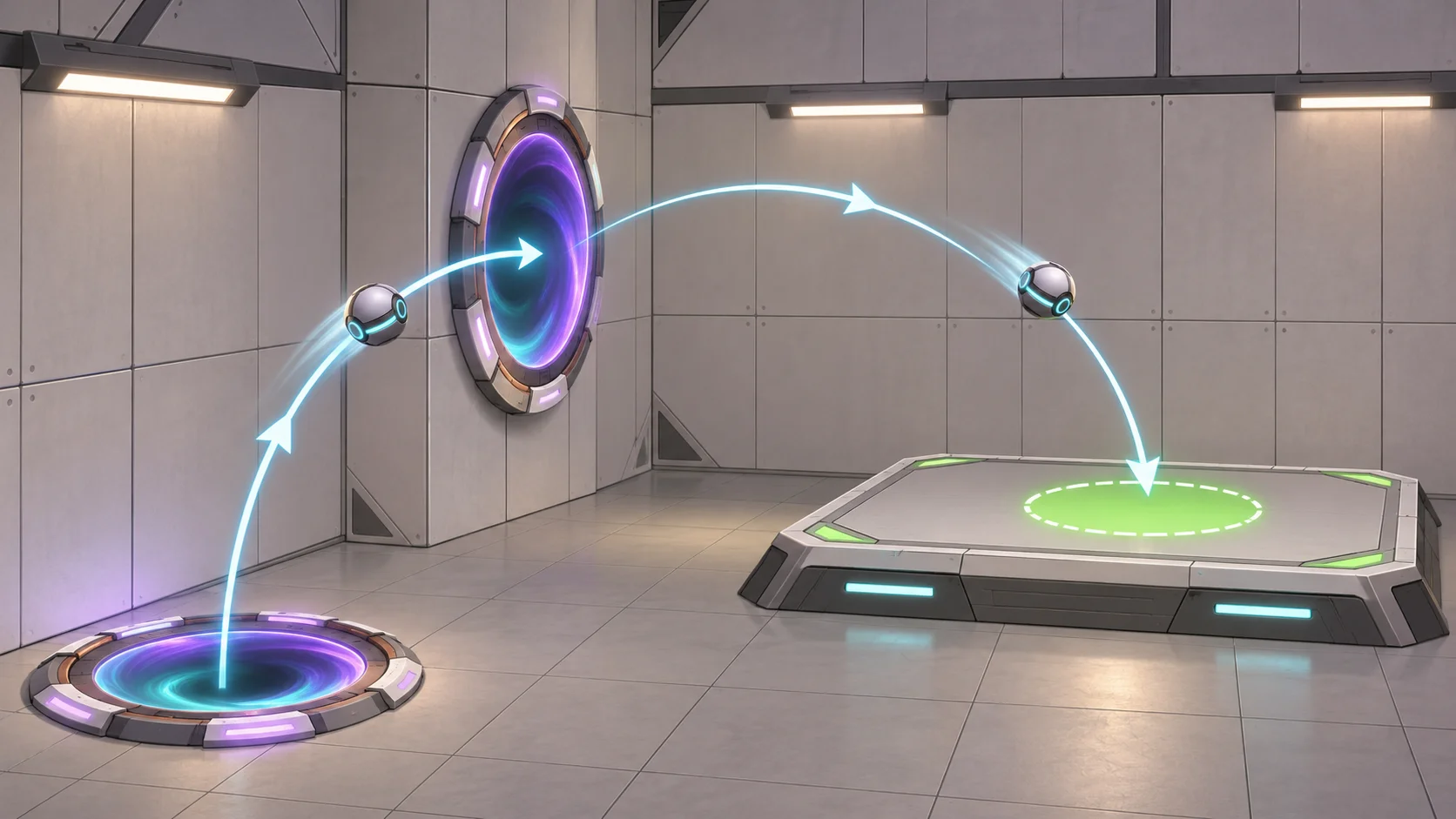
Cooperative traversal asks players to use movement, objects, and timing together to reach the next space. In a physics puzzle, one player might steady a platform while another crosses, or both might move a heavy object into position. For an original game inspired by Human: Fall Flat, make the shared action readable, let the physics create room for improvisation, and provide safe ways to recover when coordination goes wrong.
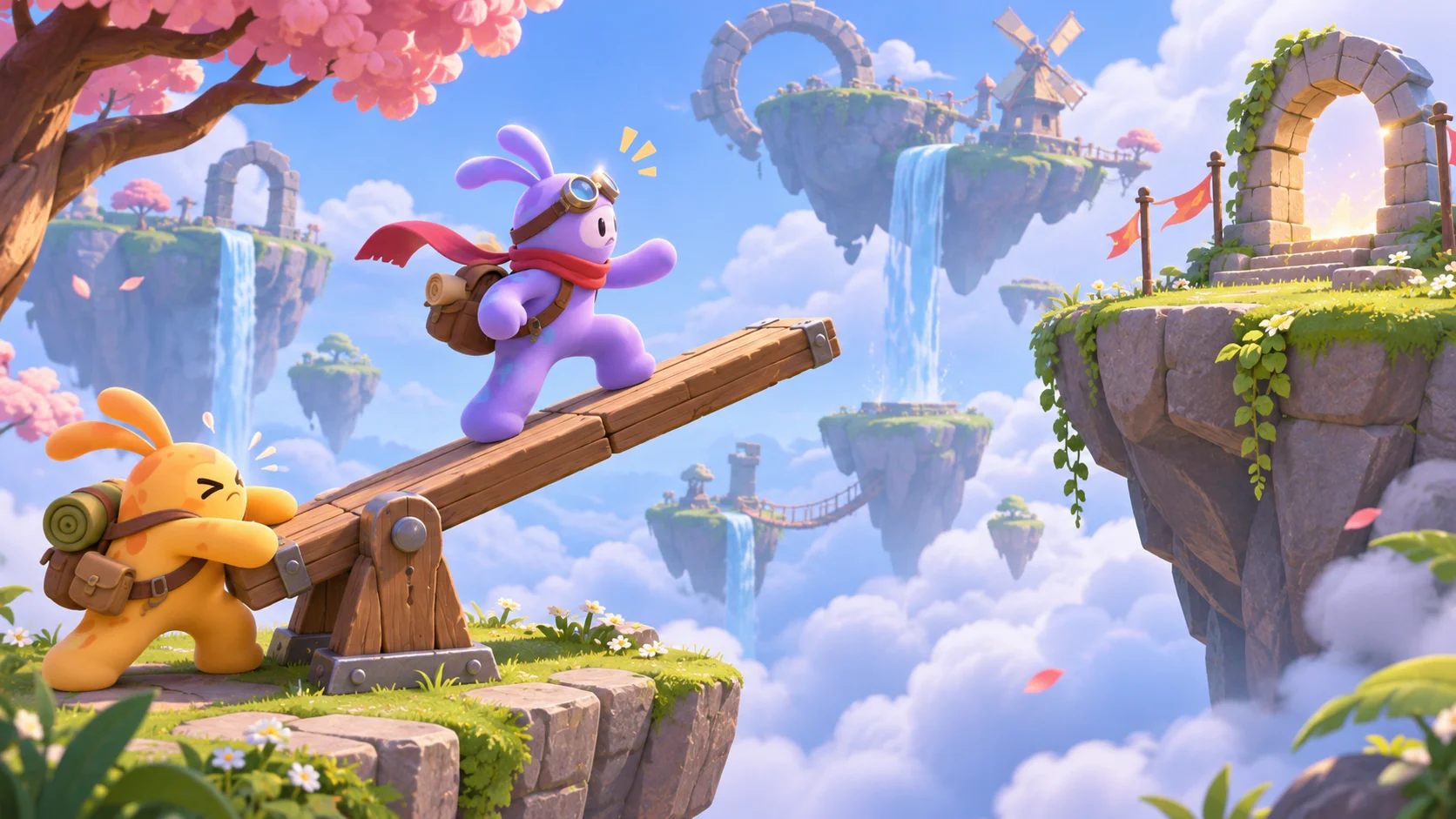
Design a space for shared movement
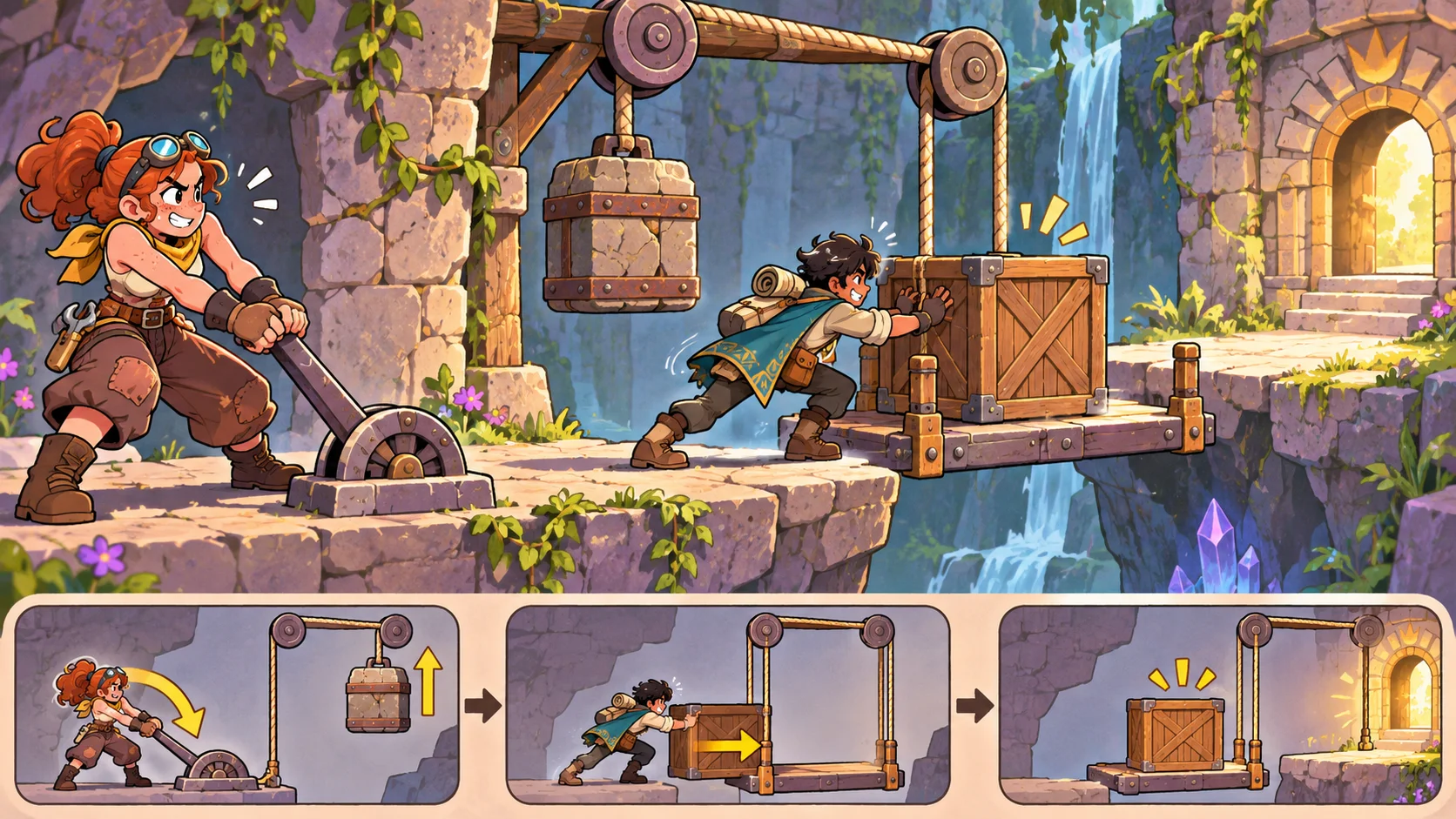
Start with a traversal goal players can understand: cross a gap, raise a bridge, move a platform, or open a heavy door. Place visible objects and surfaces that suggest how the space might work. A weight, lever, rope, or movable platform can invite interaction without prescribing a single exact solution.
Give each player room to move and observe. If a puzzle requires one person to hold a control while another acts elsewhere, make both locations visible or provide a clear signal that the action is still active. Avoid putting one player in a hidden corner with no feedback. Shared movement should feel like teamwork, not waiting without knowing whether the other player needs help.
The official Human Fall Flat Steam listing describes physics-platforming dream levels with multiple routes and online multiplayer that can help players move an object such as a boulder onto a catapult or break a wall. This offers broad context for playful physics cooperation and route alternatives; it does not prescribe a specific puzzle design for your game.
Give players complementary physical actions
A cooperative challenge works when players can contribute in different ways. One may hold a lever down while another pushes a crate. One may climb to an upper ledge and lower a rope, while the partner anchors the other end. The tasks should support one shared objective and make the relationship visible before players begin.
Define the underlying physics carefully. Decide how objects respond to force, how long a switch remains active, and whether a moving platform keeps its momentum. Inconsistent weight or grip behavior makes coordination difficult to learn. Use clear sound, animation, or a change in the environment to show when an action has taken effect.
Allow players to experiment. If the puzzle only accepts one exact arrangement, small differences in timing can make it feel brittle. A broad platform may let players push from either side; a lever could stay active for a short window after release; a crate might be movable by one player slowly or two players quickly. These alternatives let the group solve the obstacle with their available skills.
Keep recovery and alternate solutions open
Physics can create funny mistakes, but a fall should not erase too much progress. Place a checkpoint near a difficult sequence or let a player return safely to the previous platform. If one player reaches the goal first, make it possible for them to help the other instead of locking the exit or forcing a full restart.
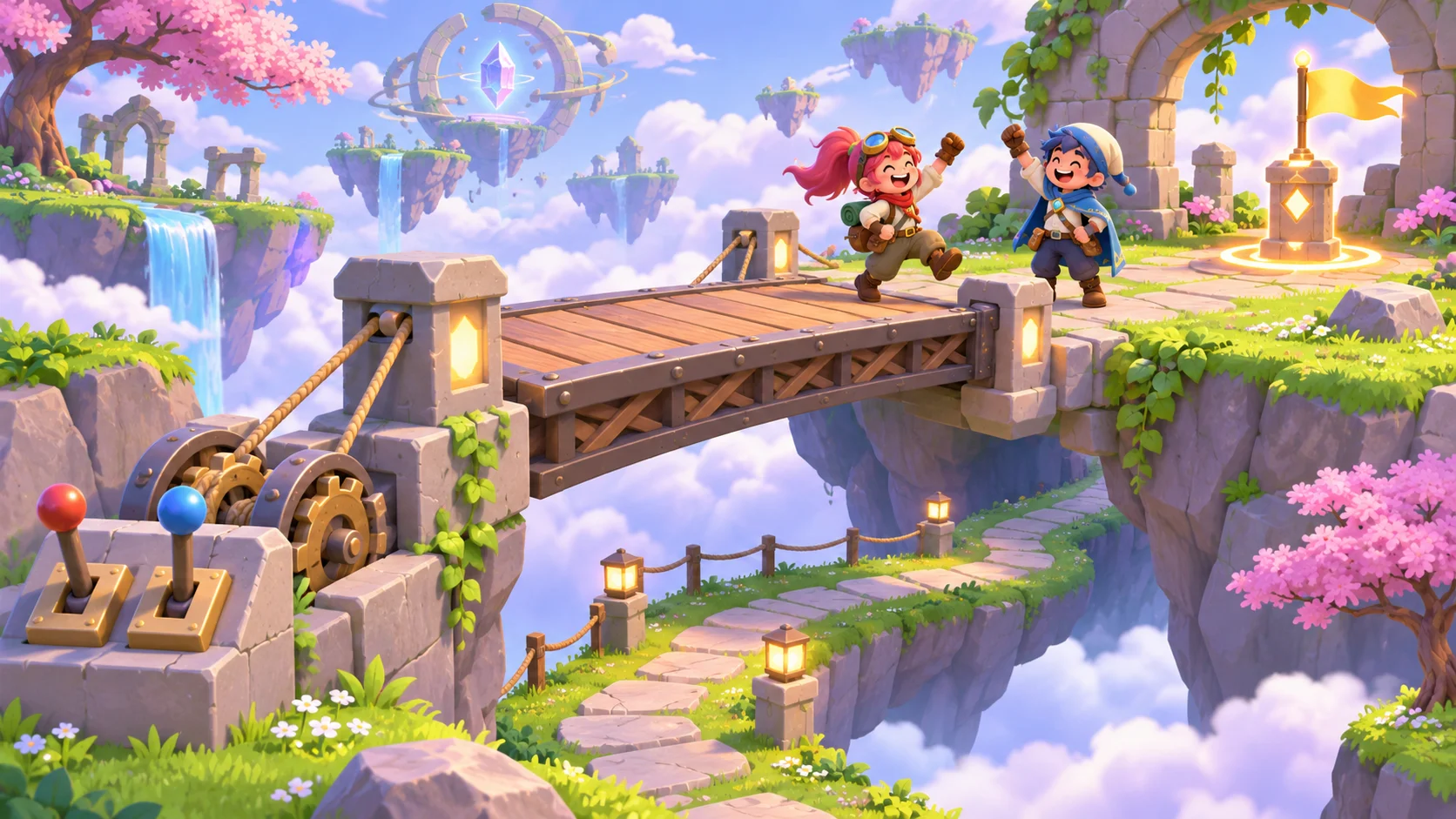
Design alternate routes where they support the experience. A player might raise a bridge together or find a lower path that takes longer but avoids the same timing challenge. Routes should reconnect cleanly so the group does not become separated without understanding how to meet again. Optional detours can reward curiosity without being required for every player to complete the puzzle.
Provide communication cues for players who cannot use voice chat. A visible lever state, an object’s outline, or a brief animation can show that an action needs another person. Make controls and object affordances clear enough that players can point, gesture, or repeat an action to coordinate.
Test cooperation, timing, and readability
Test the same space with a solo player and with pairs who have not seen the puzzle. Watch whether both players have something useful to do, whether the active role is clear, and how long the group waits without feedback. If one person solves every challenge while the other follows, add a meaningful contribution rather than a forced button press.
Try different coordination styles: players who communicate constantly, players who use only gestures, and players who improvise without a plan. Record where the physical interaction behaves differently than they expect. If a crate slips or a platform tilts, show enough feedback that players can understand why and adjust together.
Measure recovery as well as completion time. How often does a fall reset a useful action? Can players reunite after taking separate routes? Do checkpoints preserve the sense of a shared accomplishment? Tune the challenge so coordination matters, while setbacks remain funny or instructive instead of exhausting.
AI can help draft alternate layouts or list physical edge cases, but the actual simulation needs hands-on playtesting with more than one player. You can use Seele’s AI game maker to start an original physics-puzzle prototype, then tune the traversal after observing how pairs solve it.
Frequently asked questions
How do you design cooperative traversal puzzles?
Choose a visible movement goal, then create complementary actions that help players reach it. Keep the physics rules consistent, signal when an action works, and let players recover or try another route if their first attempt fails. A nearby checkpoint can turn a failed attempt into a quick retry.
What makes a traversal puzzle genuinely cooperative?
Both players should contribute information, movement, timing, or force toward the same goal. Avoid making one player wait without feedback; give each participant a meaningful action that changes the shared space or helps the other progress. For example, one can stabilize an object while the other positions it.
How do you keep physics puzzles fair when players fall?
Place checkpoints near difficult sequences, preserve nearby progress, and make it possible for players to reunite. Test whether a mistake teaches the interaction or simply repeats a long section without adding a new decision. Keep reset rules predictable and communicate what progress the group keeps.
Should cooperative traversal puzzles support solo play?
Decide based on your game’s audience and core design. A solo option may use slower objects, timed supports, or alternate routes, while cooperative play can emphasize shared timing; test both modes so neither feels like a broken version. Where you support solo, preserve the same puzzle logic instead of disabling it.