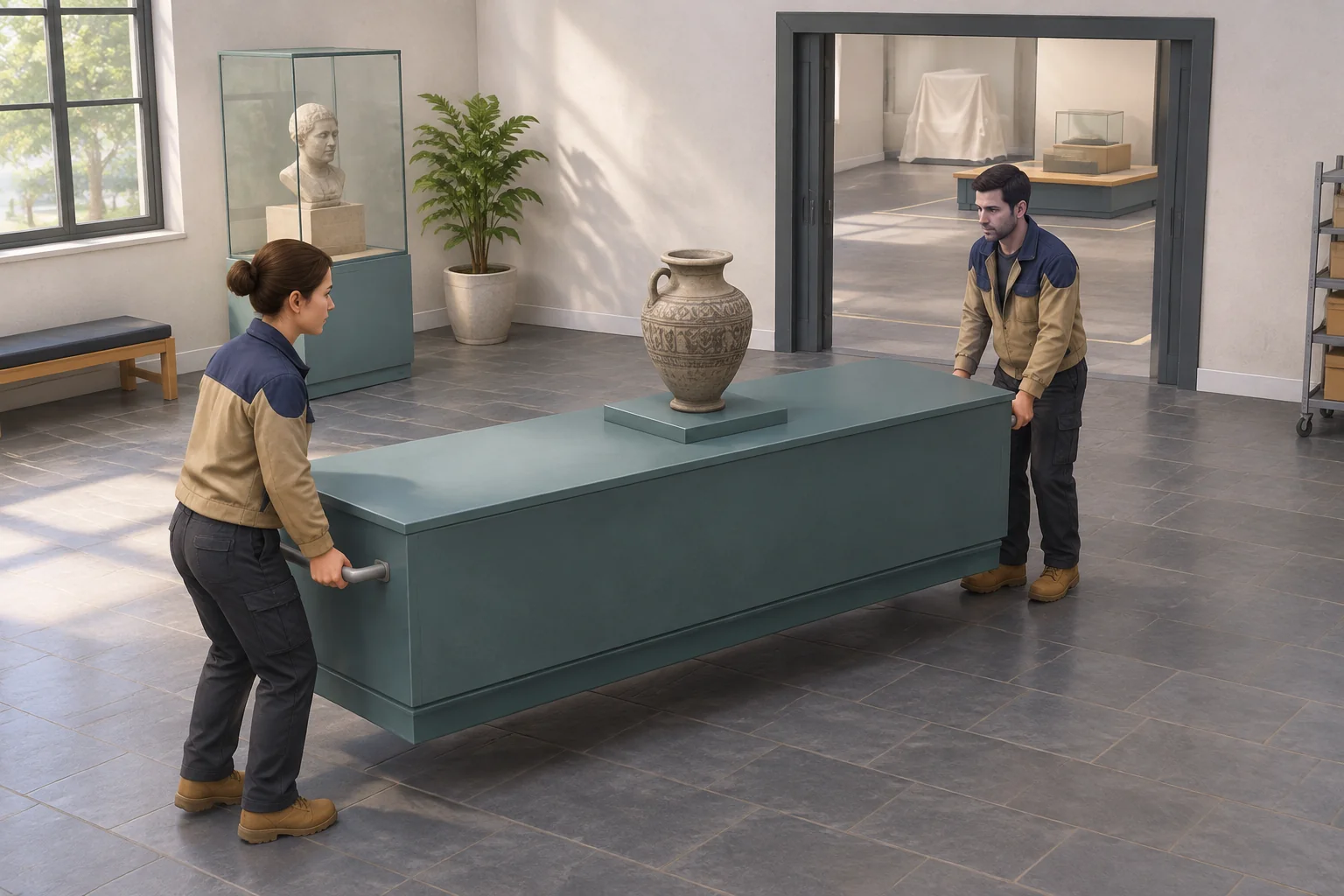
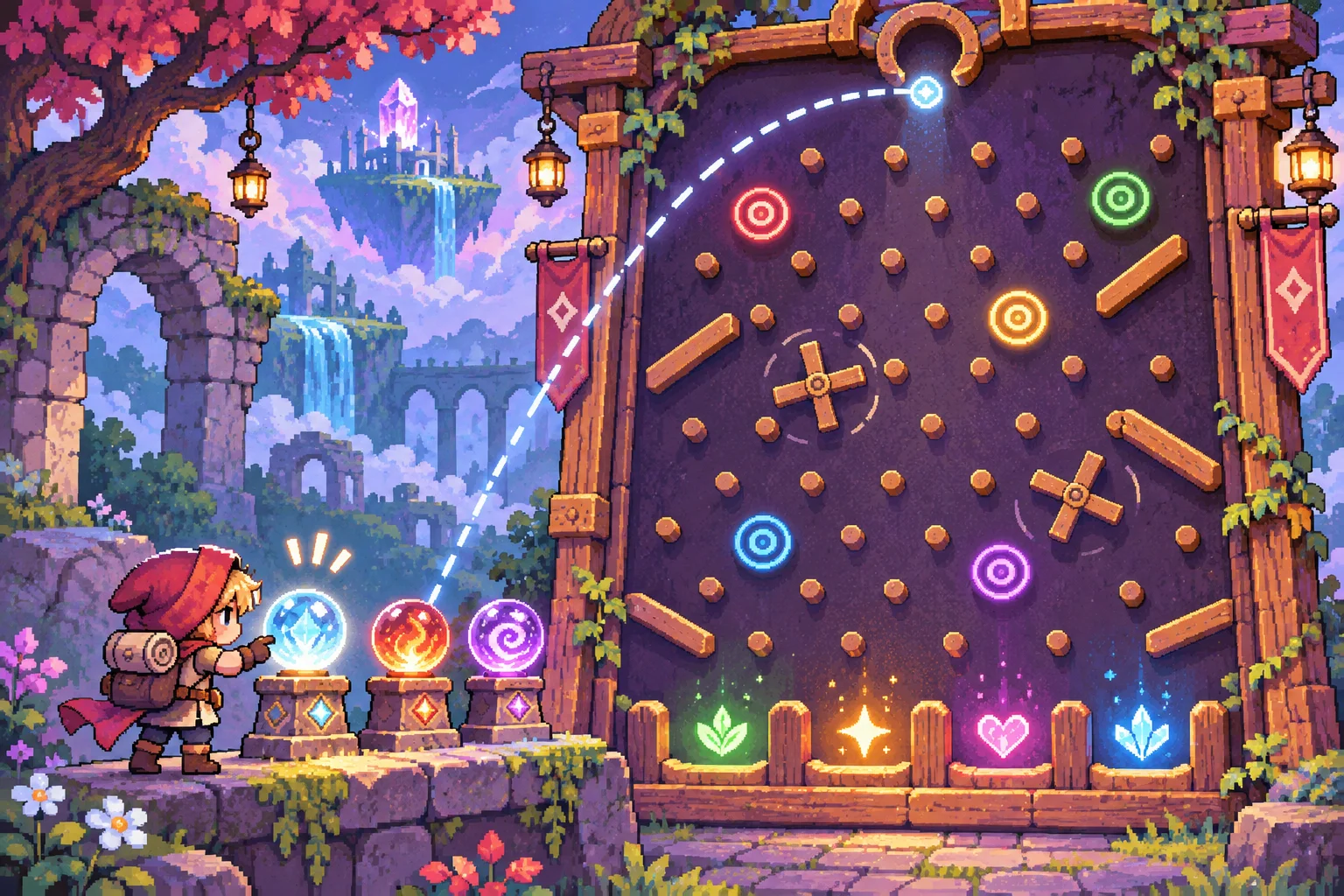
Coordinated carrying turns one object into a shared control problem. The official Moving Out Steam listing describes a physics-based moving simulator with cooperative furniture-moving jobs. That supports the broad co-op premise; the grip model, force handling, obstacle examples, and recovery rules below are original recommendations for another game.
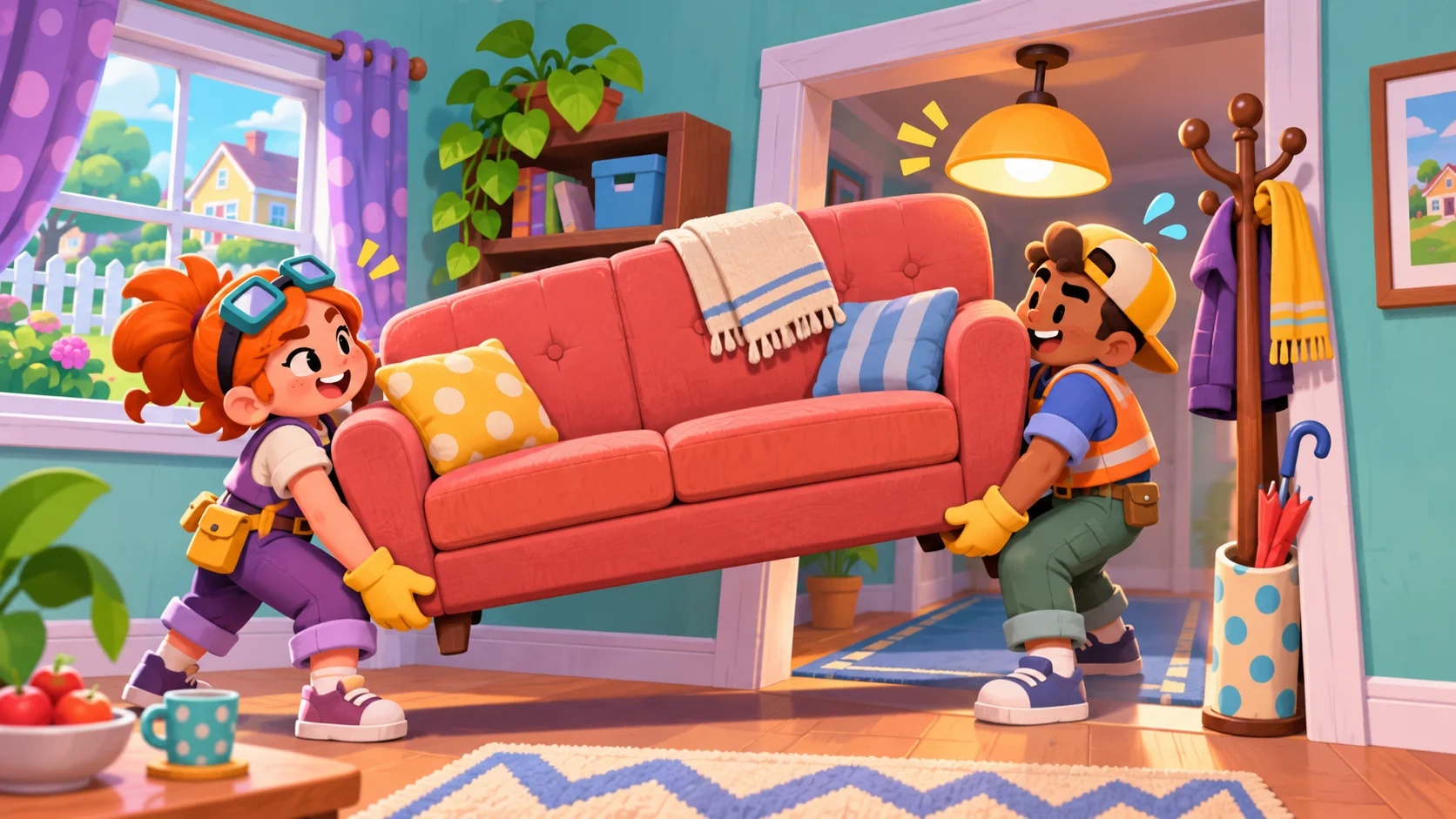
Define the shared object and both players’ grips
Treat the furniture as a shared body with a center of mass, weight class, orientation, and two or more grip points. Each player should see where they are holding it and how their input affects that grip. A long cabinet might need one player at each end; a small box could be carried by one person or passed between teammates.
Make the object’s state easy to read. A tilted silhouette can show that one side is lower; a brief effort animation can show a player straining; a contact outline can reveal which part is blocked by a doorway. Use the same signal consistently so teams can diagnose a wobble before it becomes a drop.
Let object properties create different coordination challenges. A heavy item can accelerate slowly and need deliberate turns. A wide object can require angle management in a corridor. A fragile object can demand smoother movement. Keep the property count small enough for players to predict how an object will behave.
Coordinate lift, movement, and turning
Define how player inputs combine. One simple model averages directional inputs, while each grip adds torque when players push in different directions. Lifting can require both players to hold an action briefly, or a single player can raise one end for a controlled tilt. Choose rules that are stable and teachable before adding realistic simulation detail.
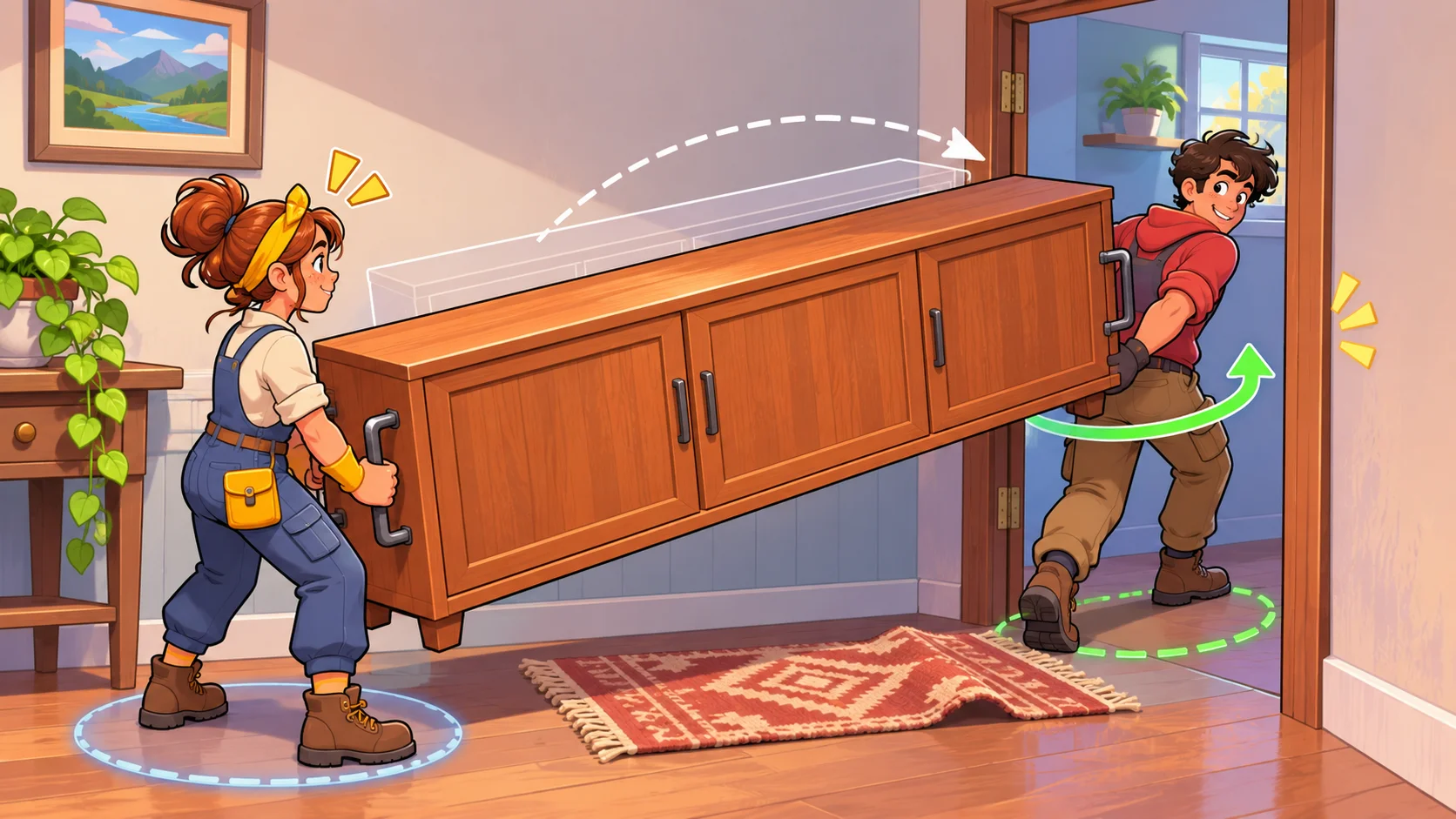
Provide a short pause or brace action. Teams need a moment to align the object before moving again. If direction changes take time, show the delay through gradual rotation rather than a sudden jump. Ensure the control model behaves similarly in both directions so players can build a shared technique.
Include a recovery path after a mistake. A dropped item could be reset to its last stable position, or players could release and re-grip it. The recovery may cost time or reduce a score, but it should not trap the object in an unreachable physics state.
Make obstacles create cooperation choices
Use spatial challenges with readable geometry. A narrow doorway asks the pair to turn the long side through first. A corner asks one player to move while the other holds position. A small step may need a coordinated lift. Make collision boundaries visible enough that players can understand why an object will not fit.
Offer more than one viable approach when the room allows it. A team might turn the cabinet before entering, raise one end, or take a longer route. A single correct solution can work for a short tutorial, but later levels should encourage communication rather than pixel-perfect imitation.
Playtest recovery, effort, and readable feedback
Test pairs with different levels of familiarity. Record object stalls, drops, accidental releases, recovery time, and whether both players contribute. Ask each person what they believed their grip was doing. If a player cannot tell whether their input mattered, adjust the visual response or control mapping.
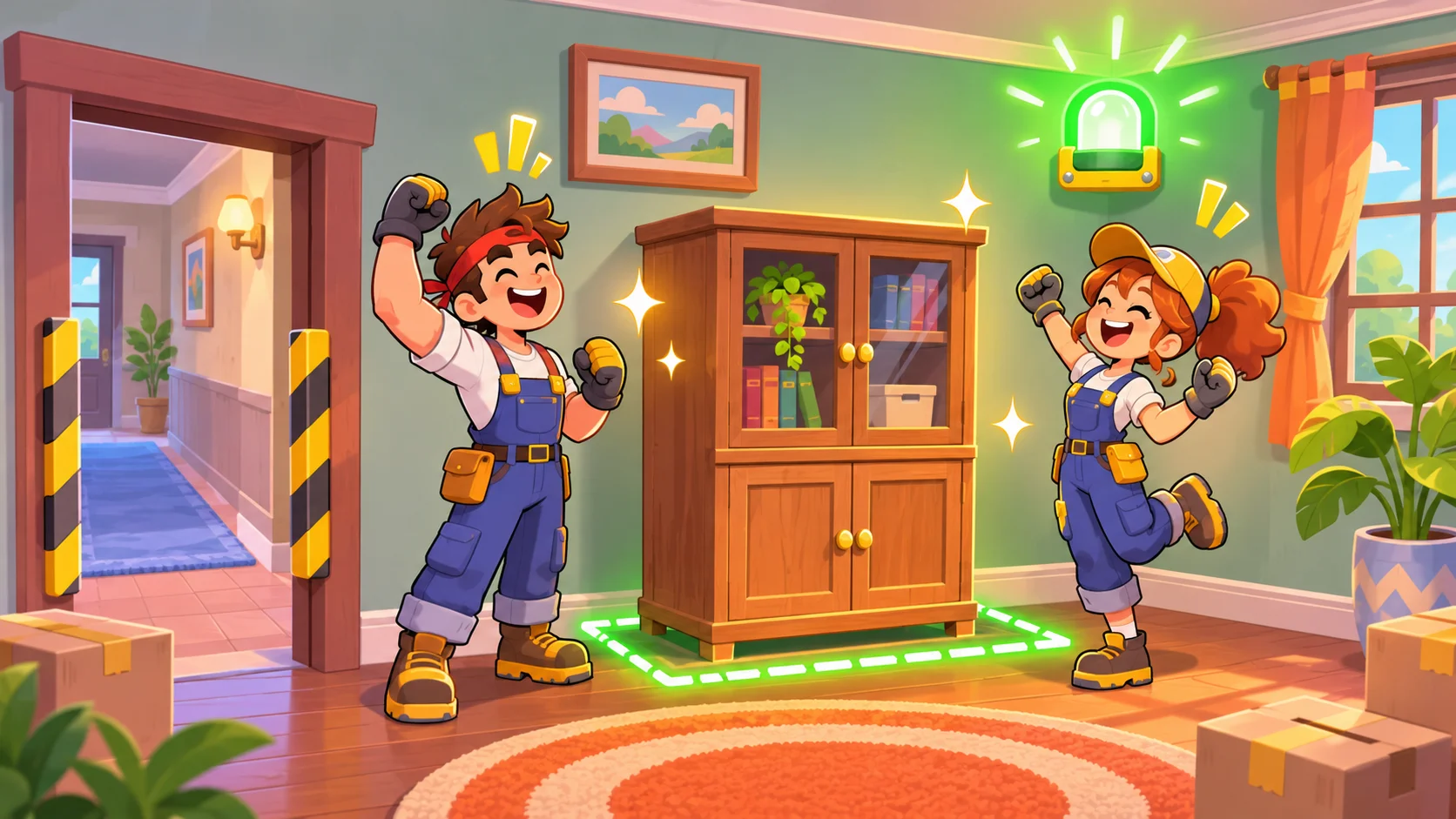
Replay the same doorway after changing one variable, such as grip visibility, turn speed, or object weight. Watch whether teams coordinate earlier and recover faster. Difficulty should come from planning a move together, not from unpredictable collisions that ignore their decisions.
Use SEELE AI to draft an original physics co-op level, then inspect whether the shared object and collision interactions behave as intended. A generated scene alone does not guarantee stable physics. For an overview of an original cooperative moving-game concept, see the co-op moving guide. Prototype an original physics co-op game.
FAQ
How do you build coordinated carrying in a co-op game?
Represent the carried object as a shared body with visible grip points and combine both players’ movement inputs. Show whether the object is stable, straining, or blocked, then let players pause and reposition. Begin with a simple object and obstacle before adding slippery floors, time pressure, or multiple items.
How should two players control one heavy object?
Give both players a clear way to lift, move, turn, and release. Their inputs can contribute force or influence opposite ends, while the object’s weight and shape affect acceleration. Explain each player’s contribution through motion or a small effort cue so neither teammate feels that their input has no effect.
How can carrying obstacles encourage cooperation?
Use obstacles that create a readable need to adjust roles or timing, such as a narrow doorway, a corner, or a small step. Show where the object will collide and allow players to stop, rotate, or change grips. Avoid random physics impulses that punish a team without offering a way to respond.
What should you measure in a physics co-op playtest?
Track how often the object stalls or drops, how quickly pairs recover, whether each player contributes, and whether they can explain why the object moved unexpectedly. Compare input delay, grip visibility, and object weight across the same obstacle. Revise from observed coordination problems instead of increasing difficulty at random.