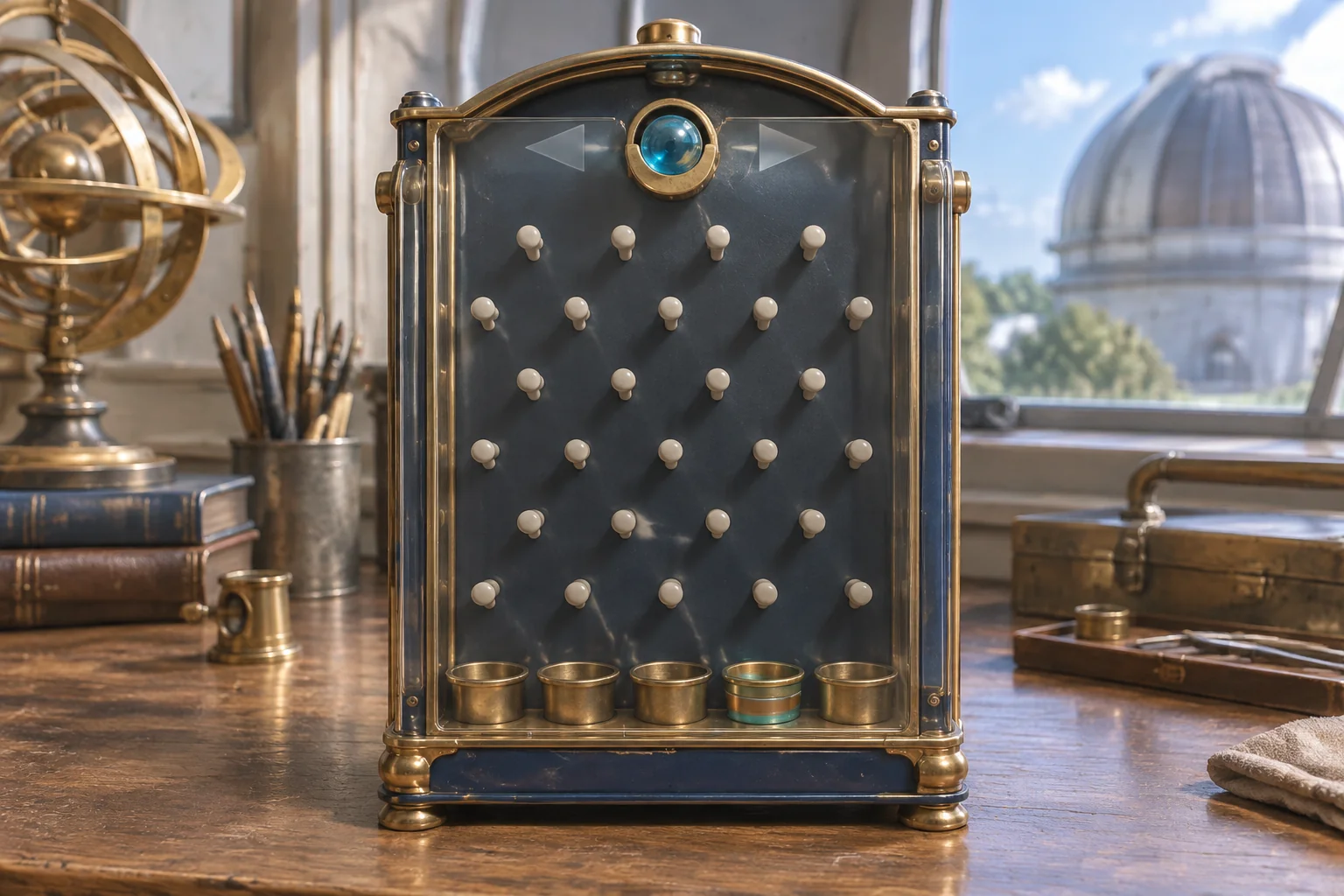
Orb effects are easiest to learn when players can connect a visible event to a predictable result. Red Nexus Games’ official Peglin Steam listing describes collecting special orbs for peg-field battles and notes that orb and relic effects can influence gameplay and physics. That public premise is the reference point only; the effect templates, trigger rules, and examples below are original.
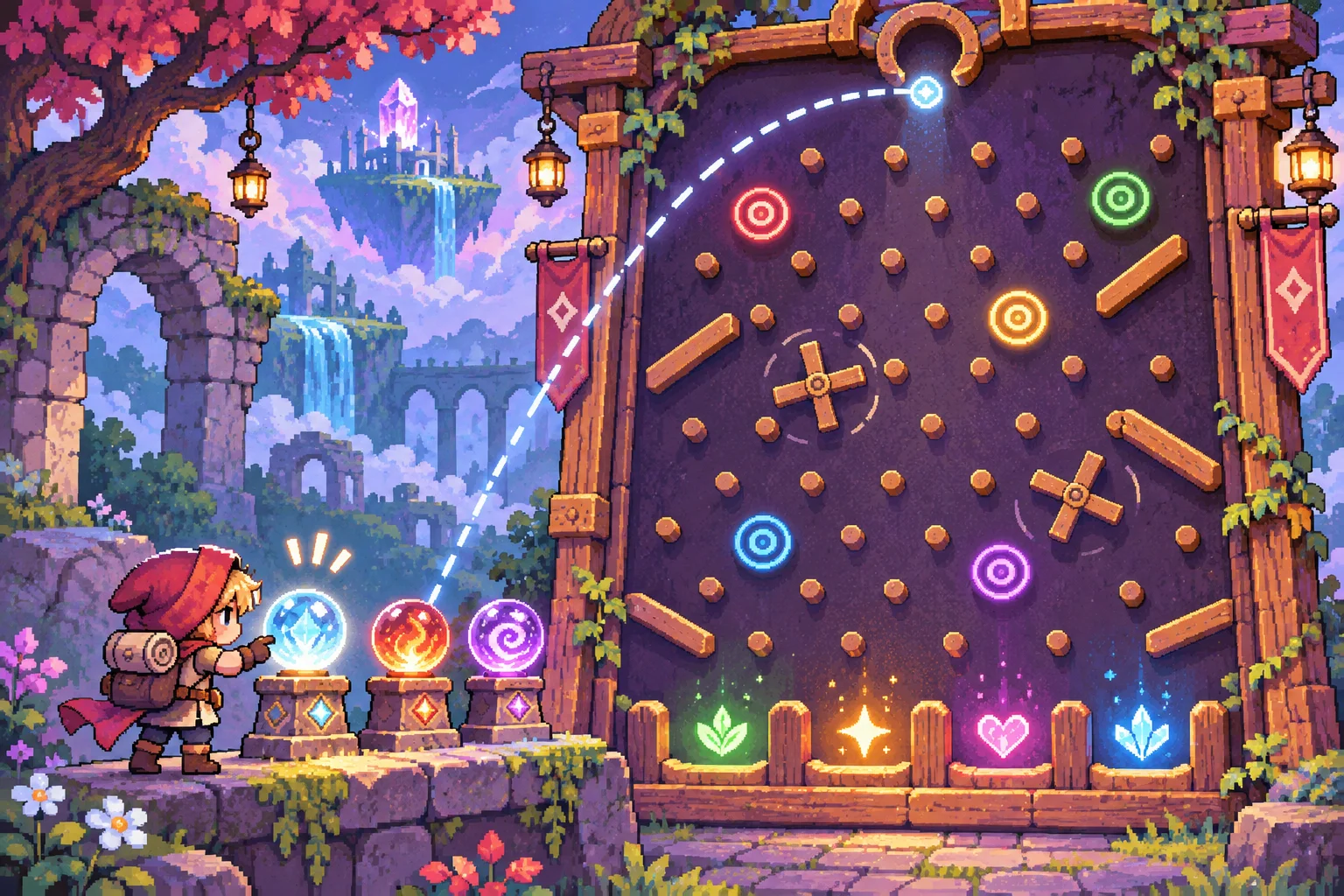
Define what an orb changes during a shot
Describe an effect with four parts: trigger, target, result, and limit. For example, an original “prism orb” might split into two smaller projectiles after striking a glowing peg, target the next two pegs in its path, add a small amount of charge, and activate at most once per shot. These invented rules illustrate a format, not a feature from the reference game.
Keep the base orb behavior distinct from its special effect. The base behavior might determine launch speed or bounce style; the effect changes what happens on a particular event. If an orb only has a cosmetic difference, it may not create a meaningful choice. If its effect changes too many systems at once, players may not understand why a shot succeeded.
Write a short card description that names the trigger and result plainly. “On first prism peg, split once” is easier to predict than a poetic sentence that hides timing. The artwork can carry theme while the rules text carries precision.
Resolve effect triggers in a readable order
Define the event sequence for every shot. A possible order is: launch, collision, peg activation, orb effect, target resolution, landing, and end-of-shot cleanup. If two effects trigger at the same time, specify whether they resolve by board position, orb order, or a stable priority. Avoid allowing implementation order to decide the outcome unpredictably.
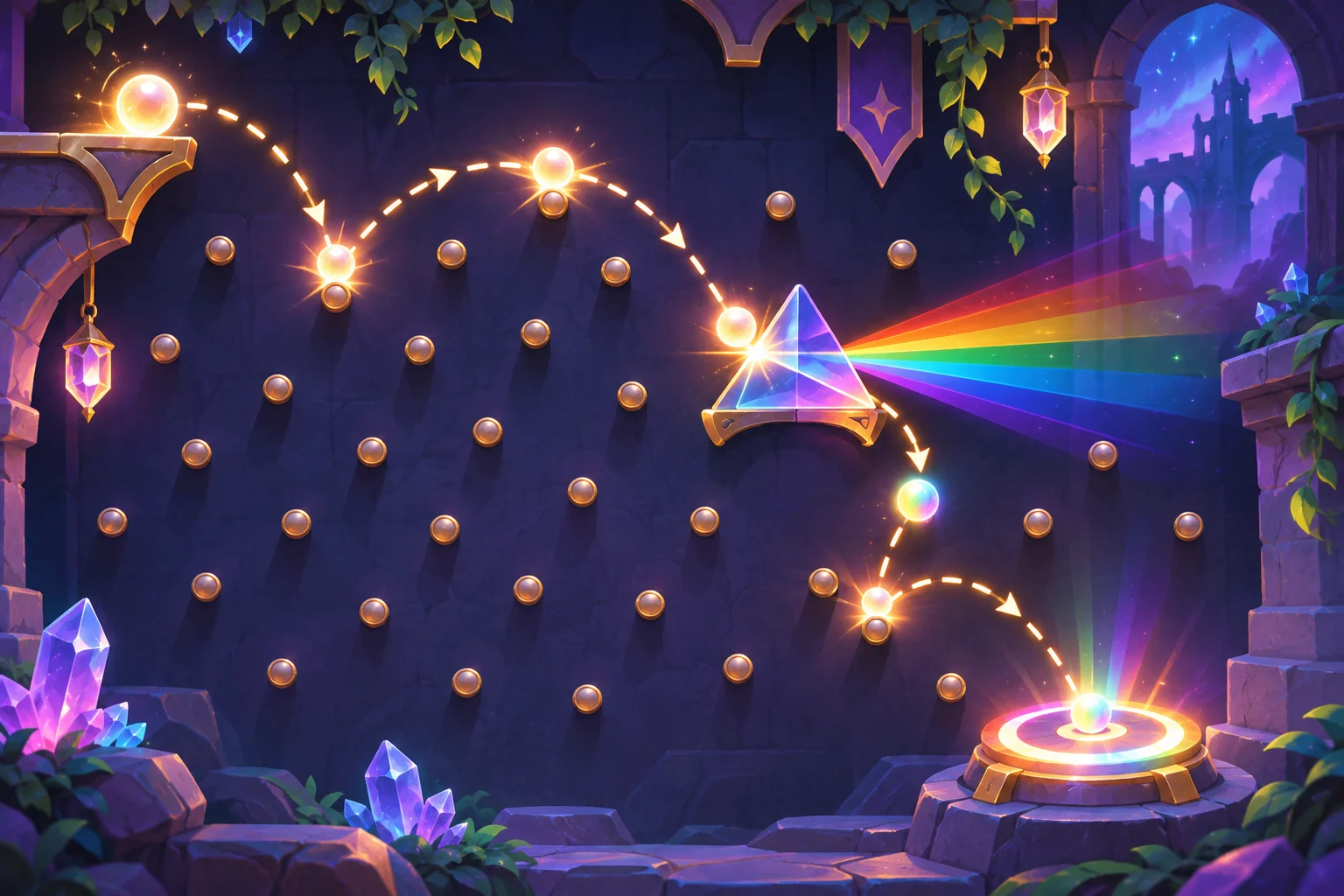
Make feedback match the event order. A brief glow or trajectory mark can indicate which peg triggered an effect; a compact log can show the resulting target change. Players do not need a full physics trace for every frame, but they need enough evidence to understand an unexpected bounce or damage result.
Handle edge cases explicitly. What if a projectile splits at the final peg? What if a target disappears before a delayed effect resolves? What if two projectiles hit the same trigger together? Choose simple outcomes such as skipping a missing target or limiting each trigger to one activation, then teach those rules consistently.
Make combinations expressive but bounded
Let two effects interact when the interaction creates a legible decision. A split effect can create more chances to hit a target; a mark effect can reward a precise route; a return effect can keep a projectile active for another pass. Make the result visible and cap loops that could recursively trigger forever.
Test each effect alone before testing combinations. Use a sparse board, a crowded board, and a board with no useful trigger. This reveals whether an orb is only effective under one unusual condition. Compare its expected value across scenarios rather than balancing around one impressive lucky shot.
Test combinations for clarity and strategic value
Ask testers to predict what an orb will do before firing it. After the shot, ask which event activated the effect and why the result differed from their expectation. Track how often the effect fires, how much it changes the board or enemy, and whether its visual feedback was noticed.
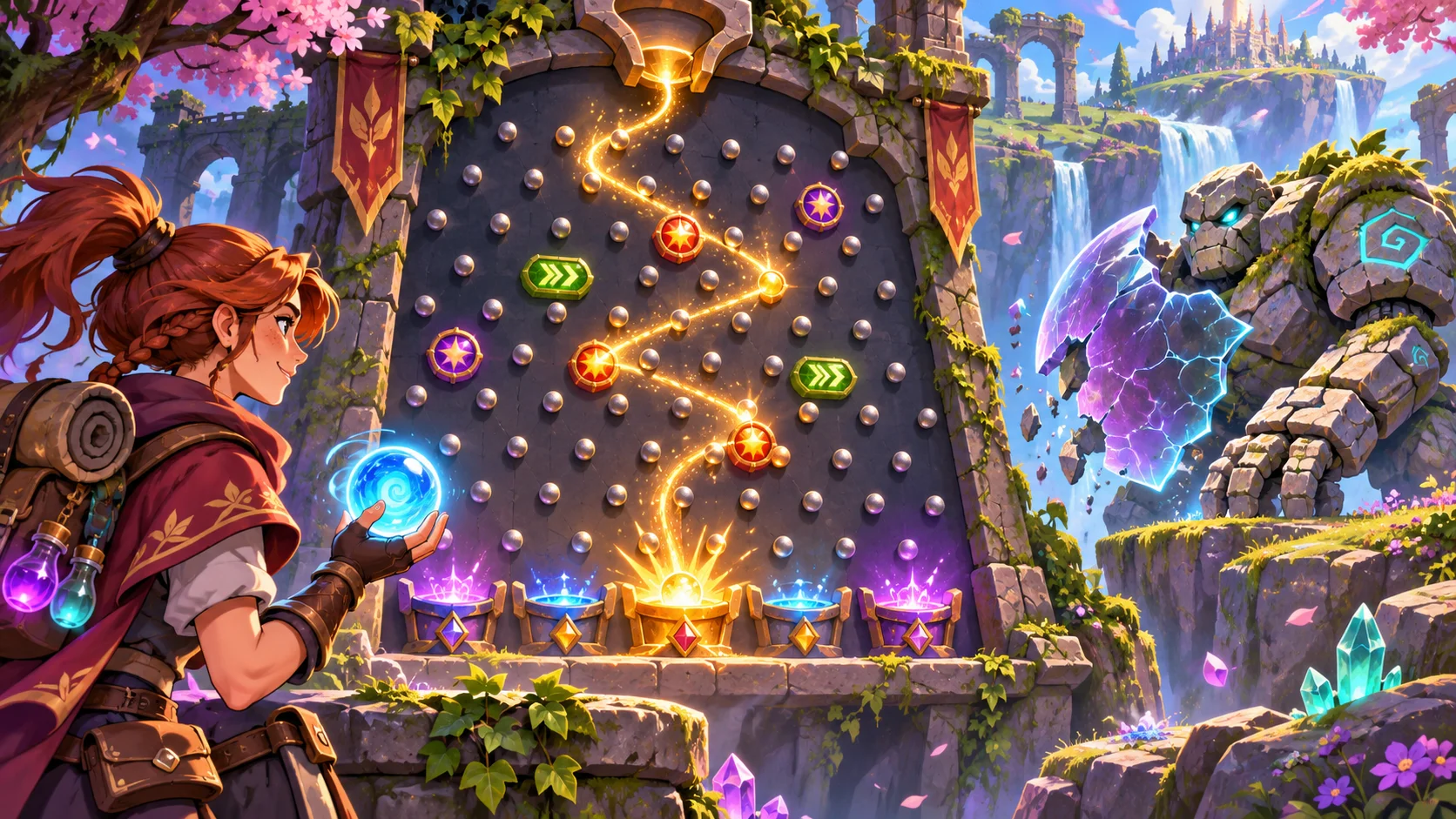
Look for effects that are never chosen, always chosen, or chosen for reasons the rules do not support. If an orb is powerful but confusing, improve its trigger visibility before reducing its numbers. If an orb is always optimal, adjust its cost, limit, or performance on other board layouts.
Use SEELE AI to draft an original physics roguelike, then test shot resolution and effect interactions in the actual prototype. A generated concept does not guarantee stable physics or balanced triggers. For a broader premise guide, read the original physics-roguelike guide. Prototype an original physics roguelike.
FAQ
How do you build orb effects in a physics roguelike?
Define each orb effect with a trigger, target, outcome, and limit. A trigger might be a collision with a marked peg; a target could be the current enemy or a nearby obstacle. Show the effect when it happens and test it on several board states so players can learn when the orb is useful.
How should an orb trigger its special effect?
Choose an event that the player can see and define exactly when it fires. An effect may activate on launch, first collision, a marked peg, or landing. Decide whether it triggers once or repeatedly, then show its timing in the shot feedback. A consistent rule helps players make predictions before choosing an orb.
How can orb combinations stay balanced?
Let effects combine in ways that create new tactics, but limit recursive triggers and runaway repetition. Set a maximum number of activations per shot where needed, and test combinations on both crowded and sparse boards. Balance includes clarity as well as damage: an effect that is powerful but unreadable can still make the choice feel random.
What should you playtest for orb effects?
Ask players to predict what an orb will do, observe the shot, and explain which triggers fired. Track damage, effect frequency, missed feedback, and how often each orb is chosen in different board states. Test interactions in isolation and in combinations, then revise effects that are invisible or always optimal.