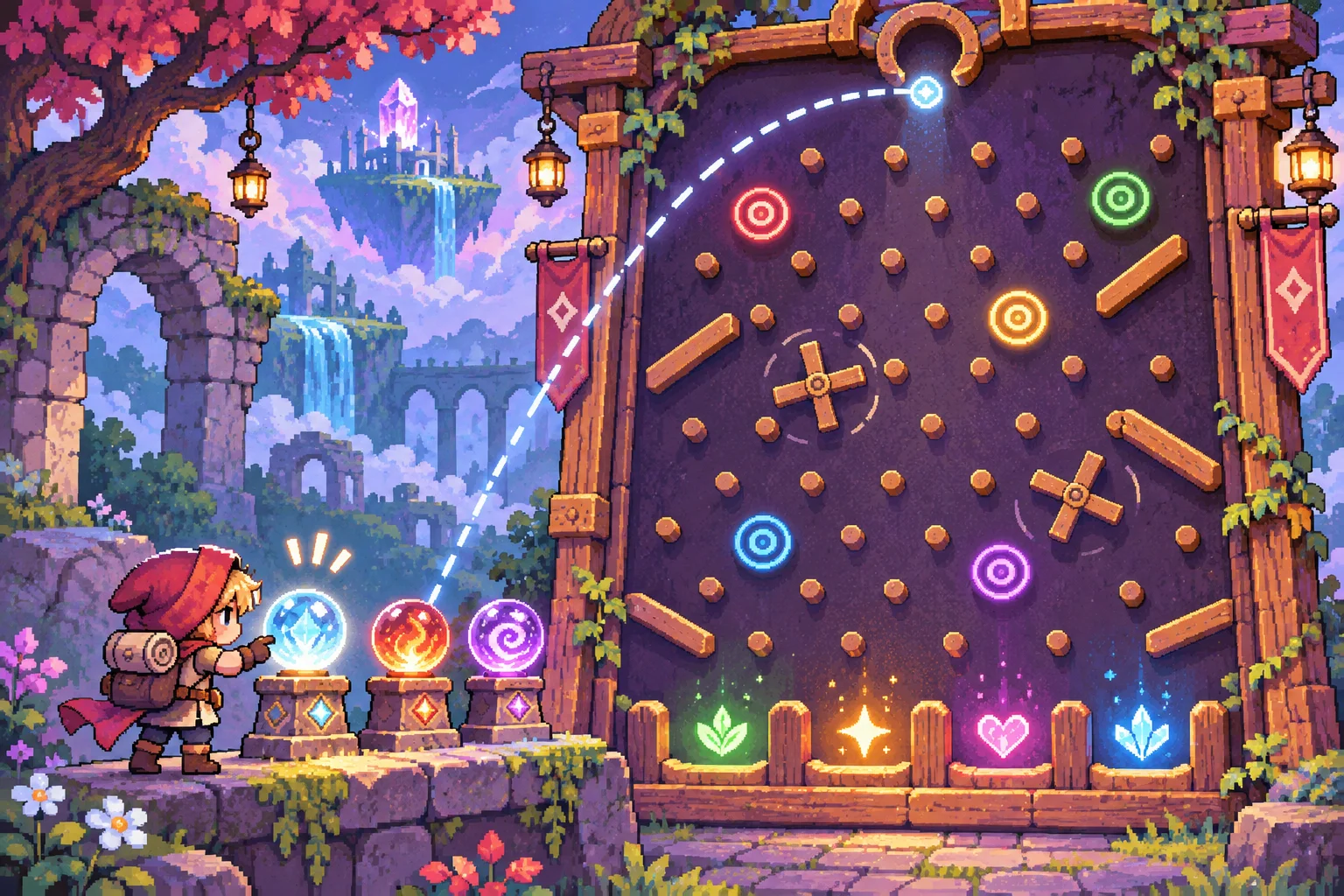
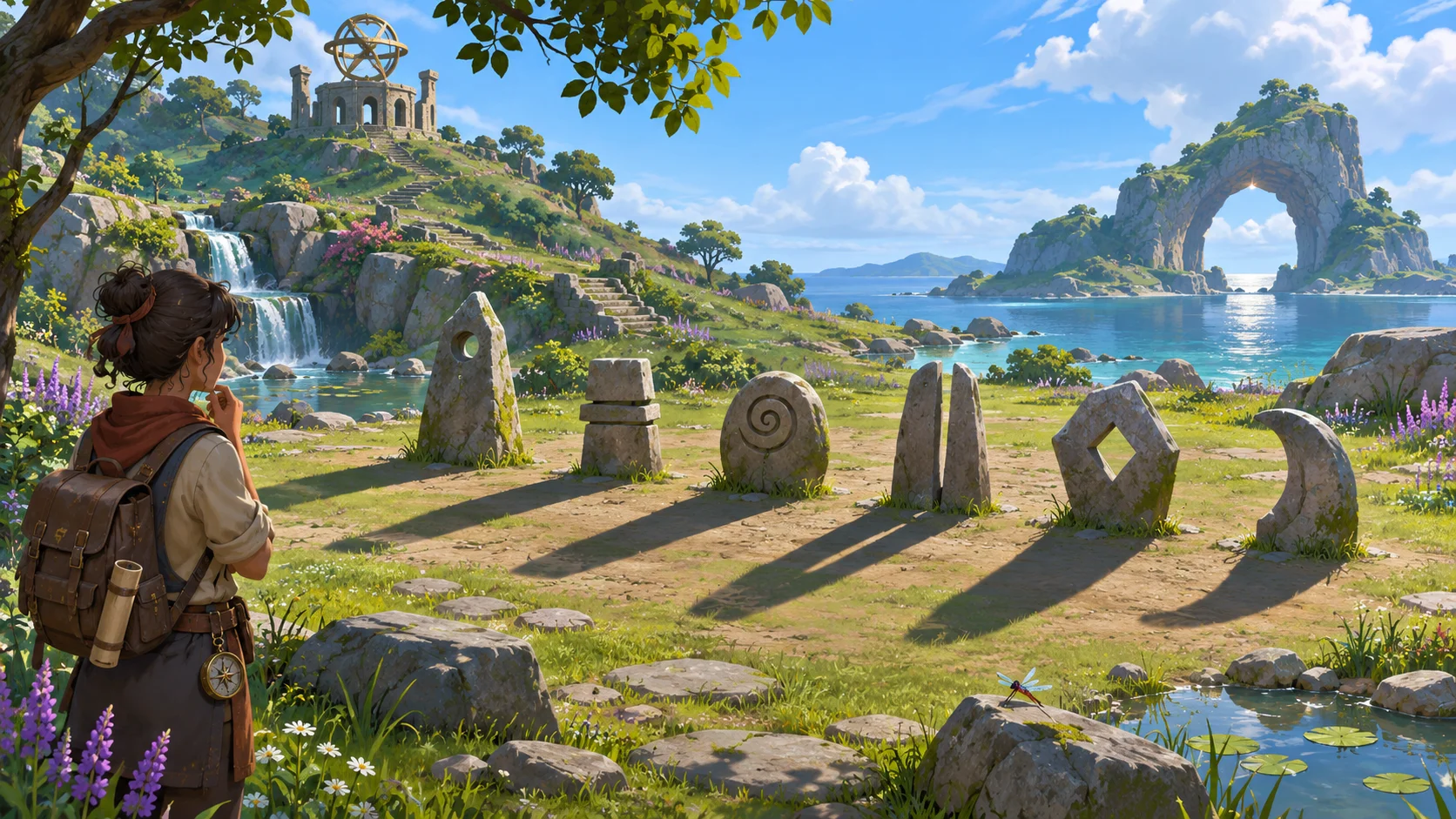
Procedural exploration can make each run feel like a new place to learn, but variation alone does not create discovery. An original physics roguelike needs routes that remain navigable, landmarks players can recognize, and environmental changes that invite experimentation without obscuring every useful clue. Separate the level’s stable structure from its variable rooms and hazards, then test generated layouts against clear rules.
Define stable structure and variable content
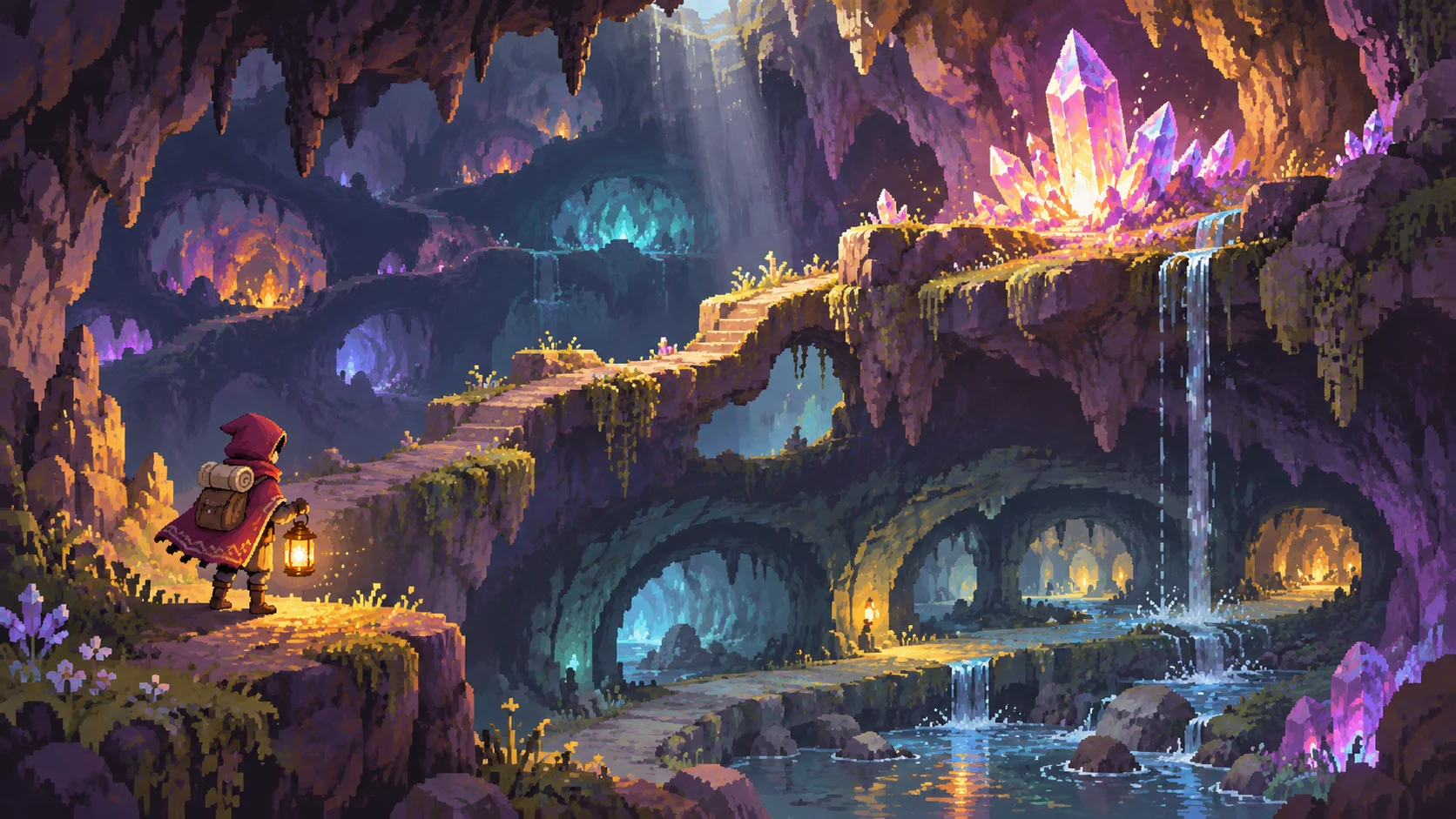
Decide what must remain true in every generated area before you choose what can change. A level may always need a safe entrance, a main route to a goal, and a way back. Optional chambers, resource locations, hazards, and visual dressing can vary within constraints. This division helps you preserve the level’s purpose while still creating different choices.
Noita’s official Steam listing describes a magical action roguelite set in a world where every pixel is physically simulated. That is the only game-specific fact used here. It does not document Noita’s generation algorithms; the topology and testing advice in this article is an original design approach for a physics roguelike.
Write down a small set of invariants: the exit is reachable, an essential resource cannot spawn behind an impossible barrier, and at least one safe route through the area remains. If your physics simulation can alter terrain, decide which objects may block a route and whether the game should regenerate, open a bypass, or let players create another path. Treat simulation changes as part of the exploration rules.
Generate connected routes with landmarks
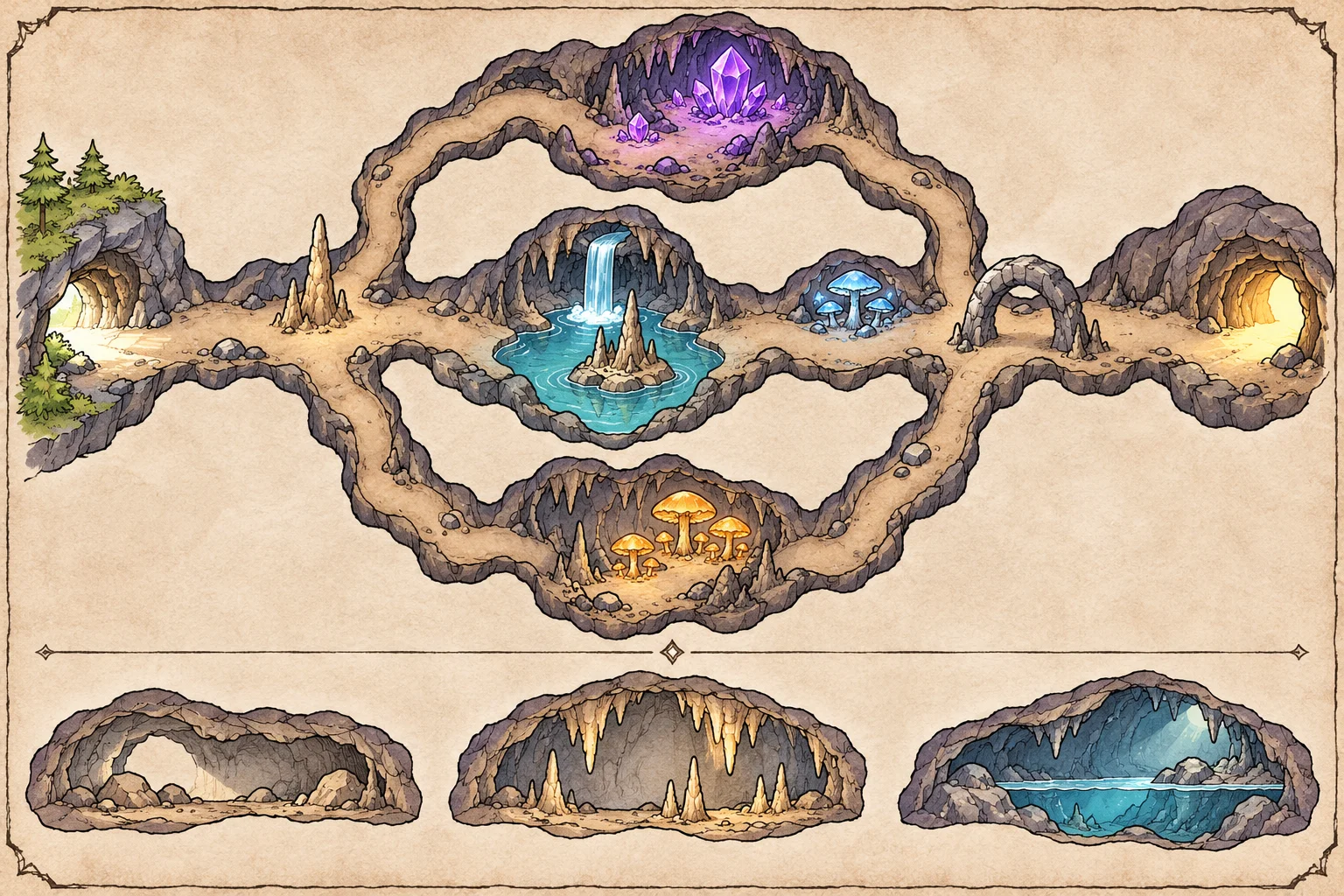
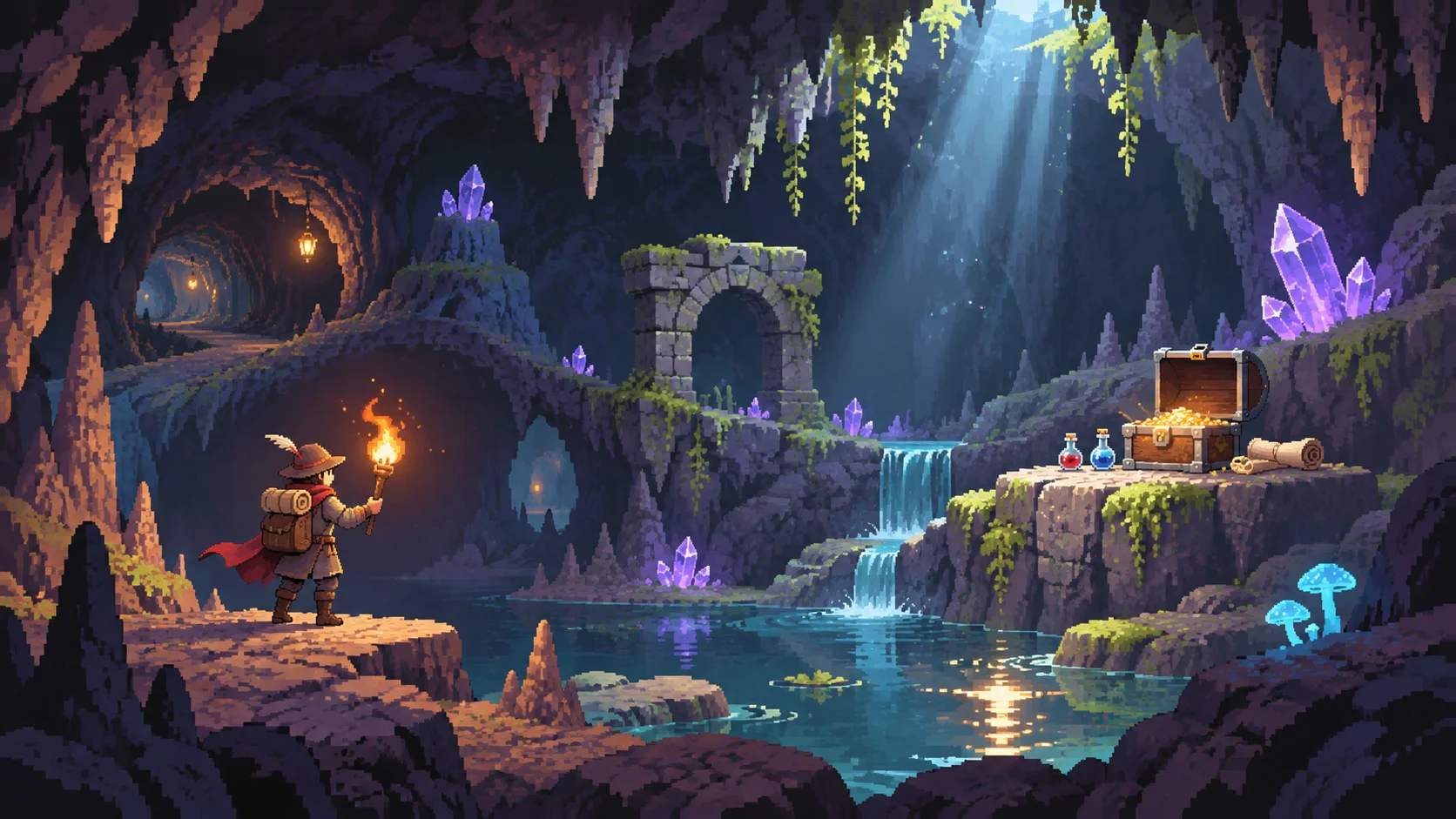
Start with a graph of rooms and connections rather than placing every tile at random. Create a main path from entrance to exit, then add optional chambers that branch and rejoin. Place landmarks at meaningful junctions: a glowing mineral seam, a waterfall, a distinctive arch, or a change in material. Players can use those features to remember where they have been and compare a return route with a new passage.
Next, map the graph into spaces. Give rooms a small set of shapes and transitions, then connect exits that fit. A chamber can have several valid entrances, but it should not create an accidental wall where the graph says a corridor exists. Keep collision, movement height, and fluid behavior in mind when composing rooms for a physics-driven character.
Use a stable seed while you debug. When a route fails, save that seed and the generated layout so you can reproduce the problem. Once the route graph passes reachability checks, vary optional content and appearance. This lets you identify whether a failure comes from the topology, the room library, or the physical simulation instead of trying to debug all three at once.
Make environmental change support discovery
Environmental reactions can teach players how a world works. A liquid may flow into a lower chamber; a soft wall may be breakable; a heat source may transform a nearby material. Keep those interactions consistent enough to learn. If the same material behaves differently in two rooms, provide a clear reason such as a different state, tool, or condition.
Use variation to create hypotheses, not just spectacle. A trace of water leading toward a new opening, a cluster of unusual crystals, or an obstacle reacting to an attack can suggest where to experiment. If the simulation can produce dangerous combinations, give players a readable warning or a safe place to observe the result before they commit to an irreversible move.
Preserve the distinction between a hidden route and a blocked route. A secret passage may be optional, but the main path should not look closed because a critical transition failed to generate. Use landmark placement, lighting, and local geometry to make the intended way forward discoverable without painting a single prescribed route through every run.
Test seeds for navigation and fairness
Build a batch of saved seeds and check each one automatically for connectivity, reachable exits, and critical resource placement. Then inspect a representative sample at the actual camera zoom. Ask a tester to find the exit, identify one optional route, and retrace a path. If they rely on random wandering, improve landmarks or clarify the space between branches.
Test the level after common interactions change it. Dig, break, flood, or burn the materials that players can affect, then verify that an essential route remains possible. Add checks for small dead ends, unreachable pickups, and rooms that become visually indistinguishable after their contents change. Keep known failing seeds as regression cases when you revise generation rules.
AI can help draft room variations, route constraints, or a prototype specification, but it cannot prove that a generated cave is traversable. Start an original physics roguelike prototype with Seele’s AI game maker, then test generated seeds and simulation changes directly.
Frequently asked questions
How do you design procedural exploration?
Define the level’s required route and landmarks first, then vary optional chambers, resources, hazards, and environmental states within constraints. Keep a reproducible seed for each layout and test its paths before expanding the generation rules. Variation is useful when it creates discoverable choices without hiding the way forward.
How do you keep generated levels navigable?
Represent the main route as connected data and run reachability checks from the entrance to required goals and exits. Use recognizable landmarks at junctions, then test at the player’s camera angle. For physics-driven worlds, repeat those checks after common actions alter materials that could block or open a path.
Should every run use a different layout?
Not necessarily. Keep important landmarks, route logic, or teaching spaces stable when players need them to learn the game, and vary optional rooms or hazards to add replay value. A mix of stable structure and changing content is often easier to test and navigate than a completely different map on every attempt.
How can AI help prototype procedural exploration?
Use AI to draft room concepts, generation constraints, test cases, or a prototype prompt. Check the results with fixed seeds and actual movement because a written layout cannot prove connectivity or physics behavior. Player observation is also needed to tell whether the routes are readable and the landmarks memorable.