Creature breeding can turn collection into a system of observation and care. The official APICO Steam listing describes a beekeeping simulation about breeding, collecting, and conserving bees, including cross-breeding to discover species. That broad context is the only reference fact used here; the trait model, inheritance rules, habitats, and example lineages below are original design recommendations.
Define traits and parent inheritance
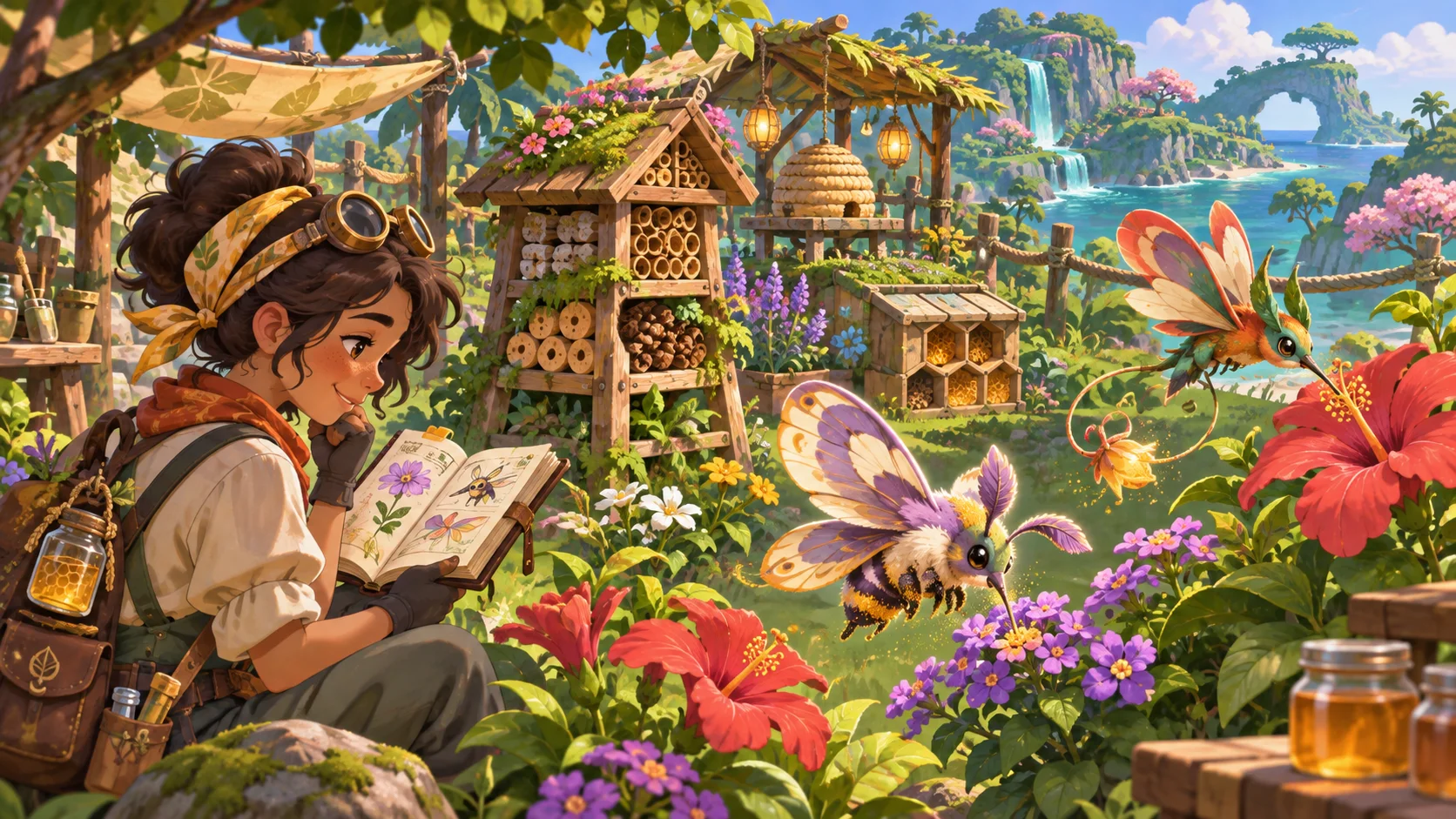
Give each creature a compact set of visible traits. Wing pattern, climate tolerance, and nectar preference could affect appearance, habitat, or crafting output. Keep a trait’s rule consistent: a color can be cosmetic, while a tolerance value may determine whether a habitat supports the creature. Players should be able to tell which traits matter to an activity.
Decide how offspring inherit properties before making a large species list. A simple model might pass one visible trait from either parent and allow a limited chance of variation. Another model could blend numeric values within a range. The exact method matters less than consistency and readable results; an offspring should not seem unrelated to its parents without an explanation.
Show parent details and expected breeding conditions before pairing. Afterward, let the player compare the offspring with both parents. A lineage record can preserve what was learned, so a new discovery adds knowledge instead of forcing players to remember every prior pairing.
Create breeding inputs and habitat needs
Connect pairing to preparation. Parents may need a compatible habitat, food source, or care action before breeding becomes available. Show missing conditions near the pair rather than hiding them in a separate menu. If a biome affects the outcome, indicate that relationship before the player commits resources.
Keep compatibility understandable. Start with a few rules such as shared habitat range or one complementary trait. A pairing that fails should explain whether the issue is environment, health, or incompatible parent types. Do not make players spend rare resources simply to discover that a basic condition was missing.
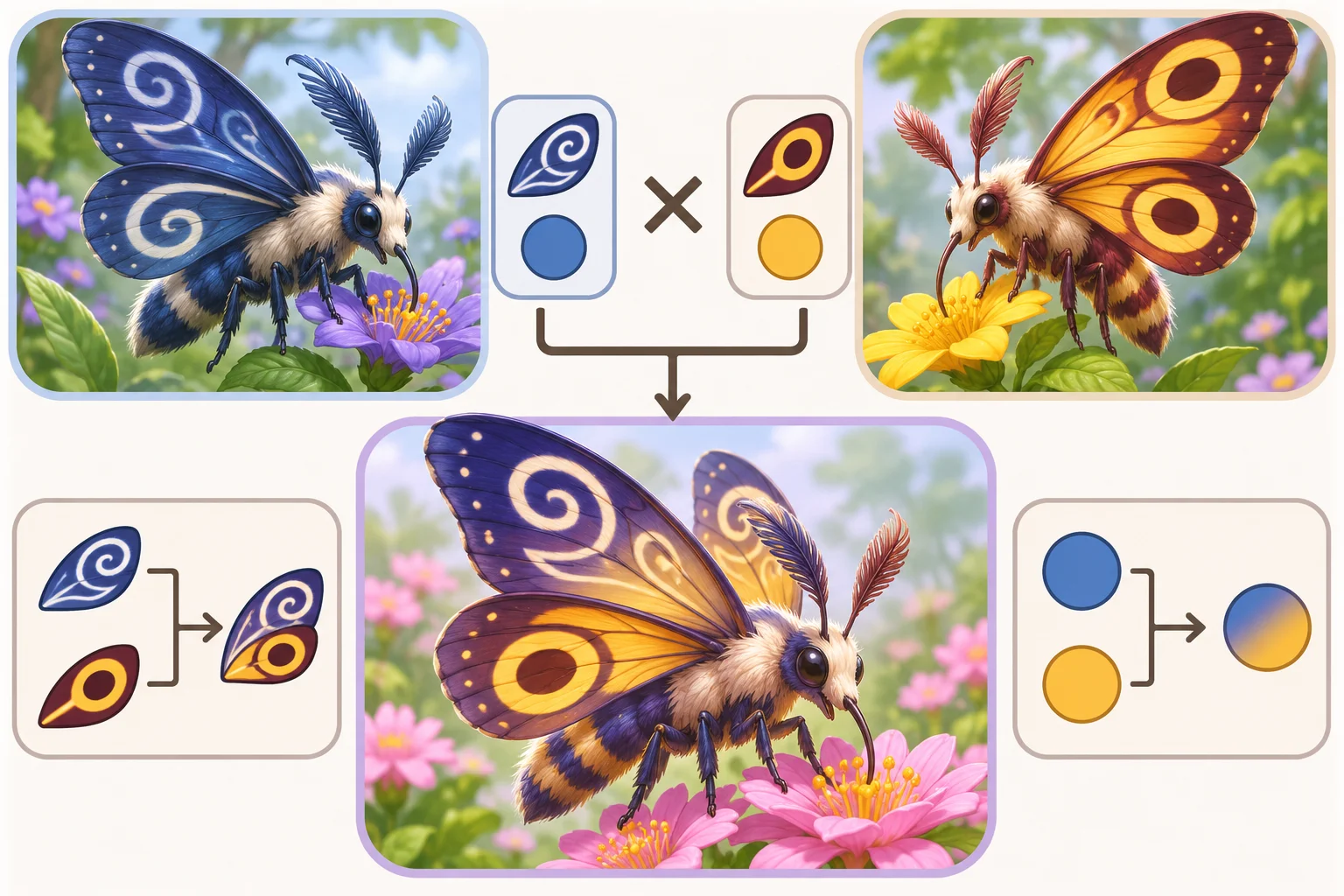
Let habitats support more than a single breeding recipe. A garden patch might sustain several pollinator types, while temperature or available flowers shape which ones thrive. This turns habitat design into a choice about ecosystem needs, not just a locked breeding station.
Make discovery understandable
Support player hypotheses with a journal. Record parent traits, habitat, and offspring outcomes; leave untested combinations marked as unknown. The journal can help players notice that a certain wing pattern tends to appear after pairings in a specific environment. Avoid pretending that a random result is predictable if the rule is not actually deterministic.
Use variation to create discovery without making progress depend on one lucky roll. Essential species should have a dependable route or recovery option. If an experiment produces an unexpected trait, explain what changed through the offspring card or a short animation. Surprise is rewarding when players can connect it to the experiment they chose.
Keep the known species list and the discovery layer distinct. A player may know how to produce a common pollinator while still investigating rare traits. This gives collection a longer horizon without making the basic crafting loop feel incomplete.
Test diversity and avoid dead ends
Playtest common, rare, and cross-biome lineages. Check whether every required species remains obtainable if a parent is released, sold, or replaced. Track how often players find viable pairs, understand the outcome, and have enough habitat space to continue. A collection system should not accidentally trap players behind a lineage they cannot recreate.

Ask players what they expect before they breed two creatures, then compare that expectation with the result. If a trait feels arbitrary, make inheritance or environmental influence clearer. If every player follows one recipe, give other pairings distinct uses rather than adding more species with no mechanical role.
SEELE AI can help outline an original ecosystem-crafting game, but trait inheritance, habitat compatibility, species data, and progression safeguards need implementation and playtesting. For a wider premise, see the original ecosystem-crafting guide. Prototype an original ecosystem game with SEELE AI.
FAQ
How do you build creature breeding in a crafting game?
Represent each creature with visible traits, parentage, habitat needs, and any compatibility rules. Define how offspring inherit or vary traits before creating a large species list. Then let players compare parents and offspring so experimentation teaches the system instead of hiding its logic.
How should offspring inherit traits?
Choose a consistent inheritance model, such as one trait from each parent with a limited chance of variation. Show which properties can change and keep the outcome explainable. Randomness can add surprise, but players should still see why a pairing was possible and what they learned.
How can a breeding system support discovery?
Give players a journal that records known parents, habitat, and observed offspring traits. Leave unknown outcomes open so players can form hypotheses. Avoid requiring a single rare result for basic progress, and provide alternative ways to obtain essential species if a lineage becomes unavailable.
What should you playtest in a breeding system?
Test parent compatibility, habitat conditions, trait inheritance, repeated breeding, and access to viable pairs after a lineage changes. Ask players to explain what they expect before pairing two creatures. Track discoveries and dead ends, then adjust clues or recovery options when outcomes feel arbitrary.