A custom order works when the customer’s words lead to a clear player decision. TapBlaze’s official listing for Good Pizza, Great Pizza describes preparing pizzas for customers in a cozy pizza shop. That broad context is the reference point here; the data model, example orders, and validation steps below are original design recommendations.
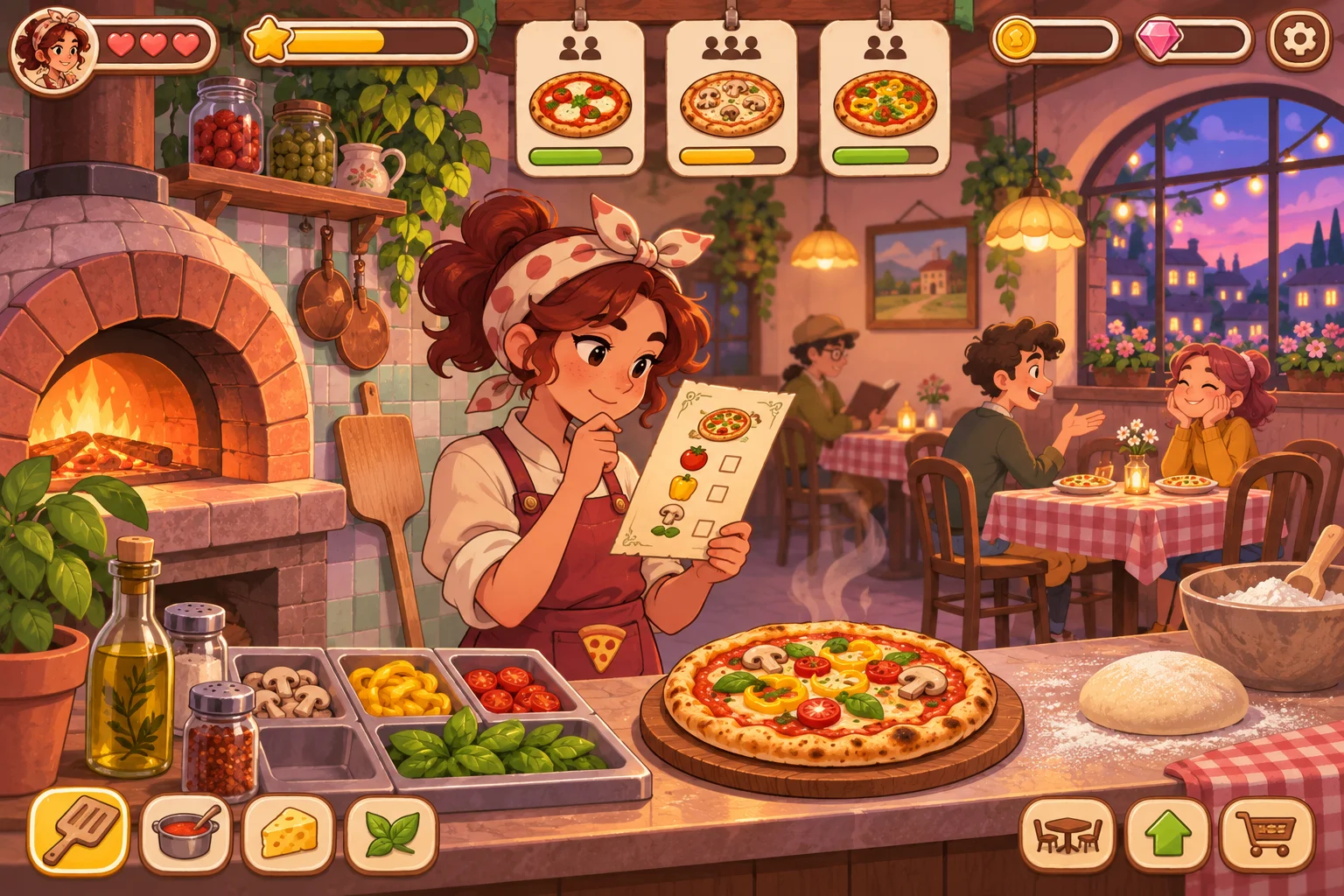
Model an order as a readable customer request
Begin with the player-facing sentence, then translate it into a compact record. For an original game, a request might be “one thin-crust garden pie, no olives, cut into four.” Store that as base=thin, required toppings={pepper, mushroom}, excluded toppings={olive}, and cut=four. The exact ingredients and phrasing are invented examples; what matters is that each phrase maps to one inspectable field.
Keep the number of simultaneous conditions small at first. A first-day order might specify a base and one topping. Later orders can add an exclusion, quantity, or preparation instruction. Increase one kind of complexity at a time so a player can identify what changed. If an order uses a metaphor or a customer’s personal shorthand, pair it with a stable visual clue or let the player ask one clarifying question.
Make “required,” “avoid,” and “bonus” visibly different. Required conditions determine whether the order is correct. Avoid conditions define an error. A bonus can improve a tip or reaction without blocking completion. This distinction prevents a decorative request from unexpectedly becoming a fail state.
Translate language into consistent rules
Use a schema that can be checked without guessing: serving count, crust, sauce, required toppings, excluded toppings, preparation, and optional preference. Leave irrelevant fields empty. A validator can compare each field to the assembled pizza and return a result for every requirement instead of one mystery score.
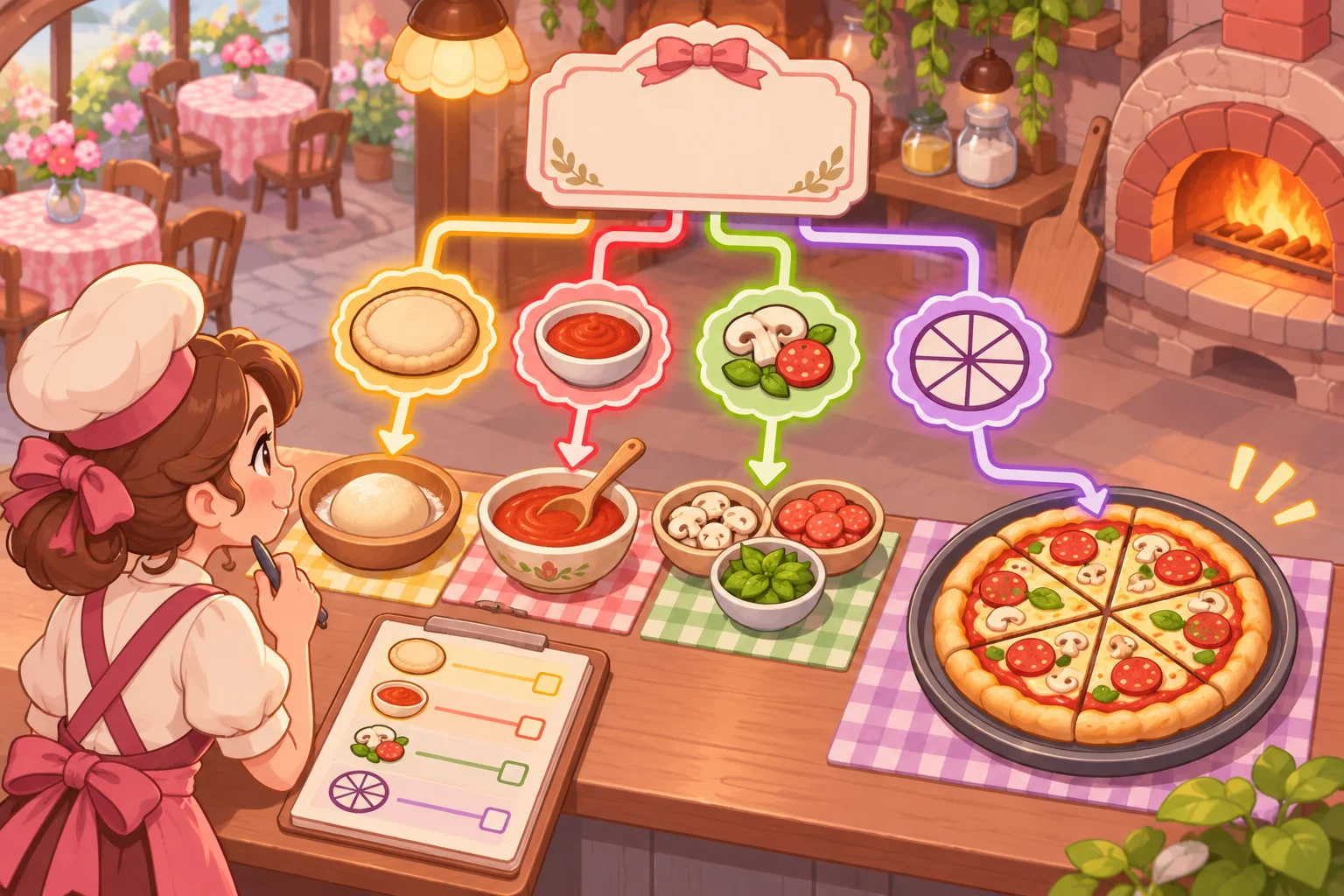
Define edge cases before content grows. If “extra mushrooms” is requested, decide whether the recipe needs a second portion or whether one topping token satisfies it. If “half vegetarian” appears, specify which side receives which ingredients. If an order asks for something unavailable, either prevent it from spawning or offer an explicit substitution. Do not let the same phrase produce different hidden interpretations.
Represent flexible language with transparent tolerances. “Light sauce” could map to one application where a normal order uses two. Tell the player what the phrase means through a short tutorial, visual example, or feedback after the first attempt. Keep those conversions consistent across customers.
Create variety without unfairness
Compose orders from a controlled library of valid components. For each generated order, verify that every requested ingredient is unlocked, no ingredient is both required and excluded, and the recipe can be prepared with available tools. Reject an invalid combination before it reaches the customer queue.
Vary the combinations deliberately. A batch might include an exact build, an exclusion, a quantity request, and a simple preference, but avoid stacking every difficult rule on one order. If the shop is under a timer, keep the wording especially direct. Difficulty can come from prioritizing several readable requests rather than decoding a riddle.
Give players a useful correction when they make a mistake. “The order needed mushrooms on both halves” teaches more than “not quite.” A result panel can list satisfied requirements, missed requirements, and excluded items found. Keep the explanation short enough that players can act on it during service.
Playtest ambiguity and revise the order set
Test with people who have not seen the design notes. Ask them to read a request aloud, assemble it, and explain what they think each phrase means. Observe hesitation and wrong turns before explaining anything. Those moments expose wording that seems obvious only to its author.
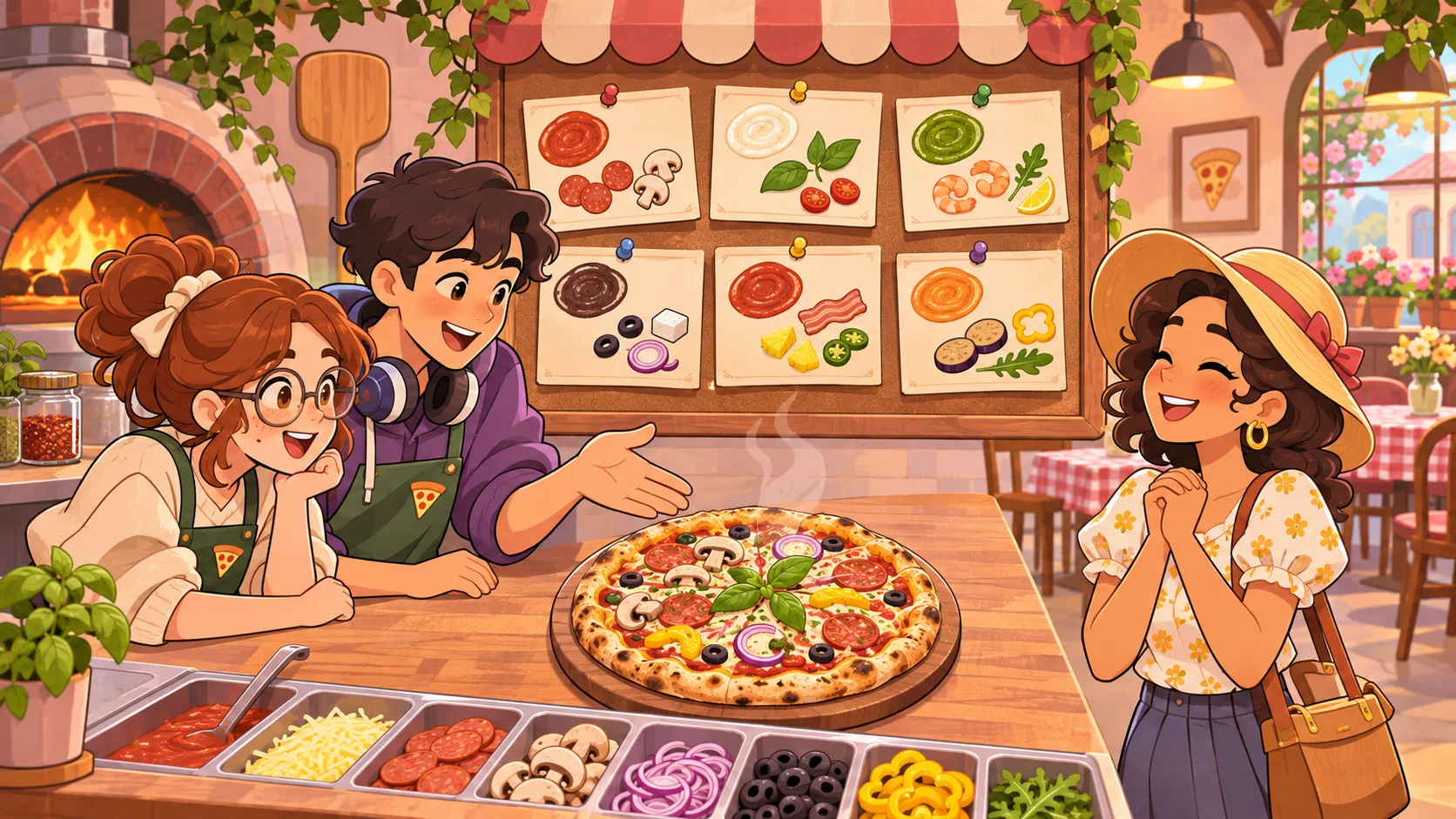
Track interpretation accuracy, time per order, completion rate, and the most common missed constraint. Separate reading errors from execution errors: a player may understand “no olives” but accidentally add one while working quickly. Change one wording, visual cue, or rule at a time, then retest the same orders to see whether the change helped.
Use SEELE AI to start an original restaurant-game draft from a written concept, then inspect whether the request, preparation steps, and result feedback are actually playable. Do not assume a generated draft includes a working parser or correct scoring until you test it. For a related service-flow model, see the checkout-flow guide. Prototype an original restaurant game.
FAQ
How do you build custom orders for a restaurant game?
Represent each request as structured constraints such as base, ingredients, exclusions, and preparation. Keep required conditions separate from optional bonuses, then validate the finished item against the same rules shown to the player. Start with a small pool and test whether different combinations remain understandable and completable.
How should a game handle vague customer wording?
Translate a phrase into a consistent rule before play begins. Decide whether a word signals a required ingredient, a preference, or a hint; show any uncertainty through an explicit choice or forgiving scoring. Avoid changing the interpretation silently between customers, because players cannot learn a rule that shifts without feedback.
How can custom orders stay varied and fair?
Build orders from bounded fields and reject combinations that conflict or require unavailable ingredients. Vary one or two dimensions at a time, and distinguish mandatory conditions from bonus requests. Review batches for repeated patterns, excessive difficulty, and orders that have no valid solution before exposing them to players.
What should you track in an order-system playtest?
Record whether players understand the request, which constraint they miss, how long preparation takes, and whether the final feedback explains the result. Compare first attempts with later ones to see if players are learning. Change one wording or rule at a time so a test can reveal what actually improved clarity.