Customer requests can turn ingredient experiments into purposeful craft decisions. The strongest system makes a customer’s need understandable, gives players room to discover a solution, and explains why the result fits. Potion Craft’s official listing describes physically interacting with tools and ingredients to brew potions; the request framework below is original guidance for a new game, not a claim about that title’s internal systems.
Turn customer needs into playable constraints
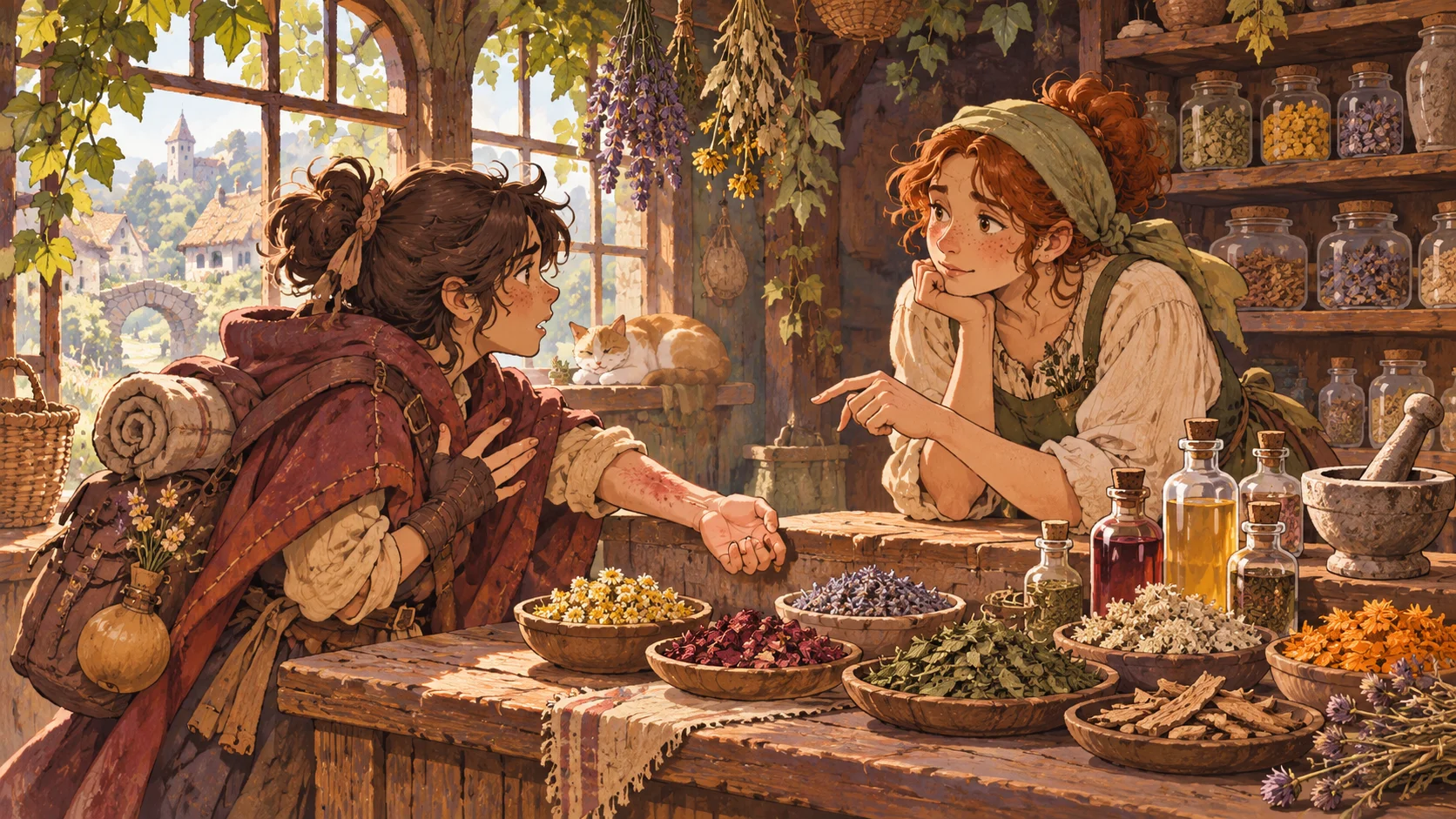
A customer request is a small design contract: it tells the player what problem matters and establishes what counts as a useful result. Begin by describing the need in everyday terms, then convert it into observable constraints for your own ingredient system. A traveler seeking warmth might need an effect with a minimum strength, while a gardener protecting seedlings could need a gentle version that avoids a harmful side effect. These are original examples, not hidden rules from any reference game.
Separate the fiction from the acceptance test. The line “My hands are stiff from the rain” can suggest warmth, but the game should still define whether the potion must meet a threshold, avoid a disallowed effect, or satisfy both. That internal rule gives the team a stable way to test the request even when dialogue changes. Give each request a clear primary goal and add a second constraint only when the player already understands the underlying effect vocabulary.
Also decide what happens when a recipe partially fits. A response that recognizes one fulfilled need and identifies a mismatch teaches more than a binary failure. Keep rewards, prices, and consequences in proportion to how clearly the request was written; players should not lose valuable materials because the goal was ambiguous.
Write clues that invite recipe discovery
Good wording gives players evidence without handing them a recipe. Use a recognizable symptom, a desired change, or a context clue, then make sure the clue maps to effects the player can discover through the crafting loop. Avoid poetic phrases that could mean several unrelated things unless the game offers follow-up questions or observations to narrow them down.
Build a clue ladder for each request. The initial line can communicate the need; an optional conversation can clarify urgency or a forbidden side effect; a journal note can remind players of ingredient observations already made. The ladder should reveal information consistently, not suddenly introduce a new rule after a costly brew. If your interface supports a preview, present it as a forecast with uncertainty only when that uncertainty is part of the game design.
Use distinct customer voices for characterization, but do not let voice alone determine the hidden answer. A hurried traveler and a careful archivist can describe the same effect differently while sharing the same acceptance constraints. This keeps dialogue expressive and keeps the puzzle fair. Playtest the wording without explaining the intended effect and ask players to paraphrase what they think the customer wants.
Balance request variety and shop pacing
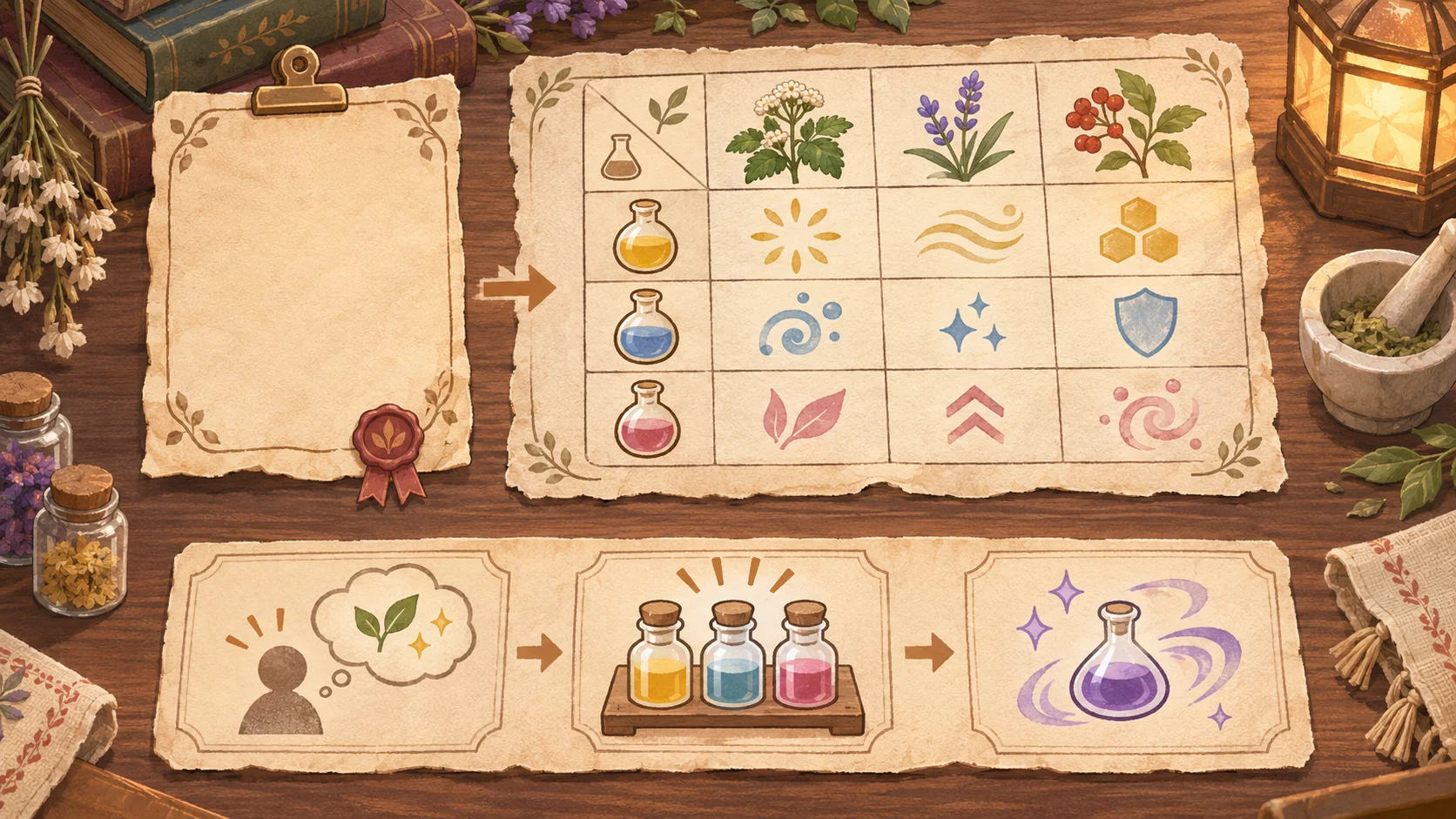
Request variety comes from changing meaningful dimensions: effect, strength, purity, timing, customer context, and tolerance for side effects. Introduce these dimensions gradually. If a first visit asks for a rare ingredient, an exact strength, a deadline, and a forbidden secondary effect, the player cannot tell which concept they are meant to learn. A short progression can begin with one obvious effect, then add strength, then combine two constraints after the player has seen the feedback loop.
Keep the queue and preparation rhythm legible. If requests arrive while players are still experimenting, define whether they wait, expire, or return later. Make the consequence visible before the player commits scarce ingredients. A request board can separate “available now” from “time sensitive,” while a calm crafting session can let players defer decisions. Pick the timing model that supports the intended mood instead of adding timers by default.
For variety, author requests from reusable constraint templates but review every line for natural language and distinct context. A template is a production aid, not a substitute for authored meaning. Check that a request does not accidentally accept an unintended recipe or reject a valid one, especially when effects combine. Record the expected answer set and the reason for each acceptable result so balancing changes stay explainable.
Playtest satisfaction, ambiguity, and repeat visits
Test requests with people who have not seen the design notes. Ask them to explain the need, choose a recipe, and say what evidence guided the choice. Record where they hesitate, what they assume an unfamiliar phrase means, and whether they can connect the result to the customer's response. A request that players solve by guessing may still feel successful once, but repeated guesses erode trust in the ingredient system.
Measure both success and learning. Track completion rate, time to a confident choice, wasted batches, and how often players can predict feedback on a second attempt. These numbers help locate friction, but a short interview reveals whether the request sounded fair. If many testers make the same incorrect interpretation, revise the clue or teach the missing concept before increasing difficulty.
Finally, test the return loop. Do customers feel different because their needs and reactions differ, and does the player understand why a fulfilled request changes their standing, shop rhythm, or future opportunities? A successful delivery should confirm the craft decision and make the next visit feel motivated. Prototype these consequences before adding a large catalog of dialogue or progression rewards.

Related guide
For another way to connect player choices with a shop loop, see the guide to shop progression.
Frequently asked questions
How do you design customer requests for a potion game?
Start from a player-readable need, then define one or two effect constraints that a valid potion must meet. Write the request in characterful language, decide what evidence the customer offers, and check that more than one understandable route can satisfy it. In a prototype, observe whether players can explain why their chosen recipe fits.
How much should a request reveal about the recipe?
Reveal enough to make the goal testable, but leave ingredient selection and experimentation to the player. A request can name an outcome such as warmth or calm without naming a specific herb or sequence. Early requests should provide clearer clues; later ones can combine constraints once players understand how ingredient observations map to effects.
How can customer requests teach ingredient effects?
Pair a request with a visible result after the player submits a sample. Explain which requested quality was met and which was missing, then let players compare that feedback with what they observed during brewing. Keep the feedback consistent so customers reinforce the ingredient model instead of introducing hidden rules.
How do you balance request difficulty?
Track how many decisions a request asks players to make, how many plausible recipes remain, and how often testers misunderstand the wording. Increase one source of difficulty at a time, such as adding a secondary constraint or a less direct clue. Keep the cost of experimentation low until players can predict likely outcomes.
Prototype the request loop
Use AI to draft alternate phrasings, cluster requests by effect constraints, and prepare a playtest sheet. Treat those drafts as working material: verify every acceptance rule against the implemented ingredient model, then revise the language from observed player interpretation. Start a game project with Seele.