A survival collection loop needs more than resources drifting past. Players should be able to see a useful goal, choose how to gather, and bring materials back to a base that changes as a result. Raft’s official listing describes hook-based floating pickups, reef and island scavenging, and raft expansion; this guide develops original mechanics for a new survival game.

Connect resource pickups to survival goals
Resource collection in a survival game should answer a question the player already has: what can I build, repair, or prepare next? Raft’s official Steam listing describes catching floating debris with a hook, scavenging reefs and islands, gathering resources, and expanding a raft. That public description is context only; the loop examples and recommendations below are original.
Start with a short progression plan. A player might need boards and fiber to add a storage rack, then collect a new material to repair a sail or prepare a garden. Show the goal in the environment or build menu before the player begins gathering. The task can remain uncertain, but the required categories and approximate quantities should be visible enough to support planning.
Give sources different interaction costs. A drifting pickup may be safe but require timing and aim; a reef source may require leaving the deck and managing exposure; an island may offer a broad assortment but cost travel time. Each route should create a meaningful tradeoff. If all sources feel interchangeable, the player has little reason to scan the world or alter course.
Make drifting and underwater sources readable
At sea, visibility and movement shape the collection challenge. Use contrast, silhouette, and spacing so a floating object can be noticed against waves from the player’s normal view. Avoid relying on tiny color differences. A soft glint, bobbing motion, or distinctive silhouette can signal a useful object without turning the horizon into a field of icons.
Hook interaction should be predictable. Give players a clear target, consistent cast arc, and quick feedback when the hook catches, passes under, or strikes an obstacle. Early pickups can sit close to the raft and move slowly; later ones can test timing or encourage repositioning. If a miss is hard to understand, add feedback before increasing the difficulty.
Underwater routes need their own readable landmarks. Show reef edges, return direction, and nearby resources before the player dives. A short, safe swim can teach the interaction; later trips can ask the player to choose between several nodes while tracking an exposure meter. Keep the route legible enough that the tension comes from a decision instead of confusion.
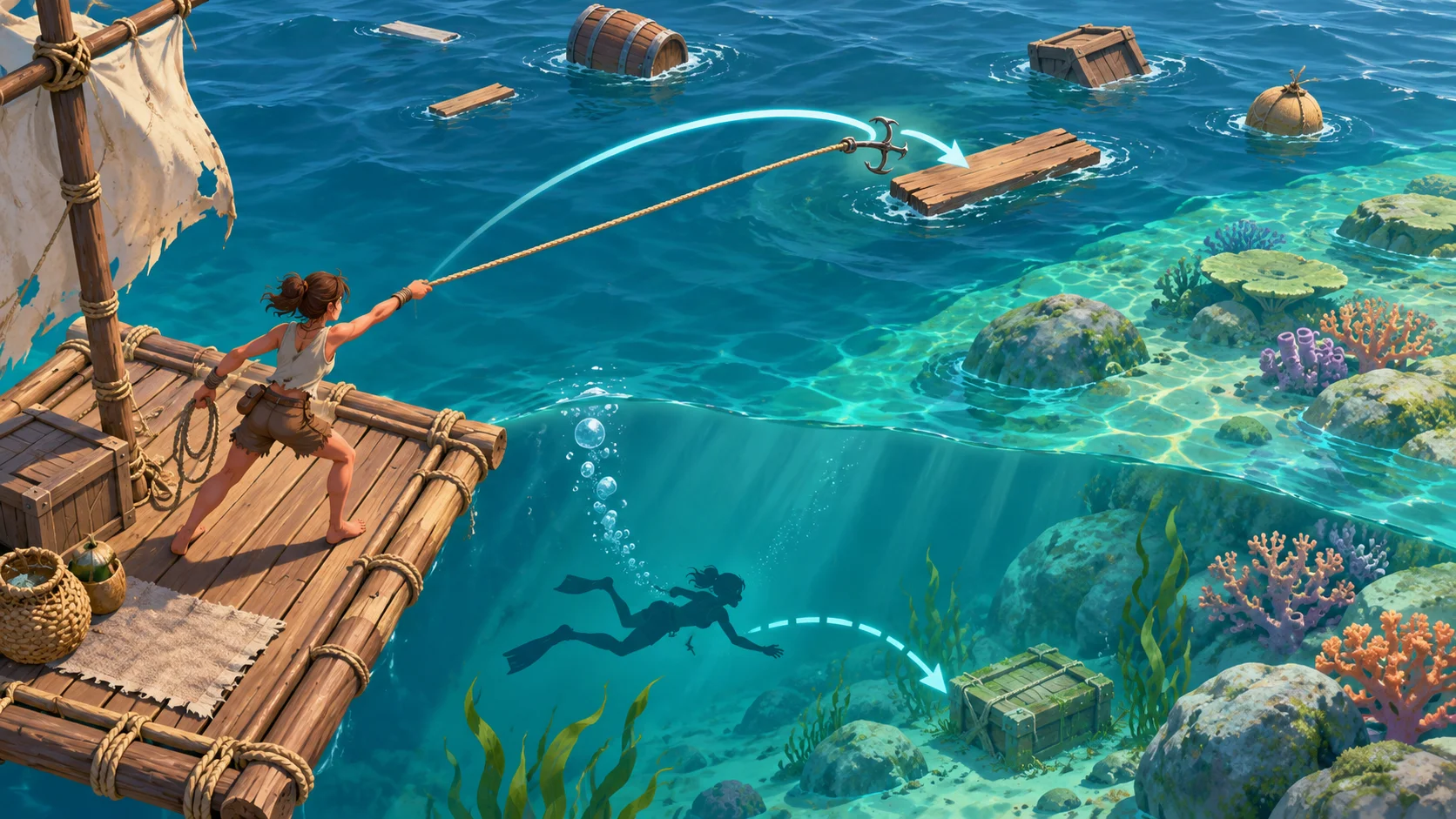
Balance collection, exposure, and storage
Collection pace depends on travel, tools, yield, storage, and danger. Tune them together. A large pickup may be satisfying, but if the raft cannot store it and discarding is unclear, the reward becomes a management penalty. Show stack counts and a useful next build so players know whether to keep gathering, return to craft, or change plans.
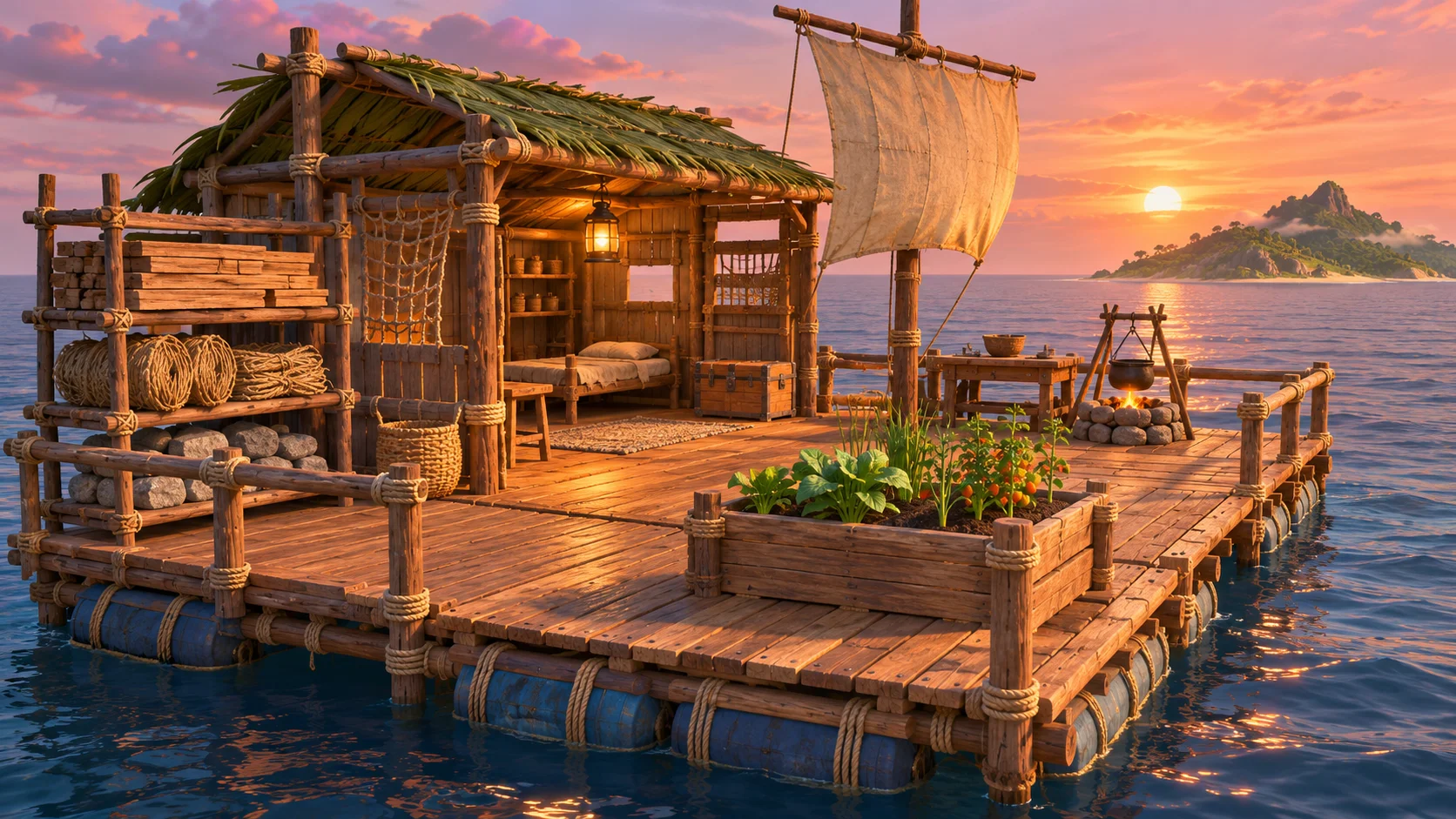
The raft itself can shape collection routes. As the player adds storage, a sail, or a safer diving tool, older sources can take on new value. Let upgrades change how the player approaches the ocean rather than simply multiplying every yield. A larger net may handle common drifting material automatically but leave rare salvage to a deliberate hook cast. A better dive aid can extend a route while leaving the player responsible for navigation.
Use exposure carefully. A risk can make a rare resource meaningful, but repeated unavoidable danger can overwhelm the calm rhythm of gathering. Provide safe staging, visible warning, and a return route. For optional risk, ensure the reward is worth the choice and that players can leave without losing the entire trip.
Test the expedition and return loop
Playtest a complete trip, not only an individual pickup. Give players a construction goal, then observe whether they choose a route, gather the right materials, manage their storage, and return to build. Record time spent looking, failed hook actions, unnecessary dives, full-inventory interruptions, and materials that remain unused.
Compare route alternatives. If players always drift in place, destinations may not offer enough reward. If they always dive for the same item, the safer collection loop may be underpowered or unclear. Ask what they thought each source would provide and whether the build goal was clear before departure. Then adjust route placement, source readability, or recipe cost based on what they inferred.
Finally, test the moment after a build. A new rack, garden, or sail should change the next decision in a visible way. If the player gathers the same objects for the same reason without new options, the loop may need a fresh purpose. Add sources and upgrades only when they create a new decision, and keep the core trip short enough that players can feel the result of their work.
Related guide
For another approach to collecting useful materials, see the guide to resource collection in a cozy RPG.
Frequently asked questions
How do you design resource collection for a survival game?
Start from a visible survival or construction goal, then make the materials needed for that goal available through a few distinct activities. Show where each source can be found, what tool or risk is involved, and how much material the player can carry. Test whether a trip feels like a choice rather than an automatic sweep.
How can floating pickups feel skill based?
Give the player enough time and visual space to notice a pickup, judge its position, and aim a tool. Keep the cast arc or target area consistent, and use a clear response when the hook connects or misses. Vary drift speed and spacing gradually instead of changing aim rules without warning.
How should underwater gathering work?
Make underwater sources visible before the player commits to a dive, then communicate the cost of staying below through air, exposure, or another clear resource. Place meaningful choices along a short route and provide an obvious way back to safety. Early dives should teach the return path before adding threats or time pressure.
How do you prevent resource loops from becoming tedious?
Vary the route and decision rather than adding many nearly identical pickup types. Let players choose between safer common materials and a more exposed source, then keep repeated tool actions responsive. Make gathered materials visibly support a raft goal so the collection trip has a reason beyond filling storage.
Prototype the collection loop
Use AI to propose source tables, route variants, and test checklists, then validate the actual gathering feel in a playable build. Check whether players understand the risk, carry useful materials, and see how each return changes their options. Start a game project with Seele.