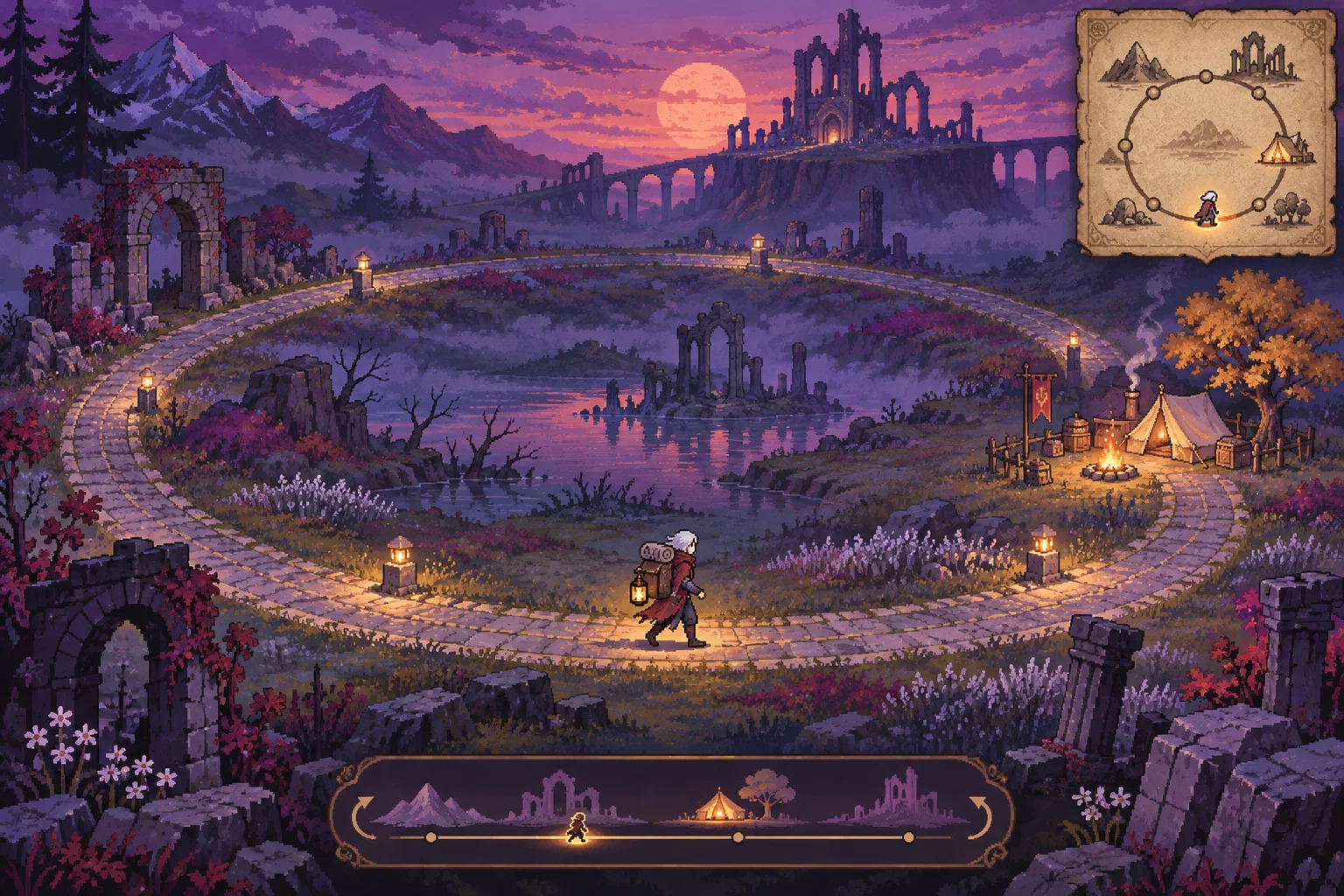
Resource collection works best when players understand what they are gathering, where it comes from, and how it helps them. A clear loop links an immediate purpose to readable sources and a useful crafting result. Potion Permit’s official listing describes gathering ingredients in the surrounding environment with tools and using them to brew remedies; the system recommendations below are original guidance for a new game.
Connect gathering to a clear player purpose
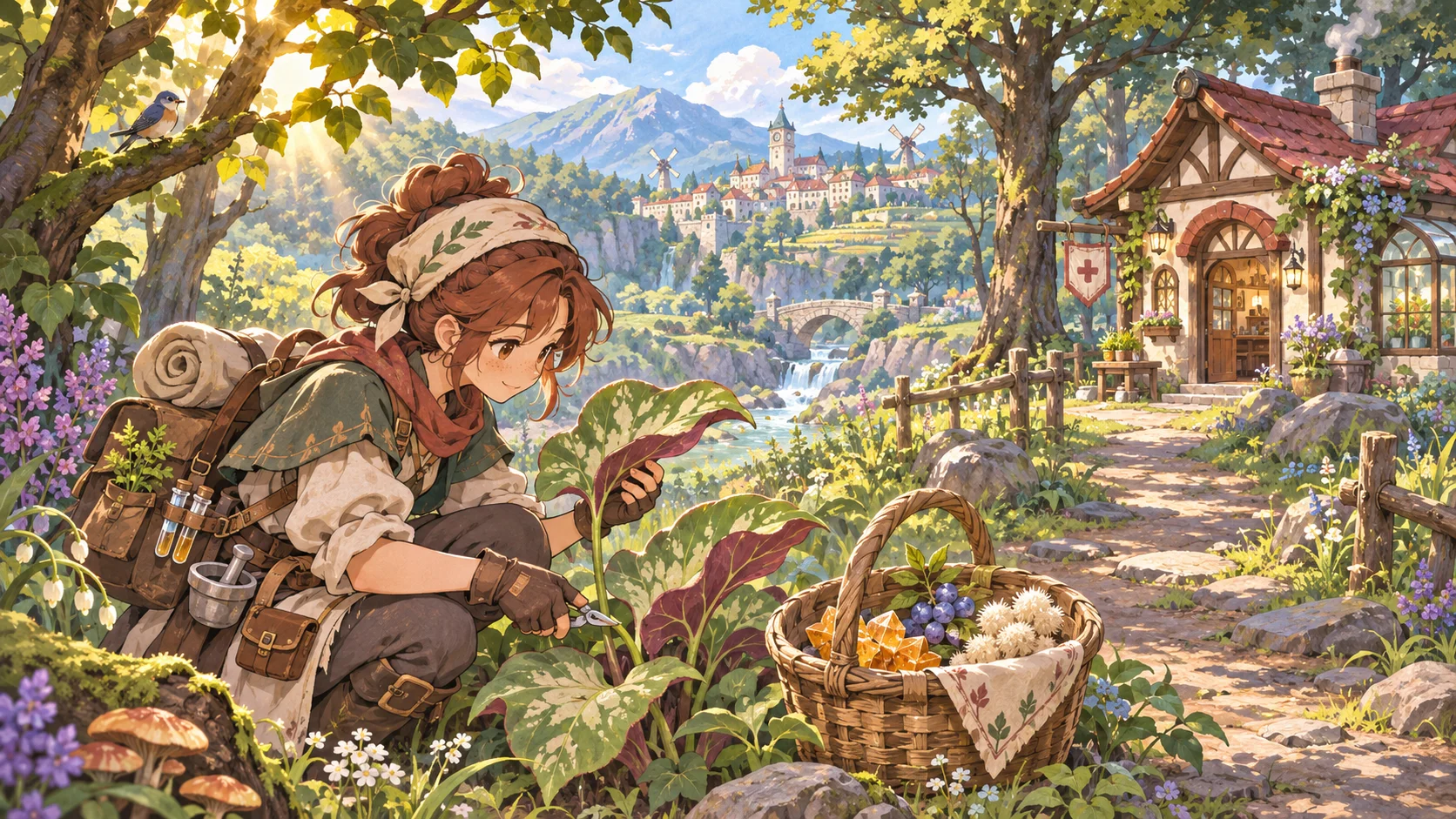
A resource loop feels purposeful when a collected item supports a visible next step. Start from the game’s crafting, repair, or community goal and identify the materials required. Then make sure the player can encounter those materials through an understandable route. Potion Permit’s official listing describes gathering ingredients in the surrounding environment with tools and using gathered ingredients to brew remedies; the examples here are original design recommendations, not claims about its hidden systems.
Build a simple chain: a character needs help, the player learns which material could contribute, the world offers one or more places to find it, and returning to the workshop turns the material into progress. The request should not demand an item the player has no reasonable way to recognize. Early tasks can name the source plainly, while later ones can ask the player to choose between a shorter common route and a longer specialized source.
For every resource, document its purpose, source, expected quantity, and what happens when the player brings too little. This small source-to-use table helps reveal materials that exist only to pad a collection list. If an item does not support a useful decision, remove it or give it a clear role before expanding the catalog.
Make resource sources readable in the world
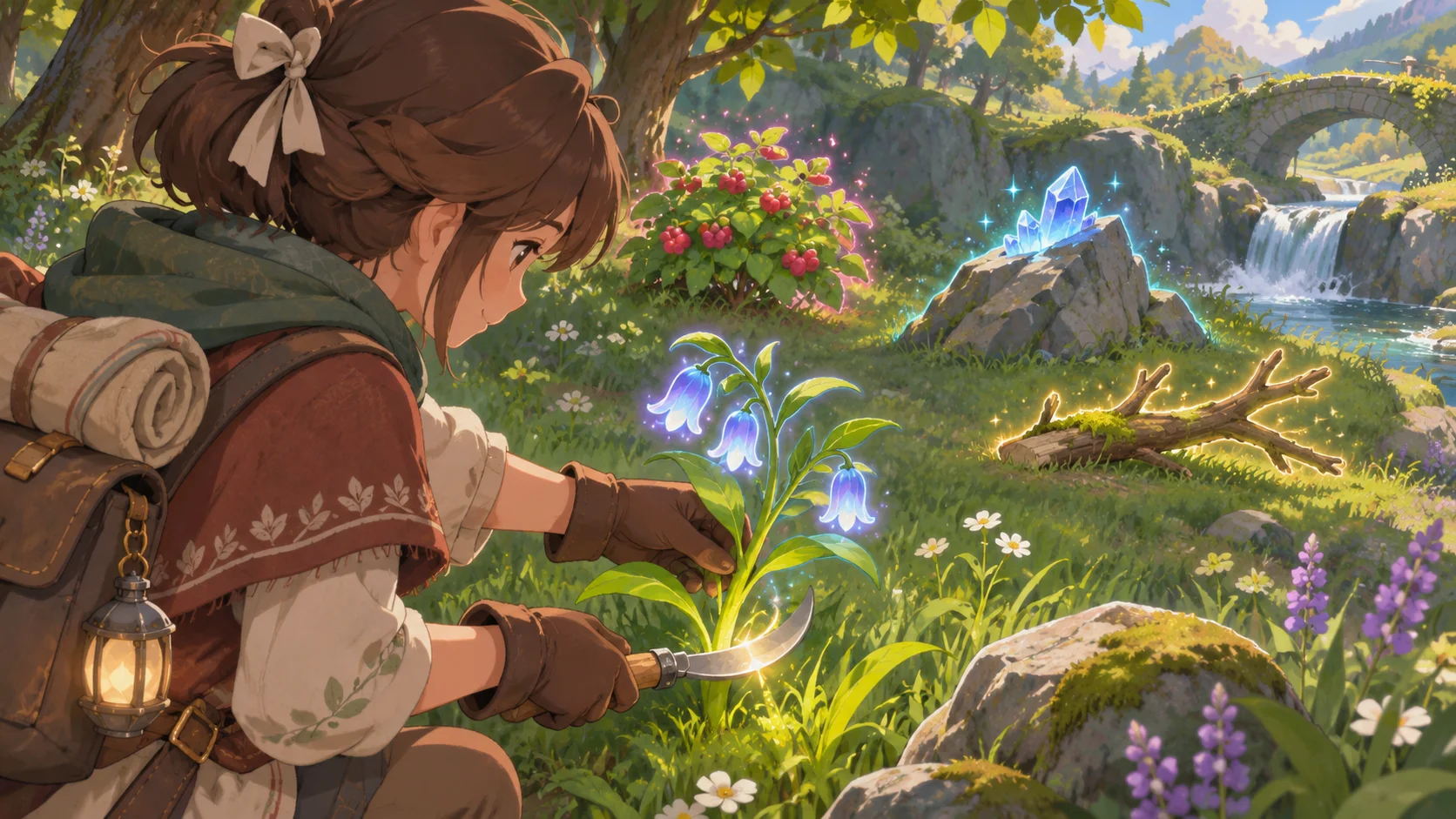
Players need to recognize which parts of the environment are interactive and what kind of tool action applies. Use consistent shape, motion, lighting, or sound cues. A berry-bearing shrub might sway and carry visible fruit; a mineral vein can have a distinct silhouette and a surface response when struck. Do not make color the only signal, and avoid presenting decorative props with the exact same interaction cue as gatherable sources.
Teach one tool relationship at a time. A short early route can show the player approaching a plant, using a simple action, and seeing the item enter inventory. The feedback should name or depict the material and confirm quantity. If an upgraded tool changes reach or yield, communicate that difference before a player spends resources on the upgrade.
A small visual vocabulary can carry across biomes while still allowing local variety. Keep the interaction cue stable, then vary the source’s silhouette, animation, and surroundings. Test screenshots and play sessions at the camera distance players will actually use; details that appear clear in a close-up illustration may disappear during normal movement.
Tune tools, travel, and inventory pressure
Collection speed depends on more than an animation timer. Travel distance, tool switching, node density, yield per action, stack size, and storage access all affect the effort of a trip. Tune them together. A rare material can be meaningful if the route has interesting choices, but it feels like waiting when the player repeats a long path with no new decision.
Use the map to place resources along routes the player already has reason to explore. A detour can offer a valuable source, a safe shortcut may have common materials, and a tool gate can make an old route newly useful later. Be careful that the best choice is not always to sweep every node. If carrying capacity is limited, show the expected value of a trip and give players a way to plan around their next recipe.
Inventory pressure should match the game’s tone. A cozy game may use storage and light prioritization rather than frequent forced disposal. If the limit is an intentional strategic constraint, make stack sizes and upcoming needs visible. Let players compare whether to carry crafting ingredients, healing items, or a quest object before they leave a safe hub.
Test whether collected materials feel useful
Observe a new player during a short gather-and-craft session. Ask them to choose a goal, locate a source, collect enough material, and explain what they expect to do next. Record mistaken interactions, backtracking, unneeded pickups, and moments when they cannot remember why an item matters. Those observations often reveal problems in the loop sooner than a large progression spreadsheet.
Track a few measures across playtests: time from goal to first useful source, number of tool actions per crafted result, unused inventory share, and how often a player changes route after finding a new cue. Pair those measures with a short question about whether the trip felt purposeful. A high pickup count is not success if the items remain opaque or the player repeatedly revisits a source by mistake.
Finally, test both abundance and scarcity. Give one group more material than a recipe needs and another group only the minimum practical supply. Check whether the gathering route remains legible and whether the recipe feels attainable. Adjust source density, yield, and storage access as a connected system, then retest the full journey instead of tuning each node in isolation.
Related guide
For a related crafting interaction, see the guide to customer requests.
Frequently asked questions
How do you design resource collection in an RPG?
Start with what the player is trying to make or solve, then work backward to the materials needed. Make sources easy to recognize, give collection a clear interaction, and place enough useful materials along a natural route. Test whether players can explain why each resource matters before adding more item types.
How can players tell which resources they can gather?
Use consistent visual and interaction cues: distinct silhouettes, a change in outline or motion nearby, and a tool response that confirms a successful action. Avoid relying on color alone. Early areas can place gatherable sources beside familiar landmarks so players learn the visual language without a long tutorial.
How do you prevent resource gathering from feeling repetitive?
Vary the decisions around collection rather than only increasing the number of nodes. A route may offer a safe common resource, a distant rare item, or a tool-gated source. Keep repeated actions quick, add new contexts gradually, and make each trip connect to a crafting or story purpose that players understand.
How should inventory limits affect gathering?
Use limits to create a meaningful choice about preparation, not to interrupt every short trip. Let players see stack sizes and the next crafting need before they leave. If a full pack forces discarding, make the cost clear and provide storage or a return path that fits the intended pace.
Prototype a resource loop
Use AI to draft possible source-to-use combinations and organize test routes, then verify each source in the prototype. The game team should decide what gathering feels like, how much material is enough, and whether inventory pressure supports the intended mood. Start a game project with Seele.