Tool upgrades can make a cleaning simulation feel more capable over time when each new option changes a player’s approach to a surface. Define the action it improves, teach that change through a job, and preserve useful decisions across different tasks. PowerWash Simulator’s official listing describes washers, nozzles, cleaners, and extensions, with dirt that varies in toughness; this article applies original design guidance to a new game.
Define what each equipment upgrade changes
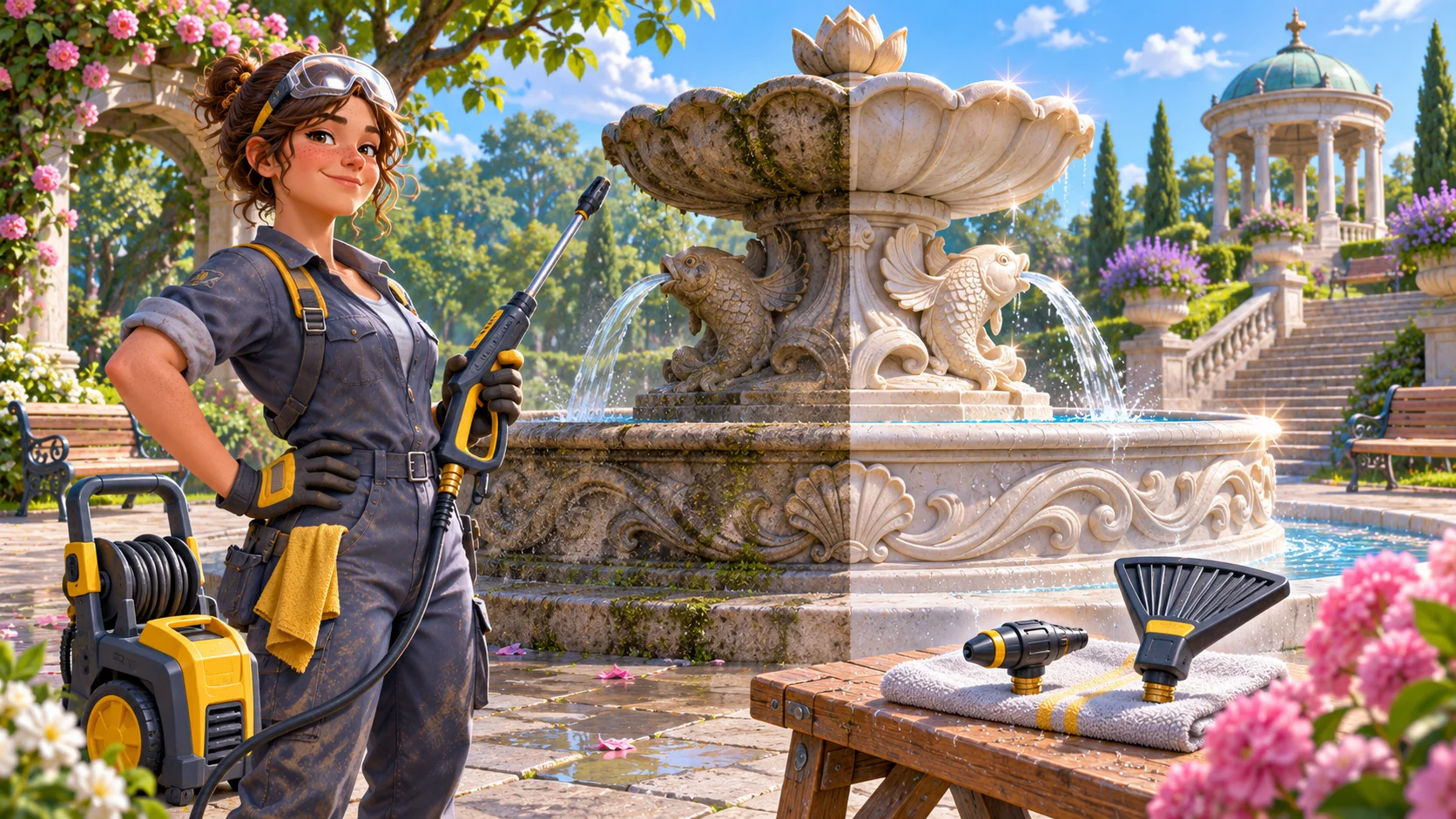
Equipment progression is satisfying when players can point to a changed action, not just a larger number. PowerWash Simulator’s official Steam listing describes washers, nozzles, cleaners, and extensions, and notes that dirt types can differ in toughness. That public description provides context only; the upgrade paths and testing advice here are original design guidance.
Start by listing the interaction dimensions your own cleaning game supports. A tool might alter spray width, reach, precision, water use, surface safety, or access to tight spaces. Give each upgrade a primary purpose and one understandable tradeoff. A broad attachment can clear open panels efficiently but be awkward around narrow trim; a precision tool may take longer on a wall while staying accurate around fragile details.
Write each upgrade as a before-and-after statement: “This attachment lets players reach upper ledges from the ground, but it narrows the spray.” Then design a small test surface that makes the difference visible. If the change cannot be described plainly or demonstrated in play, simplify the upgrade before it becomes part of a large tree.
Teach new tools through job design
A new tool needs a safe first use. Introduce it on a job with a large, forgiving target, then let players apply it to a more complex surface where its strength matters. Avoid explaining several attachments, surface rules, and dirt types at once. A brief visual cue or optional tool tip can name the relevant feature, but the job itself should make the tool choice feel sensible.
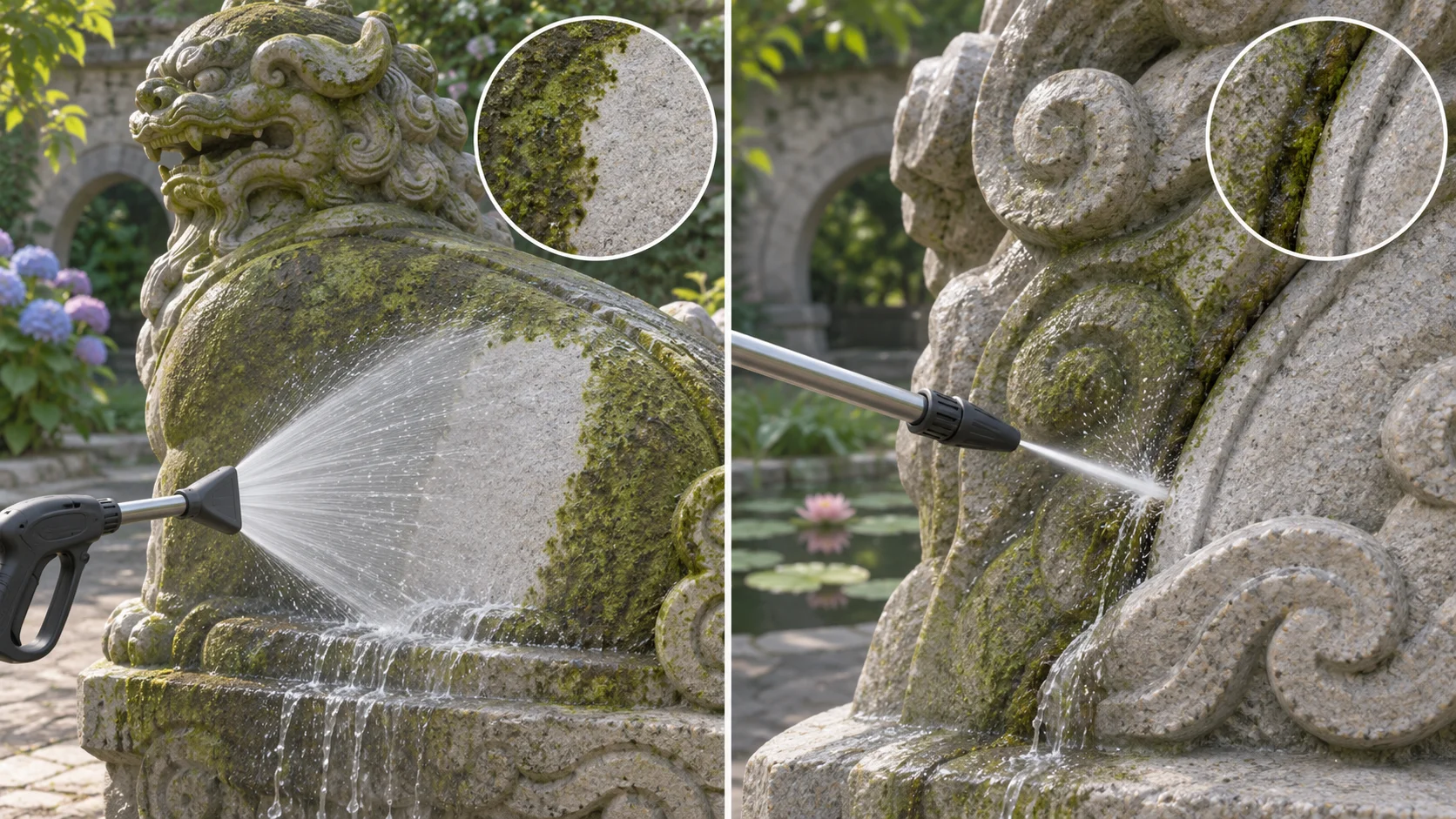
Use dirt patterns to teach aiming and coverage. A wide stain can demonstrate a broad spray; a recessed groove can show why a narrower stream helps. Make cleaned and uncleaned boundaries readable from the normal camera distance. If the effect is subtle, improve contrast or feedback before adding more instructions. A satisfying sound or surface response can confirm progress without covering the image with meters.
Let players switch tools without friction while learning. When a task requires repeated menu navigation to compare attachments, the interface can obscure the progression decision. A simple quick-select or clear preset is often enough. Test whether players can predict which tool will help before they use it, then compare that prediction with their actual experience.
Preserve choice across different cleaning tasks
A progression tree should broaden useful choices. If every upgrade simply cleans faster, the optimal path becomes obvious and earlier equipment turns into dead inventory. Build a set of representative tasks: broad flat walls, narrow carvings, elevated beams, delicate surfaces, and areas with awkward angles. Equipment can excel in different contexts without forcing a fixed loadout for every job.
Tradeoffs should be fair and visible. A long-reach extension may reduce precision; a stronger spray may use more water or disturb a sensitive surface; a compact nozzle may require more passes on a large panel. Players should understand these consequences before committing. Let job previews indicate relevant constraints, but avoid prescribing the only valid tool unless teaching one capability.
Check how often players switch tools, ignore certain attachments, or restart jobs to change equipment. Those behaviors help identify a progression choice that is either irrelevant or too costly. If players routinely use one tool for everything, revisit surface variety, tool feedback, or the balance of each attachment rather than adding more upgrades.
Measure upgrade value and pacing
Use a fixed benchmark set to compare equipment. For each surface, record completion time, missed patches, number of passes, water or energy use, and player-reported control. These measures separate speed from precision. A tool that reduces time but makes players miss details may not be a clear upgrade for a game built around careful cleaning.
Introduce upgrades when players have seen the limitation they address. If a long extension arrives before a job contains elevated surfaces, its value may not register. If the job requires it immediately with no prior teaching, it can feel like a gate instead of progress. Space unlocks so each one has a chance to change how players approach a later task.
Finally, replay old jobs after an upgrade. Revisiting familiar spaces can make improved reach or coverage tangible, but preserve optional goals for players who prefer precision. Keep a progression record that ties each tool to intended tasks, expected advantages, and observed playtest results. Update the record when balance changes so the equipment set remains understandable as the game grows.
Related guide
For related tool and source readability principles, see the guide to resource collection.
Frequently asked questions
How do you design equipment progression in a cleaning game?
Choose a small set of ways equipment can change the job, such as reach, coverage, precision, or surface compatibility. Give each upgrade one readable benefit, then create a task where players can notice that benefit without requiring a long explanation. Compare the new tool with the previous option on more than one job.
What should a tool upgrade improve?
An upgrade should improve a specific interaction that players already understand or introduce a clearly taught capability. Wider coverage can speed up open surfaces, while a precise attachment can make recesses easier to clean. Avoid stacking hidden bonuses that players cannot see or feel during normal play.
How can old equipment stay useful?
Give earlier tools a practical advantage such as finer control, lower resource cost, or better performance on delicate surfaces. Let jobs include different shapes and dirt patterns so players choose equipment based on context. If the newest tool always dominates, add meaningful task variation or revise the upgrade tradeoff.
How do you balance cleaning tool upgrades?
Measure job completion time, missed areas, tool switching, and player confidence on a fixed set of representative surfaces. A faster tool may still feel worse if it is hard to aim or overshoots small details. Tune one variable at a time, and check that the progression changes decisions rather than only increasing numbers.
Prototype equipment choices
Use AI to draft upgrade matrices and task variants, then test each tool against actual surfaces. Confirm that players can tell what changed, when an older attachment remains useful, and whether the new option improves the intended action. Start a game project with Seele.