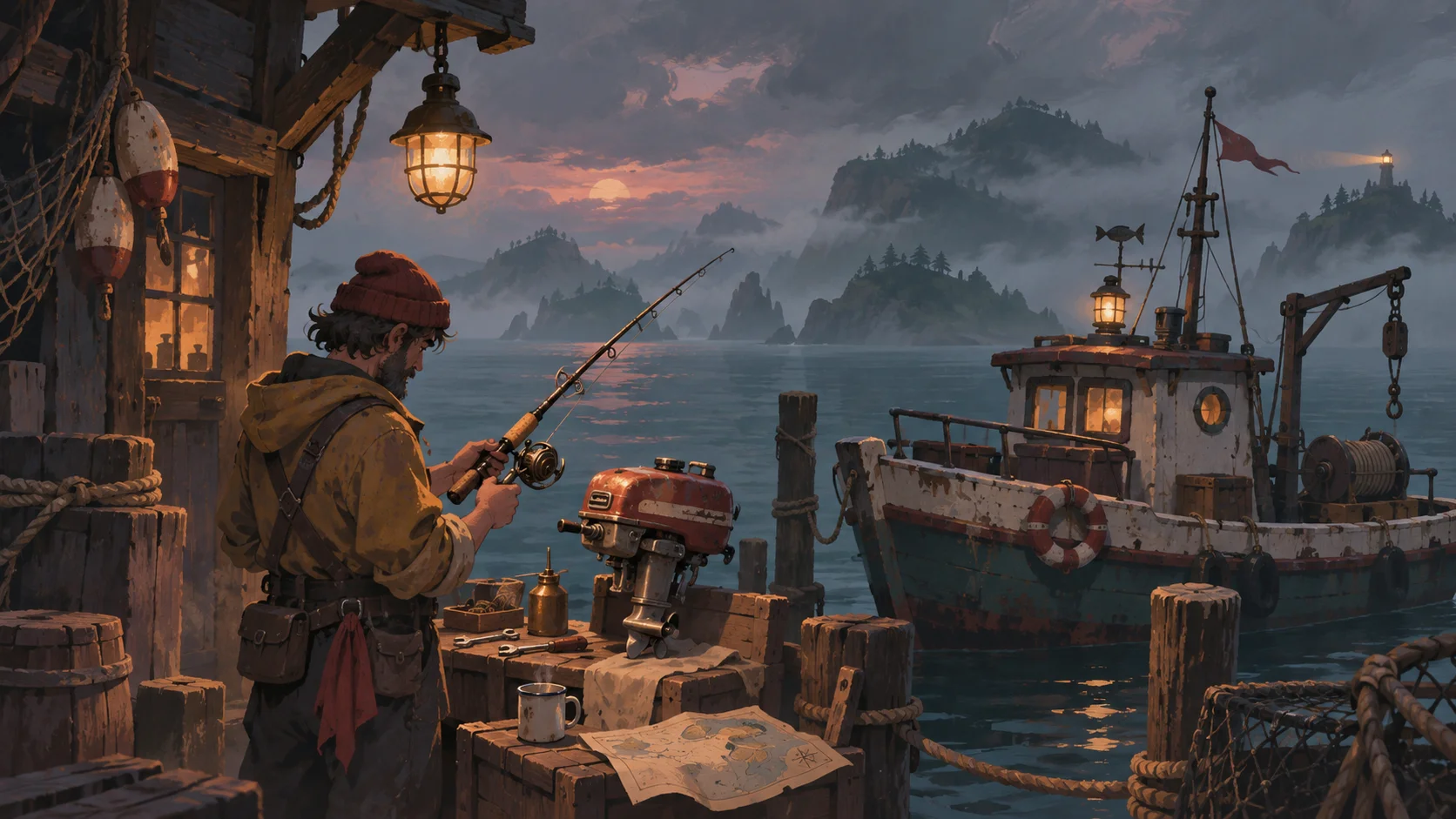
Equipment upgrades can change how an adventure unfolds. A better tool might make a familiar activity more efficient, while a specialized item can open a new region or resource. For an original fishing adventure, connect each upgrade to a clear capability and a reason to take another trip. DREDGE’s official store listing describes researching special equipment and upgrading the boat to reach rare fish and curios. Use that as broad context, then build your own progression rules.
Define upgrade categories and capabilities
Group equipment by what it changes for the player. A tool can affect how an activity works, a mobility upgrade can change travel time, and a safety item can reduce a specific hazard. Keep categories distinct so players know whether they are choosing reach, speed, capacity, or protection. If an upgrade improves several unrelated areas at once, it may be hard to understand why one option is better.
Give each upgrade a clear description of its effect. Avoid relying on a higher tier name without explaining what changes. A player should be able to compare two tools and identify the new action, location, or efficiency that each provides. If an item is mainly a side-grade, state the tradeoff plainly, such as greater reach with slower operation.
Keep the first few upgrades focused. A small system with a basic tool, one specialized tool, and one mobility upgrade can teach how equipment affects play. Add more variants after you know that players understand the categories and have a reason to compare them.
Connect equipment to new opportunities
An upgrade feels useful when the player can apply it soon after receiving it. A specialized fishing tool might allow a new catch type, while a stronger engine can make a distant location easier to visit. Give players a visible hint about the opportunity before they invest. A map marker, inaccessible hotspot, or character comment can suggest what a new item may enable without giving away every discovery.
Keep access requirements fair. If a new region requires a tool, introduce that requirement before players commit to a long trip. If several tools can solve the same barrier, explain the alternatives. Consider whether players can borrow, rent, or craft a temporary version so a missed purchase does not stall the adventure.
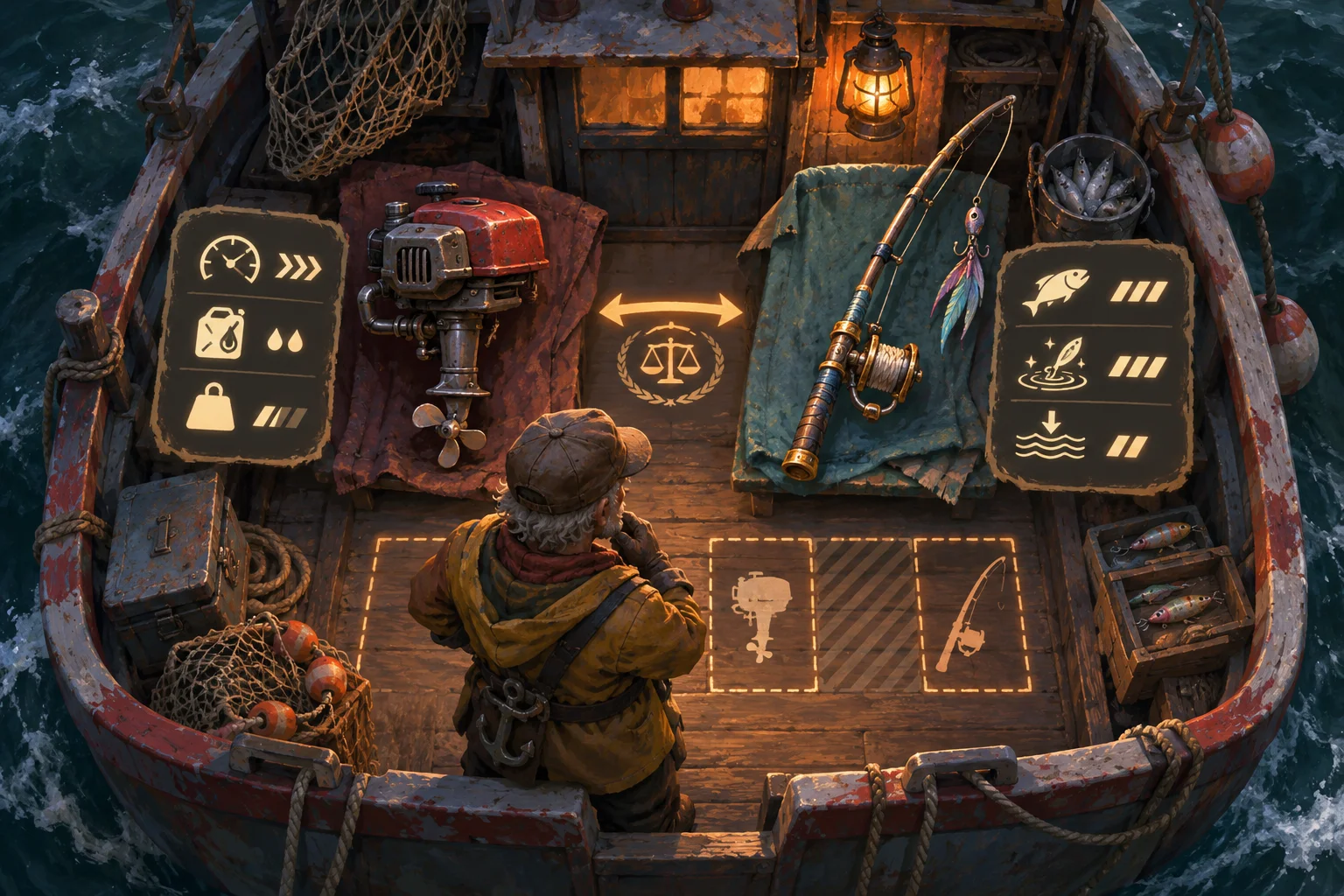
Let upgrades support different approaches. A player might prioritize covering more water, carrying extra supplies, or specializing in one activity. Keep multiple paths viable. If every route requires the same upgrade in the same order, progression may feel like a checklist rather than preparation.
Make installation and tradeoffs clear
Show how an item fits with the rest of the equipment. If space is limited, display the slot it uses and what might need to be removed. If an upgrade is installed at a workshop, explain how long it takes and whether the boat can be used while it is happening. The player should understand the full cost before confirming.
Offer a safe way to compare and recover. A preview can show the boat’s capabilities before and after a change. If players can swap items freely, make that convenient enough to encourage experimentation. If swaps have a fee or take time, show that cost and let players inspect the destination or next activity before committing.
Check how the system handles edge cases. What happens when a player buys an item but has no space? Can equipment be sold or stored? Does a replacement preserve progress? Are there upgrades that conflict with one another? Write these rules down and test them in the interface, especially when the player owns several items.
Test upgrade progression across trips
Playtest a sequence of trips that includes a new location, one equipment choice, and an opportunity to use it. Ask players what they expect the upgrade to do before purchase, then observe whether the next activity matches that expectation. If they cannot tell why an item matters, improve the preview or the world cue.
Track which upgrades are purchased, equipped, and used. A popular purchase may still be confusing if players never equip it. A low purchase rate may mean the benefit is too small, the cost is too high, or the relevant activity is difficult to find. Watch the whole cycle from discovery through use before adjusting the numbers.
Test with different play styles. Someone who explores every coast may value travel and storage differently from a player who focuses on one resource. If one upgrade dominates across all routes, adjust its versatility or give another option a more distinctive role. Preserve player choice while making the consequences clear.
DREDGE’s official listing supports a high-level reference to researching special equipment and upgrading boat capabilities to reach rare fish and curios. It does not prescribe a particular item progression, slot limit, or upgrade cost. Build those rules around your world and test whether equipment changes what players can do. SEELE’s documented game-creation capability can help start from a natural-language fishing adventure idea; use a prototype to refine the upgrade loop and its opportunities.
Frequently asked questions
How should equipment upgrades change gameplay?
Give an upgrade a clear effect on what players can do, where they can go, or how they approach an activity. Show the capability before purchase and give players a nearby opportunity to use it. Avoid upgrades that only raise a number unless that increase creates a noticeable decision or outcome.
How do you make upgrades feel worth the cost?
Match the cost to a benefit players can understand and experience soon. The upgrade might unlock a new activity, make a route more practical, or support a different play style. Let players preview the effect, then test whether they actually use it and feel that the investment mattered.
Should players be able to swap equipment freely?
Free swapping encourages experimentation when it does not undermine the intended preparation decisions. If swaps take time or resources, show those costs before players commit. Make storage, slot use, and conflicts easy to inspect so players can understand what must change to equip a new item.
How can upgrades unlock new areas fairly?
Signal a new area’s equipment requirement before the player makes a costly trip. Show what capability is missing and whether alternatives exist. Give players a reasonable route to obtain the upgrade, and place a useful first opportunity nearby so the new equipment has a clear payoff.
Prototype a basic tool, a specialized side-grade, and one new opportunity each can unlock. Explore an AI game creation starting point for an original fishing adventure.