Evidence collection is the engine of a co-op investigation game: players observe a scene, choose a tool, record what it reveals, and compare explanations. In an original game inspired at a high level by Phasmophobia, make clues specific enough to reason about while preserving some uncertainty. The system should reward careful observation and team communication instead of asking players to repeat tools until a hidden random check succeeds.
Design evidence as observable signals
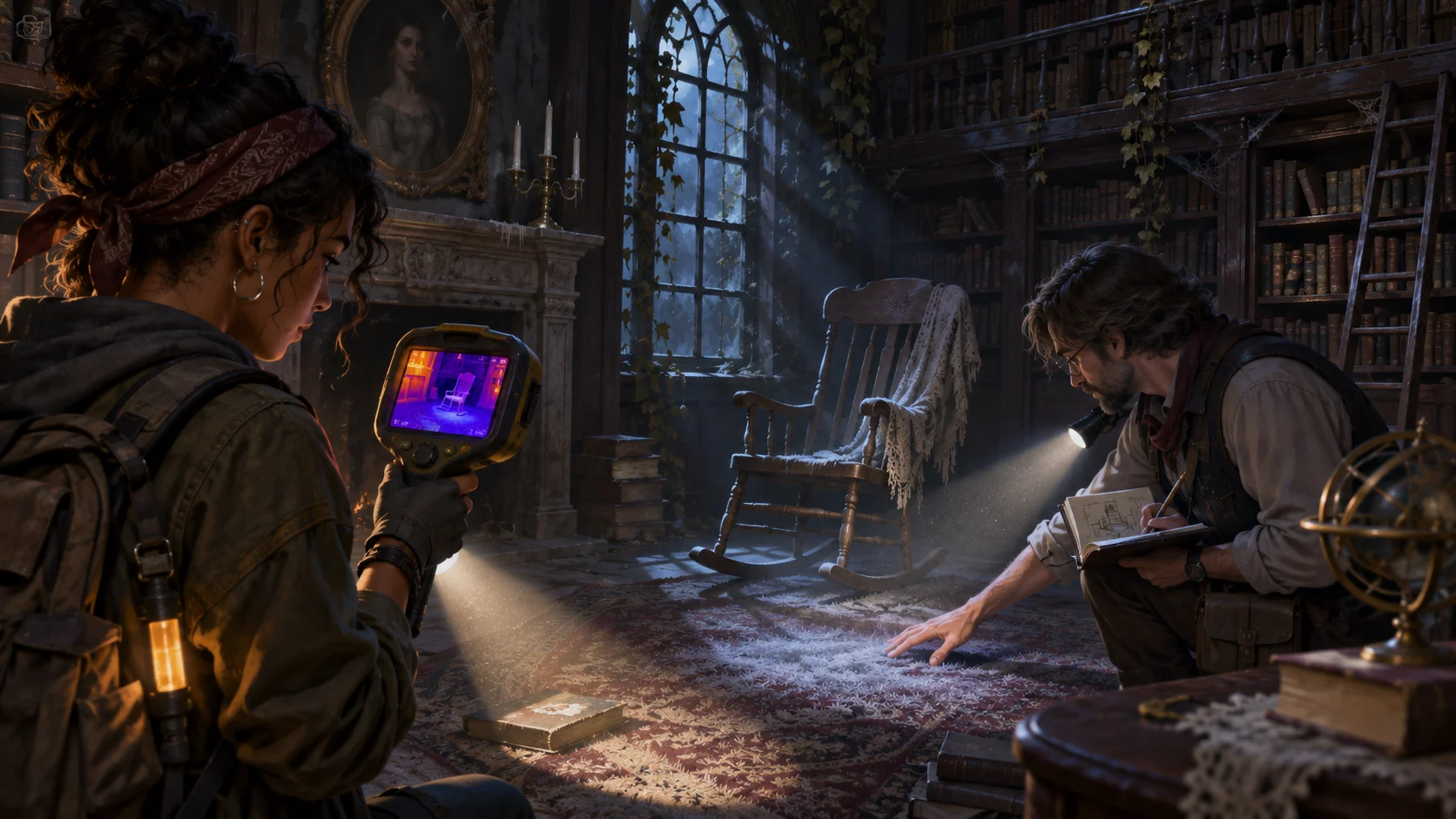
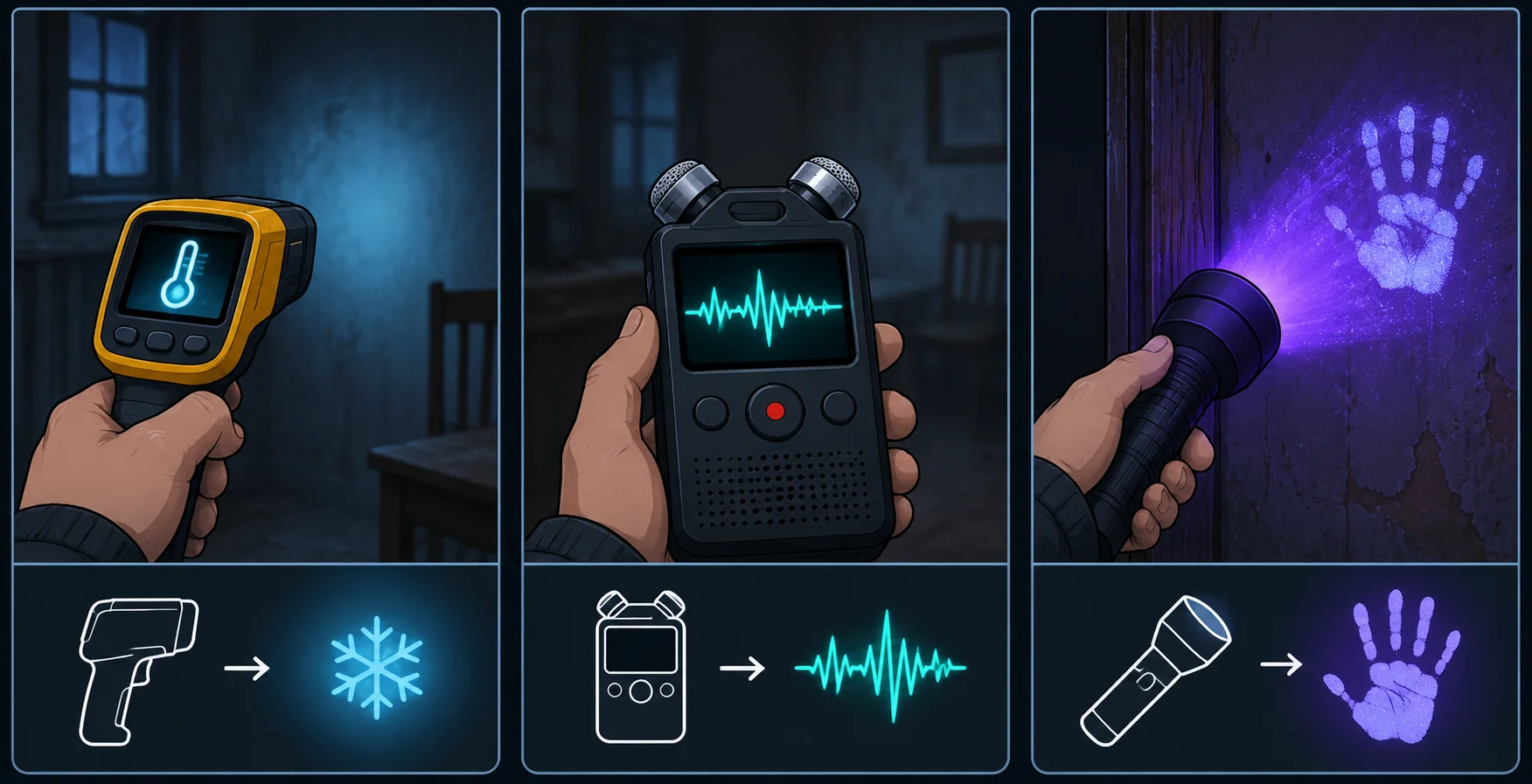
Give each clue a source and a way to observe it. A cold draft might be visible on a temperature sensor; a repeated sound could appear on a recorder; a mark might show under a special light. Decide where the signal can occur, what conditions affect it, and whether it can be misleading. If a clue is rare, tell players how long they may need to observe before deciding it is absent.
Kinetic Games’ official Phasmophobia page describes using ghost-hunting equipment to gather paranormal evidence. That is the broad premise used here; this article’s tools, clue model, confidence rules, and deduction structure are original and are not presented as Phasmophobia mechanics.
Distinguish evidence from interpretation. The observation “sensor drops sharply near the window” can support several explanations, while “the room is haunted” is already a conclusion. Let players record what they observed separately from what they believe it means. This creates room for uncertainty without making the underlying clue random or meaningless.
Give tools distinct collection methods
Each tool should answer a different investigative question. A temperature sensor can compare locations; an audio recorder can capture a sound over time; a special light can reveal marks that are otherwise hard to see. Players can decide which tool to bring, where to use it, and whether another teammate should confirm the result. Avoid tools that differ only in animation while returning the same information.
Design the interaction as a sequence: equip, position, observe, collect, and review. Provide feedback for both positive and negative results. If a device detects nothing, players need to know whether it was used correctly and whether the observation window was long enough. A quiet device should not leave them wondering whether it is broken, out of range, or simply showing a valid absence.
Consider false readings carefully. A tool may produce noise or a weak signal, but distinguish that from confirmed evidence through consistency, duration, or a second observation. Let players test a hypothesis by moving or repeating the measurement. Good uncertainty gives them a reason to investigate further; bad uncertainty makes the tool feel arbitrary.
Record and compare team findings
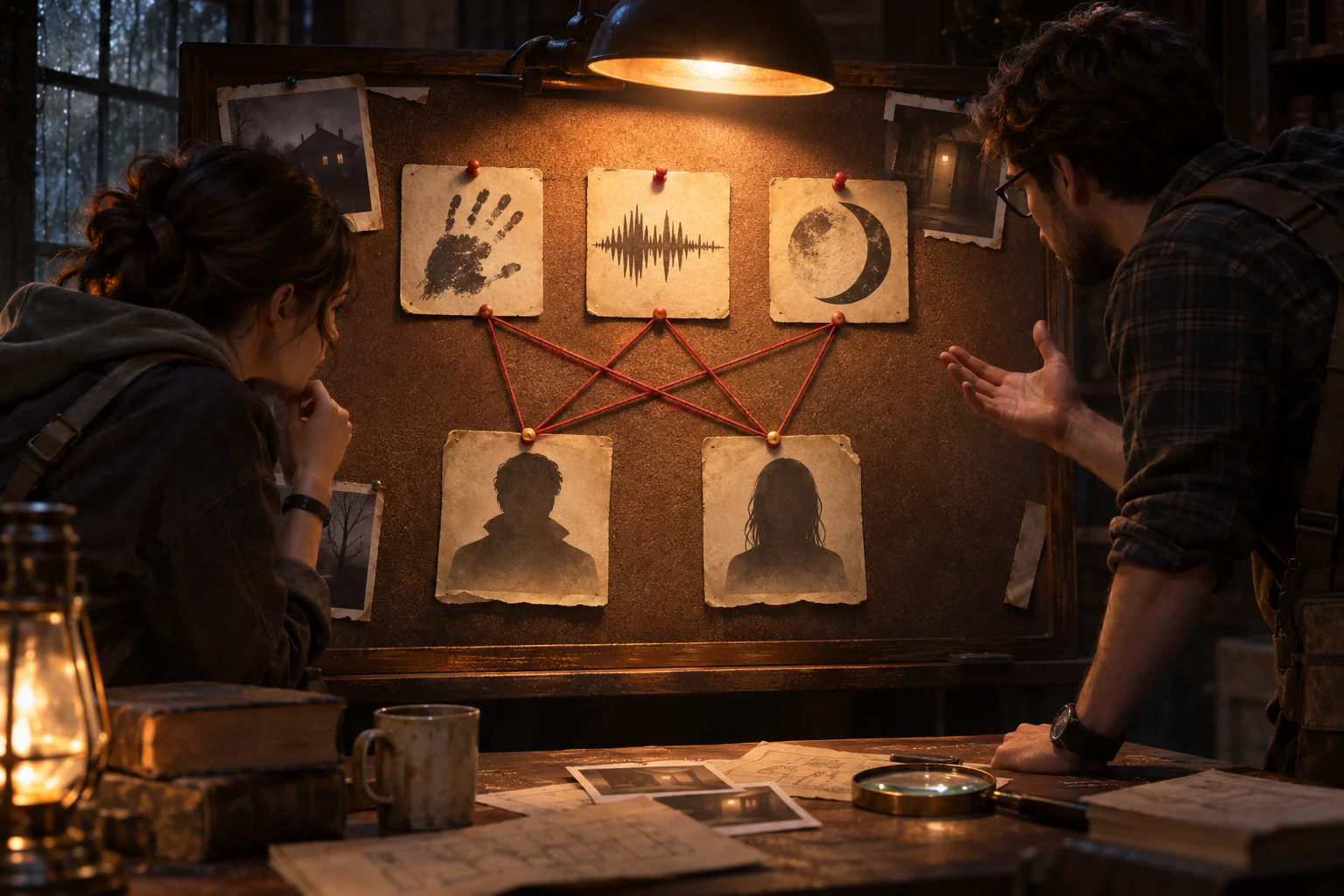
Keep a shared case record that all players can inspect. Each entry can capture the clue, location, tool, time, and confidence. A teammate may add a second observation or mark a clue as uncertain. Shared records reduce repeated work and help a team member who was elsewhere understand how the group reached its current theory.
Let evidence narrow possibilities without always revealing the answer after one clue. A clue can rule out some hypotheses, strengthen others, or prompt a new test. Show which possibilities remain and what the team still does not know. If the answer depends on a combination, make that combination discoverable through consistent clue rules rather than a hidden lookup table.
Give players a way to communicate observations without requiring voice. A ping on the room, a shared note, or an evidence marker can show where a clue was collected. Make uncertainty visible so players can distinguish “we did not find it” from “we have not tested for it yet.” This distinction supports better planning and reduces unnecessary repeated searching.
Test deduction, uncertainty, and teamwork
Playtest with teams that have not seen the case design. After each clue, ask what they observed, what they think it means, and what tool they will try next. If their conclusion is wrong, check whether the signal was ambiguous, the tool feedback unclear, or the deduction rule inconsistent. A useful mystery can surprise players while still giving them enough information to explain the answer afterward.
Test accessibility and different team roles. Make key evidence readable in sound, visual, and written form when practical. Check that a player using a smaller screen can review the shared log and that no clue depends on a single subtle color. Confirm that one player cannot accidentally erase or hide another person’s finding.
AI can help draft original clue sets, candidate explanations, or playtest prompts, but it cannot determine whether a clue is fair from prose alone. Start a co-op investigation prototype with Seele’s AI game maker, then watch whether teams collect and interpret evidence as intended.
Frequently asked questions
How do you design evidence collection for a co-op game?
Define observable clues, distinct tools, and a shared record that captures where and how a clue was found. Make positive and negative results understandable, then let players compare observations and test hypotheses together. Playtest with teams who have not seen the case so you can find unclear signals.
How should investigation tools differ?
Give each tool a different way to reveal information, such as measuring a condition, recording a sound, or exposing a hidden mark. Explain how it is used and what its result means. Distinct tools create meaningful choices about where to search and what evidence the team still needs.
Should evidence always identify the answer?
No. A clue can narrow the candidate set or support more than one possibility, as long as the rules remain consistent and players can gather more information. Track what has not been tested separately from evidence that was tested and absent, so uncertainty remains understandable.
How can AI help prototype an investigation game?
Use AI to draft original clue variations, possible explanations, or test scenarios. Check each clue against the deduction rules and try it with players who do not know the intended answer. AI can speed up content exploration, but observation is needed to tell whether evidence is clear and fair.