Evidence systems work when players can distinguish what they observed from what they believe it means. Lucas Pope’s official Return of the Obra Dinn listing establishes a historical ship-mystery context and identifies the game with detective and mystery genres. The evidence graph, candidate states, and examples below are original design recommendations for another deduction game.
Represent clues as evidence links rather than isolated facts
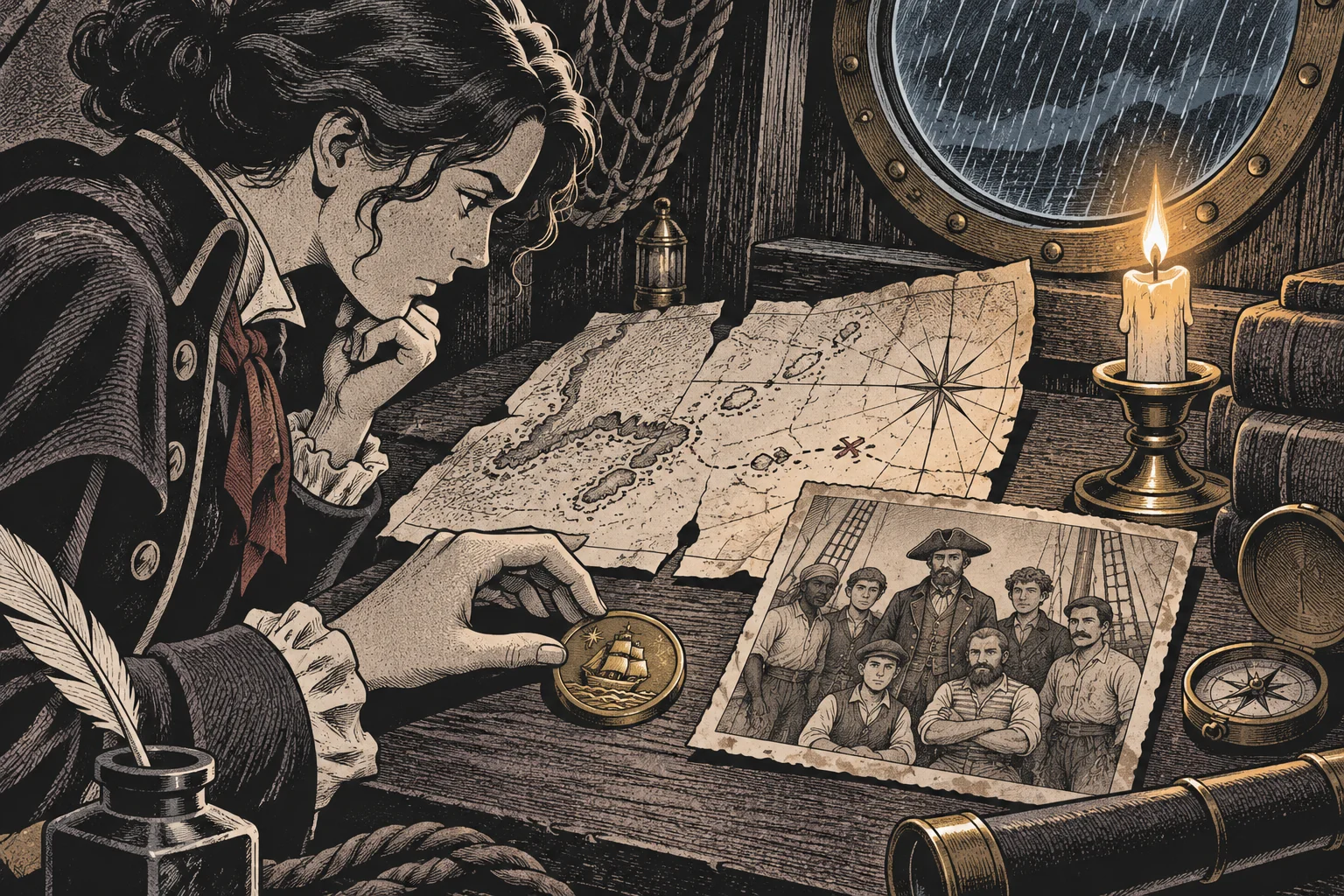
Store every clue as an observation with provenance. A player might find a brass token beside a damaged chart in a fictional cabin. Record what was seen, where it was found, and when it became available. Keep that record stable even if the player later changes their interpretation of the token.
Separate observations from hypotheses. “The token has a three-pronged mark” is an observation. “The mark identifies the navigation crew” is a theory. If the game writes both as established facts, players cannot revise an interpretation when a second token appears in a different location.
Give each clue a few useful tags such as object, person, location, time, or event. Tags help players search their notebook without automatically solving the mystery. Keep the categories consistent and avoid adding metadata that never affects a deduction.
Build a graph from observations to candidate explanations
Represent hypotheses as nodes connected to supporting or conflicting observations. In an original example, a marked token, a cabin location, and a witness silhouette might support the theory that one crew member carried a navigation tool. Another clue could contradict the timing. The player can compare both pieces without being told which one to trust.
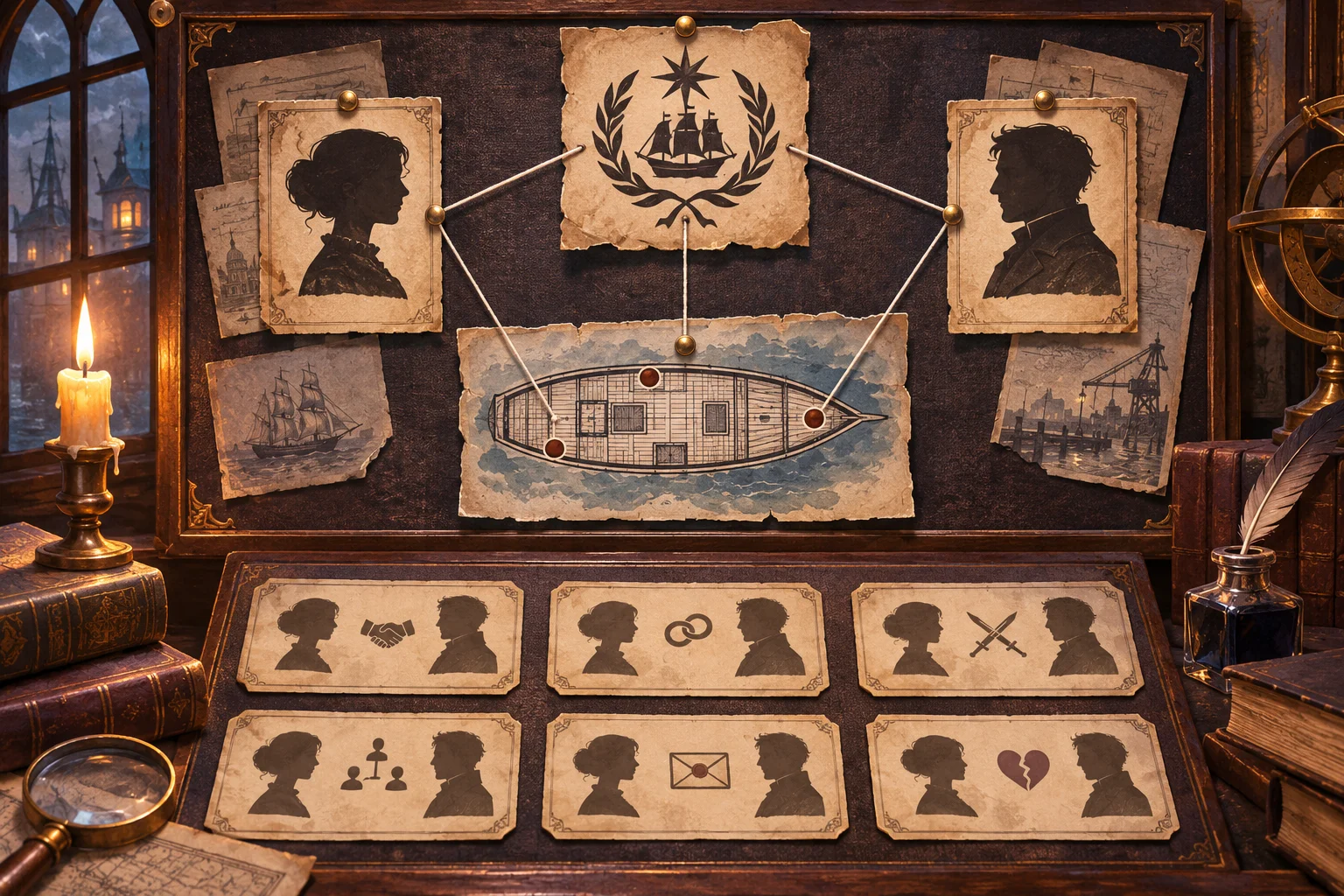
Use relationship types that explain how clues connect: supports, contradicts, occurred-before, located-at, or belongs-to. Do not let a single undifferentiated line mean every kind of relationship. A player should understand why one clue is attached to a candidate explanation.
Require independent support for major conclusions. Two clues that repeat the same information are not necessarily two independent sources. A location marking and a separate witness statement may provide stronger evidence than two versions of one symbol. The exact threshold depends on the game, but explain it through feedback or a short example.
Let players compare, revise, and record deductions
Keep candidate explanations visible until there is enough evidence to confirm one. A notebook can show a supported theory, a contradiction, and one missing connection. If the player commits early, make the consequence clear; if there is no cost, allow correction without treating it as failure.
Let players annotate a clue in their own words if note-taking matters to the design. These notes should remain separate from any official conclusion. A player’s theory can be incorrect while their observation remains valid.
Confirm a connection only when evidence supports it
Define what confirms a relationship and what does not. A matching mark may suggest a shared organization but not prove that two people met. A time clue may eliminate one candidate without identifying the right one. Use status labels such as possible, supported, contradicted, and confirmed to make confidence readable.
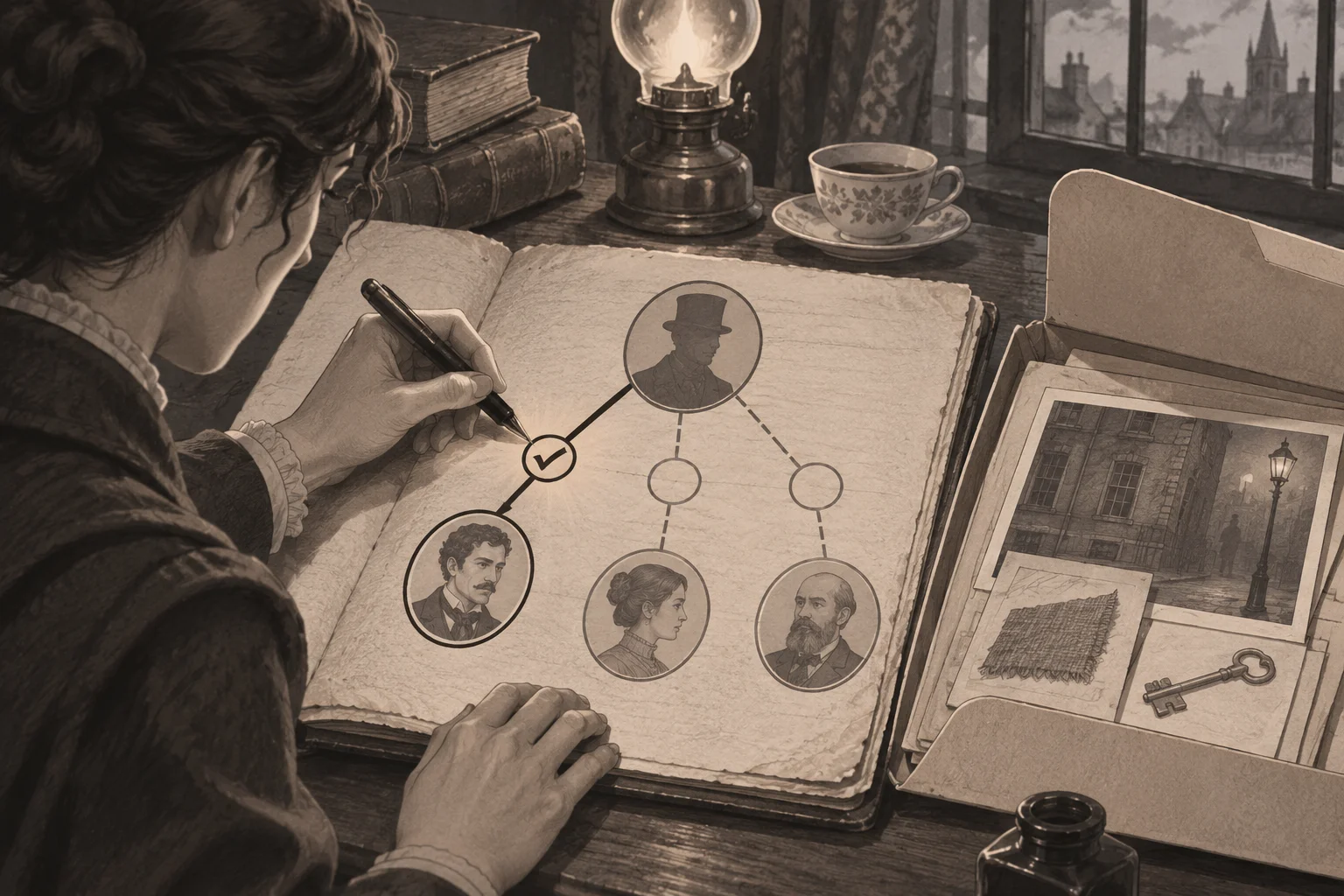
Playtest with people unfamiliar with the mystery. Ask them to explain one conclusion using only the observations they found. Record unsupported guesses, overlooked clues, and mistaken links. If testers reach the intended answer for the wrong reason, add independent evidence or improve the relationship feedback.
Use SEELE AI to draft an original deduction mystery, then inspect whether its clue relationships support more than one plausible hypothesis. A generated story outline does not guarantee a coherent evidence graph. For a broader premise guide, read the original shipboard mystery guide. Prototype an original deduction mystery.
FAQ
How do you build evidence connections in a deduction game?
Store each observation with its source and let the player connect it to one or more candidate explanations. Include links that support, contradict, or leave a hypothesis uncertain. Show the difference between what the player directly saw and what they infer so new evidence can revise a theory without changing the original observation.
How should clues connect to a hypothesis?
Require a clear relationship between each clue and the candidate explanation. A location may support where an event occurred, while an object may suggest who was present. Use more than one independent clue for important conclusions, and make contradictory evidence visible so players can compare explanations instead of guessing.
Should players be able to revise a deduction?
Yes, if new evidence can change a conclusion. Preserve the earlier observation and let the player update the interpretation. Show whether a conclusion is tentative or confirmed, and make the cost of committing early clear if the game uses one. Revision keeps exploration open while still allowing meaningful decisions.
What should you test in an evidence system?
Test whether players understand which observations support a conclusion, whether alternate hypotheses remain visible, and whether a mistaken link can be corrected. Record time spent searching, unsupported guesses, and deductions made for the wrong reason. Ask players to explain one conclusion using the evidence they actually found.