Design the kitchen around a shared route
Overcooked is a cooperative cooking game built around preparing and serving orders as a team. Hearthside Kitchen is a separate fictional prototype. Its grid, stations and path limits are original design examples, not claims about Overcooked level layouts.
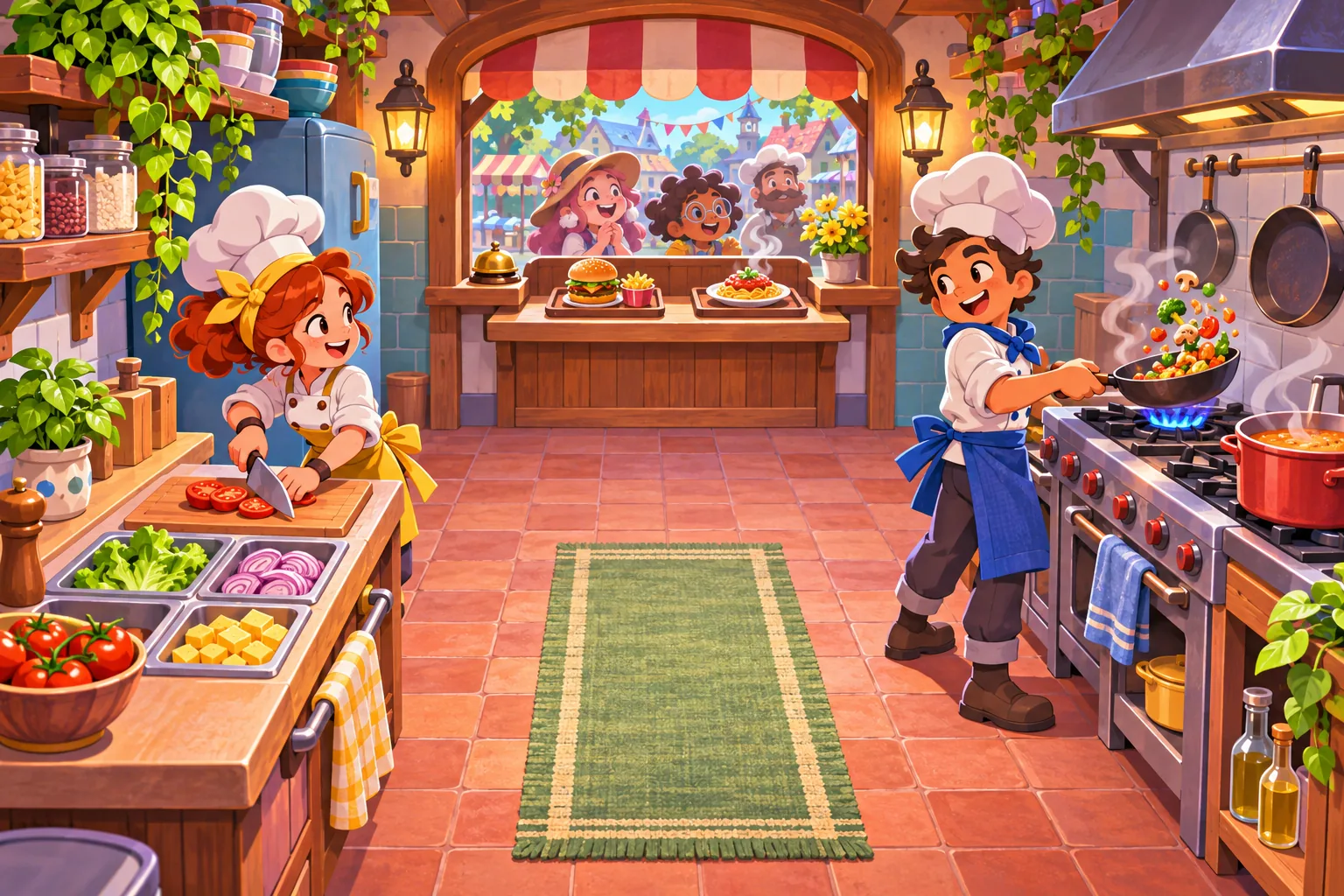
Start with a 5-by-5 floor. Place the entrance at (0,2), prep at (1,2), stove at (3,1) and serving hatch at (4,2). Leave the central aisle open and keep each station within four steps of the entrance. Counters occupy cells; a cook cannot pass through them. This small constraint makes the map easy to validate before adding moving hazards.
Measure station access with grid paths
Run a breadth-first search from the entrance through open floor cells. Each station must be reachable in four or fewer steps. Reject a layout if a counter blocks a station or creates a longer route. The player can still choose a longer path during play, but the base map guarantees a short route between the core stations.
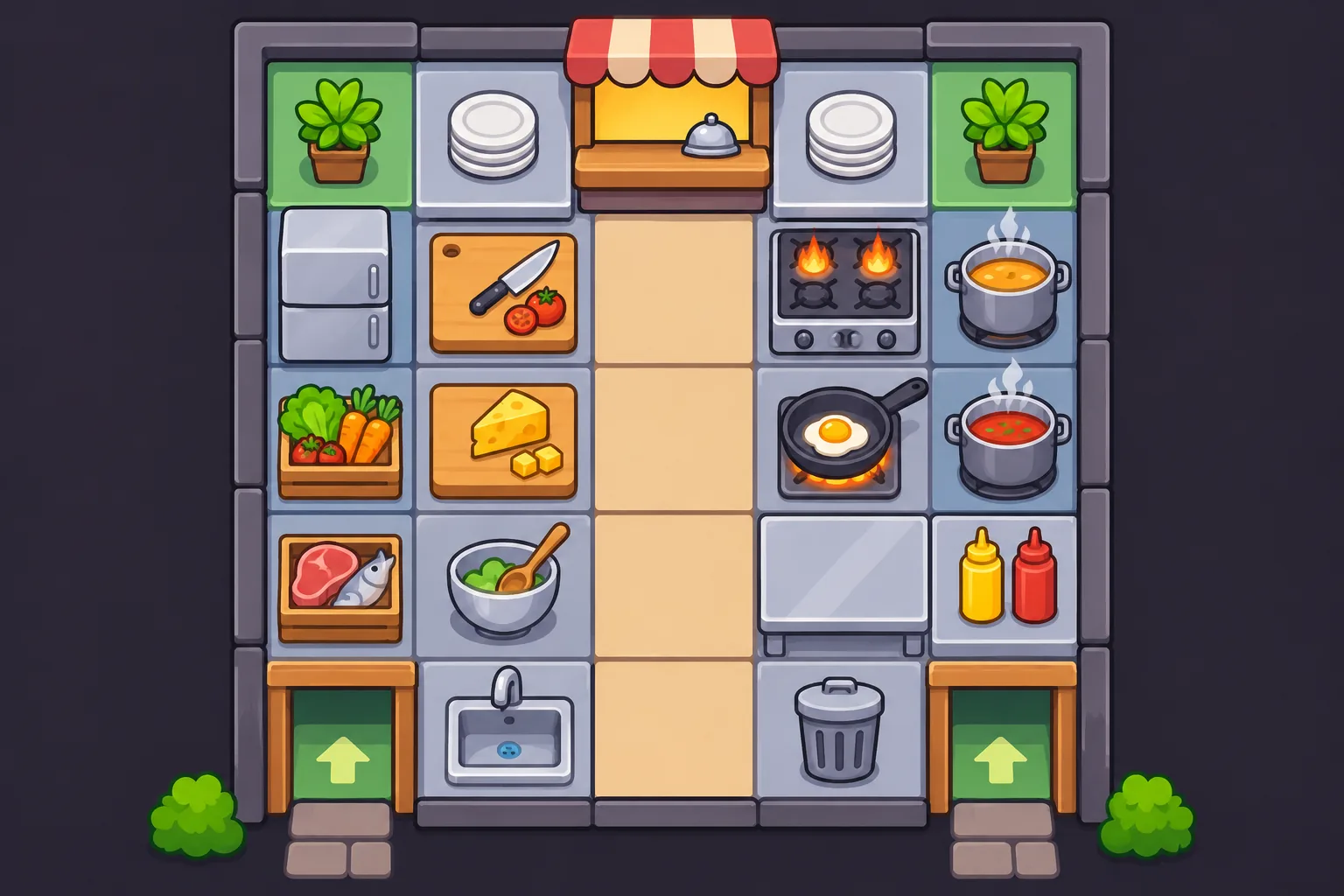
The layout test confirms all three stations are reachable within four steps. Adding a counter to the central route may lengthen access, so the search is rerun after each edit. A counter placed on a station cell is rejected. This verifies map connectivity and distance only; it does not measure whether two cooks will collide during a busy order.
Use play space to reduce crossing paths
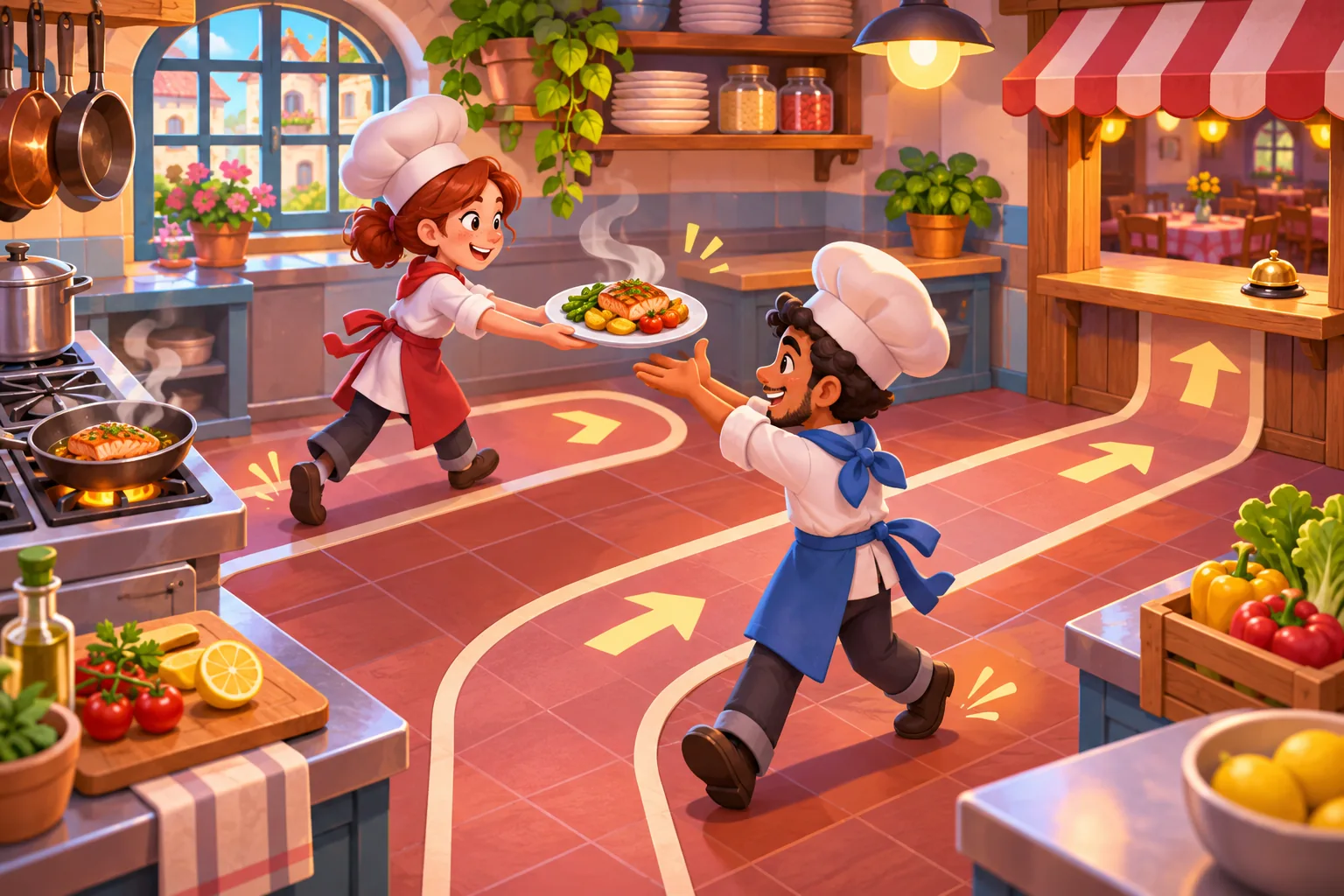
Keep prep near the entrance for incoming ingredients, place the stove off the main lane and put serving at the far edge. Leave a one-cell aisle between them so one cook can move past another. If a redesign puts two stations on opposite ends of a narrow corridor, check the route again before raising order speed.
Validate the map before adding order pressure
Store floor cells, counters, stations and entrances separately, then run the same path check whenever the layout changes. Godot Resource can store an original kitchen map; SEELE AI Game Maker is a starting point for a prototype. Overcooked provides broad co-op cooking context only and does not validate Hearthside's layout limits.
Build an original co-op cooking game with a 5-by-5 kitchen. Put the entrance at (0,2), prep at (1,2), stove at (3,1) and serving hatch at (4,2). Counters block movement. Use breadth-first search to confirm each station is reachable within four steps; reject counters on station cells and rerun the check after edits.
Create an original cooking game in SEELE · Overcooked on Steam
Frequently asked questions
What makes a kitchen layout easy to read?
Separate the stations visually and preserve an open route between them. Hearthside places prep near the entrance, moves the stove off the main lane and keeps serving at the far edge. A visible aisle helps cooks understand where to walk before order pressure or hazards are added.
How can a prototype detect an unreachable station?
Model walkable cells and counters on a grid, then run breadth-first search from the entrance. If a station cannot be reached, reject the layout. You can also cap path length, as Hearthside does with a four-step limit, so each core task remains close to the starting area.
Should counters block movement in a cooking game?
Use one consistent rule and test it as part of layout validation. In this prototype, counters occupy cells and block movement, while station cells must remain open. This makes the route calculation predictable. A different design could allow movement around or behind counters, but its path rules should be equally clear.