Movement challenges work best when players can read what a room asks of them and understand why an attempt failed. In a precision platformer, a jump, dash, or climb should feel consistent enough that difficulty comes from timing and route choice rather than guessing at controls. Celeste’s official changelog documents movement and dash-related behavior, including climb-jump interactions. Use that only as high-level context; build original challenges around the verbs and feel of your own game.
Teach one movement verb at a time
Introduce a movement ability in a low-risk space before asking players to use it near a hazard. A roomy landing area lets them try a jump, test a dash, or learn how a surface responds to a climb. Give feedback quickly: a dust trail, sound, animation, or brief input response can show what happened. Avoid teaching several new rules in a narrow corridor where players cannot tell which one caused a fall.
Make each verb’s limits readable. Show where a dash can begin and end, how long a grip lasts, or whether the player can change direction in the air. A visual cue on a surface can show that it is climbable or temporary. Consistency matters: once players learn a rule, the level should not quietly change it unless the variation is signaled clearly.
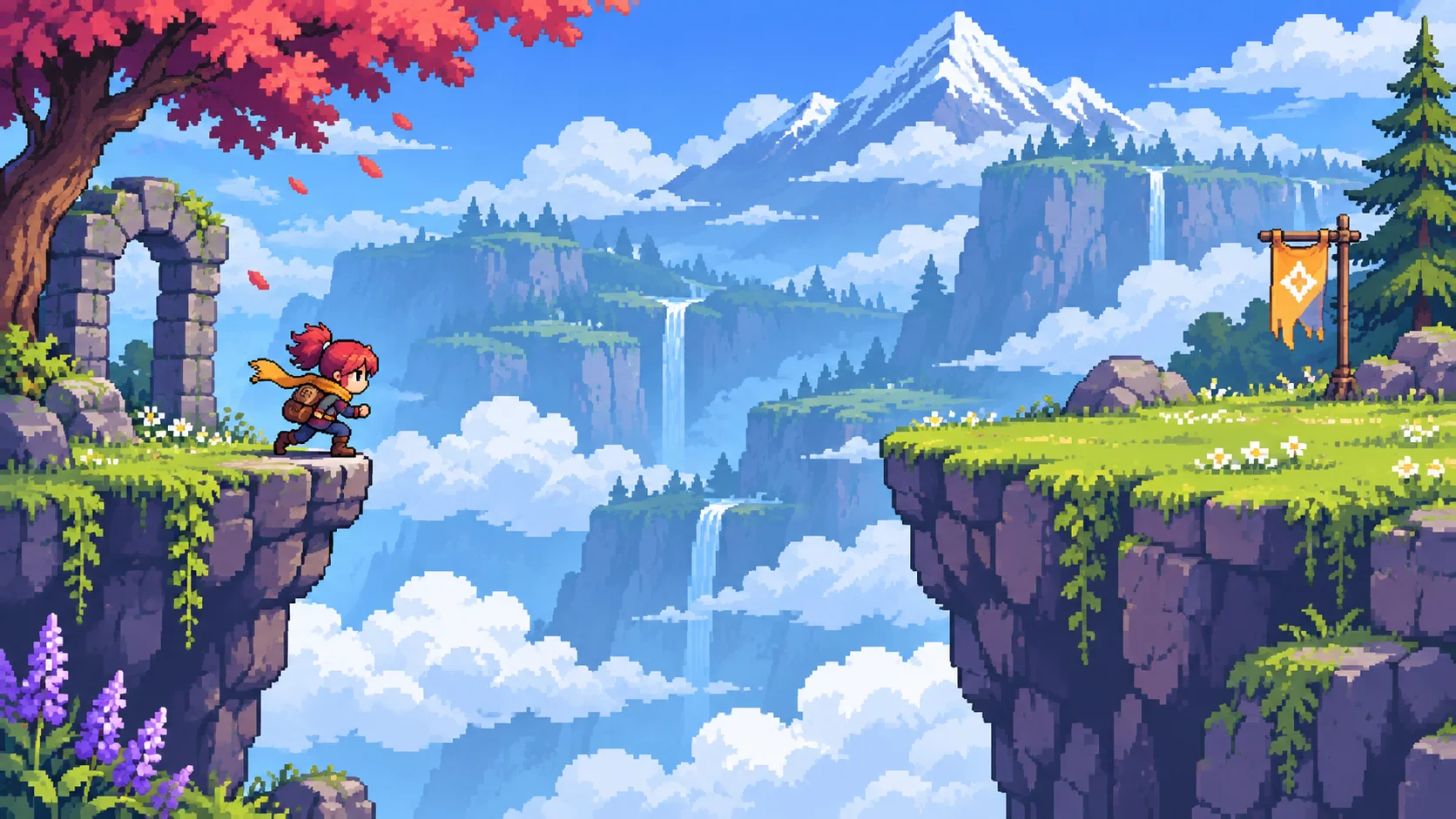
Use a short sequence: introduce the movement, offer a safe practice, then ask for a small variation. For example, a broad gap can teach jump distance, a second platform can change the timing, and a final route can ask the player to combine movement with a moving hazard. Give enough space for the player to see the next landing before committing.
Build readable precision challenges
Design hazards with a clear shape, timing, and consequence. Spikes, moving platforms, and breakable surfaces should be visible before the player enters their range. Avoid placing a hazard behind foreground art or requiring an unseen turn immediately after a launch. A challenge can surprise players through an unexpected combination, but it should not conceal the information needed to respond.
Use landmarks to show direction and safe space. A bright ledge, distinct wall texture, or opening in the background can lead the eye toward the next step. If a route requires a dash into a narrow landing, make the destination visually distinct from dangerous surfaces. The camera should show enough of the route to plan without revealing every challenge at once.
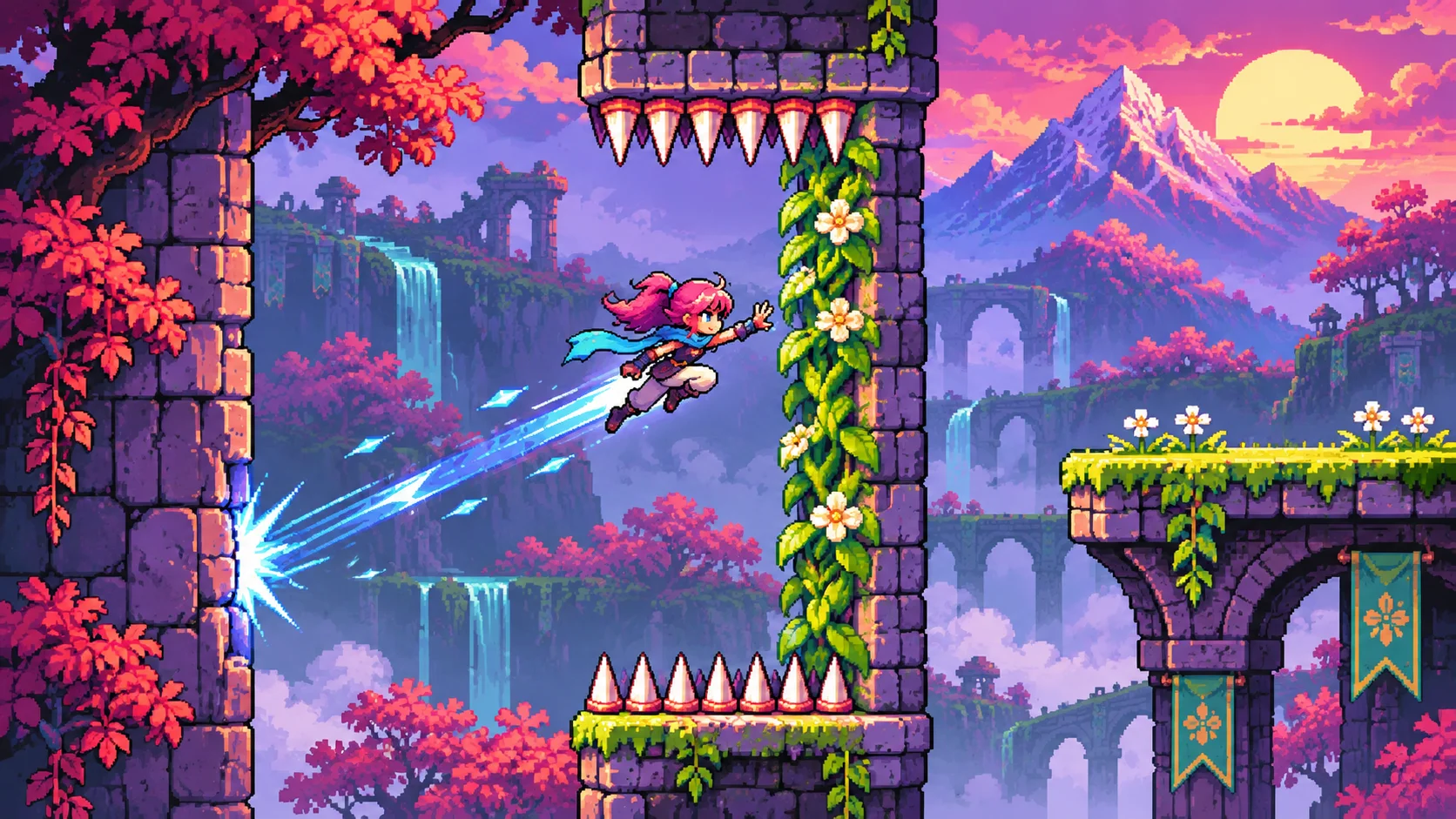
Give players a predictable way to restart. A nearby checkpoint can make experimentation less costly, while a longer sequence can test whether players retain a learned skill. Decide how much progress is preserved after failure, and make the rule consistent. If a challenge is short, restarting at the entrance may be fair; if it is long, use a checkpoint before a major skill combination.
Combine movement skills into a route
After players understand individual verbs, combine them into a route with several valid decisions. A jump might position the character for a dash, while a climb allows a pause before the final landing. Make the sequence build on what players already learned. When adding a new twist, isolate it first, then blend it into more familiar movement.
Vary challenge rhythm. Alternate a demanding passage with a safe platform where players can look ahead. A quiet beat can help them understand the previous room and prepare for the next one. If every screen demands perfect timing, players may stop noticing how the movement system works and focus only on avoiding mistakes.
Consider accessibility and different play styles while preserving the challenge’s core idea. Remappable controls, adjustable speed, generous input windows, or optional practice can make a movement game easier to approach. Celeste’s changelog documents support for movement-related options and Assist Mode changes; that is a reminder to treat control and difficulty settings as part of the overall design. Choose adaptations that fit your project and explain what they change.
Playtest failure and checkpoint pacing
Watch people play without explaining the intended route. Note where they pause, what they look at, and whether a failed attempt teaches them anything. Ask what they expected to happen after a dash or climb. If their mental model differs from the game’s response, improve the control feedback or level cue before increasing difficulty.
Track how many attempts a challenge takes, where deaths cluster, and whether players reach the next room with confidence. A high attempt count is not automatically a problem if players understand the challenge and enjoy improving. Repeated deaths at the same hidden edge or unexpected collision usually point to a readability or consistency issue. Change one element at a time so you can see which adjustment helped.
Test checkpoint placement as part of the room. A checkpoint just before a new combination lets players practice without replaying solved content. A checkpoint after the combination can provide a satisfying milestone. Ask whether the restart cost feels fair and whether players can recall the skill they were practicing. Iterate on the room geometry, hazard timing, and recovery point together.
The official Celeste changelog supports a narrow factual reference to movement and dash interactions in that game. Your own precision platformer should define its controls, surfaces, and recovery rules on their own terms. SEELE’s documented game-creation capability can help start from a natural-language game idea; prototype one short room, observe real attempts, and refine its movement cues before building a longer sequence.
Frequently asked questions
How do you design a fair platforming challenge?
Show the relevant surfaces and hazards before they become dangerous, keep movement responses consistent, and let players understand what an attempt asks them to do. Start with one learned skill, introduce a twist clearly, and provide a restart point that matches the length and difficulty of the challenge.
When should a level combine movement abilities?
Combine abilities after players have practiced each one in a safer space. A room can ask for a jump followed by a dash or a climb after a landing, but make the route readable and build on familiar rules. Introduce one new complication at a time so players can identify what to learn.
How often should precision platformers use checkpoints?
Place checkpoints around meaningful learning milestones. A checkpoint before a difficult combination can reduce repeated work, while a longer mastered sequence can remain intact if players have already learned its parts. Playtest the restart cost and adjust when it distracts from the movement challenge.
How can players learn from repeated failure?
Give clear feedback about collisions, timing, and movement state, then let players retry quickly. Observe whether each attempt changes their approach. If players repeat the same action without understanding the result, clarify the control response, hazard cue, or landing area before making the section harder.
Prototype a short route with one movement verb, one combination, and a fair checkpoint. Explore an AI game creation starting point for an original precision platformer.