Object arrangement puzzles ask players to infer a rule from familiar things. Max Inferno’s official A Little to the Left listing describes sorting, stacking, and organizing household objects and notes that puzzles can have multiple solutions. That broad organization-puzzle context is the only reference fact used here; the object properties, validation rules, and hint ladder below are original design recommendations.

Represent objects and relationships
Start with properties a player can observe: color, size, material, category, orientation, or a visible mark. A puzzle can ask players to group objects by type, order them by size, or align a pattern. Keep the rule set small enough that players can explain what they are trying to do.
Separate required relationships from decoration. If a row must increase in size, encode that as a relationship between neighbors rather than a fixed coordinate for every object. If several items belong together, represent the shared category. The validator can then check the property that matters while allowing natural variation in spacing or order.
Before adding a hint, list the intended valid arrangements and tempting near misses. This reveals whether the rule is too vague or whether an unspoken convention is doing the work. A puzzle should not reject a plausible arrangement because the validator expects an exact position the player could not infer.
Offer multiple valid arrangements
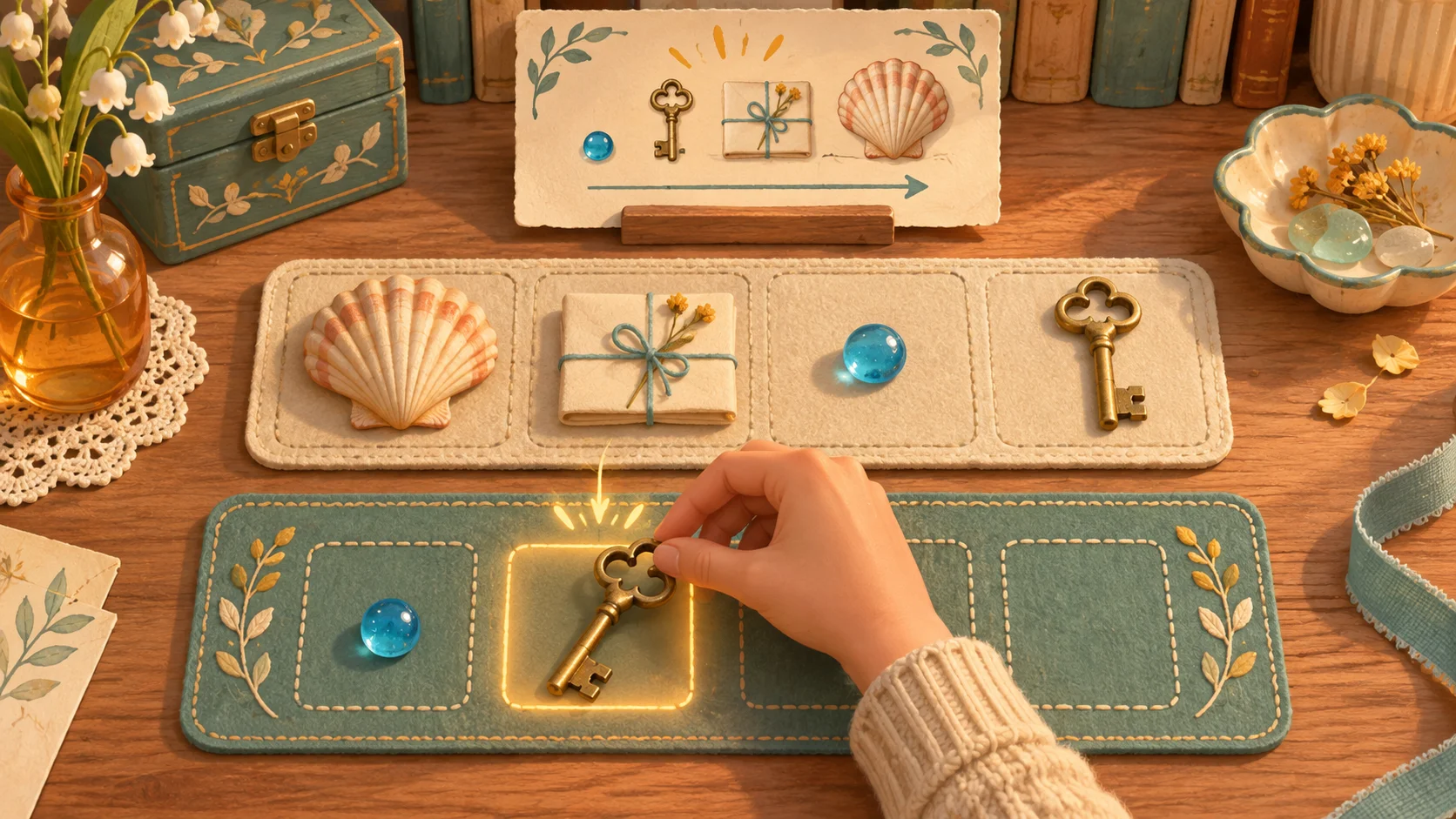
Define the condition for success, then accept any arrangement that satisfies it. If the puzzle is about grouping by type, the order within each group may not matter. If the task is about a sequence, the direction might matter but the distance between items might not. State these decisions in the design brief and make feedback consistent.
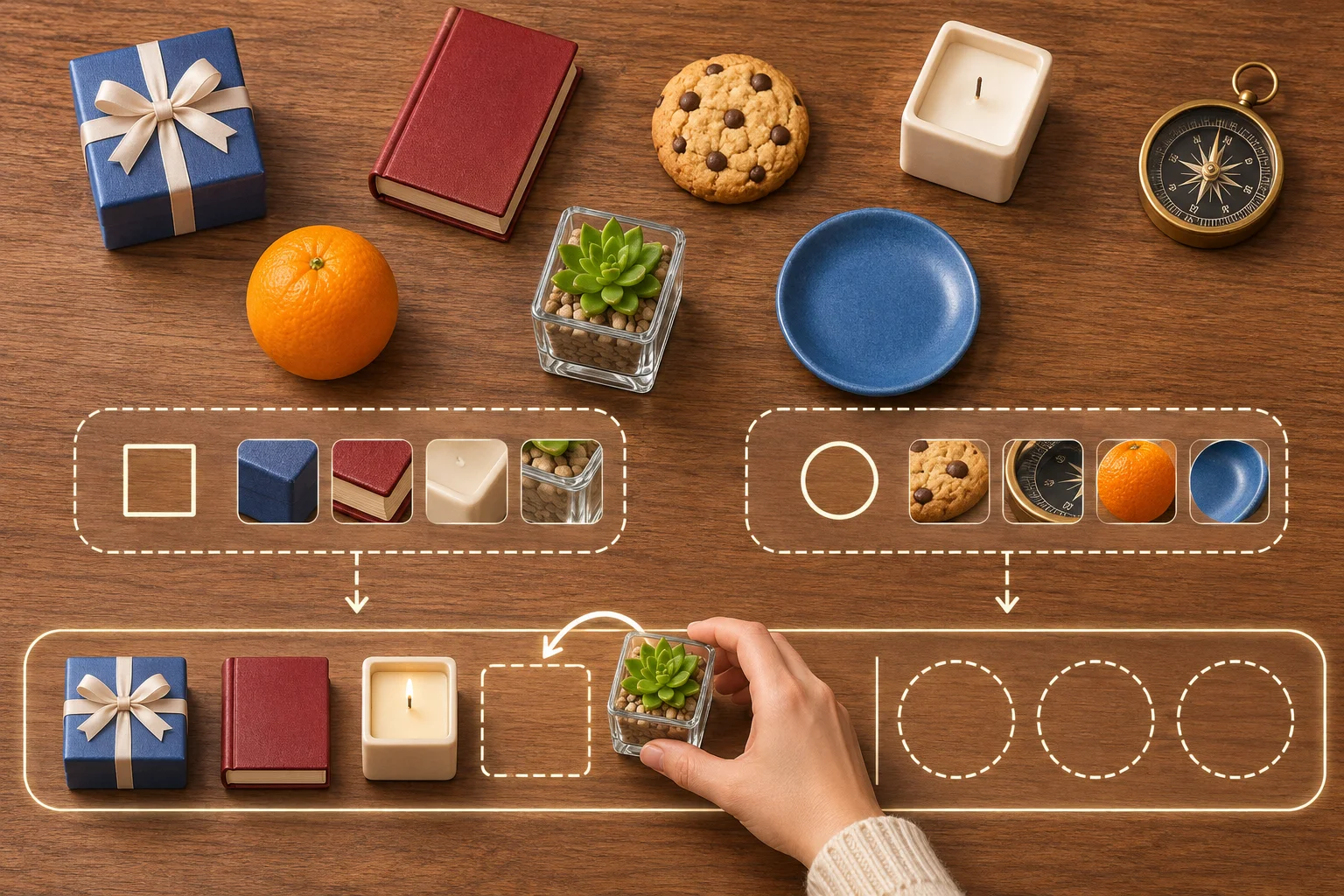
Multiple solutions can improve experimentation, but they need clear boundaries. Decide which properties are relevant and which are cosmetic. If a player finds another arrangement that obeys the visible rule, accept it or explain the additional constraint before asking them to solve the puzzle again.
Test the validator separately from the art. A table with simple colored shapes can reveal gaps in the rule logic before a polished room makes failures harder to diagnose. Once the rule works, restore the context and check that the visual clues still point toward the same interpretation.
Use hints to reveal one step
A useful hint ladder starts with a nudge and reveals more only if the player asks. The first hint might draw attention to two related objects; a later hint can name the shared property; a final hint can demonstrate one move. Let players stop at any stage so they keep ownership of the discovery.
Keep hints attached to the current puzzle state. If a player has already grouped the objects correctly but missed an orientation detail, a hint should focus on that detail rather than repeat the whole premise. Avoid hints that give a rule inconsistent with the validator, and make it possible to dismiss a hint without losing the arrangement.
Decide how to handle alternate solutions in the hint system. A hint may identify a relationship instead of prescribing the only order. If several internal orders work, show one example while making clear that the player can explore other valid options.
Test recognition and puzzle clarity
Observe a player without explaining the rule. Ask what they think the objects have in common and what they expect the game to accept. Record the first plausible arrangement, near misses, hint usage, and moments when feedback changes their interpretation. A completion rate alone will not tell you whether the solution felt earned.
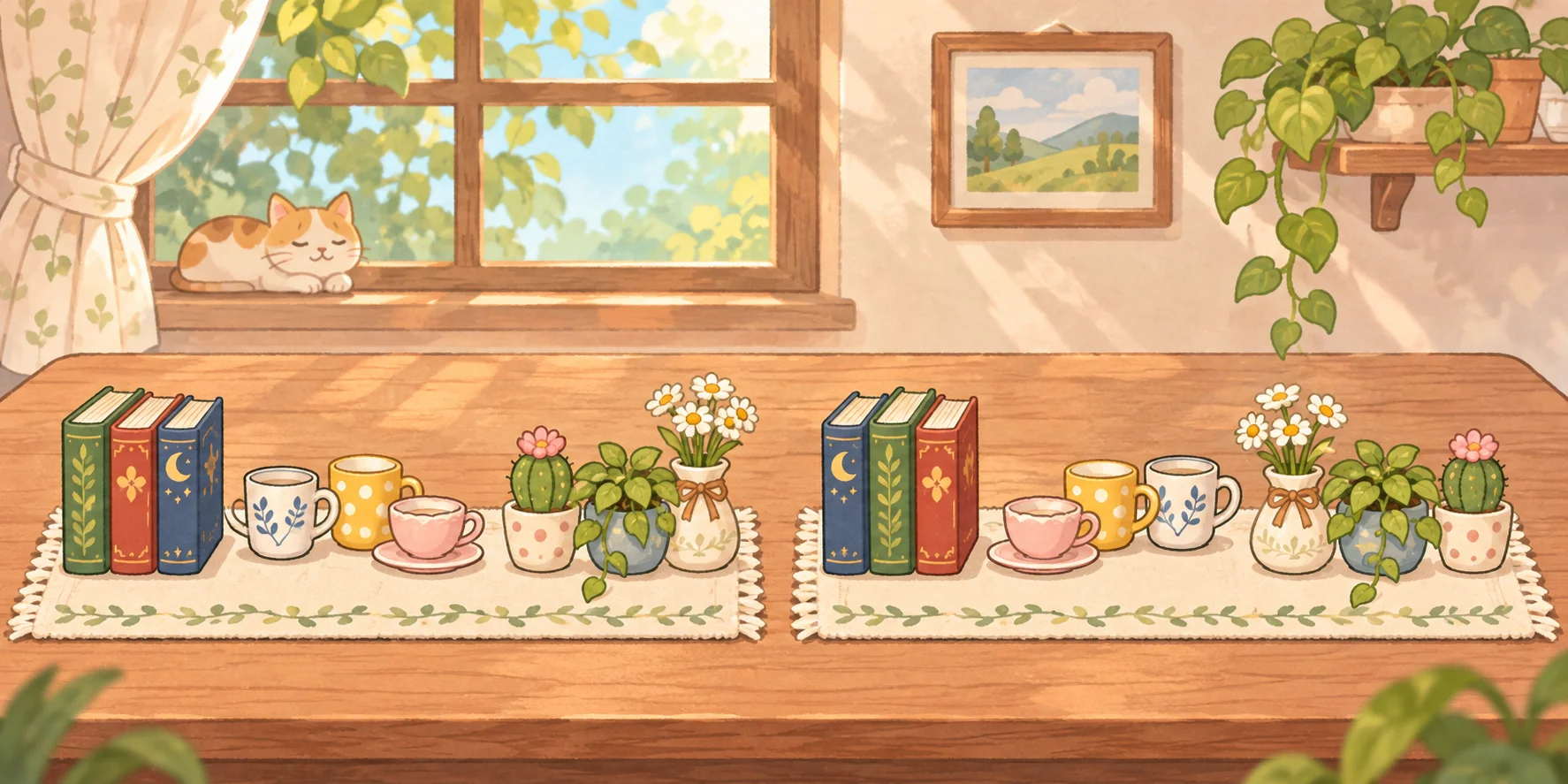
Test every intended solution and at least one plausible near miss. If players explain a rule that the validator does not accept, revise the clue or accept the alternative when it still fits. If a hint solves too much, split it into a smaller step. Repeat the test with new players after each major change.
SEELE AI can help outline an original organization-puzzle concept, but object relationships, validators, alternate-solution coverage, and hint behavior need to be implemented and playtested. For a broader premise, read the original organization-puzzle guide. Prototype an original organization puzzle with SEELE AI.
FAQ
How do you build object arrangement puzzles?
Define object properties such as size, color, category, or orientation, then combine them into a small number of visible relationships. Validate those relationships rather than one exact coordinate arrangement when the puzzle allows alternatives. Test with a few objects before adding decorative detail or more constraints.
How can a puzzle allow multiple solutions?
Specify the rule each solution must satisfy, then accept any arrangement that meets it. For example, a set can be grouped by type while still allowing several internal orders. Check for accidental edge cases where an arrangement looks valid to a player but fails because the validator expects an unshown detail.
What makes a good hint system for an organization puzzle?
Offer a progression from a small nudge to a more direct clue. A first hint might identify two related items, while a later one can reveal the relevant ordering rule. Let players choose whether to continue, and avoid penalizing experimentation if discovery is part of the intended experience.
What should you playtest in an arrangement puzzle?
Observe whether players can explain the relationship they are trying to satisfy, how often they try plausible alternatives, and whether the completion feedback matches their understanding. Test all intended solutions and at least one tempting near miss. Revise ambiguous constraints and feedback when a reasonable arrangement is rejected.