Object placement can make a quiet puzzle feel personal: players decide where things belong, then read the room to understand what changed. Witch Beam’s official Unpacking listing describes a zen puzzle about taking possessions from boxes and fitting them into a new home. That high-level premise is the only reference fact used here. The placement rules, object relationships, and room examples are original design guidance.

Define item footprints and legal surfaces
Give every item a footprint, orientation, support requirement, and set of surfaces it can use. A small book might sit on a table or shelf; a tall plant needs floor support; a mug may fit on a flat surface but not on a narrow rail. These properties make placement behavior consistent and let you design items that feel different without adding arbitrary exceptions.
Surfaces need their own capacities and rules. A shelf might have a usable length and a weight limit; a desk can accept several objects but still reserve an area for interaction. Start with a few simple categories such as floor, wall hook, shelf, and tabletop. Add precision only where it creates a decision the player can understand.
Before confirming a move, calculate whether the item overlaps another object, extends beyond its support, or breaks a room constraint. Keep object and surface data separate from visual art so you can adjust the rules without redrawing every item. A small test room with varied shapes will reveal more than a large catalog before the system is stable.
Make placement feedback specific
Keep the item attached to the cursor while the player searches for a valid spot. Show its full footprint as a preview and color the target surface to indicate whether it can accept the item. If placement is invalid, say why through a clear visual: an outline can show that an item is too wide, unsupported, overlapping, or incompatible with the surface.
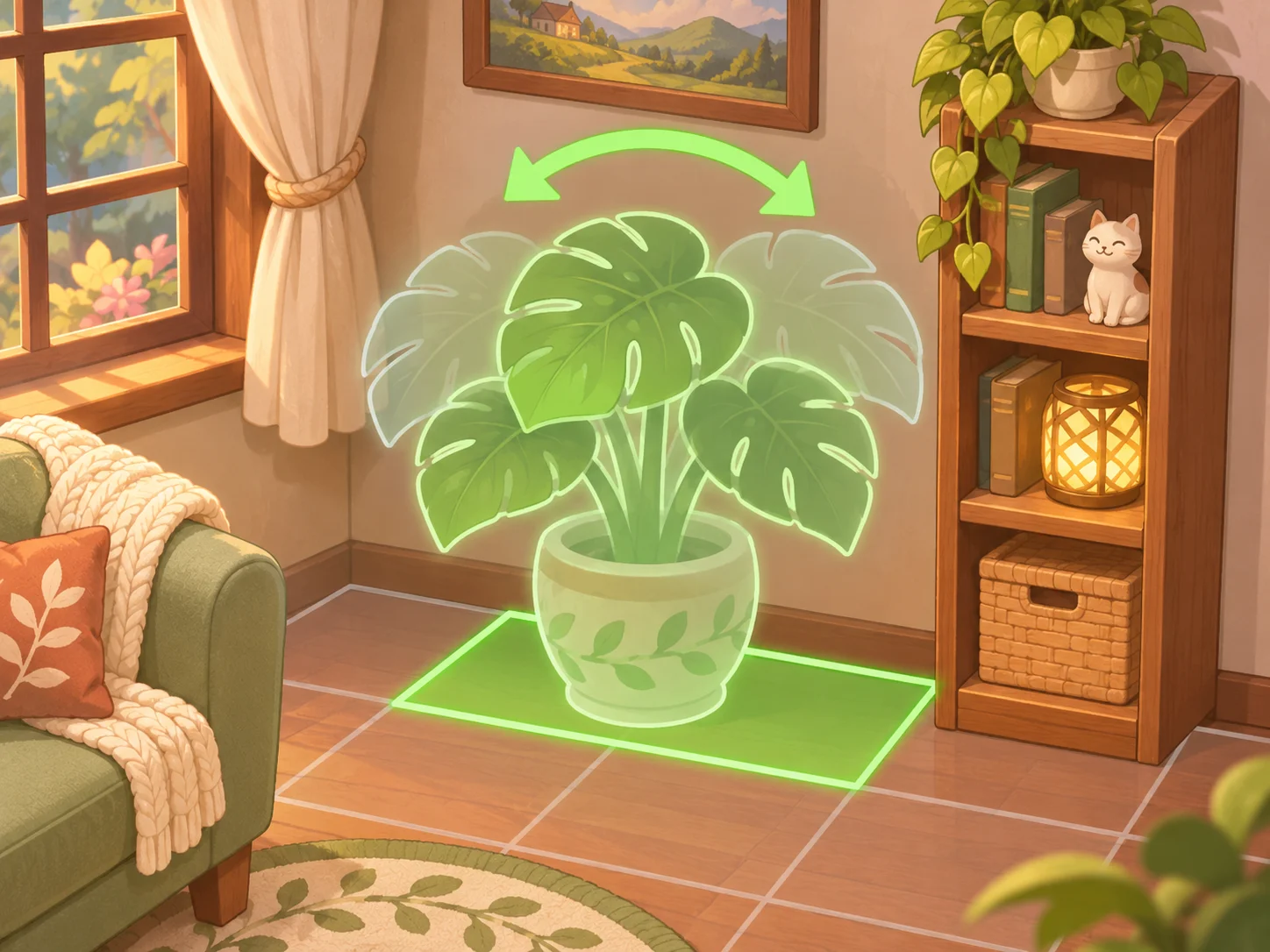
Offer rotation when the item has a meaningful alternate orientation. Make the control visible, and update the preview immediately. Avoid silently snapping an item to a different surface or changing its orientation; the player should understand what action caused the result. Let them cancel without losing the item or undo a placement after seeing it in context.
Use short, consistent feedback for each constraint. A shelf that rejects an item for being too tall should communicate that one reason, not flash several unrelated warnings. Test the signals without explanatory text to see if the room itself teaches the rule; add a concise instruction only if observation reveals ambiguity.
Use room context to create gentle puzzles
Room purpose can guide arrangement without requiring one exact layout. A bedroom, workshop, or reading nook suggests different uses, while a few object relationships can reinforce the setting. A lamp near a chair may create a coherent reading spot; the same lamp could still work beside a bed. Decide which relationship is required for progress and which is an optional aesthetic reward.
If a puzzle asks players to group related items, show the relationship gradually. One object might have a recognizable shape or a visual hint that links it to a shelf. Avoid relying on hidden scoring rules that reject a plausible solution without explanation. Where several arrangements make sense, accept more than one and make the result feel responsive.
Keep functional rules separate from decorative scoring. An item may need support to stay put, while an optional composition bonus rewards a balanced or themed room. This separation lets players experiment freely without making every personal choice feel like a wrong answer.
Support undo and evaluate the room result
Make moves reversible and preserve the room state reliably. Undo should restore the item’s previous position and orientation, including after a move across surfaces. Save only confirmed placements, or clearly support an in-progress state; do not let an accidental drag erase a carefully arranged room.

Playtest with different object sizes, rotations, surface edges, overlap cases, save and reload, and undo after a move. Ask people to arrange the room without instructions and note which feedback they notice. Track invalid attempts and the time it takes to reach a satisfying result, but do not optimize away experimentation if trying alternatives is part of the pleasure.
SEELE AI can help draft an original arrangement-puzzle concept, but placement validation, interaction feedback, saving, and puzzle completion need implementation and hands-on testing. For a broader premise, see the original unpacking-inspired guide. Prototype an original arrangement puzzle with SEELE AI.
FAQ
How do you build object placement for an unpacking puzzle?
Represent each object with a size, orientation, support requirement, and any room-specific constraints. Represent surfaces with capacity and accepted object types. When a player moves an item, preview whether it fits and let them confirm or undo. Test placement rules in a small room before adding more item categories.
How should a game handle an item that does not fit?
Keep the object attached to the cursor, show the target surface and the specific reason placement is invalid, and allow the player to rotate or cancel the move. A subtle shape or color cue can teach the constraint. Avoid silently snapping an item elsewhere because that can make cause and effect unclear.
How can room context make placement meaningful?
Give a room a purpose and let a few object relationships reinforce it. A lamp near a reading chair can feel coherent without forcing one exact pixel position. Distinguish a required relationship from an optional aesthetic choice, and show enough feedback for players to discover both.
What should you test in a placement system?
Test object rotation, overlap, surface capacity, edge cases near boundaries, undo, and saving after moves. Ask players to arrange objects without instructions and note where feedback fails. Track invalid attempts and time to a satisfying arrangement, but preserve multiple valid layouts when the design allows them.