Player-built obstacles turn a platform level into a shared design problem: every participant changes the course that everyone must cross. Clever Endeavour Games’ official Ultimate Chicken Horse listing describes players building a level during play by placing traps and hazards before attempting to reach the goal. That broad premise is the only reference fact used here; the draft pool, placement limits, and testing rules below are original recommendations.
Separate the building phase from the run
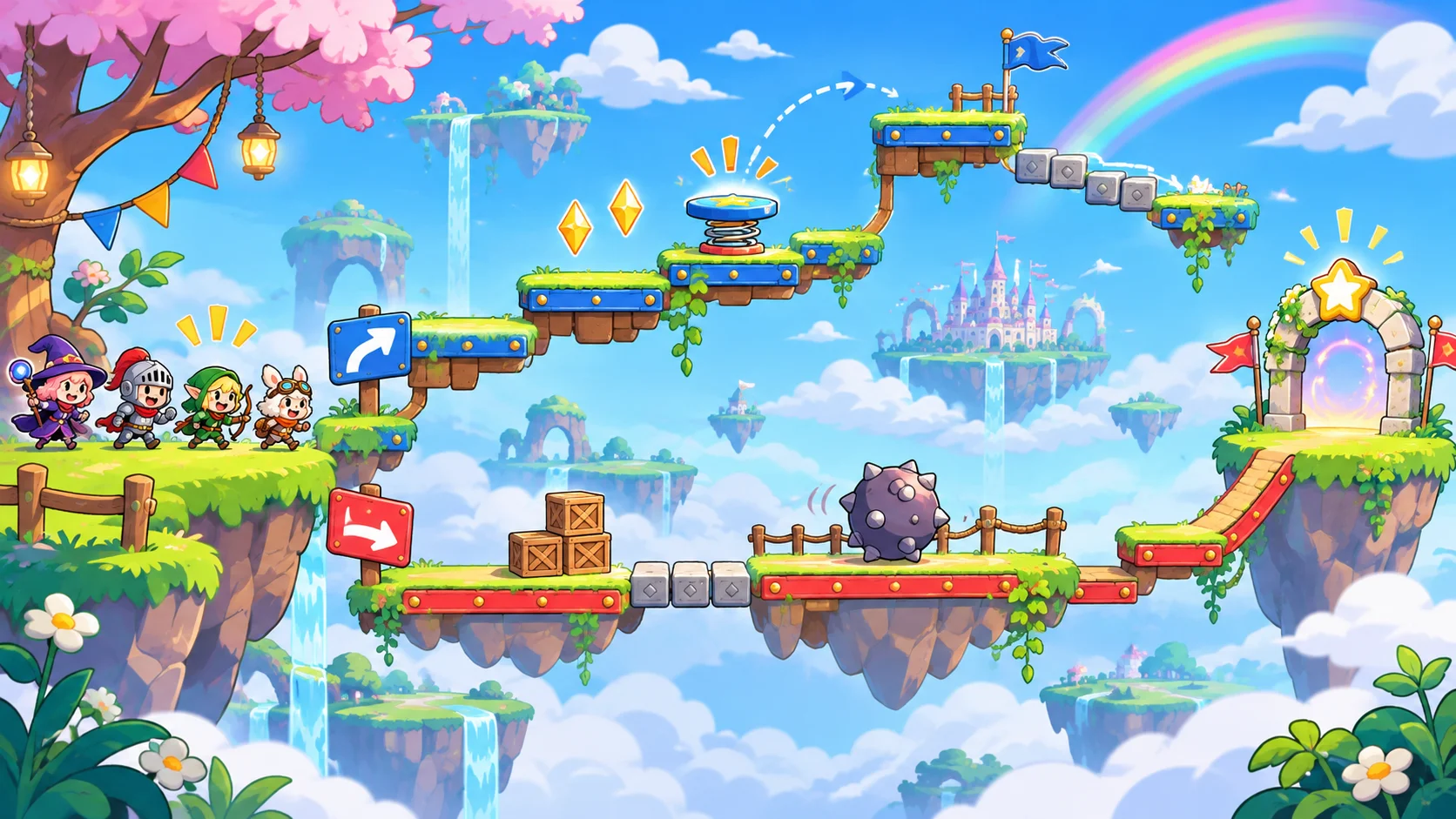
Keep construction and traversal distinct at first. A short build phase gives players time to inspect a piece, choose a socket, and consider how it changes the route. Then lock placement, show a countdown, and let everyone attempt the same course. This separation makes cause and effect easy to understand: players can connect the obstacles they placed with the risks they faced.
Use a small shared inventory before adding individual hands. For example, offer a few platform extensions, one spring, a low moving hazard, and one slow hazard. Each player takes a turn placing one item. Limit duplicate pieces until you know the course can handle them. The exact inventory should follow your movement model; a hazard that is trivial for a double-jump character may be impossible for a character with a short hop.
Show turn order and remaining pieces in the build interface. If rounds are timed, give a warning before the phase closes and make the final placement state unmistakable. A player should not lose a choice because a countdown ended without a clear signal.
Constrain placement while preserving route choice
Represent legal positions as sockets or cells rather than allowing free placement everywhere. A piece can snap only where its footprint fits and where it does not overlap the start, goal, or another forbidden zone. These boundaries reduce fiddly placement and make it easier to test many layouts.
Before the run begins, validate that at least one route remains possible under the game’s actual movement rules. A simple reachability graph can represent platforms as nodes and jumps as edges; remove edges blocked by new pieces, then check that the goal is still reachable. This check does not prove a route is fair or fun, so also run the course with a basic movement bot or a human tester.
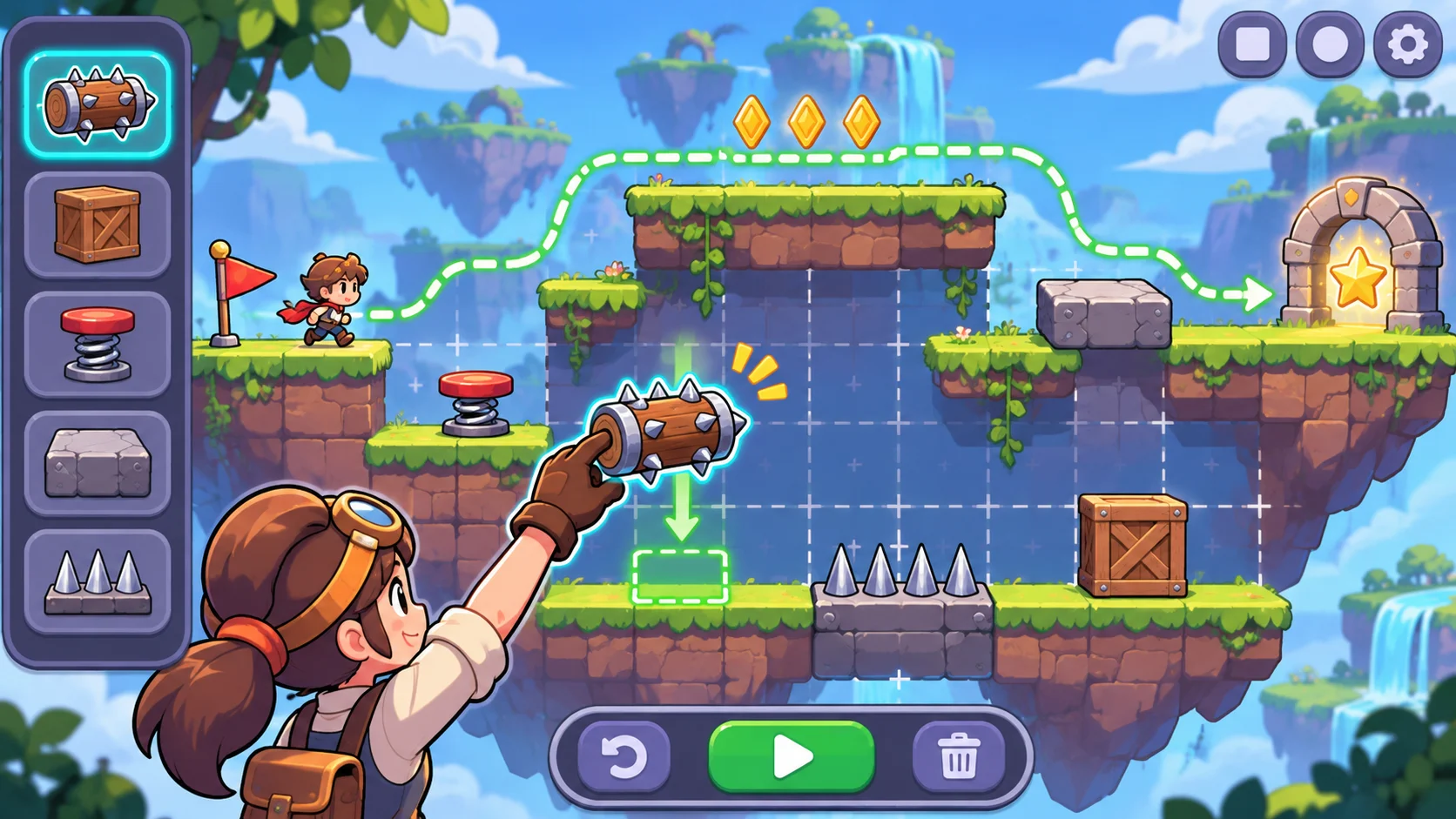
Make legal and illegal positions visually different before a player confirms. Show a piece’s collision footprint, highlight a valid socket, and explain why a blocked socket cannot accept it. When a piece changes an existing route, preview the affected space. A clear preview prevents players from discovering after the countdown that a placement covered an essential landing.
Balance the piece pool for counterplay
Give hazards a readable behavior and at least one response. A slow roller might be avoided with a jump, waited out, or bypassed by a longer platform route. A narrow gap might reward timing but remain crossable with the baseline movement. Avoid combining an unseen hazard, a forced landing, and an immediate second threat unless the game has already taught that sequence.
Think in terms of tradeoffs instead of “good” and “bad” pieces. A short route can be dangerous, while a longer route costs time. A spring can speed a confident player but send another player past a safe landing. Label the risk through animation, shape, sound, or a preview rather than requiring a written rulebook.
Check the full item set for repeated punishment. If several pieces all target the same jump or timing skill, the draft may remove viable styles instead of creating a choice. Keep early pools small, then add variety after playtesters can recognize what each piece does and what options remain.
Playtest rounds and tune the rules
Record completion rate, time to goal, falls by obstacle, abandoned rounds, and whether players can explain the threat they faced. Compare new players with experienced players; high completion for experts can hide a dead end for everyone else. Ask testers to point out which placements felt clever, surprising, or impossible, then compare those reports with the actual route data.
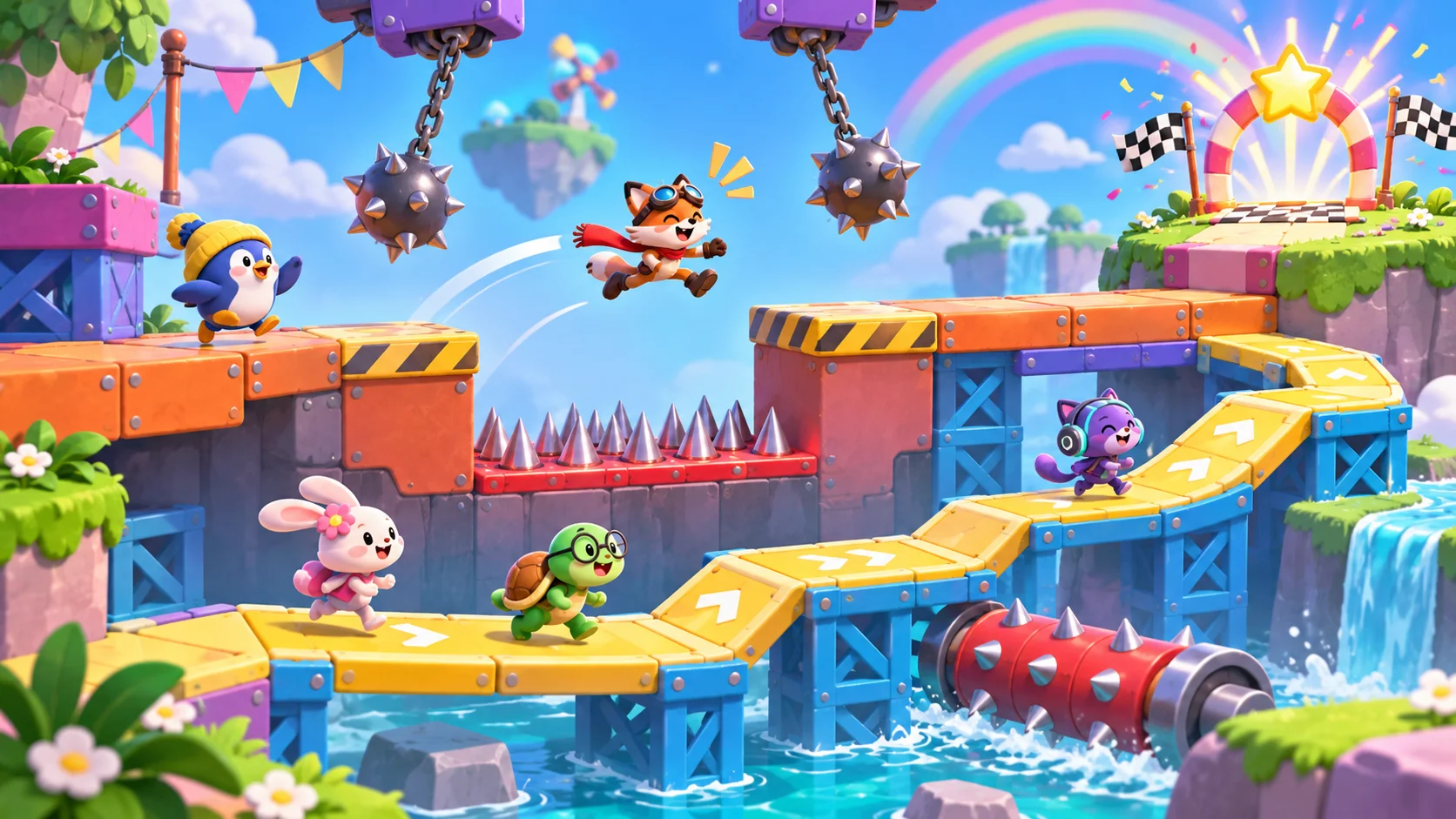
Change one rule or one obstacle at a time. If players miss a danger, improve its warning or preview. If a placement blocks all progress, tighten socket validation or update the route test. If every player chooses the same safe route, adjust the cost or reward rather than adding more hazards. Replay the same layout after each change so the result is comparable.
SEELE AI can help draft an original party-platformer concept, but the movement set, collision rules, route validator, and obstacle balance must work in the actual prototype. For the broader concept, read the original party-platformer guide. Prototype an original party platformer with SEELE AI.
FAQ
How do you build player-placed obstacles in a platformer?
Create a distinct build phase, give players a limited pool of pieces, and restrict placement to validated points. Before a round starts, verify that at least one route remains traversable. Explain each obstacle’s collision and timing, then test the same layout with different movement skills.
How do you keep player-built levels fair?
Preserve a viable path, make hazards readable before commitment, and provide counterplay such as an alternate route, a timed opening, or a jump that fits the base movement. Track whether players understand why they failed. Fairness depends on legibility and choice, not on making every route equally easy.
What should go in an obstacle draft pool?
Start with a small set of pieces that change route length, timing, or movement demands in different ways. Avoid several pieces that punish the same action. Give every high-risk choice a visible tradeoff, then add new pieces only after players can distinguish their behavior.
What should you measure in a party-platformer playtest?
Record completion rate, time to goal, falls by obstacle, abandoned rounds, and whether players can explain the threat they faced. Compare results across skill levels and layouts. If one placement repeatedly blocks progress or hides danger, revise its legal sockets, warning, or counterplay.