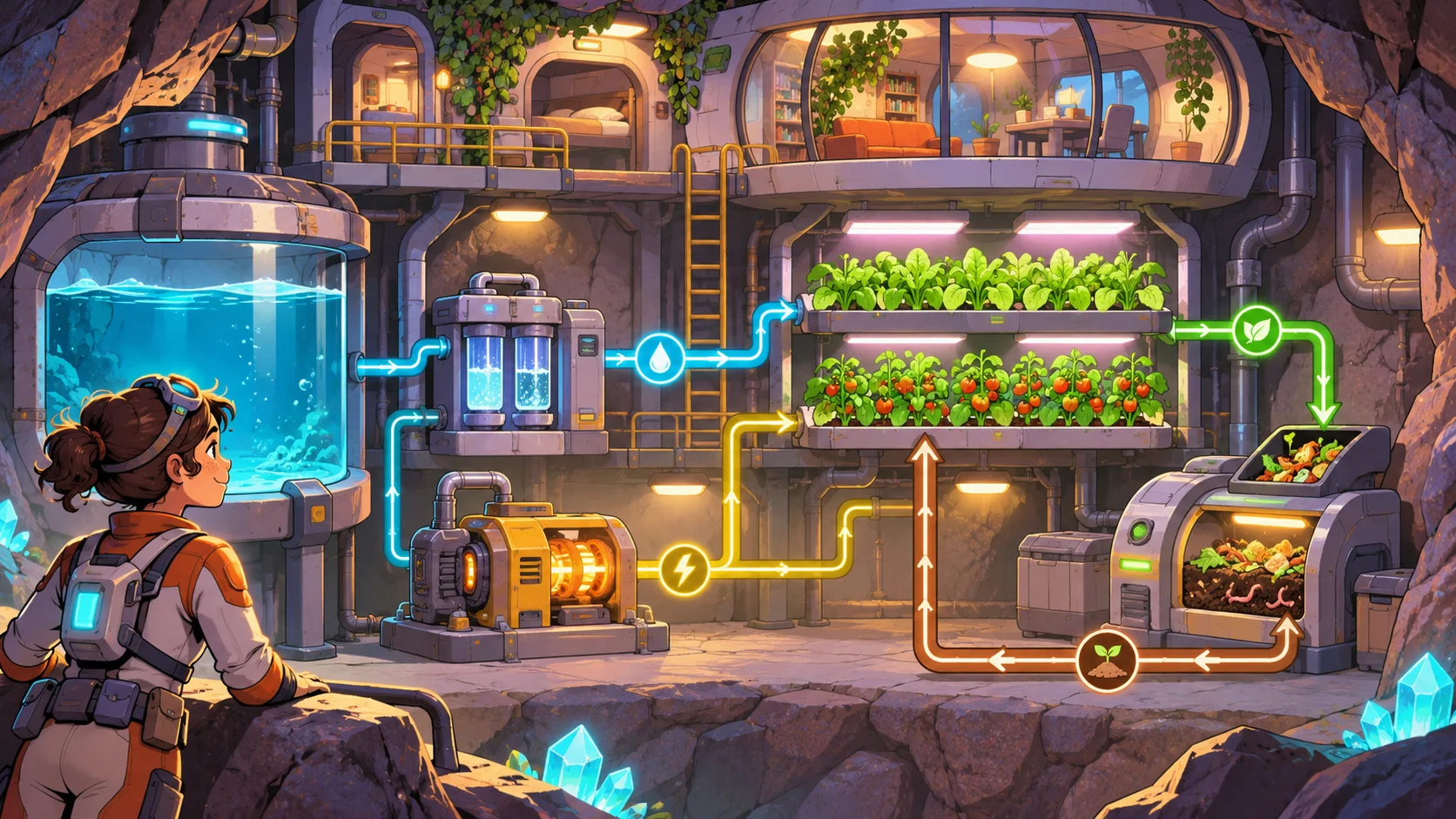
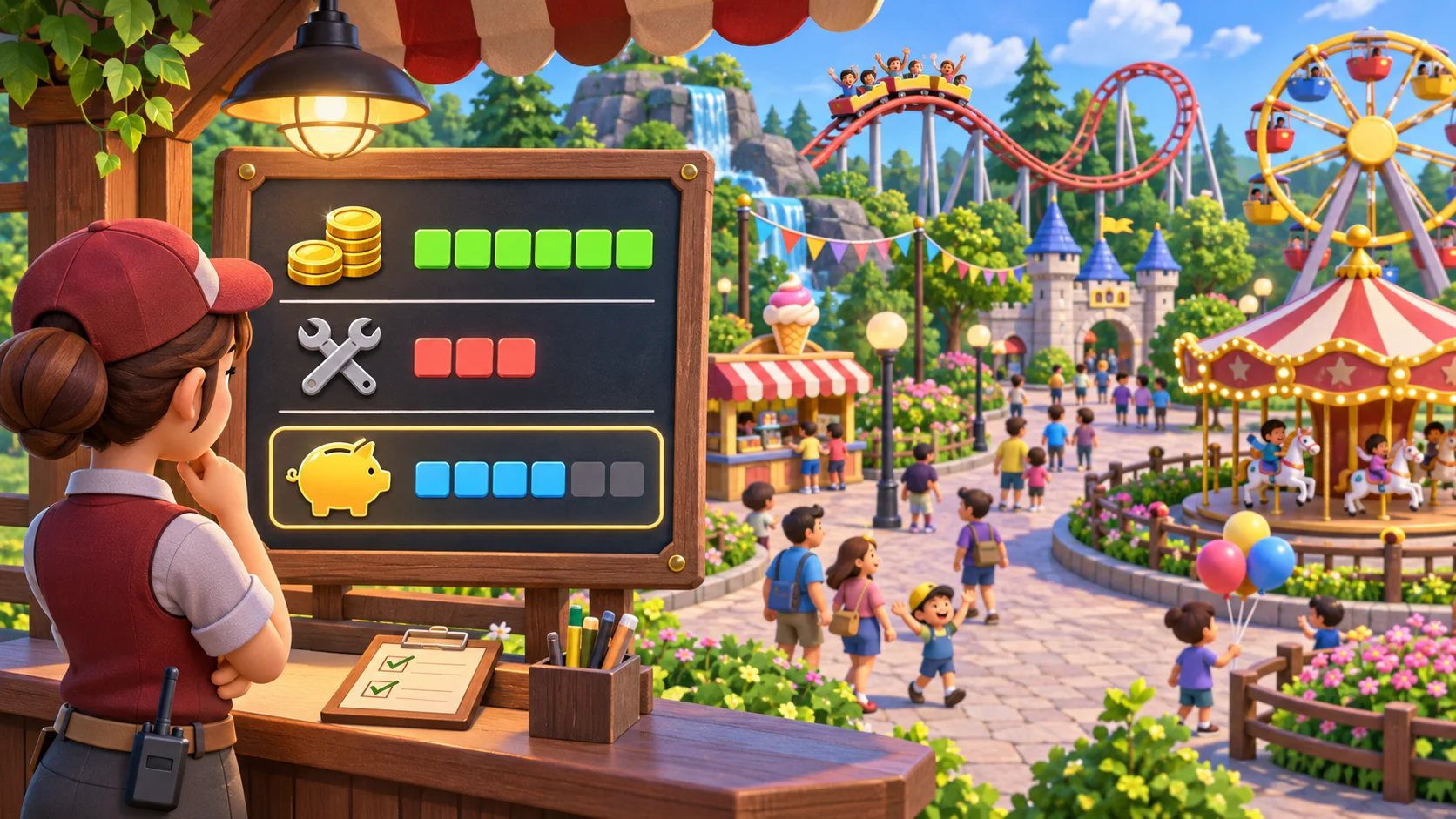
Resource processing gives a crafting simulation its transformation logic: materials enter a station, a recipe changes them, and the result supports a new task. For an original game inspired by Graveyard Keeper, the design challenge is to make those transformations understandable as the player moves between gathering, crafting, and managing a growing business. Start with a short chain, then add stations and recipe choices only when they create useful decisions.
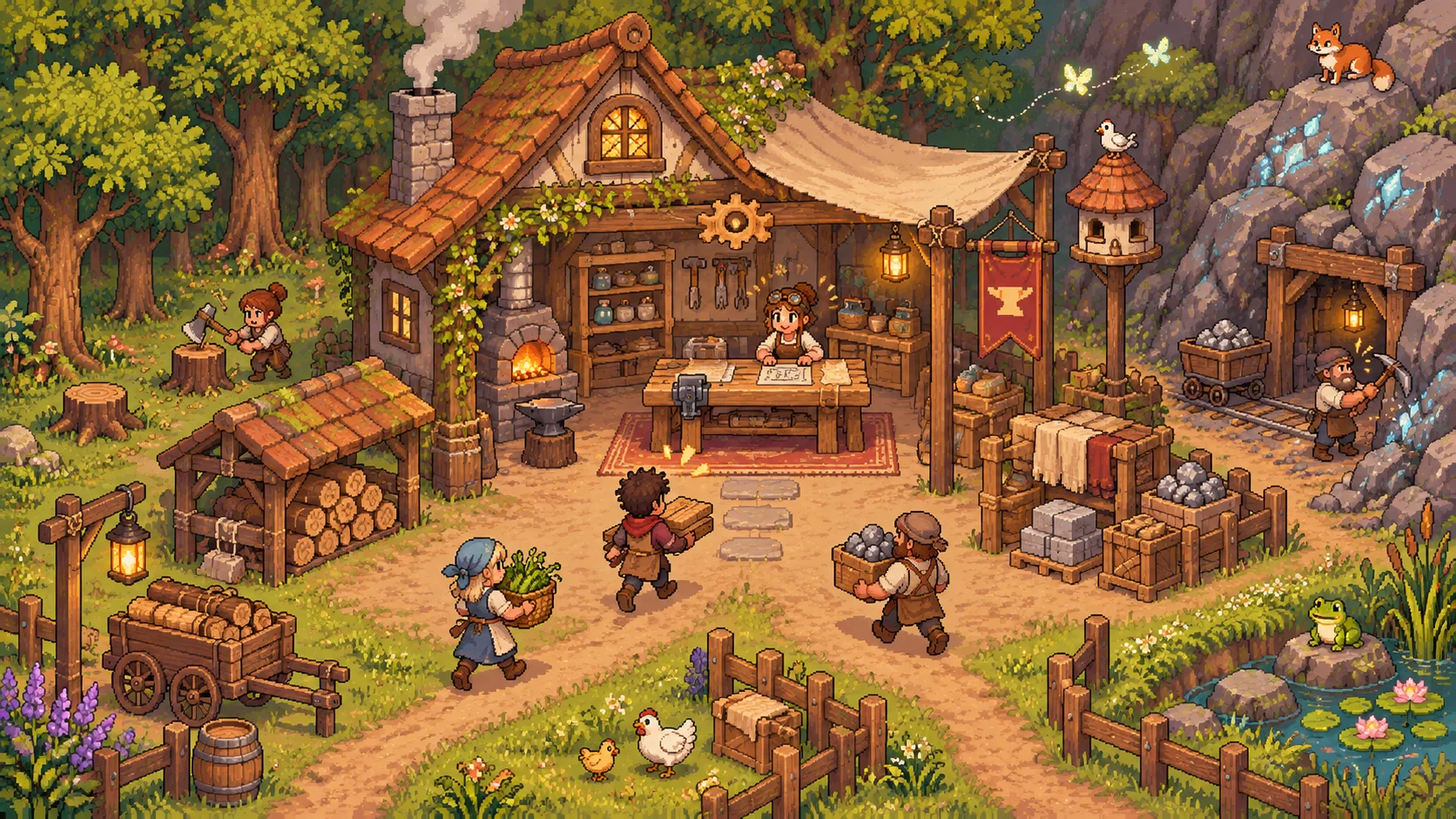
Map a resource transformation chain
Choose a single material and map each step from discovery to use. A resource might be collected in the world, refined at a station, stored, and then consumed by a building recipe. Write the chain in plain language and mark where the player acts. This reveals whether the game needs another station, whether a step can be skipped, and what progress the finished item makes possible.
Give every intermediate material a reason to exist. If a product is only used in one recipe, make that recipe visible before players spend time producing it. If it has several uses, introduce those uses in a way that supports planning rather than forcing players to memorize a long catalog. A short recipe description can show the input and result at the station where the transformation happens.
The official Graveyard Keeper Steam listing describes gathering valuable materials, crafting new items, and expanding a graveyard business. That supports a high-level reference to connected resource and crafting activities. It does not supply a general recipe model or specific processing rates, so the example system here is an original design framework.
Define recipes and machine states
For each recipe, specify the required materials, output quantity, processing duration, station requirement, and any optional condition. Keep the first station simple enough to learn at a glance. The player should be able to answer: what goes in, what comes out, what starts the process, and where the result will appear?
Decide how the station handles missing inputs and full output storage. It may pause until supplies arrive, hold one finished item, or signal that a nearby container has no room. Whatever rule you choose, show the state close to the station and keep it consistent with other machines. Never let an item disappear without clear feedback about why.
Recipe graphs can become difficult to follow when too many resources depend on one another. Keep related chains visible together, label shared ingredients, and make it easy to compare alternatives. If an item has multiple recipes, tell players which station can produce it and how to switch the active recipe. Avoid hiding a required resource deep in a menu that is disconnected from the production task.
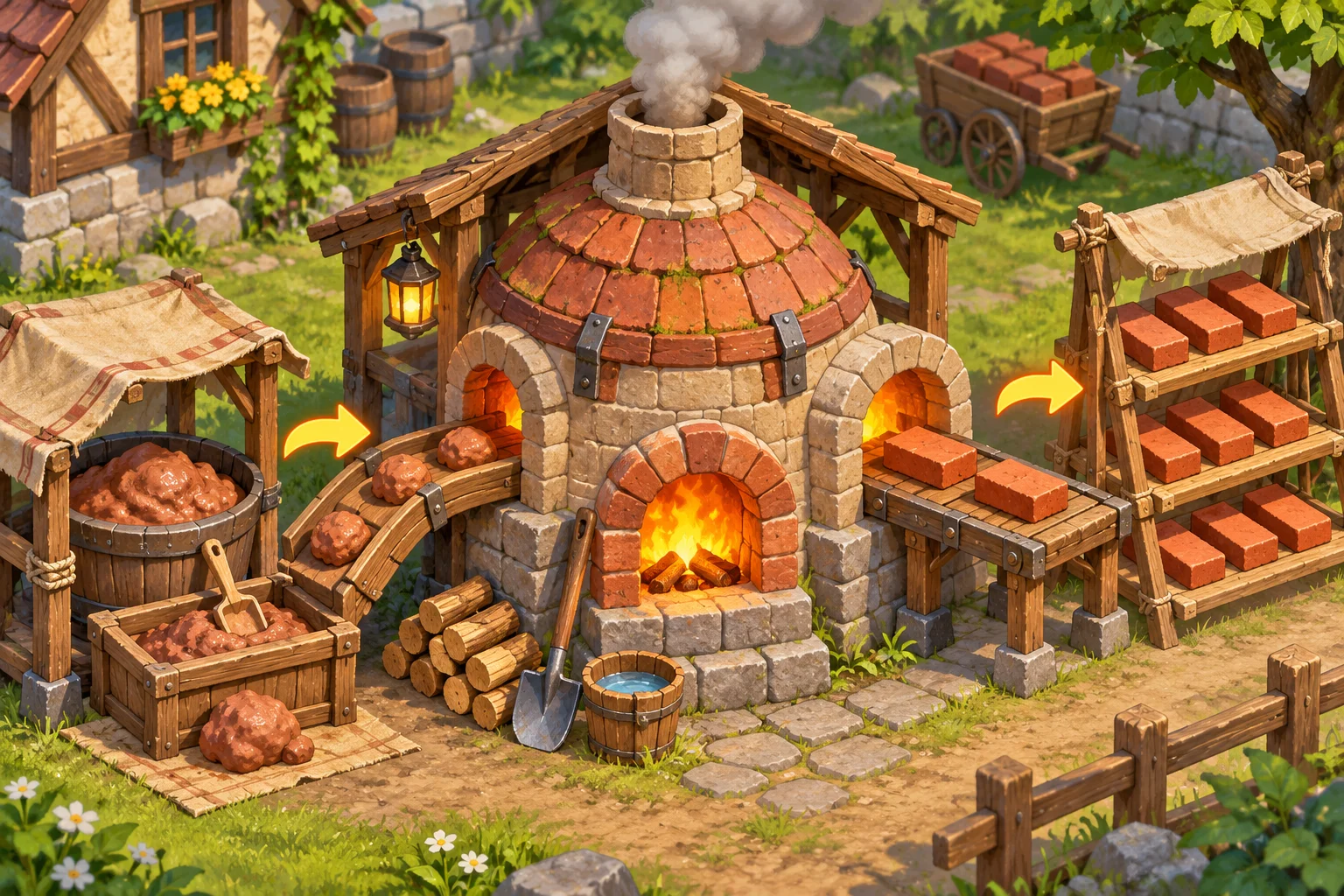
Make processing progression understandable
Introduce additional stations when the player has a reason to make more than one kind of product. An early recipe can teach the input-output pattern; a later station can require an intermediate material; an upgrade might improve a rate or enable a new recipe. Explain what changes when an upgrade is purchased, and let players see the requirement before they begin gathering.
Use progression to change decisions, not only to lengthen the recipe. A new station could accept a more efficient input, produce a byproduct, or let the player choose between a fast and economical method. Make sure each option has a context where it is useful. If one recipe always dominates, the extra choice is overhead rather than depth.
Keep time and resource costs aligned with the game’s rhythm. A long process can create anticipation if the player has other useful activities to do. If they must wait with no decision or task, the duration feels like a barrier. Test whether a station creates a meaningful pause, encourages the player to explore, or interrupts the loop without adding value.
Test outputs, bottlenecks, and comprehension
Run the complete chain from raw resource to final product with an empty inventory and again with partial supplies. Check every transition: collection, station input, recipe start, output creation, storage, and final use. Record where players hesitate and whether they can explain what the station needs. If they repeatedly search an unrelated menu, bring the recipe information nearer to the production step.
Stress the chain with full storage, unavailable resources, and several recipes competing for a shared input. Confirm that the user interface shows which part is blocked and how to recover. Track how many items enter and leave each step so you can find a bottleneck. Change one recipe rate or storage rule at a time to understand its effect.
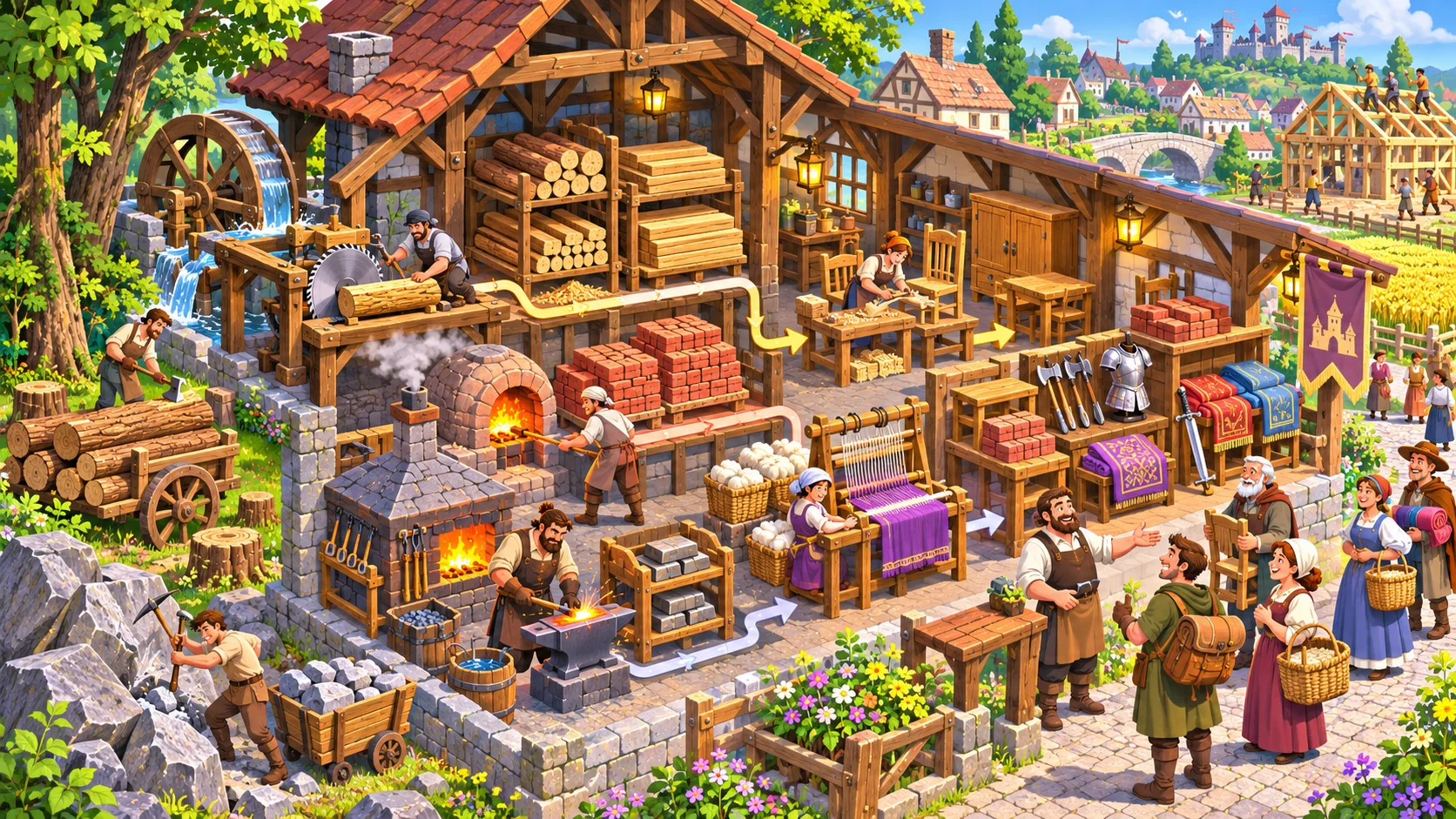
Ask testers to craft a target item without coaching. Observe whether they identify the needed resources, select the correct station, and understand how to collect the output. Then ask whether the processing path made the result feel earned or needlessly complicated. Use those observations to simplify names, improve station feedback, or expose a useful alternative earlier.
AI can help draft recipe variations, organize material lists, or create a first playable prototype from a design brief. Recipe balance and comprehension still require playtesting. You can use Seele’s AI game maker to begin an original crafting simulation, then adjust the production chain after observing players use it.
Frequently asked questions
How do you design resource processing in a crafting game?
Map a material from gathering through transformation, storage, and use. Define the recipe and station rules, show what the player needs, and test that the finished output supports a clear next step in the game. Use a small chain first so you can test every stage without hiding the source of a problem.
What should a processing machine communicate?
Show its active recipe, required inputs, process state, output location, and any blocking condition. Players should know whether it is working, waiting for materials, or unable to store a finished item without searching unrelated menus. Keep these signals visible near the station or recipe controls so diagnosis stays part of production flow.
How do you balance a crafting recipe chain?
Track input and output quantities, processing time, and storage limits across the full chain. Test common and edge conditions, then adjust one rate or requirement at a time so you can see how the change affects player effort and progression. Compare the chain at its intended play pace and check whether the output amount supports the next unlock.
When should resource processing upgrades unlock?
Unlock an upgrade after the player understands the task it improves and can see its value. Explain whether it changes speed, output, recipe options, or required inputs, and confirm through playtests that it adds a useful choice. Offer it before the old process becomes tedious, but after the need is understandable.