Route-based events turn travel into more than movement between map points. A beacon can offer help, demand a resource, present a hazard, or introduce a character who changes the run. For an original space roguelike, connect event opportunities to where the player travels and what their ship can handle. FTL’s official Steam listing describes hundreds of text-based encounters that force tough decisions. Use that as broad context for event-driven play, not as a template for exact event rules.
Connect events to route context
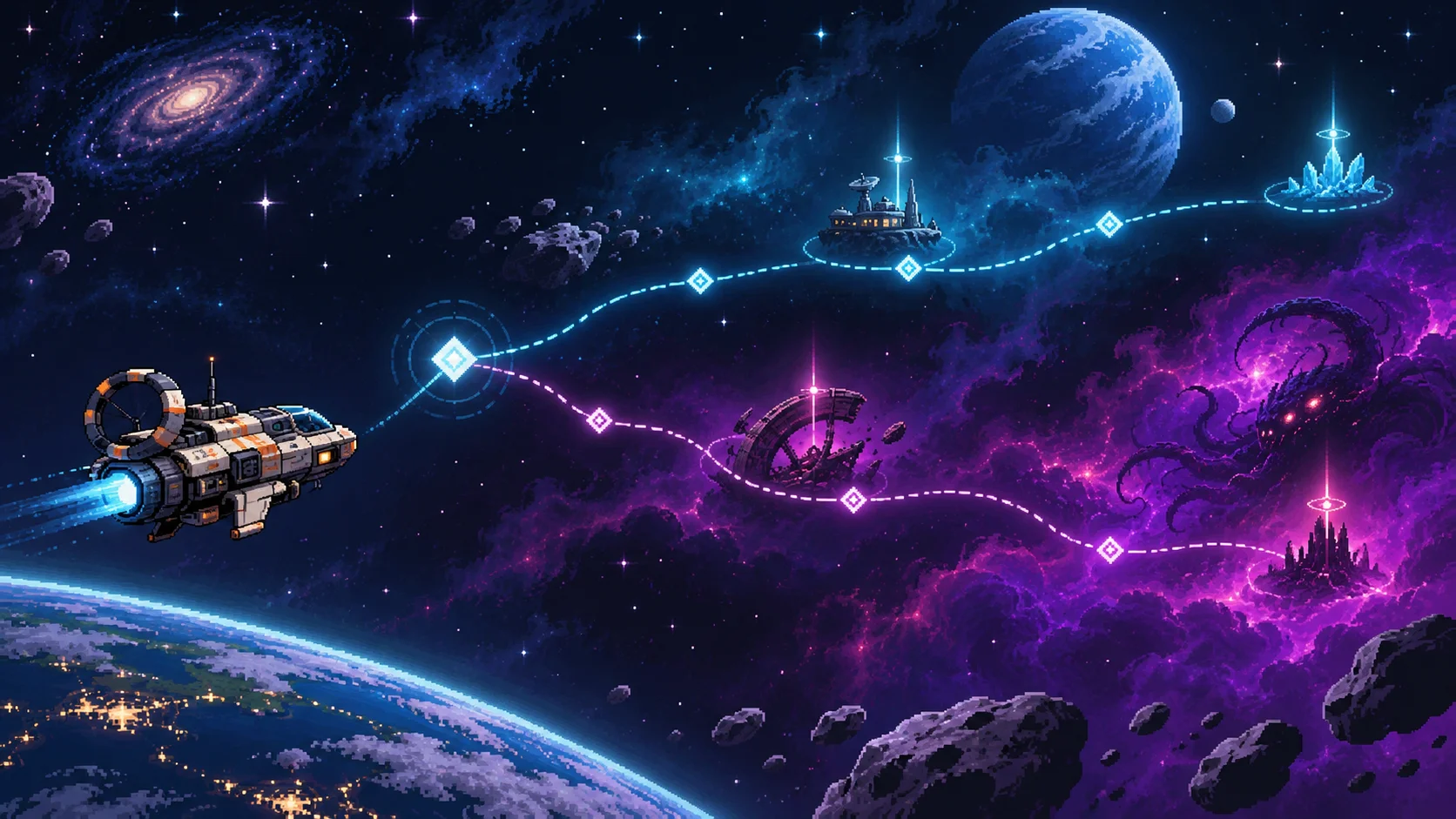
Start with a small set of event categories: discovery, trade, distress, hazard, conflict, and recovery. Each category can respond to the region, nearby factions, or current ship state. A resource-rich area might offer salvage; a dangerous region might present an emergency; a quiet route could let the crew recover. Keep the relationship understandable so players can learn what kinds of decisions a route tends to produce.
Show a cue before an event when possible. A beacon type, region label, signal strength, or nearby landmark can suggest what the player may encounter. The cue does not need to reveal the exact outcome. Its job is to help players prepare and decide whether their current supplies, hull, or crew can handle the possibility.
Balance predictability and surprise. If events always match their labels exactly, the system may feel routine. If labels have no relationship to outcomes, they stop helping players plan. Let a route signal a range of possibilities, and teach what that range means through repeated play.
Build readable encounter choices
Give each event a clear situation, relevant details, and choices that do different things. One action might spend fuel to help a stranded ship; another might avoid danger but leave a potential reward behind. A third might require a crew skill or ship capability. Explain the cost before the player commits and make clear which resource or risk is involved.
Use choices to express different priorities. A player might protect the crew, preserve the ship, gain supplies, or take a risk for a future advantage. Avoid options that are only different labels for the same result. Even when outcomes are uncertain, players should understand why one choice fits a cautious or ambitious approach.
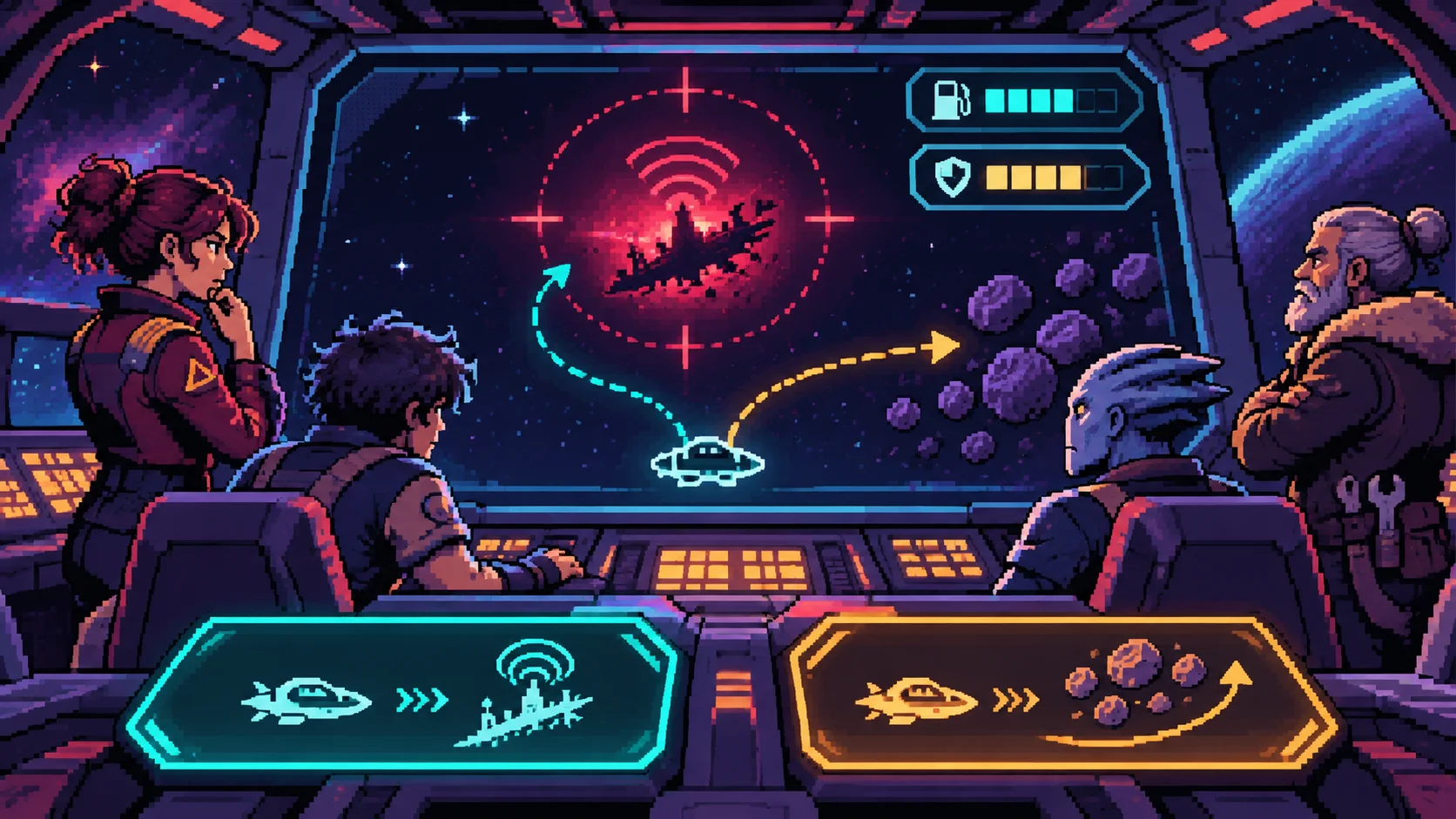
Let ship state shape available responses. A damaged system may make a repair impossible, while a well-equipped crew can attempt a specialized action. Show why an option is unavailable and what could unlock it. If a response depends on a hidden stat, provide enough feedback for players to learn that relationship over time.
Use state for meaningful outcomes
An event can remember what happened earlier. A rescued crew member might recognize the player, a faction may respond to a previous choice, or a damaged beacon can change what appears later. Keep persistent effects limited and readable. If every small action creates a hidden flag, the system becomes difficult to write, test, and understand.
Write success and failure as useful changes to the run. Success can offer supplies or information; failure can cost time, fuel, or hull while revealing another path. Both outcomes can move the story forward. Avoid treating every failed roll as a dead end or a punishment that removes the player’s ability to make another decision.
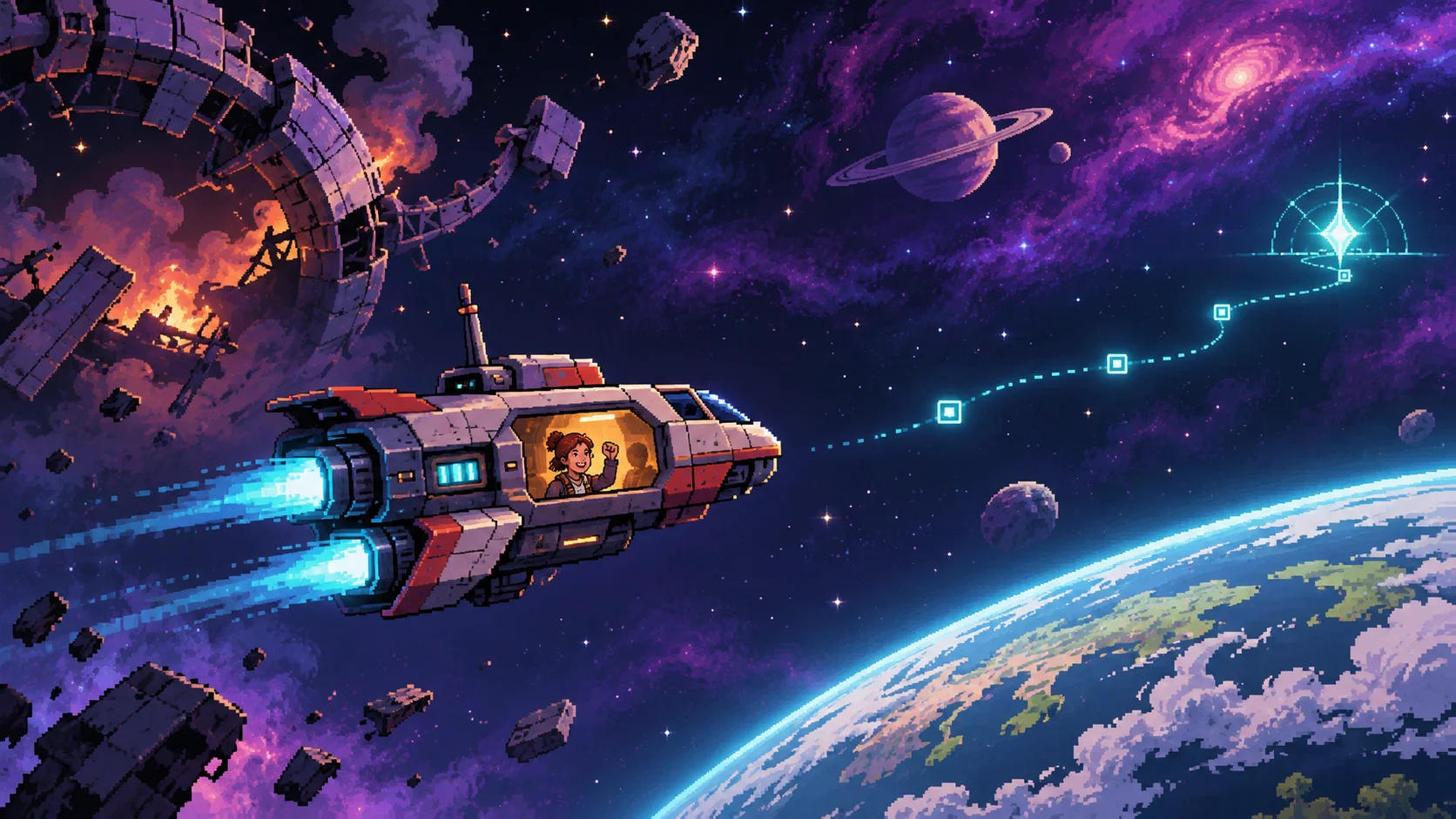
Test event rewards against the run economy. If every event grants a resource, it can remove pressure from navigation. If most events cause damage, players may avoid exploration. Consider whether the event changes a future decision, gives a small but useful benefit, or introduces a cost that the player can prepare for.
Test event variety and run impact
Prototype a small event pool with several categories and a handful of outcomes. Run it with different ship states: low fuel, damaged systems, a strong crew, and a balanced starting setup. Watch whether players understand why a situation appeared and whether their choices feel connected to the ship they built.
Track how often events repeat, which options players choose, and what resources change after each encounter. If a choice is never selected, find out whether it looks too risky, offers too little value, or is unclear. If the same event appears too frequently, adjust its eligibility or let the route context change which events can occur.
Review event chains for fairness. A single event can create a challenge, but several costly outcomes in sequence may leave a run with no reasonable recovery. Make sure the player can still reach another decision, and consider how route options respond after a setback. Difficulty can rise without closing every path forward.
The official FTL listing supports a narrow reference to text-based encounters that ask players to make decisions. Your own space roguelike can use a different event structure, presentation, and outcome system. Build a small route-linked event prototype, observe what players infer from its cues, and tune the choices around the resources they actually have. SEELE’s documented game-creation capability can help start from a natural-language space game idea; validate the event flow through a playable run.
Frequently asked questions
How do route-based events work in a roguelike?
They connect encounters or decisions to the route a player travels. A region, beacon, or route cue can influence which event categories are possible. Show enough context for the player to prepare, then make the event outcome depend on their choice, ship state, or available resources.
How can a route hint at possible events?
Use a consistent cue such as a beacon signal, region type, faction marker, or hazard icon. Let it suggest a range of outcomes without revealing every detail. Players should gradually learn what the cue means and be able to use it when choosing their next route.
Should events depend on player resources?
They can, when the relationship is clear and creates useful decisions. Low fuel might change which responses are affordable, while a capable crew can unlock another option. Explain unavailable choices and show costs before commitment so resource-dependent events feel like planning rather than hidden punishment.
How do you keep random events from feeling unfair?
Give players cues, explain costs, and preserve a path forward after setbacks. Test event sequences with different ship states and check whether repeated losses leave no viable route. Randomness can create surprise while players still understand the boundaries of the risk.
Prototype a small event pool linked to two route types and several ship states. Explore an AI game creation starting point for an original space roguelike.