Route planning gives a delivery driver a chance to decide what kind of trip they want before turning the key. One route might be faster, another might avoid difficult roads, and a third may pass a useful stop. For an original driving simulation, show the important tradeoffs and let players adjust the plan when the journey changes. The official Euro Truck Simulator 2 manual describes planning ahead through the Freight Market and includes World Map and Job Market sections. Use that as broad workflow context, not evidence for live traffic or a specific navigation algorithm.
Define route inputs and constraints
Begin with the information that affects the drive. A route may have a destination, distance, estimated duration, road types, fuel needs, tolls, weather, and delivery deadline. Choose a small set for the first version. Each input should either change the player’s decision or help them understand the trip; extra values can make a route screen harder to use.
Decide how the route is calculated. A simple simulation can compare distance and average speed by road type. A more detailed one might include vehicle weight, road grade, traffic events, or fuel stops. Make the model consistent and explain its most important effects. If the route preview shows travel time, players should be able to learn why a highway or mountain road changes that estimate.
Make job requirements visible alongside the route. A delivery may have a deadline, cargo fragility, or vehicle restriction. Tell players what they need before accepting the job and show whether each route makes the requirement easier or harder to meet. This lets planning connect to the player’s truck and cargo rather than appearing as a separate puzzle.
Compare route alternatives before departure
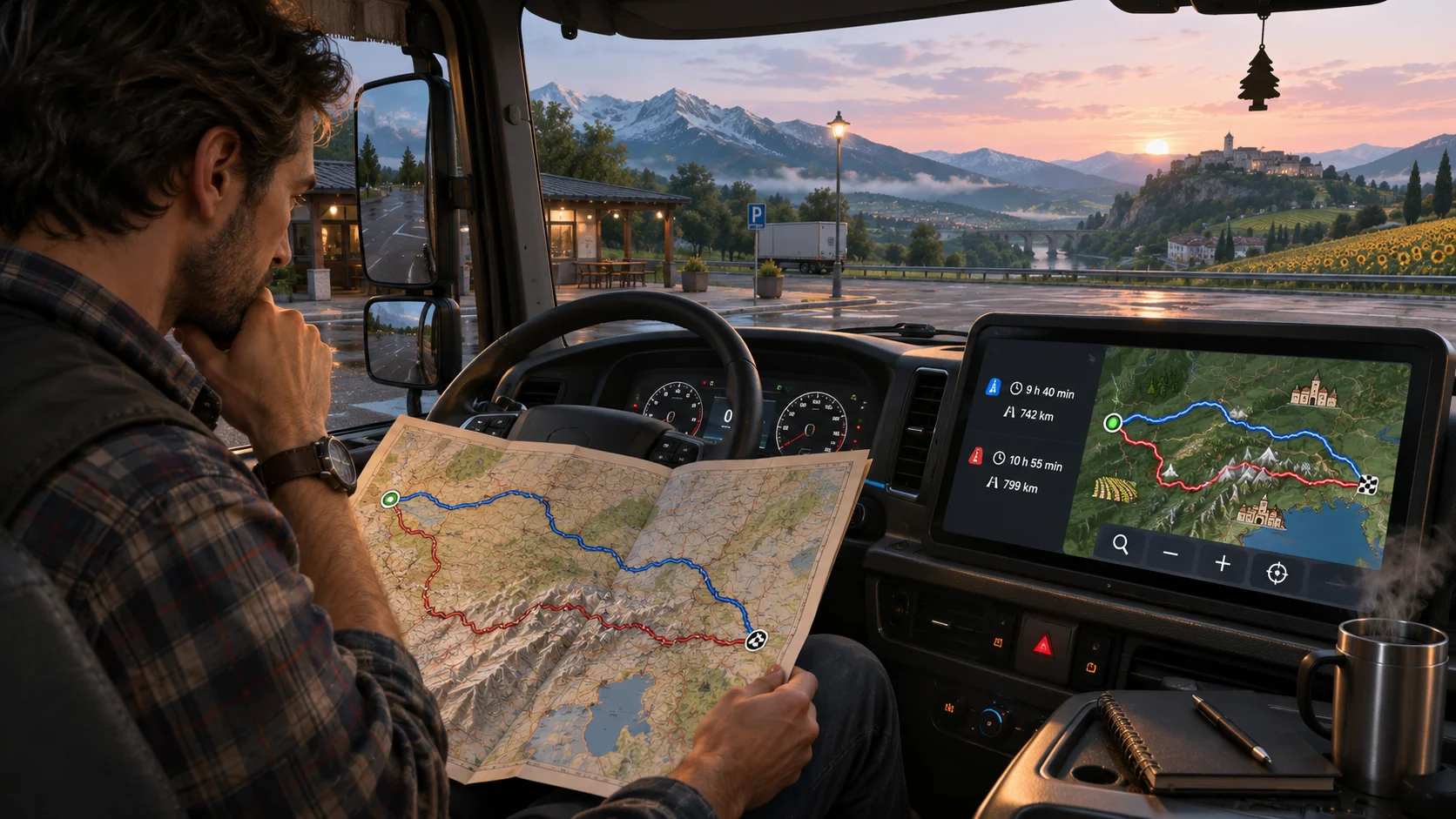
Offer a small number of useful options. A direct motorway can minimize time, while a rural route may provide a scenic drive or avoid a toll. A detour could pass a fuel station or repair shop. Keep differences concrete and make the reason to choose each path clear. If every option has the same time, cost, and risk, players have no real planning decision.
Show a route on a map with readable landmarks and road types. Use line color, style, or texture to distinguish alternatives, and keep the destination and current position obvious. Pair the map with a concise summary, such as estimated time, distance, fuel stops, and delivery margin. Players should not have to inspect every road segment just to compare two routes.
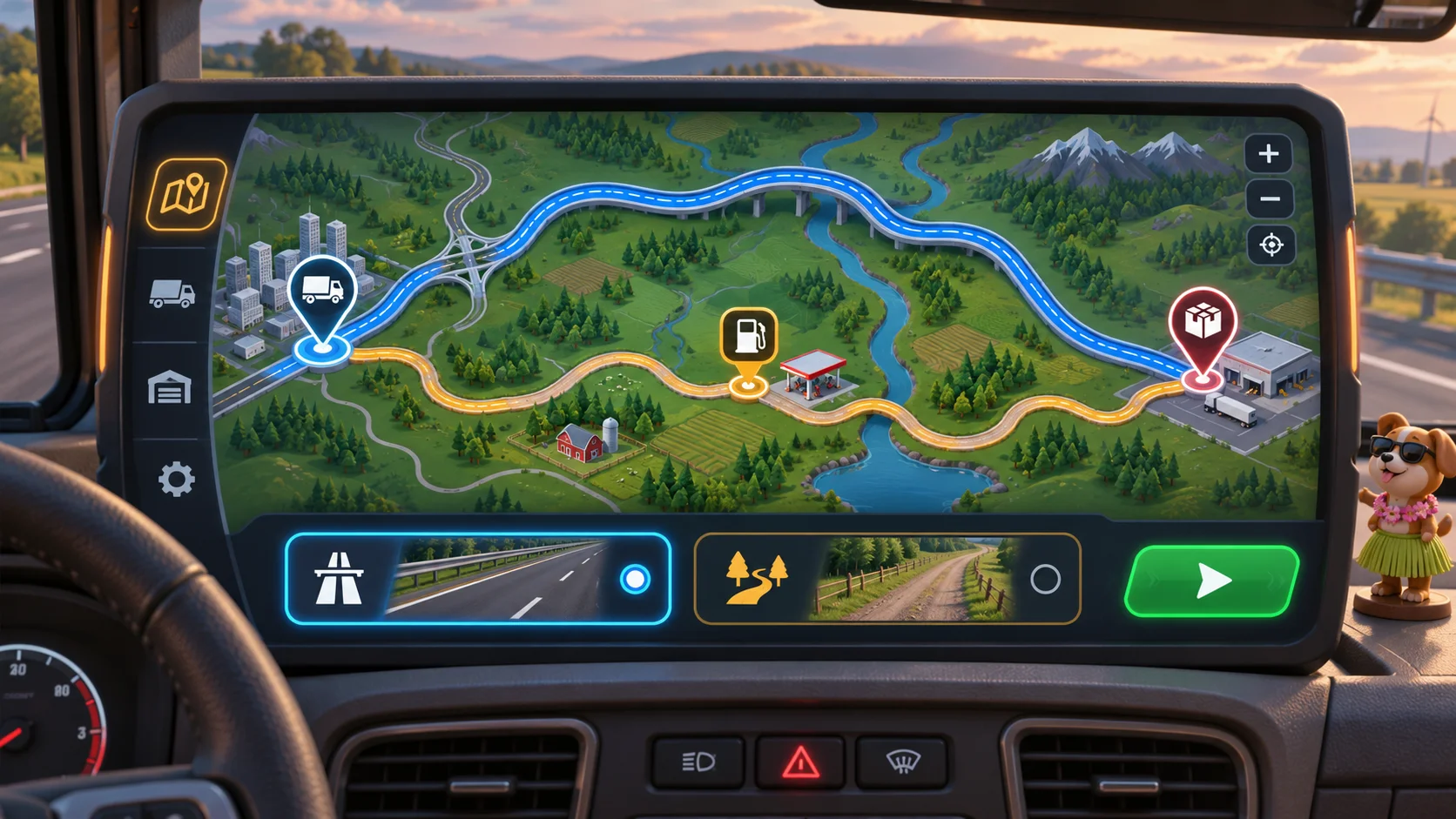
Connect route choices to consequences. A longer route may consume more fuel but offer a safer margin for an urgent delivery. A shorter one may include difficult turns or steep grades. Avoid making scenic routes a disguised penalty; give them a distinct reward, view, or gameplay rhythm. Likewise, if a route is risky, show the reason rather than using an invisible modifier.
Support navigation during the drive
Once a trip begins, show enough guidance to keep attention on driving. A simple next-turn cue, distance to the turn, and clear road sign can help players act without staring at a full-screen map. Let players open the map when parked or during a safe pause. Keep audio cues optional and avoid issuing so many alerts that the route becomes noise.
Plan for missed turns and detours. The player might take a wrong exit, stop for fuel, or choose to explore. Make it possible to recalculate or return to the previous route. Show how the change affects arrival time, fuel, or delivery margin. Recovery should teach players about the trip rather than making one mistake end the job immediately.
Decide whether conditions can change after departure. Weather, road closures, or optional encounters can make route planning more dynamic, but they should be communicated clearly. If the game has no dynamic events, keep the route preview stable. Avoid implying traffic simulation or road conditions that the game does not model.
Test detours, stops, and delivery outcomes
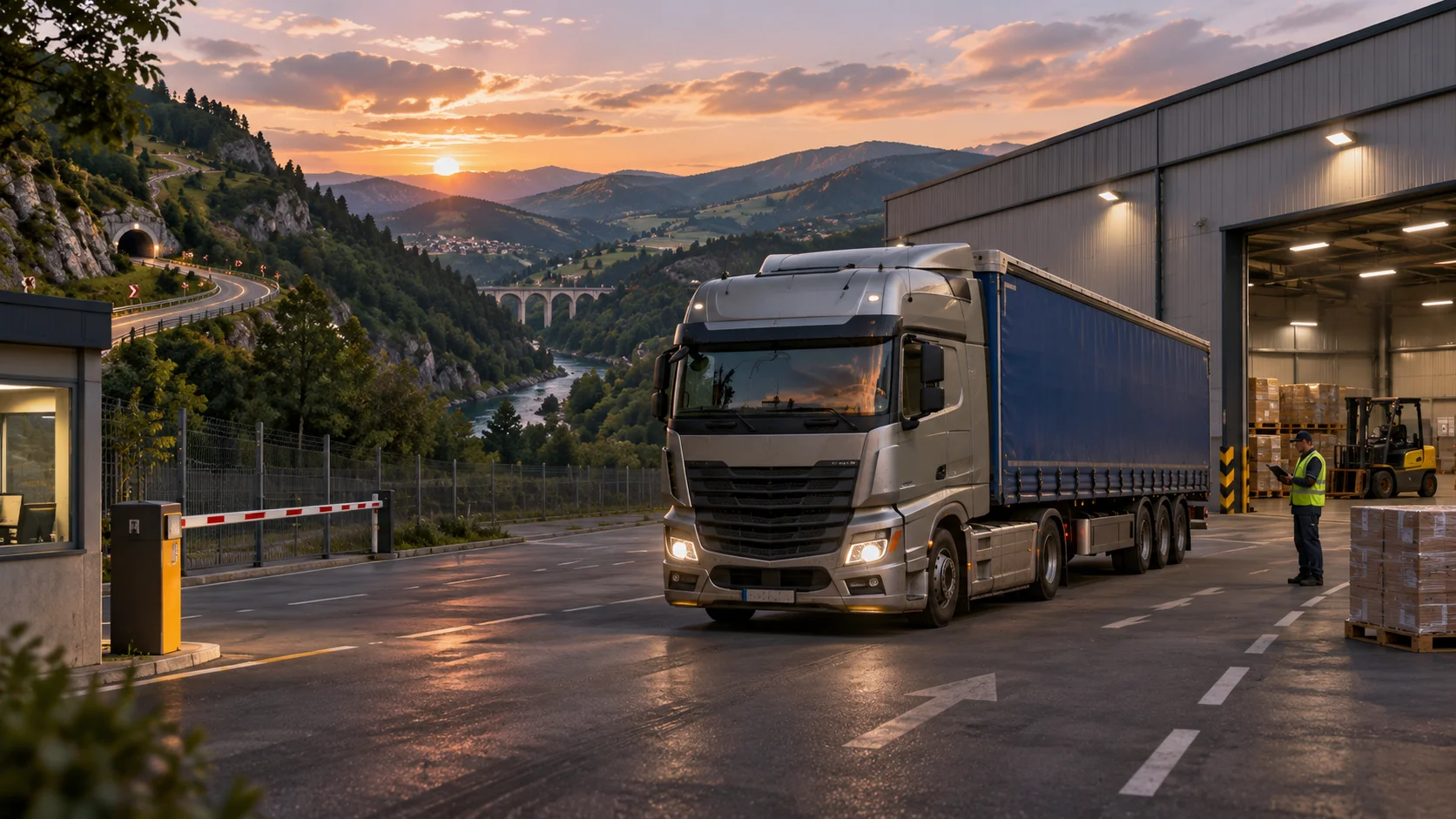
Playtest a short delivery with two route options and one optional stop. Ask players what they expect each path to cost and whether they know how to change their plan. Watch how often they open the map, miss a turn, refuel, or arrive close to a deadline. If a route is chosen only because it is shortest, check whether other characteristics are visible and worthwhile.
Compare the estimate with the actual trip. If the displayed time regularly differs from what players experience, explain what the estimate includes or tune the model. A realistic simulation can include variation, but players should understand the range and feel that their planning still matters.
Test interface use while moving and while parked. Controls that work well in a menu may be distracting during a drive. Make important route information readable from the cockpit, provide an accessible map screen, and support a simple way to change options. Ask players to complete a delivery with minimal instruction before adding longer routes or more complex constraints.
The official ETS2 manual supports a reference to planning jobs ahead and using map and job-market workflows. Your game can use a different interface and a simpler travel model. Start with two distinguishable routes, one delivery requirement, and a clear way to recover from detours. SEELE’s documented game-creation capability can help start from a natural-language driving simulation idea; use a playable delivery to tune how route choices affect the experience.
Frequently asked questions
What should a driving game route planner show?
Show the destination, route alternatives, estimated time and distance, and the trip conditions that affect the delivery. Add stops or requirements when they change the decision. Keep the map readable and summarize important tradeoffs so players can compare routes quickly.
How do you make route choices meaningful?
Give alternatives distinct costs or benefits, such as travel time, fuel, road difficulty, stops, or scenery. Make those differences visible before departure. A route choice should change how the trip feels or what the player can achieve, not only change the line drawn on the map.
Should players be able to change routes mid-trip?
Allow detours when exploration or recovery is part of the experience. Recalculating should show the effect on arrival time, fuel, and job requirements. If the game uses a fixed challenge route, provide clear reasons for that restriction and let players know before they accept the delivery.
How can a game teach its route planning system?
Begin with a short delivery where two routes have one clear difference. Let players inspect the map, compare the summary, and adjust the plan. After the drive, show how the choice affected the trip, then introduce additional factors such as stops or vehicle constraints gradually.
Prototype one delivery with a direct route, an alternative, and a recoverable detour. Explore an AI game creation starting point for an original driving simulation.