Shop-based upgrades turn limited currency into choices about team roles, combinations, and future rounds. Players need to understand what each purchase costs and how it changes their plan. Super Auto Pets’ official listing describes team building with unique pet abilities and different pack formats; the shop rules and upgrade model below are original proposals.
Define what players can buy and improve
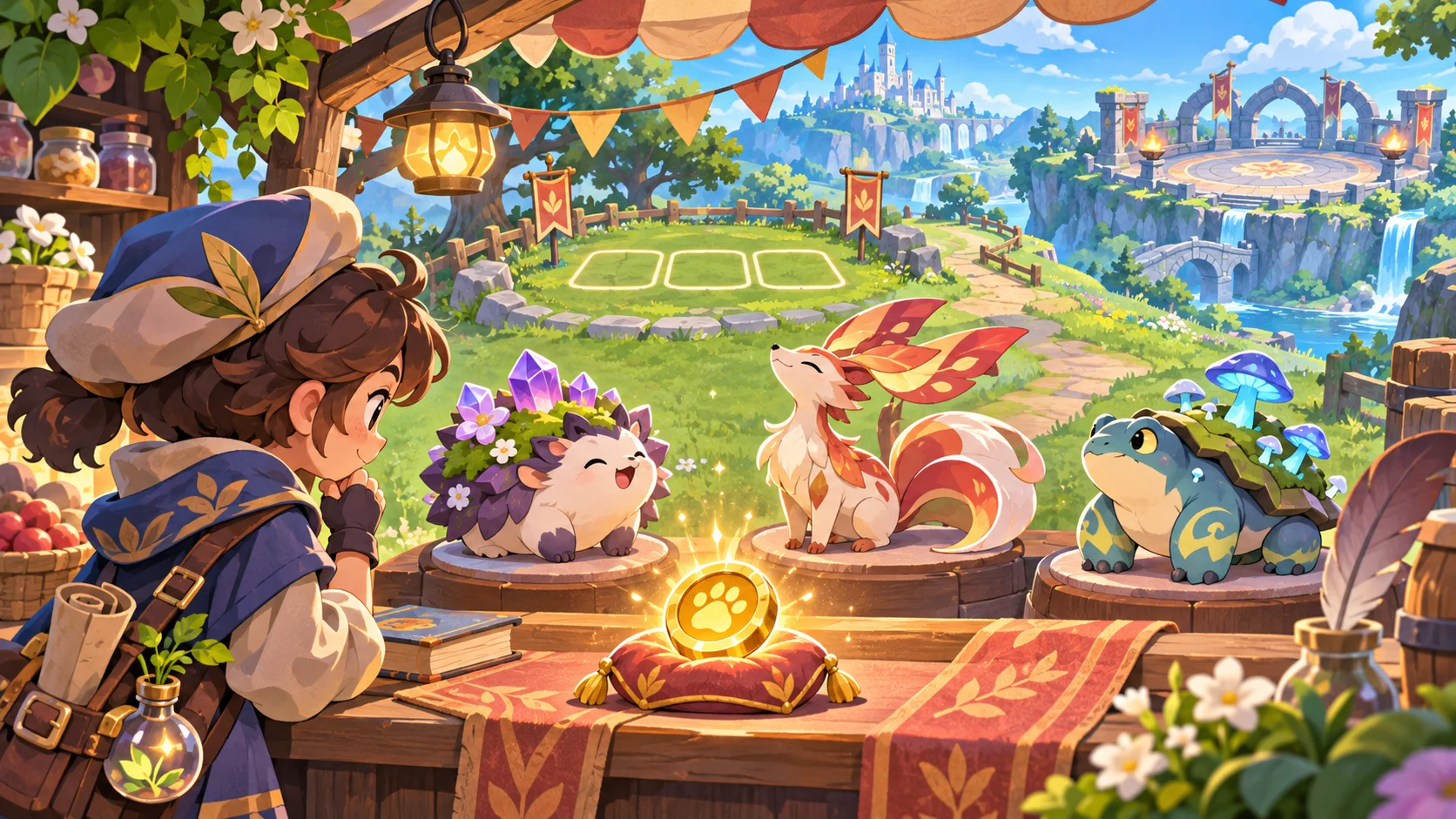
A shop between battles turns limited currency into a strategic choice. Super Auto Pets’ official Steam listing describes building a team of pets with unique abilities and includes standard, custom, and weekly packs; it notes that custom packs support combinations. Those public facts provide context only. The purchase economy below is an original design framework.
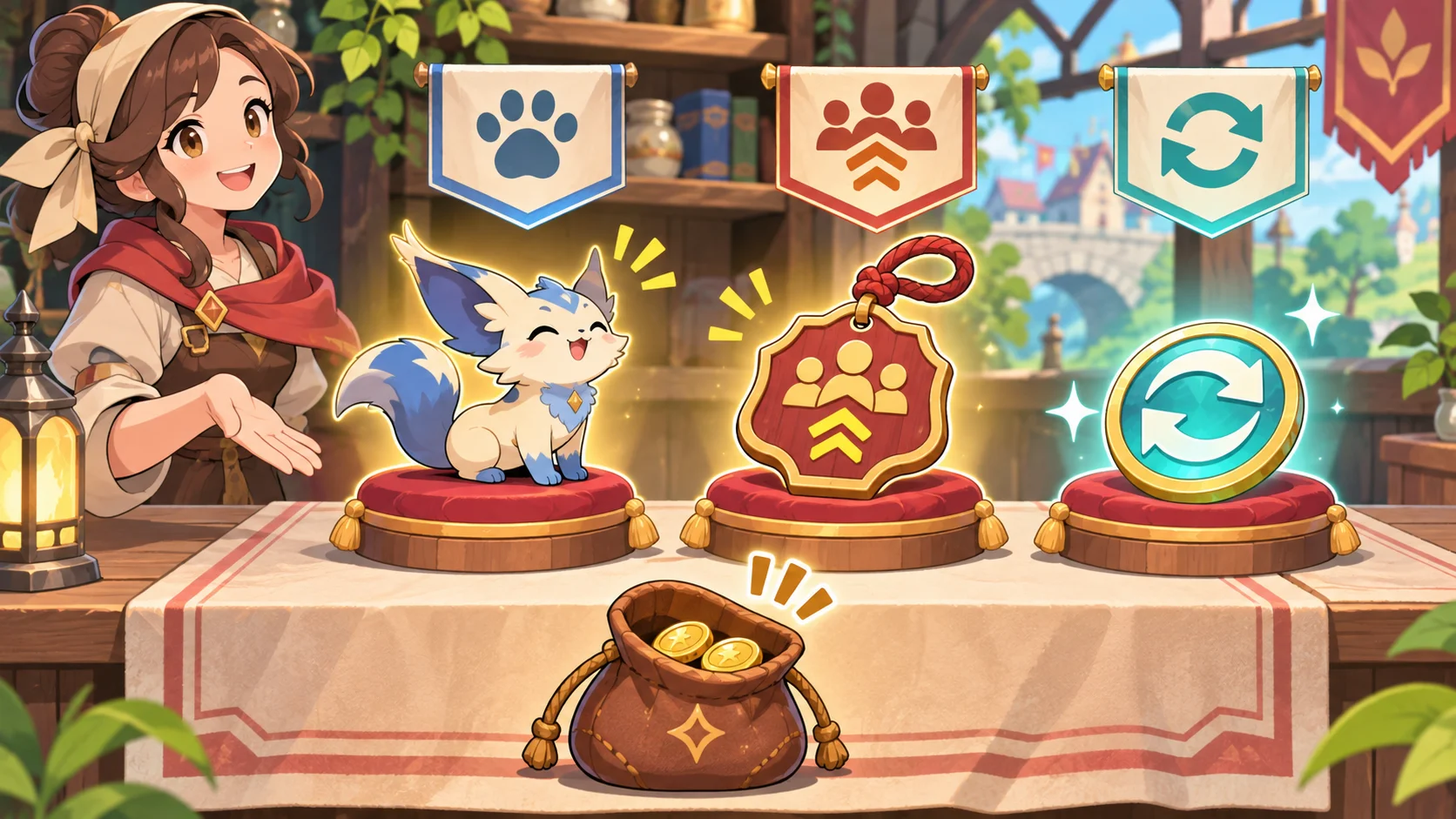
Define a few purchase categories with different purposes. A new team member adds a role or opens a combination; a training item strengthens a current member; a support item changes the next encounter; and a refresh changes the options at a known cost. Each type should solve a different problem, not provide the same power in a different wrapper.
Write a purchase card as cost, immediate effect, and strategic reason. A player should be able to tell whether the item supports their current plan or helps cover a weakness. Avoid hidden effects or vague “power” upgrades. If the game has a team limit or item slots, show that capacity before the purchase rather than after the player has paid.
Make currency and refresh tradeoffs clear
Currency creates tension when players must choose what to do now and what to save for later. Show current funds, costs, and any upcoming price change in one consistent view. If selling a unit returns only part of its cost, state that rule before the player commits. Keep purchases reversible only when reversal is part of the intended strategy.
A refresh is a gamble with known stakes. Let players compare the current options with a new roll, and show the cost clearly. Some systems can give one free refresh or let players lock a valued offer; these are tuning choices, not mandatory features. Test how often players refresh, what they hope to find, and whether a bad roll leaves a viable path forward.
Prices should relate to the value and timing of an offer. A strong early unit may influence many rounds, while a late tactical item may answer one specific opponent. Price the future impact rather than the visual rarity alone. Use playtests to see whether the shop encourages different plans or a single purchase priority.
Keep team upgrades flexible across rounds
Upgrades work best when they support a team identity without requiring a perfect combination. A stat increase can improve a role; a trigger modifier can reward positioning; a protection item can help a fragile unit. Keep the effect clear and make sure the team still functions if the player never sees a preferred partner.
Offer counterplay and pivots. If one unit becomes much stronger after repeated upgrades, opponents or encounter patterns should still create decisions. A player may invest in a core member, widen the team, or hold currency for a future offer. Make each route viable under different shop sequences so the draft feels strategic rather than solved.
Avoid upgrades that erase meaningful unit differences. If every unit can receive the same bonus until it dominates, the player may stop caring about roles. Use upgrade paths that reinforce or complement the existing ability, and review whether a modification changes tactical choices rather than only increasing a number.
Test shop balance under varied rolls
Run scripted shop sequences that cover abundant currency, poor offers, expensive refreshes, and a team missing a key role. Track purchase type, refresh rate, currency left unused, team survival, and how often players abandon a strategy. These measures can show whether prices or probabilities push everyone toward the same decision.
Test both average and unlucky sequences. A shop should create uncertainty without making the match depend entirely on a rare offer. Give players practical alternatives, such as a lower-cost unit or a modest general upgrade. If a weak roll is recoverable only through more luck, revisit the offer pool or the economy.
Finally, compare progress over a full run. Early upgrades need time to pay off; later options need to influence a specific battle. Ask players to explain why they bought each item and what they expected next. Use those answers with outcome data to adjust cost, offer frequency, and effect strength. Keep a balance log so each shop change can be evaluated against prior tests.
Related guide
For a different approach to combining selected pieces into strategies, see the guide to card synergies.
Frequently asked questions
How do you design shop upgrades for an auto battler?
Offer purchases that change a team in distinct ways, such as adding a unit, improving a current unit, or preparing for a likely opponent. Give each purchase a visible cost and immediate effect. Test whether players can explain what strategy the upgrade supports before they spend their limited currency.
How should players choose between units and upgrades?
Make the tradeoff clear: a new unit can fill a role or enable a combination, while an upgrade can strengthen a plan the player already has. Both should be viable in some situations. Avoid making one purchase type mathematically superior at every stage of a run.
How can a shop refresh remain fair?
Show the refresh cost before the player uses it and keep that cost predictable. Offer enough control to make a refresh a deliberate risk, while protecting players from spending their last resources on repeated empty rolls. Playtest high and low currency states to see whether refreshes create options or only frustration.
How do you balance team growth across rounds?
Measure team strength, available currency, purchase rates, and survival across several shop sequences. Test players who invest early, save for later, and build around different roles. Adjust offer odds and costs so each plan has a risk and payoff without requiring a lucky sequence.
Prototype a purchase economy
Use AI to produce shop scenarios and compare player strategies, then tune prices, offer rules, and comeback options in a playable build. The team should own the intended power curve and the consequences of every purchase. Start a game project with Seele.