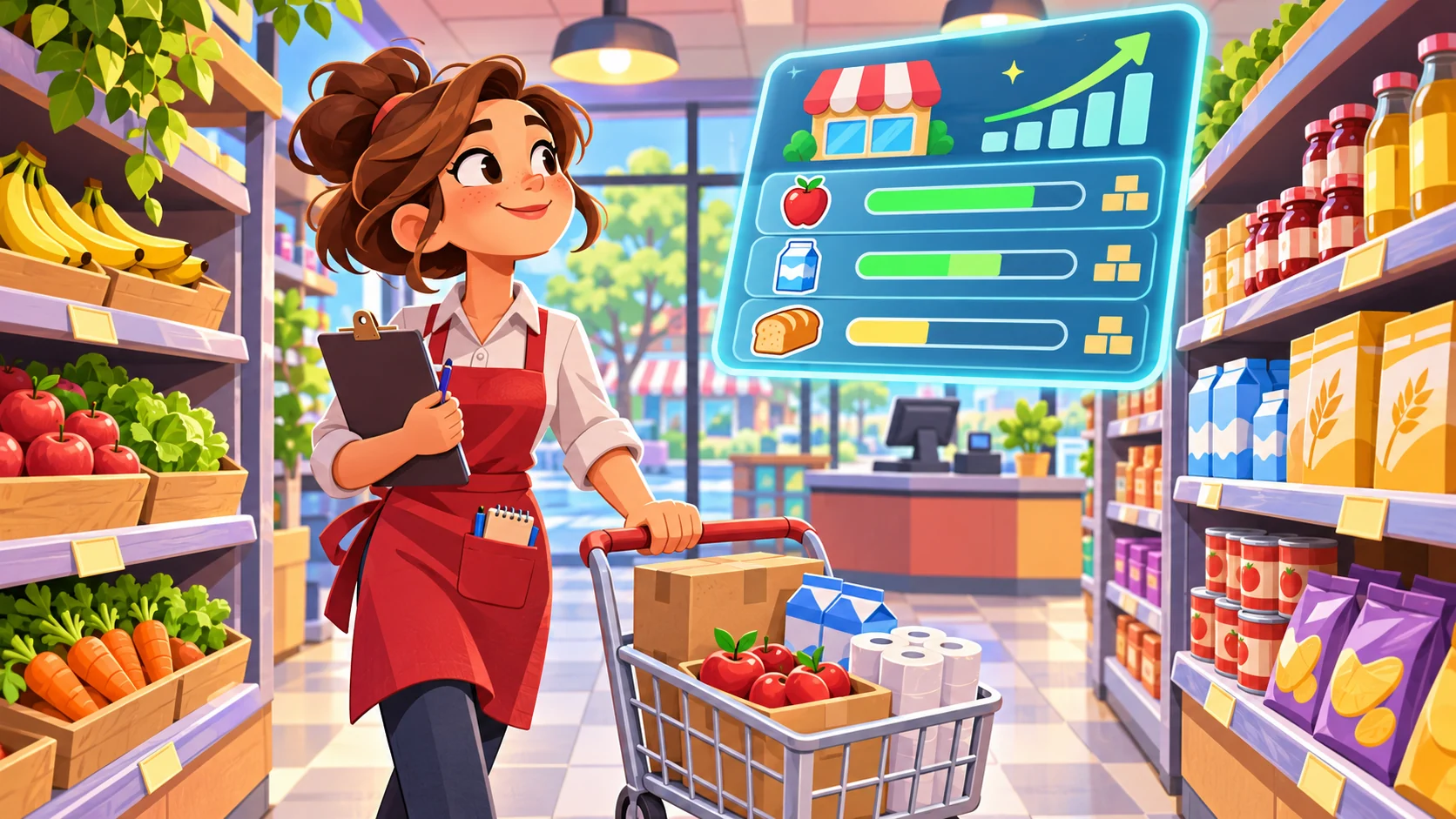
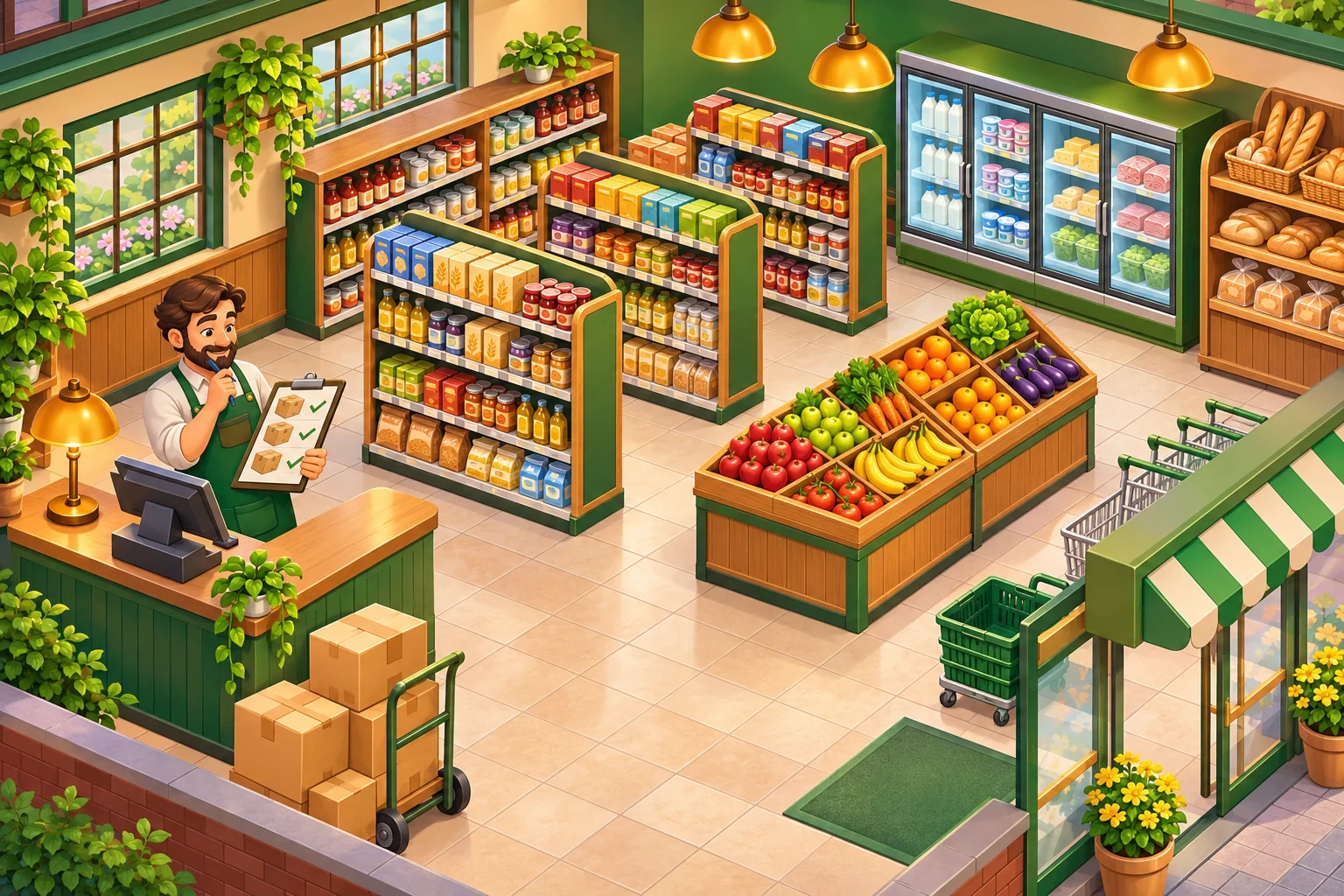
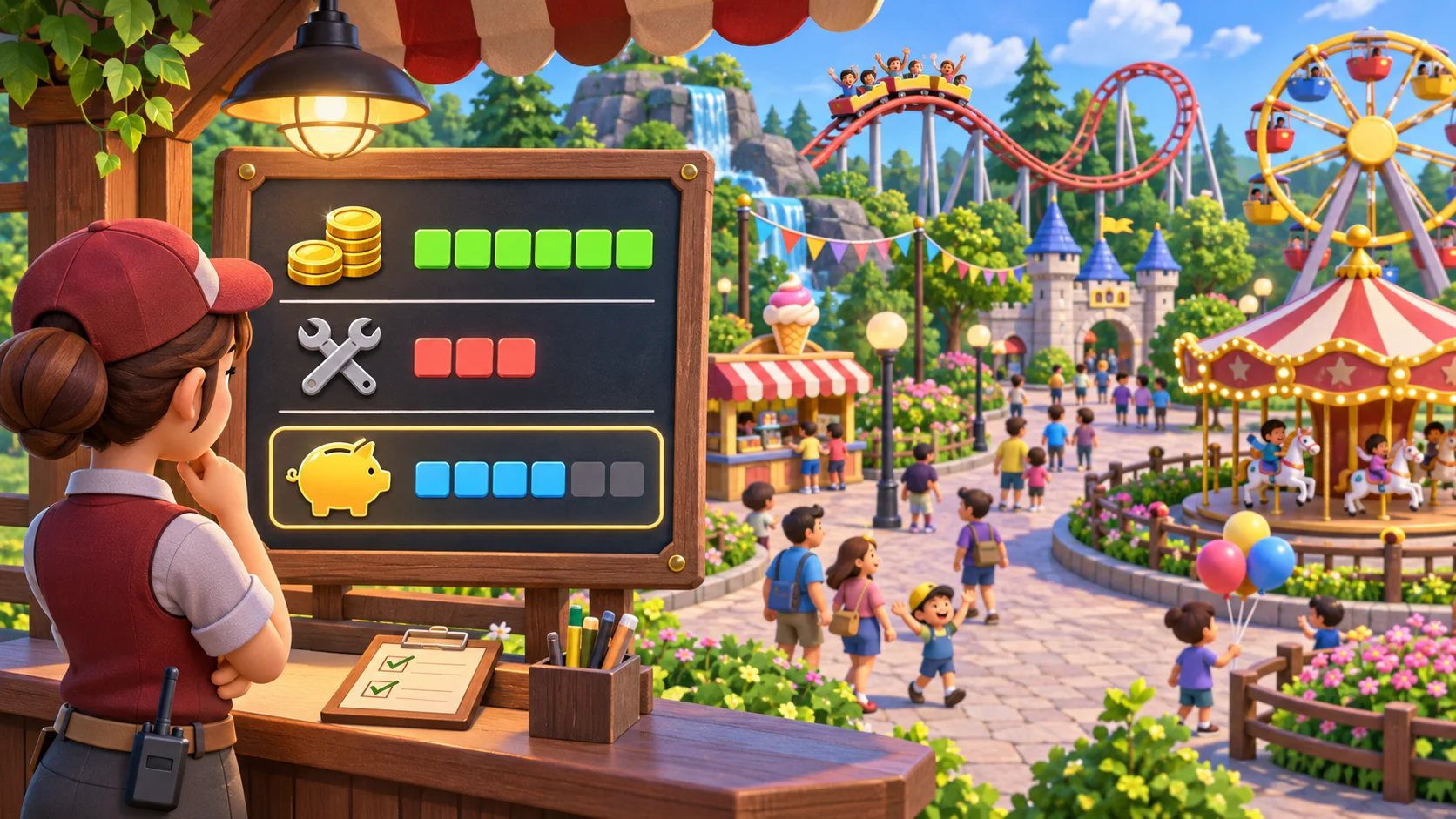
Stock replenishment becomes a useful shop simulation system when players can connect sales to shelf quantity, backroom inventory, and delivery timing. They need to choose what to order and how much, with costs and constraints in view. Supermarket Simulator’s official listing describes ordering stock, organizing storage, filling shelves, and balancing prices with profit; this guide proposes original rules for a new retail game.
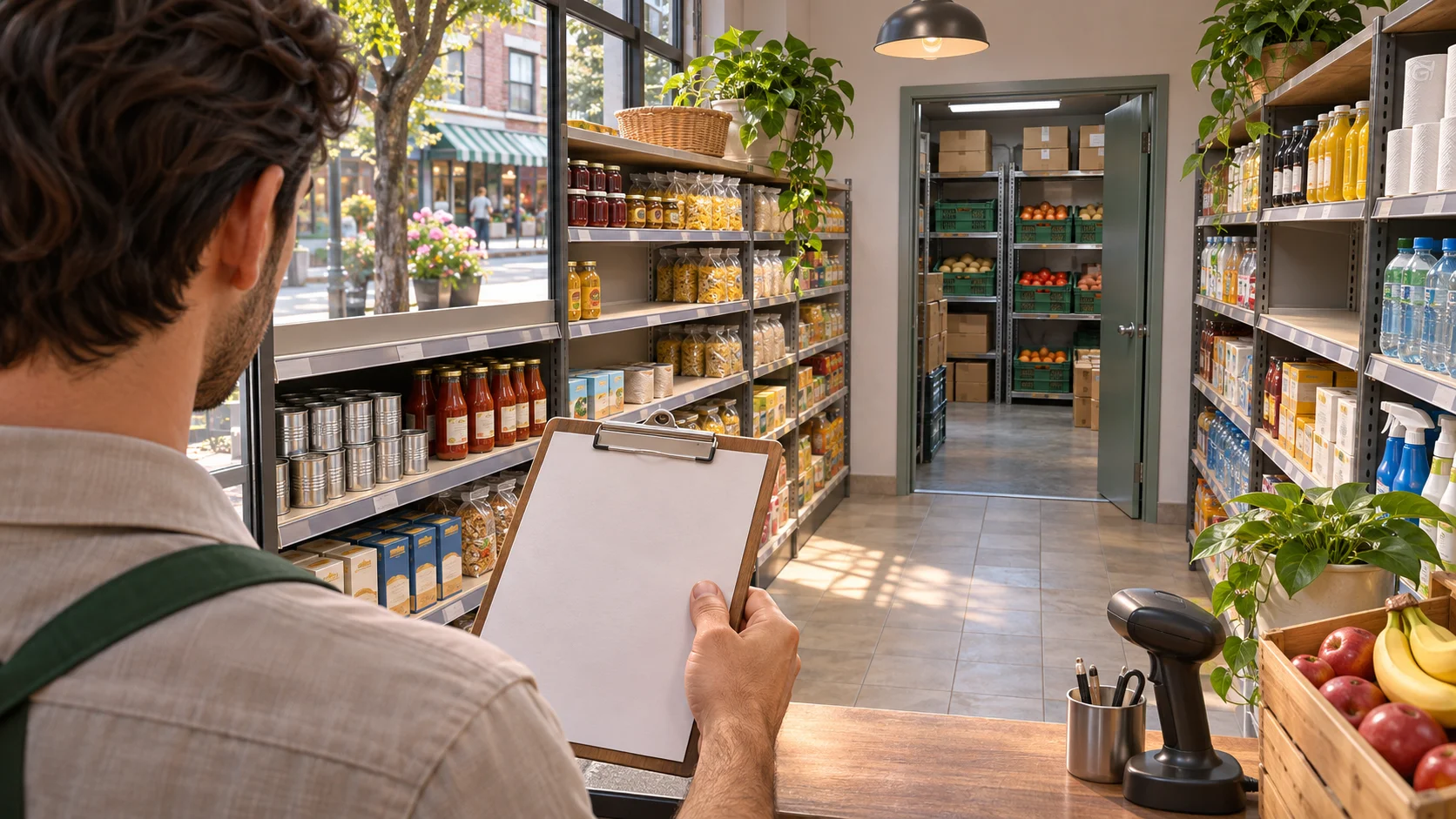
Connect shelf demand with inventory
Stock replenishment is a loop linking what customers buy to what the player orders, stores, and places on shelves. Supermarket Simulator’s official Steam listing describes ordering stock with an in-game computer, organizing goods in storage, placing them on shelves, and balancing prices and profits. Those public activities provide context; the inventory model below is original.
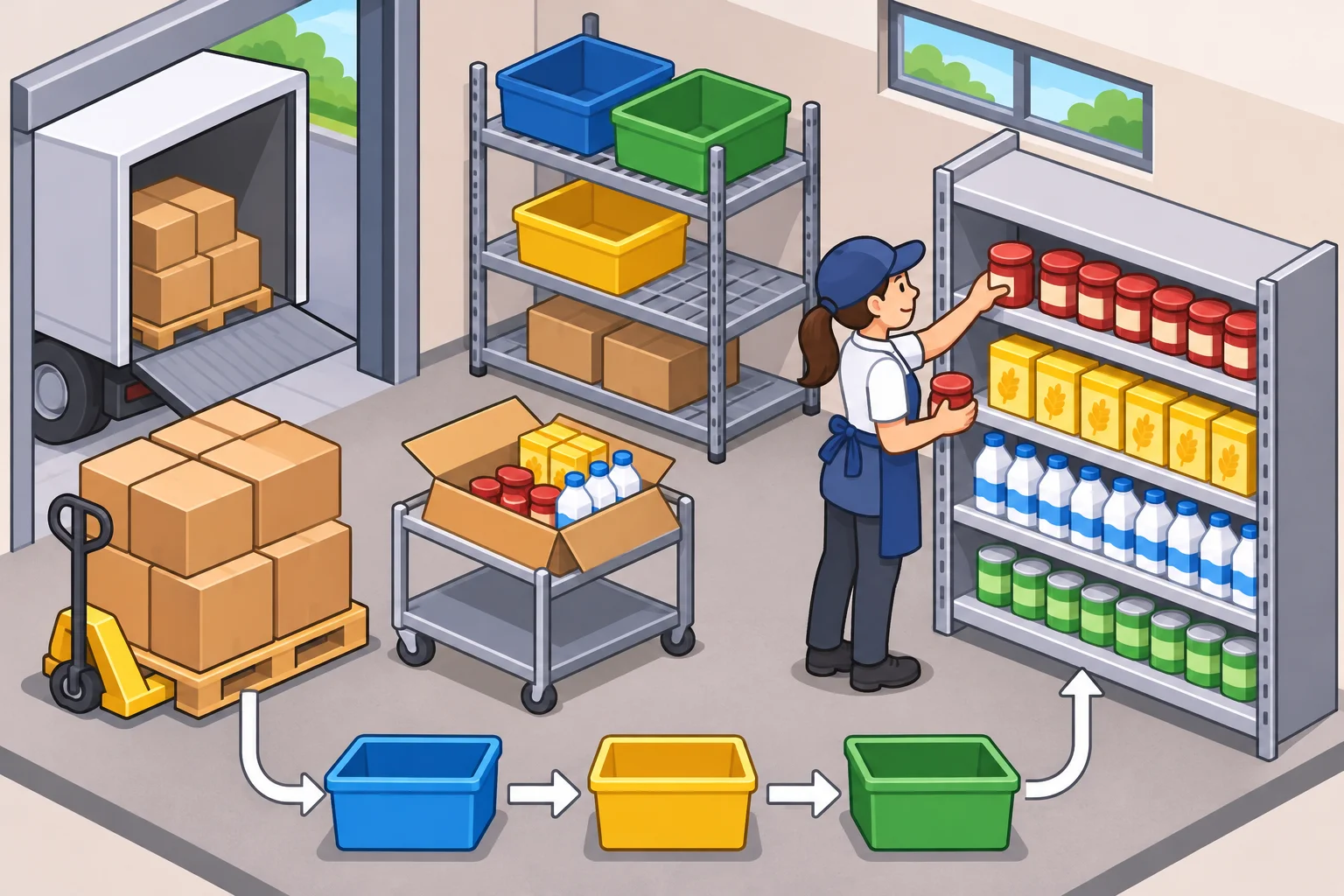
Represent each product with at least three values: shelf quantity, backroom quantity, and incoming quantity. Add a demand estimate and a delivery delay if the game uses them. This makes it clear whether a shelf is empty because the player failed to order, because the shipment is still in transit, or because the backroom has not been restocked.
Use shelf gaps and sales history as feedback. A product that sells steadily can be easy to plan for; a seasonal item or promotion can create a temporary spike. Show enough information for players to respond, but do not overload the screen with every statistic at once. A product detail view can offer deeper trends when the player needs them.
Make ordering and delivery timing predictable
Ordering choices need visible costs and timing. Show the quantity, unit price, expected arrival, and storage use before the player confirms. If market prices vary, indicate the current price against a recent baseline so a discount is meaningful. Avoid sudden price changes with no warning when a delivery depends on a budget commitment.
Delivery timing creates planning when players can act before the truck arrives. If an order takes a day, let players see its status and adjust shelf priorities while waiting. A late shipment can create a challenge, but should follow understandable rules. If deliveries can fail or be delayed, provide a way to communicate that so the player can make a contingency order.
Let players prioritize categories or products. A manual order can provide control early, while templates, minimum thresholds, or staff assistance can reduce repetitive handling later. Each shortcut should be transparent: show what it will reorder and the maximum amount it can spend. Automation should support the player’s plan rather than silently empty the budget.
Balance stock, storage, and cash
Overstock ties up cash and storage; understock loses sales or customer trust. Tune these pressures together. A large backroom may allow bulk orders at a lower price but require an upgrade. A small shop may need frequent deliveries and more attention to timing. Make the tradeoff visible when players choose a store layout or purchase a storage improvement.
Use demand variability carefully. If demand changes every day without a learnable pattern, forecasting becomes guesswork. Tie changes to visible causes such as a promotion, local event, weather, or customer preferences. Give players time to react before a predictable surge and a reasonable way to recover if they misjudge it.
Customer tolerance should be consistent. Some shoppers may accept a substitute, wait, or leave when an item is missing. Explain which products are critical and how shortages affect satisfaction. If every missing item causes the same penalty, one gap can outweigh an otherwise successful day; vary consequences according to the product’s role.
Test shortages, overstock, and customer behavior
Test a full cycle from order placement to delivery, shelf replenishment, and sale. Record time spent ordering, items left unsold, stockout duration, storage overflow, cash tied up, and customer reactions. This helps separate a forecasting problem from a delivery or shelf capacity issue.
Try several shop strategies: order a broad assortment, focus on best sellers, keep minimal stock, and invest early in storage. Each should create a different risk. If one approach always wins, adjust margin, carrying cost, demand, or order timing rather than adding a more complex inventory screen.
Finally, watch how players learn from a shortage. Can they identify what happened and make a better order next time? If not, improve the sales record, shipment status, or restocking feedback. Make routine shelf filling quick enough that the main challenge remains choosing the right stock level and adapting to customer demand.
Related guide
For another business progression loop based on products and customers, see the guide to creative shop progression.
Frequently asked questions
How do you design stock replenishment for a shop sim?
Connect what customers buy to shelf quantity, backroom stock, and the next delivery. Show players how long an order takes to arrive and how much it costs. Provide a way to prioritize important products, then test whether players can prevent common shortages without ordering far more than they can store or sell.
How should players estimate product demand?
Give players visible evidence such as recent sales, time of day, local events, or a simple trend indicator. Start with predictable demand and introduce variation gradually. Forecasts can be approximate, but should be consistent enough that players learn how product choice and price affect sales.
How do you balance backroom storage and shelf space?
Make storage capacity and shelf capacity distinct, visible constraints. Players can keep reserves in the backroom and refill shelves as needed, but large orders should have a clear footprint or holding cost. Test whether a larger storage upgrade changes planning choices instead of simply removing every inventory decision.
How can restocking stay engaging?
Let players decide what to replenish and when, then reduce repetitive handling through sensible shortcuts or staff automation. Keep attention on demand, cash, and product priorities rather than requiring a long sequence of identical item placements. A restock task can remain tactile when it is short and has a clear purpose.
Prototype replenishment decisions
Use AI to generate demand scenarios and test ordering policies, then validate storage use, shelf flow, and customer response in a playable prototype. Designers should set the demand model, price signals, and recovery rules. Start a game project with Seele.