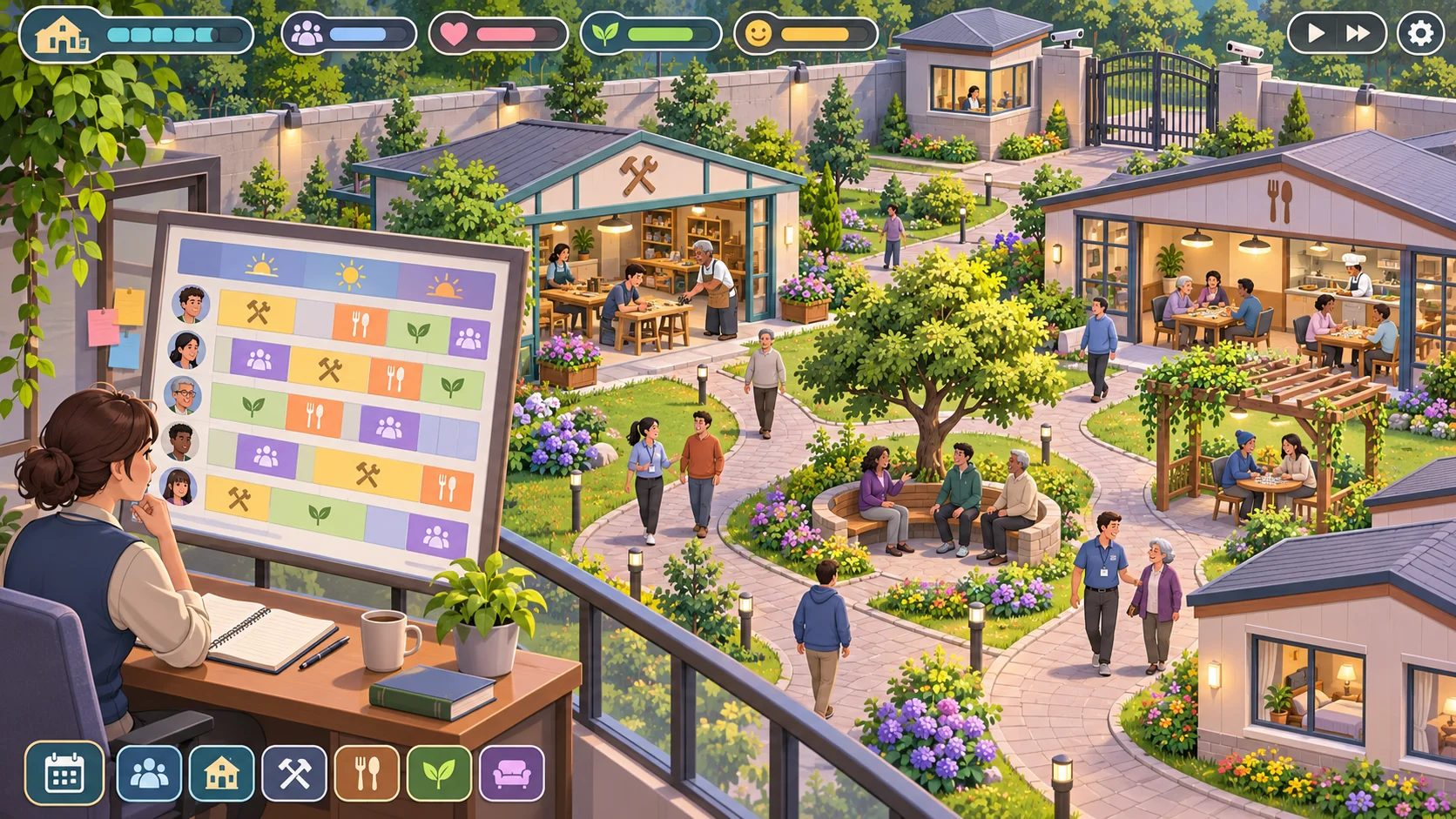
Co-op task coordination works when players can see what must happen next, how their work connects, and where another teammate can help. An original cooking management game inspired at a high level by Overcooked can create pressure through shared orders, limited time, and changing kitchen layouts. Give each task a visible state and a clear handoff, so the challenge comes from adapting together rather than guessing what the system expects.
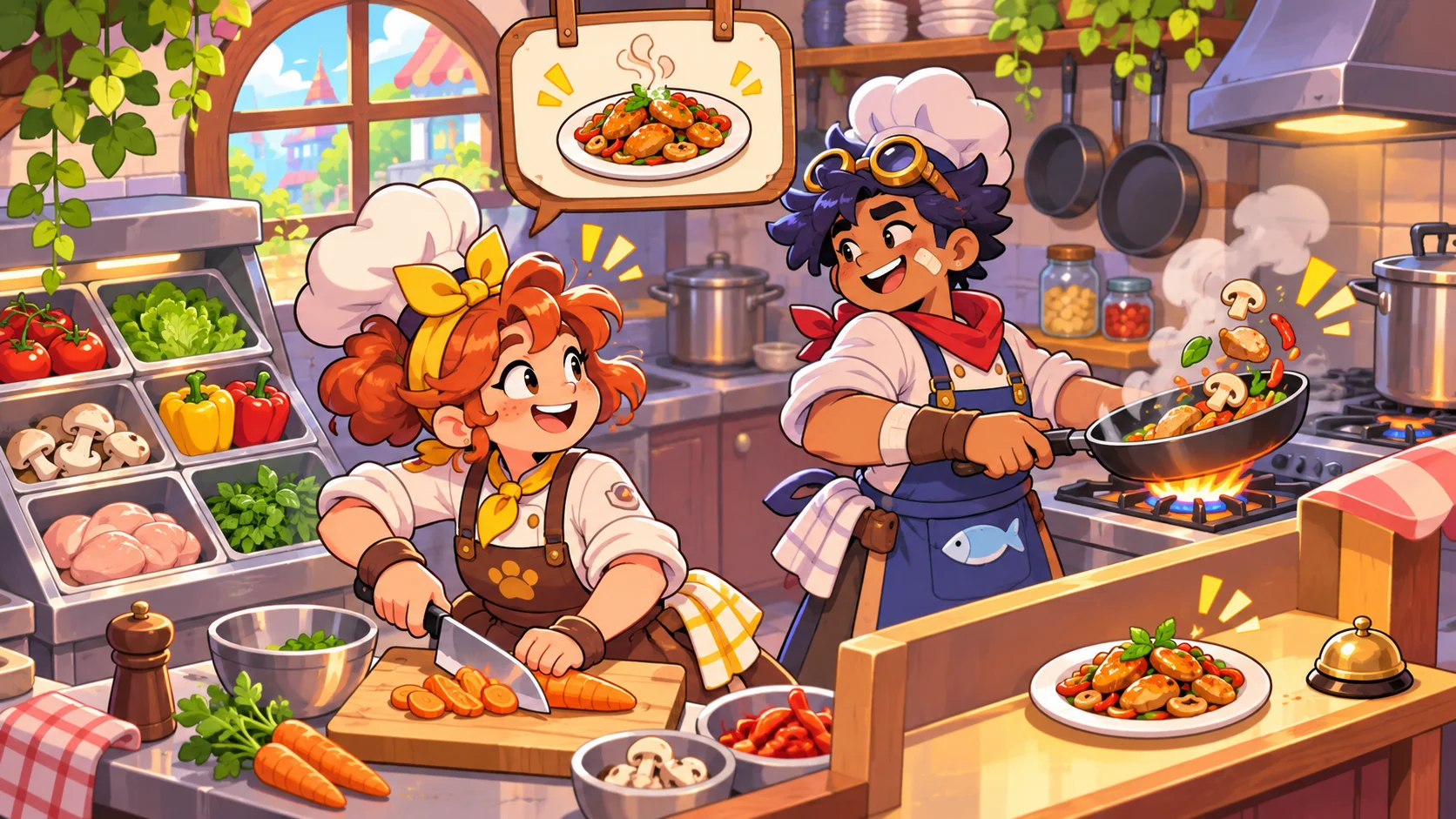
Map the task chain and dependencies
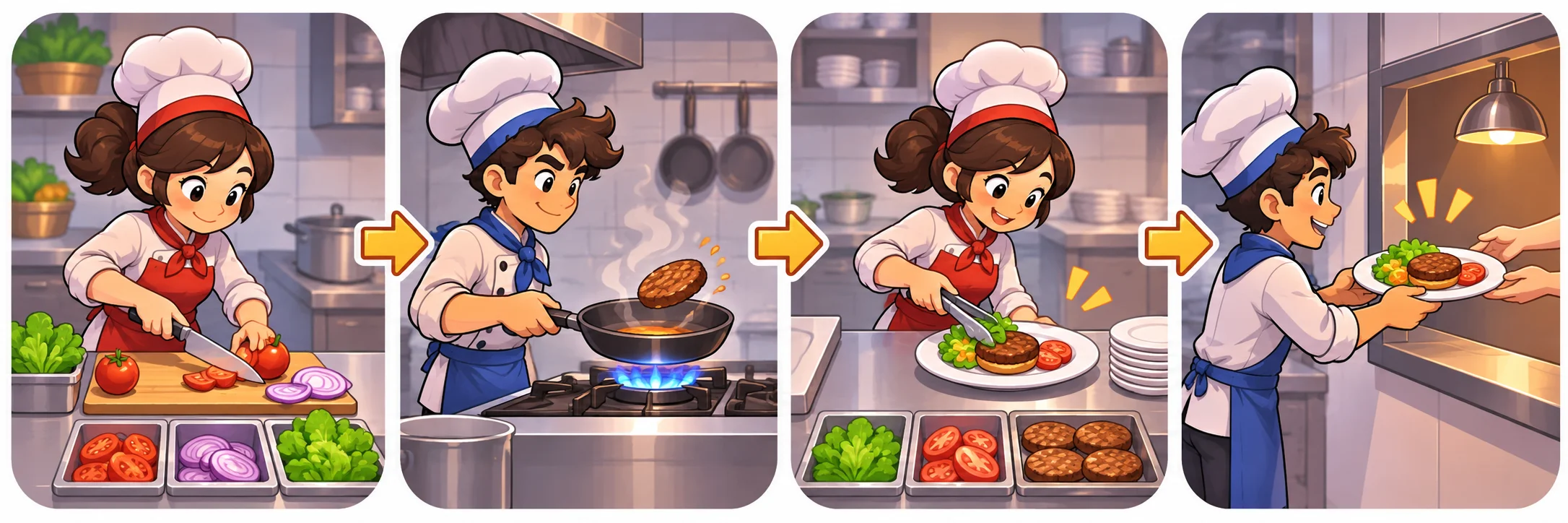
Start with a sample order and list every step required to complete it. A meal might need ingredients gathered, vegetables prepared, a pan cooked, the dish plated, and the order delivered. Mark which steps can happen in parallel and which need a completed handoff. If two dishes share a stove or ingredient, make that resource conflict visible to the team.
Team17 describes Overcooked as a co-op cooking game where players work together to prepare, cook, and serve orders before customers leave. This is broad context for coordinated timed tasks. The sample order chain and role ideas here are original and are not claims about the game’s specific kitchen systems.
Represent each task with an owner or station, a status, required inputs, and a next action. A shared board or clear object state can show whether an ingredient is waiting, being prepared, cooking, or ready to serve. Keep dependency rules consistent. If a plate is needed before delivery, show where plates are stored and how players can tell whether the meal is ready to move.
Give teammates complementary responsibilities
Let each player contribute a meaningful action. One person may prepare ingredients while another manages the stove; a third can plate and deliver. Avoid assigning a permanent role that leaves one player idle when orders change. Instead, make responsibilities flexible around stations, handoffs, or temporary priorities, so players can switch when one part of the workflow becomes crowded.
Give the team a reason to communicate. A player holding a finished dish might need someone to clear a route; a cook might need the next ingredient before a timer expires. Show those needs through task state, animation, or a simple visual cue. Do not rely on a private notification only one teammate can see when the whole team needs to coordinate.
Make the costs of switching understandable. If leaving a pan unattended causes it to burn, give a visible timer or escalating feedback. If ingredients can be dropped or carried between stations, make that interaction reliable. Players should learn the effect of their actions and be able to recover when a teammate takes a different route than expected.
Make changes and handoffs readable
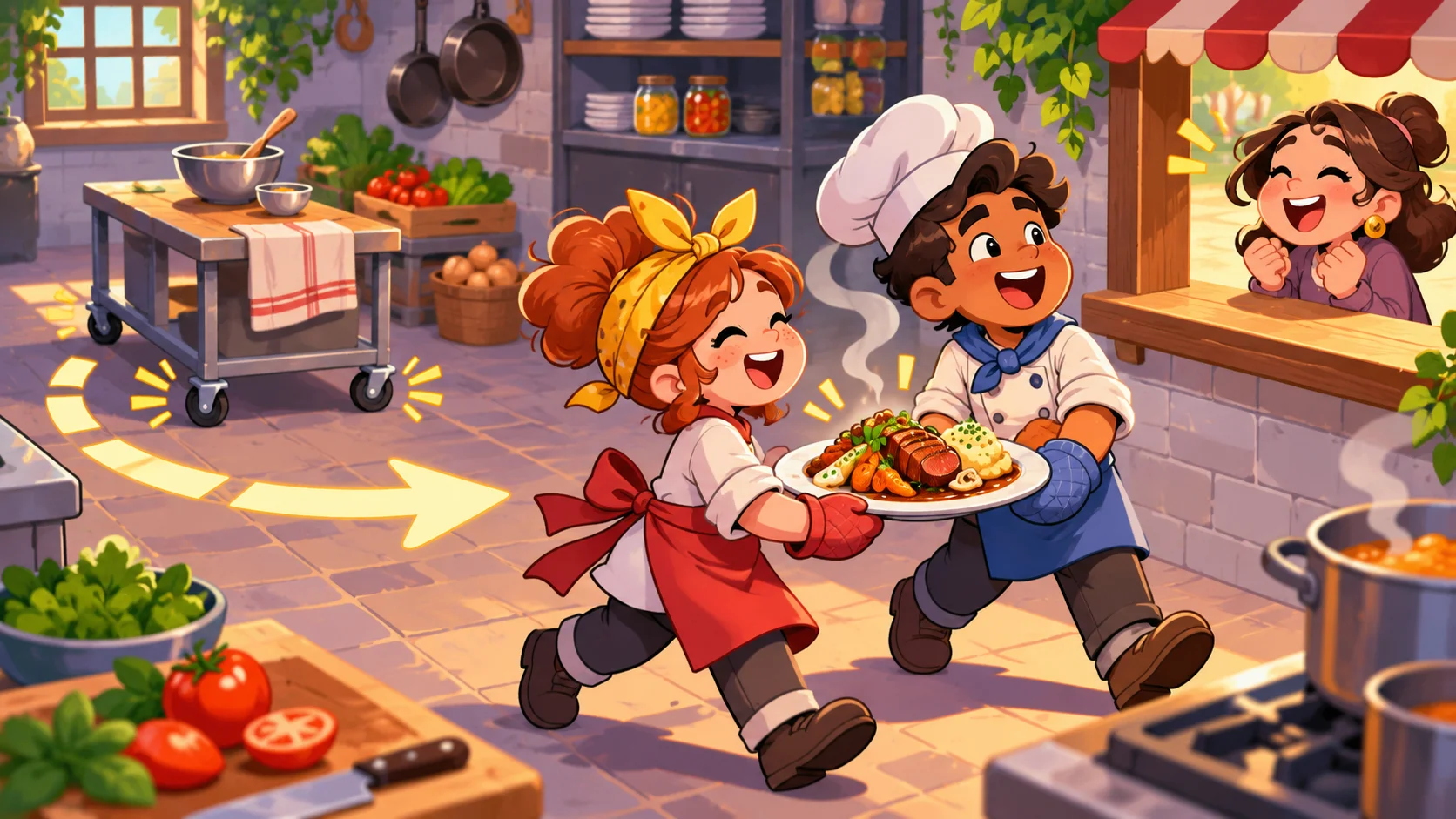
A changing kitchen should alter the plan without hiding the rules. A shifted counter might block the shortest path but open another route. A moving platform can make a station temporarily inaccessible. Signal the change before it disrupts a critical task, then leave enough time for players to agree on a new handoff. If the change is intentionally surprising, place it where the team can recover rather than losing the entire order without warning.
Clarify what happens when work is interrupted. A dish could remain safe on a plate, ingredients might fall back to a shared station, or a cooking timer may pause when the pan is moved. Choose rules that support the game’s intended pressure and communicate them through feedback. Do not silently discard a task state when players are trying to adapt.
Make the end condition visible. Show the order’s remaining steps, the deadline, and whether a dish has been accepted. A clear completion signal frees players to start the next task. If an order fails, identify why and let the team continue with the rest of the round whenever that fits the design.
Test teamwork and recovery
Playtest with pairs who have not seen the kitchen. Ask them to explain the next order step and what each person intends to do. Observe whether they naturally divide tasks, notice a blocked route, and recover when their plan changes. If players repeatedly collide at the same station, adjust its position, add capacity, or make the handoff clearer.
Test different team sizes and communication styles. A task that works with two people speaking may become confusing for a group of four or players using limited communication. Make important task state visible to everyone and ensure that a solo option, if supported, still uses the same core rules with adjusted timing or automation.
AI can help draft an original task chain, recipe variants, or a prototype specification, but it cannot tell whether coordination is readable in motion. Start a co-op management prototype with Seele’s AI game maker, then observe how teams divide work and revise handoffs based on what they actually do.
Frequently asked questions
How do you design task coordination in a co-op game?
Break the shared goal into visible tasks with clear inputs, dependencies, and completion states. Give players complementary ways to contribute and show when a handoff is ready. Then test whether teams can divide work, adapt to changes, and understand how to recover when an action is missed.
What makes a teamwork task easy to understand?
Players can see what is needed, where it happens, and what changes when the task is complete. Keep cues consistent and make important state visible to the whole team. A short practice scenario can teach an interaction before the game combines it with timers or environmental changes.
How should dynamic kitchens change the workflow?
A changing layout should create a new route or priority without making the task rules unreadable. Signal major changes, show which stations or paths are affected, and let players reorganize their handoffs. Test the same task before and after the change to verify that a reasonable solution remains.
How can AI help prototype cooperative tasks?
Ask AI to draft original task chains, dependencies, kitchen events, or team scenarios. Review the rules, then prototype them and watch multiple players coordinate without coaching. AI can help produce variations, but direct observation is needed to assess clarity, workload, and recovery.