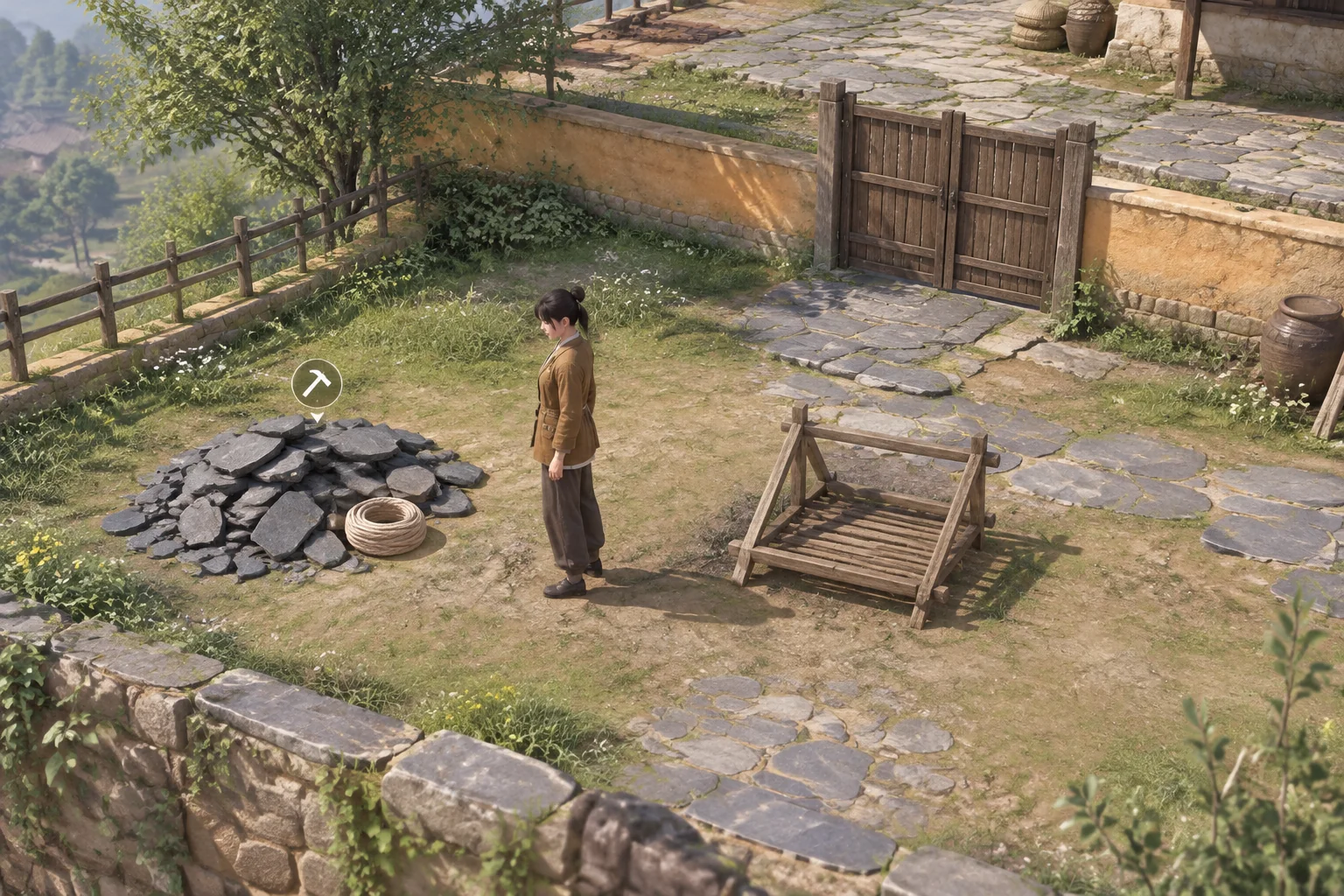
Upgrade progression is most satisfying when it changes what a player can try next. HopFrog’s official Forager listing describes gathering, crafting, building and expanding a base, alongside leveling up to learn skills, abilities, and blueprints. That broad gather-craft-build progression context is the only reference fact used here; every upgrade effect, cost, and branch below is an original example.
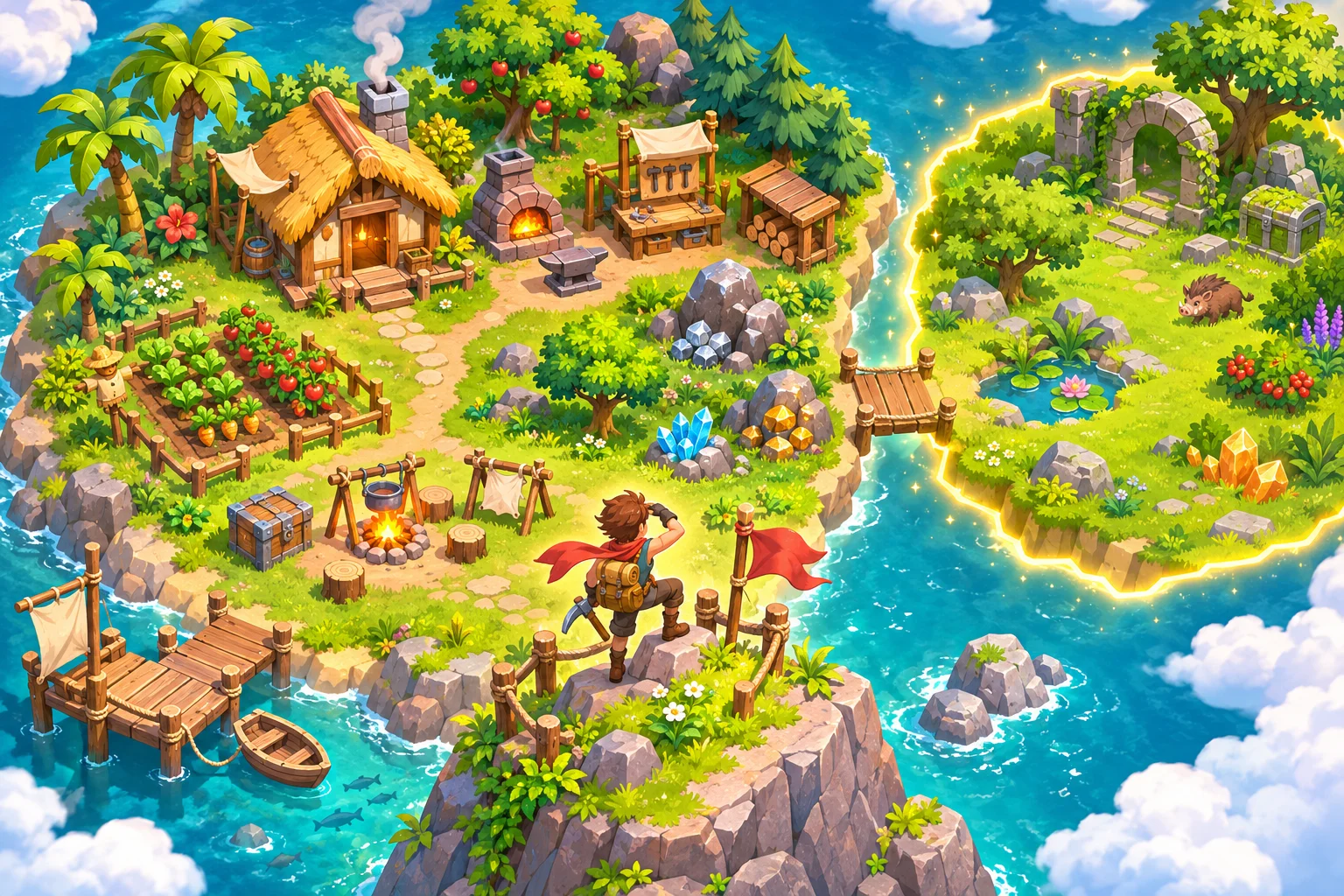
Start with actions the player can already take
Write down the starting loop before designing a skill tree. A player might gather wood, craft a workbench, and use it to make a better tool. Identify where that loop slows down or stops creating new decisions. A bottleneck worth changing could be a resource the player cannot reach yet, an action that takes too long, or a location that remains inaccessible.
Design the first milestone around that limit. For example, a reinforced pick could open a crystal deposit, while a gardening skill could make a small crop plot productive. State the before-and-after action set in plain language. If an upgrade only changes a number, ask whether the player will notice that change during ordinary play.
Keep the first progression path short enough that a new player can understand its purpose. Show the next cost and effect before they invest. A visible goal helps the player connect the resource loop with the new capability they are working toward.
Make upgrades alter capability
Prefer upgrades that open a new option, interaction, or route over a stack of isolated stat increases. Faster gathering can feel useful, but access to a previously blocked deposit changes the map and creates a reason to explore. A blueprint might enable a new station; a skill could change which resources are available from an activity.
Each upgrade needs an observable effect. Tell the player what changed, then put that change in front of them. If a tool breaks a new kind of rock, place one on a route they can now take. If a skill adds a crafting option, make the recipe discoverable where it is useful. A milestone that stays hidden in a menu may technically unlock but still feel inert.
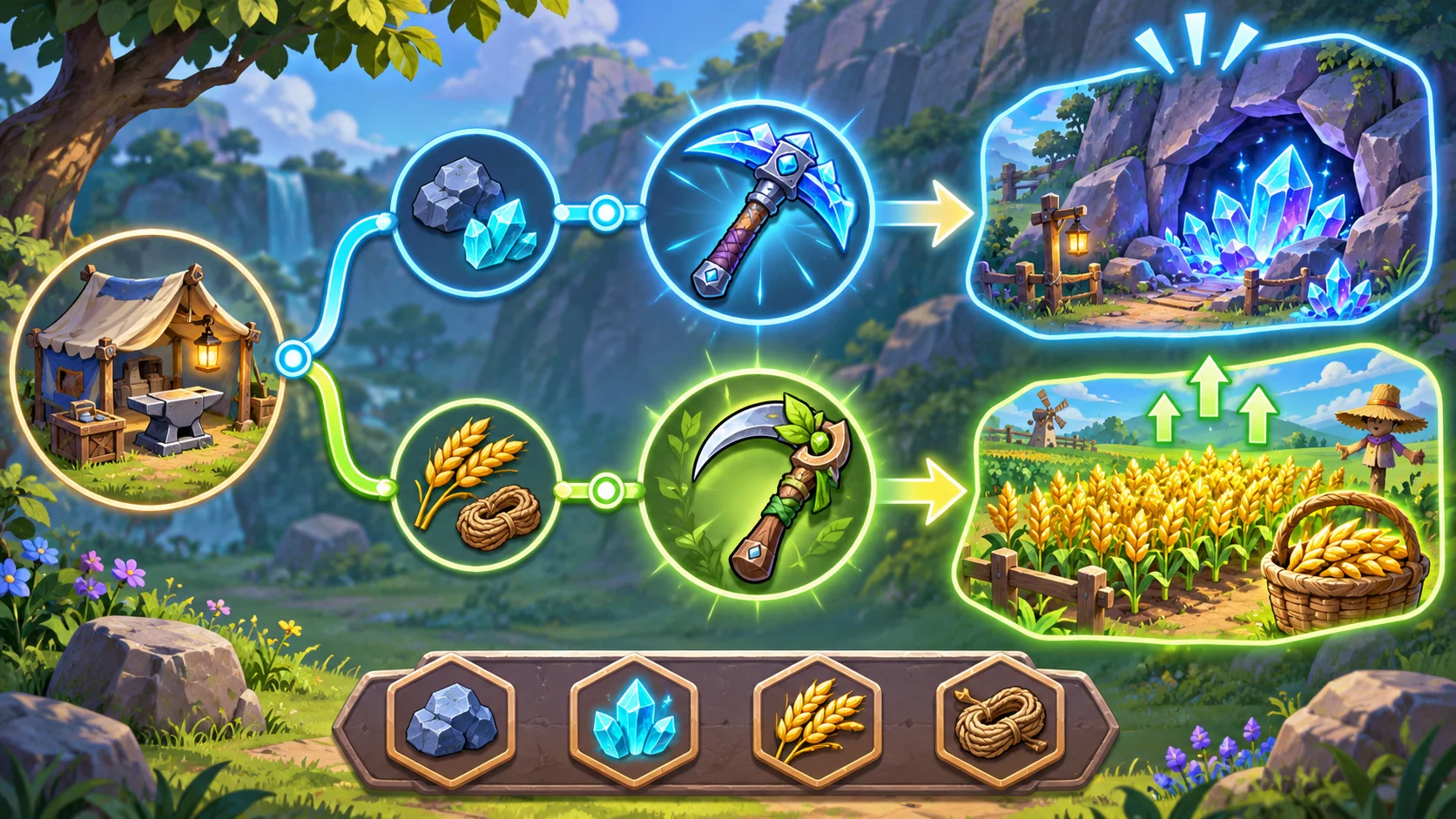
Offer choices that express different priorities. One branch might make exploration more rewarding, while another improves food production. Neither should quietly block all progress in the other. State whether a branch is exclusive, reversible, or simply earlier than a later option; players should not have to guess the long-term cost of a choice.
Price milestones without stalling play
Use costs to pace decisions, not to require repetitive work with no alternative. Make sure a player can earn needed resources through more than one activity or keep a reliable fallback action open at every tier. Avoid requiring a material that only becomes available after the upgrade being purchased.
Place competing upgrades where they ask for a real priority. A rare crystal could buy access to a cave, while saving it might improve a tool for farming. If the choice has a lasting effect, explain what each path provides. If it is reversible, make the cost of changing direction clear.
Track how long players spend between milestones and whether they keep engaging with the base loop. A longer interval can be satisfying when players understand the goal and have varied work to do. If they repeat one task because nothing else advances, reduce the bottleneck or add a meaningful alternative instead of simply lowering every cost.
Test branches and long-term clarity
Ask playtesters to name a useful next goal without opening a guide. Note whether they understand an upgrade’s cost, effect, and prerequisites. Record time between milestones, unused upgrade points, repeated grinding, and how often players reach a branch that does not help their current plans.
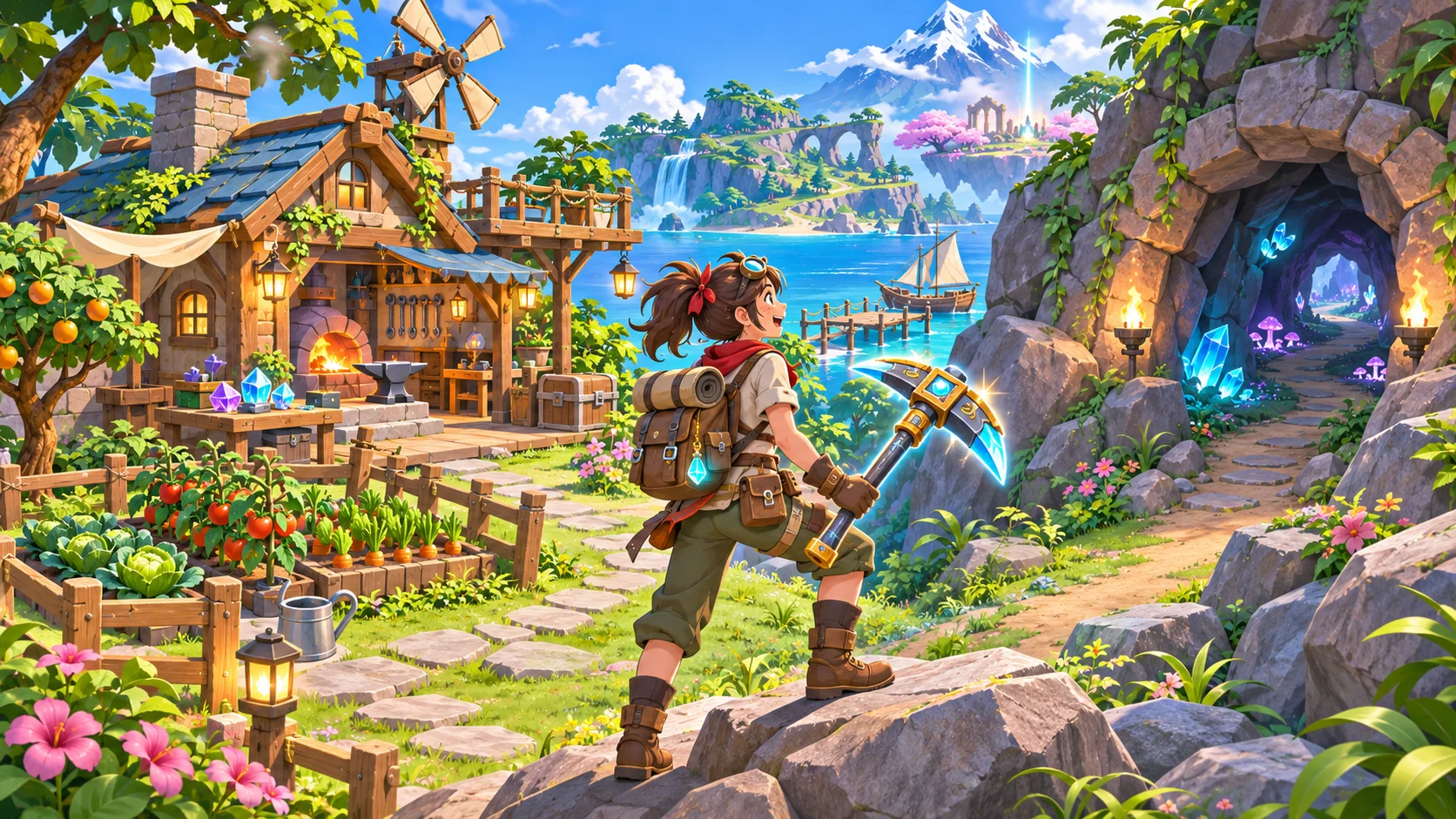
Compare a focused route with an exploratory route. If only the optimized path feels viable, adjust prerequisites or give side activities more useful outputs. If players cannot see that a new area is accessible, improve the world cue or milestone notice. Test one cost or branch at a time so you can identify what changed.
SEELE AI can help draft an original crafting-adventure concept, but the resource loop, unlock graph, milestone pacing, and balance require implementation and playtesting. For a broader premise, see the original incremental-adventure guide. Prototype an original crafting adventure with SEELE AI.
FAQ
How do you build upgrade progression in a crafting adventure?
Map what players can do at the start, identify a meaningful limit, and design an upgrade that changes an action or opens a new route. Set a cost using resources the player can earn through more than one activity. Then test whether the upgrade is understandable and arrives before the base loop becomes repetitive.
What makes a game upgrade feel meaningful?
A meaningful upgrade changes what a player can do or how they approach a familiar task. Faster gathering can help, but a new tool that reaches another resource may create a broader choice. Explain the effect before purchase and show it in play so the player can connect the milestone to the outcome.
How do you prevent upgrade costs from stalling progress?
Keep at least one reliable activity available at every tier, and avoid requiring a resource that can only be obtained after the upgrade being purchased. Show the player what remains to earn. Test both focused and exploratory play styles to catch costs that feel fair only to an optimized route.
What should you measure when testing progression?
Record time between milestones, unused upgrade points, repeated resource grinding, and whether players can name a useful next goal. Compare different upgrade paths and check for dead ends. If players miss a branch or stop engaging with the loop, revise the signposting, cost, or effect rather than adding more tiers.