To make a 3D collectathon with AI, start with a small space the player can read from the ground. Put two pickups on an easy path, then offer a choice about how to find the next one. Give that choice a visible payoff: a gate that opens once the player has enough pickups to leave.
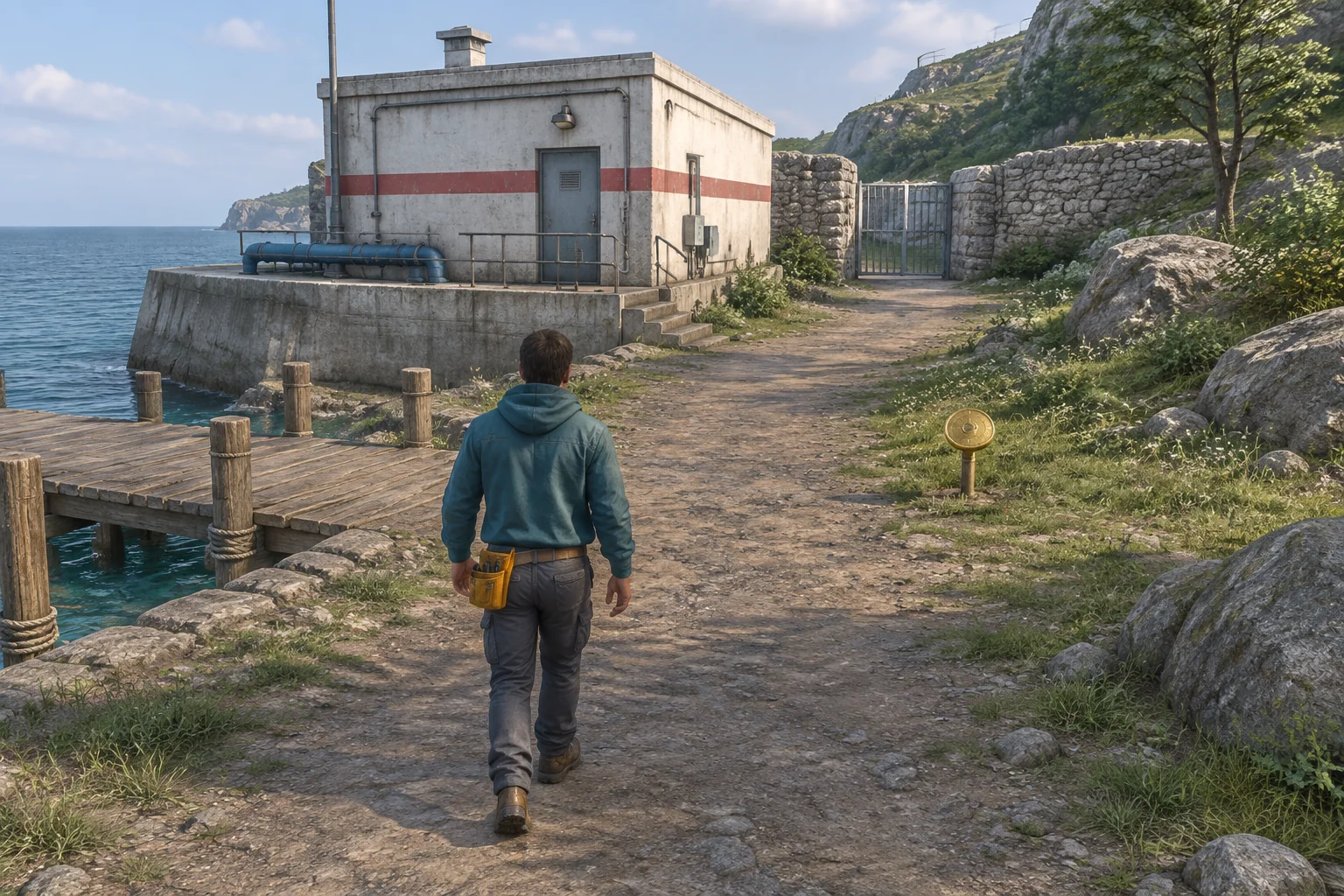
In this fictional design, a coastal technician collects brass survey markers around a pump station. Four markers are available and three open the exit. The player can take a short ledge with two jumps or follow a longer walking ramp. Both lead back toward the same gate.
Make the route readable from the dock
Build a dock, a central pump house, and a gate before detailing the rest of the coastline. At the spawn point, use the pump house's painted stripe to pull the eye inland. Let the player see the gate, or see enough of its approach to place it once they reach the building. Walk the opening path from the actual follow camera. A clear top-down plan can still put the gate behind the player's head or leave a landmark hidden by a wall.
| Marker | Placement | Purpose |
|---|---|---|
| Dock path | In the player's natural walking line | Teach pickup and feedback together. |
| Pump house | Beside the junction | Put a second easy pickup at the point where the player chooses a route. |
| Maintenance ledge | On a wide landing after the first jump, with a second jump leading out | Reward the short route that asks for precise movement. |
| Walking ramp | At a bend on the longer route | Offer a route to the same threshold without jumps. |
Make both branch entrances accessible again from the gate approach so a player can turn back for the fourth marker. If the ramp entrance looks like background scenery, give it a usable opening and a railing that leads the eye around the bend. Keep the ramp longer in distance. Its advantage is predictable movement.
Make every pickup change one state
Give each marker a stable ID. When the player touches an uncollected marker, record its ID, remove it from the scene, and update the count from the set of collected IDs. Play a short pickup cue and light one of the three gate-progress slots. Show the total found separately once those slots are full, so a fourth marker still gives feedback. Re-entering a marker's old location should leave the count alone.
Open the gate when the count reaches three. The run ends when the player crosses the open threshold, leaving time to collect the fourth marker first. If the player touches the gate early, show how many more markers they need. A fall on the ledge returns the player to the pump-house junction with collected markers and gate progress intact. A deliberate restart restores every marker, closes the gate, and puts the player back at the dock.
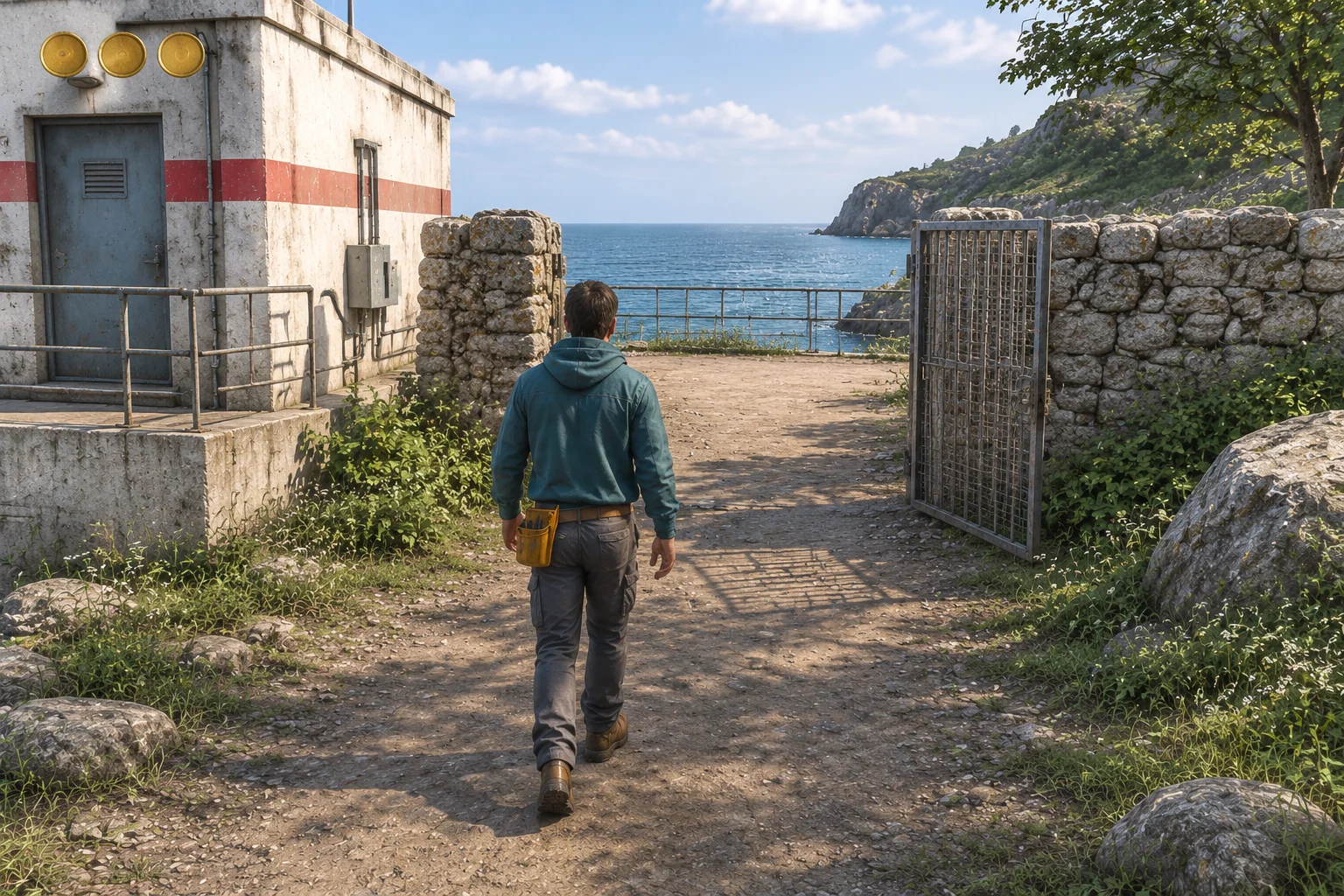
Give AI a build request you can check
SEELE's 3D game maker starts from a written player loop and is designed around small browser prototypes. Describe the route geometry and the rules first. Leave detailed scenery until you can walk the opening, take each branch, and read the pickup cue from the follow camera.
Create a small third-person browser game set at a coastal pump station.
Use WASD to move, Space to jump, and R to restart. Show those controls.
Start the player at a dock with a view of the pump house and gate approach.
Put one brass survey marker on the dock path and one beside the pump house.
Branch from the pump house into a short two-jump maintenance ledge and a
longer walking ramp. Place one marker on the ledge landing after the first
jump and one on the ramp. Both routes return to the gate approach, and the
player can walk back to either branch from there.

Give each marker a stable ID. On first contact, remove it, play a pickup
cue and count it once. Show the total found and three gate-progress slots.
Keep the gate closed until three unique markers are collected. At an early
gate attempt, show how many are still required. Entering the open gate
ends the run. Allow collecting the fourth marker before entering.

If the player falls from the ledge, return them to the pump-house junction
and retain their pickups and gate progress. Block leaving the map elsewhere.
Restart from any state, restoring the player to the dock, all four
markers to their positions, the count to zero, and the gate to closed.
Use simple shapes and readable landings. Leave out enemies and timers.
Check both three-marker finishes
Start each branch test from a fresh restart. When a result differs from the table, record the location, route, and count before and after the action. That gives you a specific repair request, such as keeping the ledge marker collected after falling on the second jump.
| Try this | Expected behavior |
|---|---|
| Collect the dock marker, walk over its old position, then touch the gate. | The count stays at one. The gate remains closed and asks for two more markers. |
| Take both starting markers, collect the ledge marker, then fall on the second jump. | Respawn at the pump house with three markers. The ledge marker stays gone and the gate stays open. |
| Restart and finish once via the ledge and once via the ramp, skipping the other branch each time. | Either route opens the gate at three. Crossing the open gate ends the run. |
| Use both branches, collect the fourth, cross the gate, and restart. | The total reaches four without ending the run. Crossing the gate ends it. Restart returns to the dock with four available markers, a zero count, and a closed gate. |
Change one pickup sightline at a time
Suppose a tester reaches the first jump, sees the landing, and turns back because the marker is outside the follow camera's view. Move the marker toward a visible point on the same landing and give it room on all sides. Keep the camera, jump distances, and gate requirement fixed. That change tests whether players can see a reason to jump from the approach.
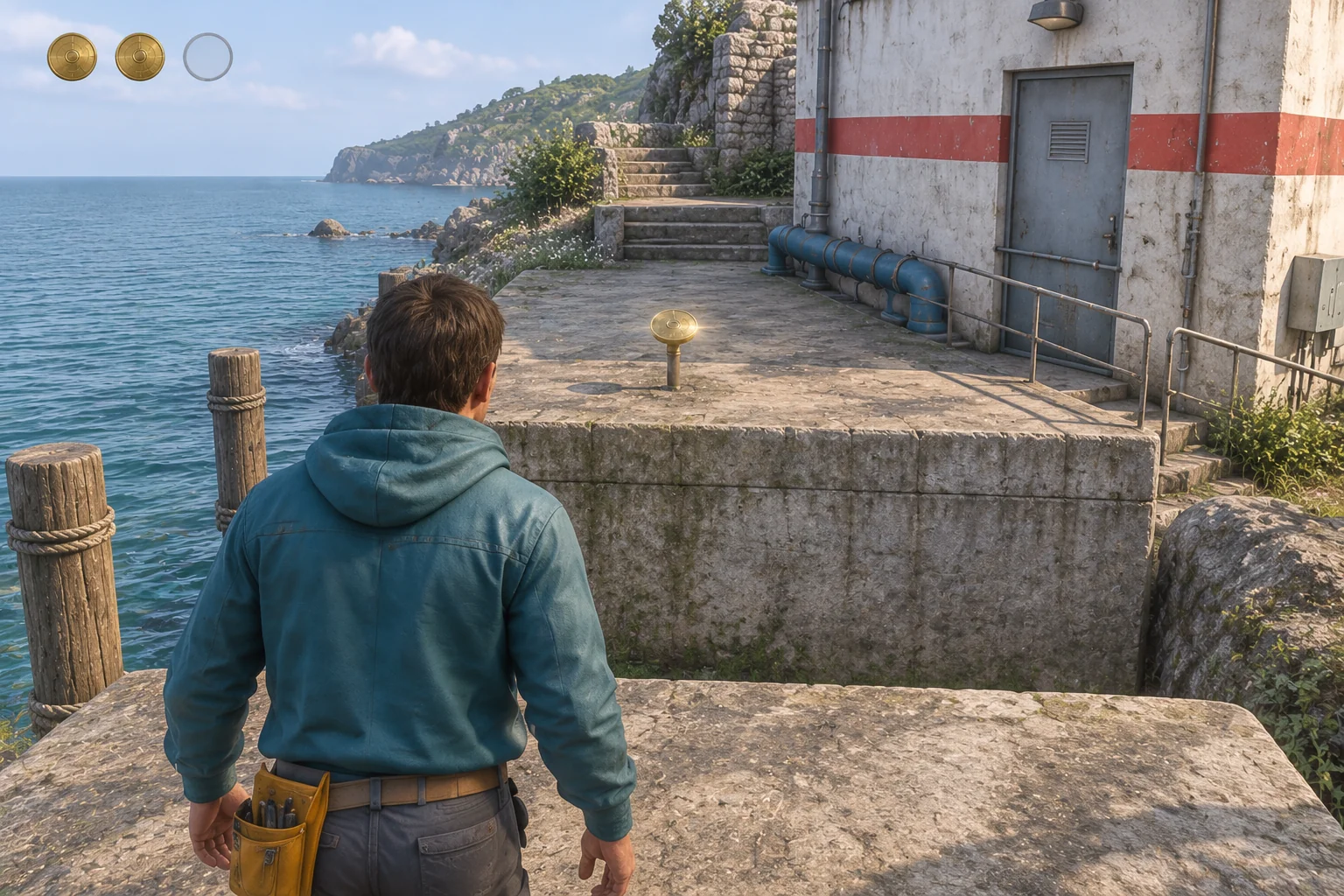
For a before-and-after check, use the same starting point and camera angle. Record whether the tester spots the marker before jumping or rotating the camera. Repeat both finishes and the second-jump fall, because moving the pickup could put its trigger outside the walking line. If the pickup is easy to see and the jump still fails, inspect the gap and the usable landing width in a separate change.
Frequently asked questions
Why place four pickups if the gate only needs three?
The spare pickup lets players choose how to finish. In this map, both routes can supply the third marker, so a missed jump does not force another attempt.
What should happen after a missed ledge jump?
Send the player back to the junction and retain collected markers. From there, the player can retry the ledge, switch to the ramp, or head for the gate if it is already open.
Should I move the camera or move the pickup?
If the jump and landing are easy to read but the pickup is hidden, try moving the pickup first. If the camera conceals landing edges on several jumps, investigate the camera separately.
When should I add a second zone?
Add one after players can find both routes, recognize pickup feedback, and finish and restart cleanly. Give the next zone a new decision, such as choosing between a visible detour and a route revealed from a higher vantage point.
Build the route before expanding the map
Start with the dock, the pump house, and the exit gate. Once players can choose a route and tell what each pickup changes, you can spend time on a larger map or a visual pass around the landmarks. Start a small 3D prototype with SEELE.