To make a fishing adventure game with AI, build two spots that give the player different reasons to cast. At the first dock, teach when to reel and when to ease the line. Let those catches pay for stronger line, then send the player back to a spot they could see from the start.
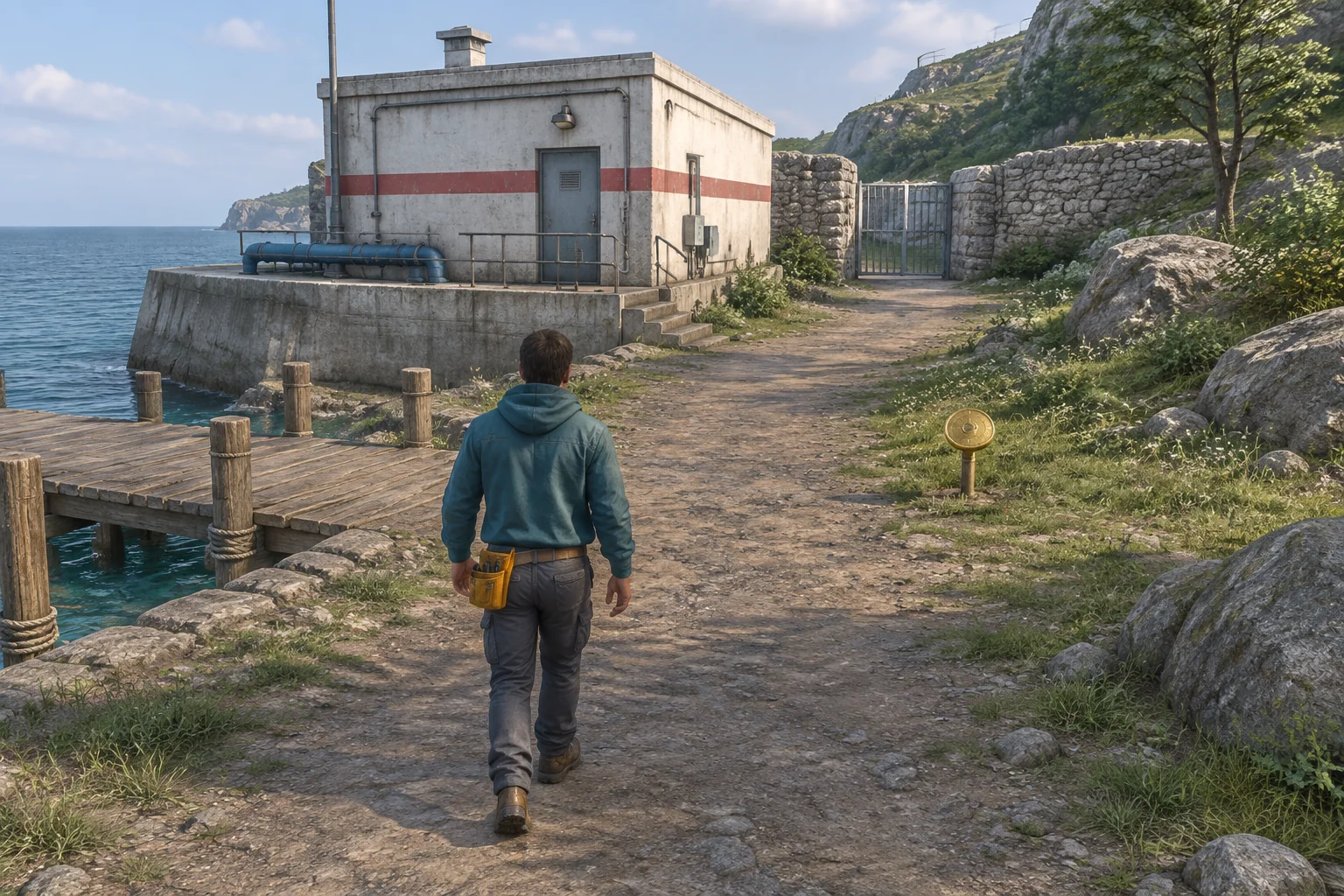
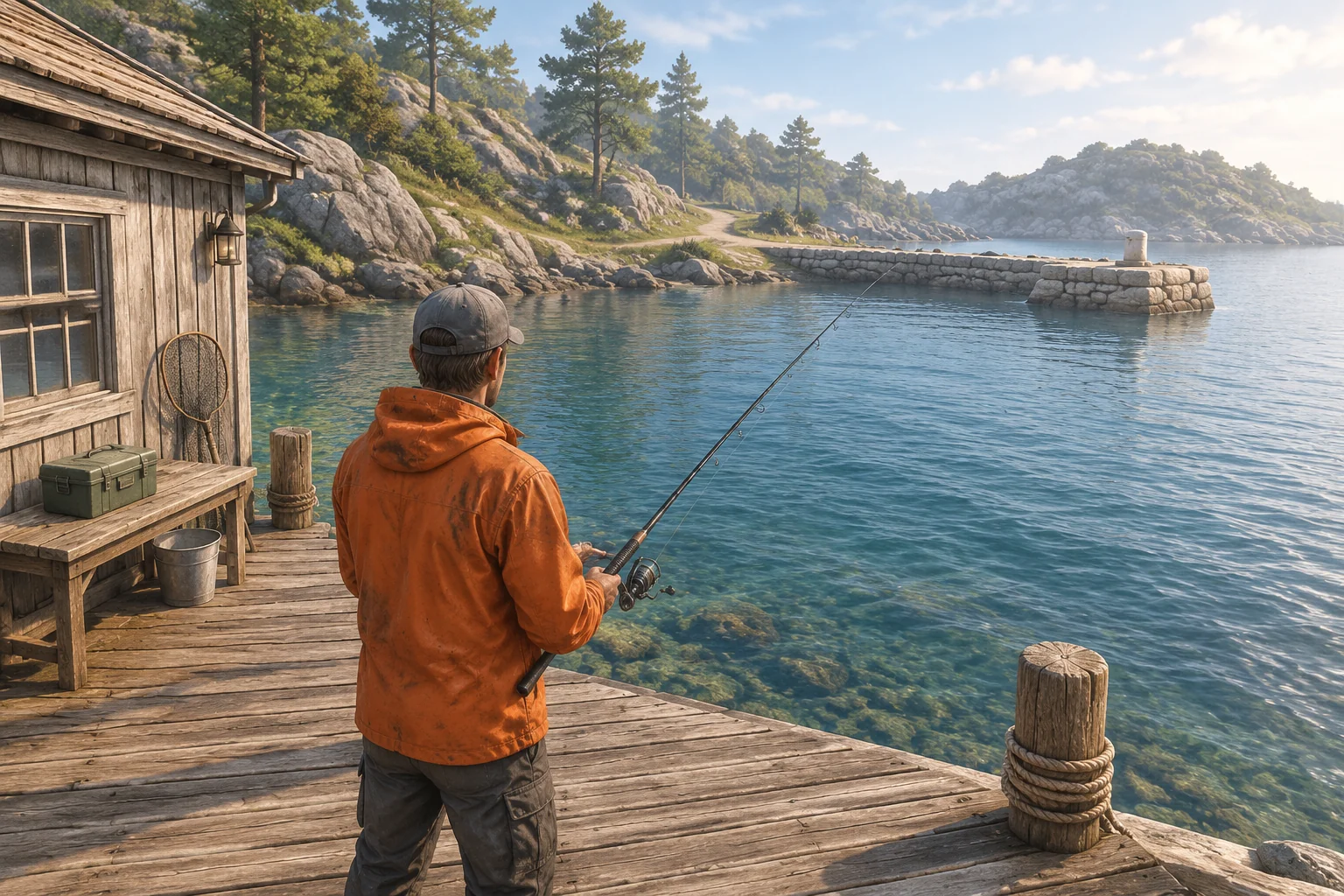
This fictional prototype takes place in a small rocky bay. The old boathouse dock has gentle pulls and a tackle bench. A path around the shore leads to a stone jetty, where the fish puts more strain on the line. Catching one jetty fish completes the run.
Let the player discover the jetty before buying gear
Put the dock, tackle bench, and far jetty on one continuous walking route. Let players walk to the jetty with their starting equipment. If they try to cast there, show that they need reinforced line and leave their inventory alone. That way, the player can find the next spot and learn what to buy in the same visit.
Use the dock for the first catch and the bench as a separate interaction. When the player walks back to buy line, they should be able to distinguish the upgrade action from casting at the water.
Make each pull a choice between reeling and easing
In this prototype, a cast starts a bite cue, then the player works through a sequence of pulls one at a time. The tension meter starts at zero, and the interface shows the next pull before the player acts. Reel adds that pull's value to tension and earns one catch mark if the line holds. Ease lowers tension by two, down to a minimum of zero, and earns no mark.
Both actions use up the current pull. Think of easing as letting the fish finish a pull while you give it line. When you ease, the next value comes up even though your catch progress stays where it was. That makes timing useful. You can let a hard pull pass and reel on the lighter one that follows.
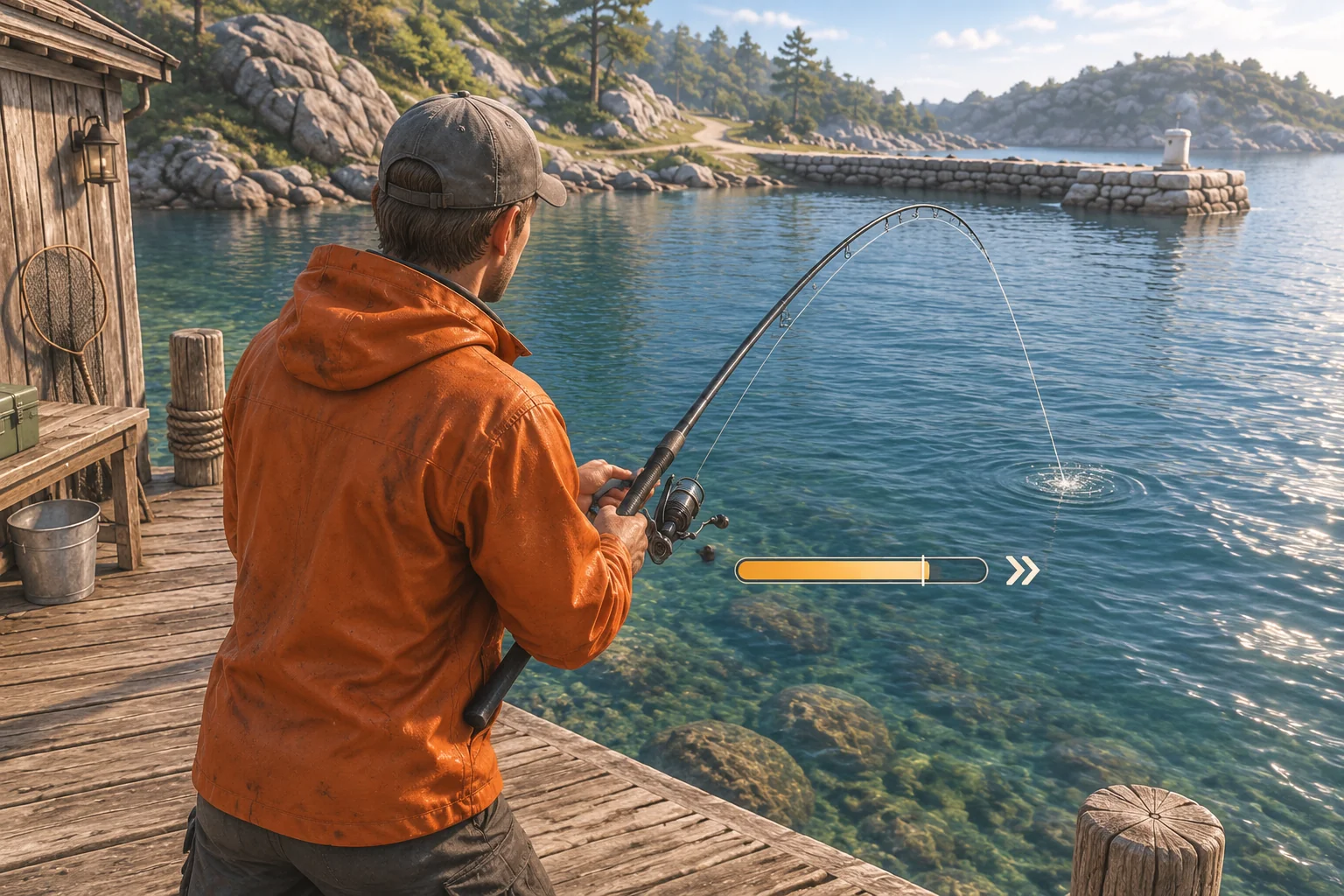
The starter line holds up to three tension. Reinforced line holds up to five. Reaching the limit is safe. Going above it snaps the line before the game adds a mark, even if that mark would have finished the catch.
| Spot | Repeating pulls | Marks needed | One successful sequence |
|---|---|---|---|
| Boathouse dock | 1, 2 | 2 | Reel, Reel. Tension reaches 1, then 3. |
| Stone jetty | 2, 3 | 3 | Reel, Ease, Reel, Reel. Tension reaches 2, 0, 2, then 5. |
At the jetty, reeling three times in a row produces tension of two, five, then seven. The second pull is safe, but the third snaps the line and awards nothing. The safer sequence uses the second pull to lower tension. From zero, the remaining two reels use the full capacity without going over it.
Make the line upgrade worth the walk
Start with no credits. Each landed dock fish gives one credit and one catch-log entry. Two catches pay the exact two-credit price of reinforced line. At the bench, check the balance, deduct the cost once, and equip the line immediately. A second purchase attempt should leave the balance and gear alone.
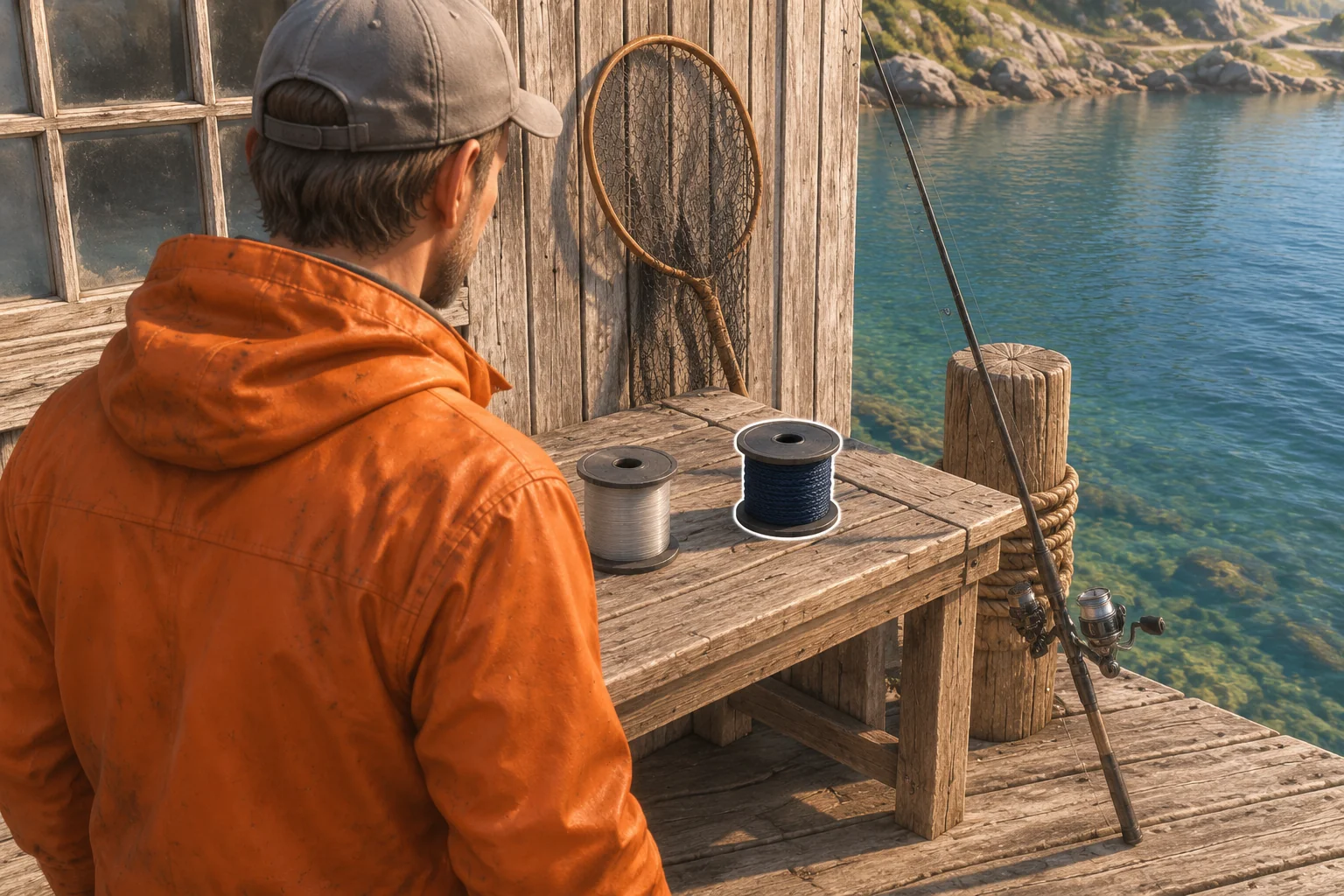
Walking the bay changes where you can fish. Buying line changes what happens after you cast. Keep both effects visible. Show the equipped line and its capacity near the cast action, then display the far fish's stronger pull pattern when the player hooks it.
Give AI the route and the catch rules together
SEELE's 3D game maker gives you a prompt-led starting point for a small browser prototype. Describe the walkable route, input choices, and reward rules before adding more locations or fish.
Create a third-person fishing adventure around one walkable bay.
Use WASD to walk. Let the player interact with a dock fishing spot,
a tackle bench beside it, and a second fishing spot at the far jetty.
Start at the dock with starter line, zero credits, and an empty catch log.
Allow walking to the jetty from the start. Block casting there until
reinforced line is equipped, and show the requirement.

A valid cast starts a bite cue and then a turn-based fish challenge.
Start each challenge at zero tension and zero catch marks. Show current
tension, capacity, and the next pull. Reel adds the shown pull to tension.
If tension is above capacity, snap the line and award nothing. Otherwise
Reel adds one mark. Ease lowers tension by two, to a minimum of zero,
and awards no mark. Advance the pull pattern after either choice.

At the dock use repeating pulls of one and two. Land the fish after two
marks, log the catch and add one credit exactly once. Starter capacity
is three. At the bench, let the player spend two credits once to equip
reinforced line with capacity five. Reject an early or duplicate purchase
without spending credits. At the jetty use repeating pulls of two and
three. Landing the fish after three marks records it and ends the run.

After a snap, clear the current encounter and let the player cast again
with existing gear, credits and log unchanged. Restart restores the dock
spawn, starter line, zero credits and an empty log. Use simple scenery
and two visible choices. Leave out bait, random loot and real-time timers.
Check rewards, snaps, and the reset
| Try this | Expected result |
|---|---|
| Walk to the jetty before upgrading and try to cast. | The requirement appears. No challenge, cost, or reward is triggered. |
| Reel twice at the dock, then activate the result again. | The fish lands at tension three. The game logs one catch and grants one credit. |
| Try the upgrade with one credit, then with two, then repeat the purchase. | The first attempt leaves one credit. The second equips the new line and leaves zero. The last attempt leaves both unchanged. |
| Reel three times at the jetty, then retry with an Ease on the second pull. | The first run snaps on seven before progress. The second lands at five, adds one jetty entry, and wins. |
| Restart after a snap and after winning. | Both restarts restore the dock, starter line, zero credits, and an empty log. |
Move the next-pull cue before changing the fish
Suppose a player reaches five tension at the jetty with two catch marks and reels again into an upcoming pull of two. They may know the limit but miss the next-pull cue. Try moving that cue beside the tension gauge while keeping its size, the pull pattern, and all rules fixed.
Compare the choice at that same five-tension state before and after the change. The question is whether the player reads the upcoming two and eases. At that point, easing once leaves three tension and reveals a pull of three, so the player needs to ease again before reeling. Rerun both jetty sequences to confirm that cue placement leaves the outcomes unchanged. If players can already read the two values together but do not understand the consequence, revisit the snap feedback in a separate pass.
Frequently asked questions
Why start with only two fishing spots?
Two spots let you test whether exploration and equipment affect the same loop. The dock teaches the catch, and the jetty gives stronger line a purpose. Add another location when it changes what the player sees, chooses, or does during a catch.
How is line capacity different from current tension?
Capacity is the maximum load the equipped line can hold. Tension is the current load, which changes after each action. At five tension on reinforced line you are still safe, but reeling into any positive pull will take you above capacity.
What should happen when the line snaps?
End that fish encounter without a catch or credit and explain which pull crossed the limit. Let the player try again with the gear and rewards they already earned. A retry gives them a chance to use the feedback on the next catch.
When should I add more fish?
Add variety once players can read the tension and follow the equipment loop. Give a new fish a pattern that calls for a different decision. For example, put two hard pulls together so the player considers easing twice before the next reel.
Build one return trip first
Give the player a dock catch they can learn, a line upgrade they can earn, and a jetty catch that makes them use both. Start a small 3D fishing prototype with SEELE.