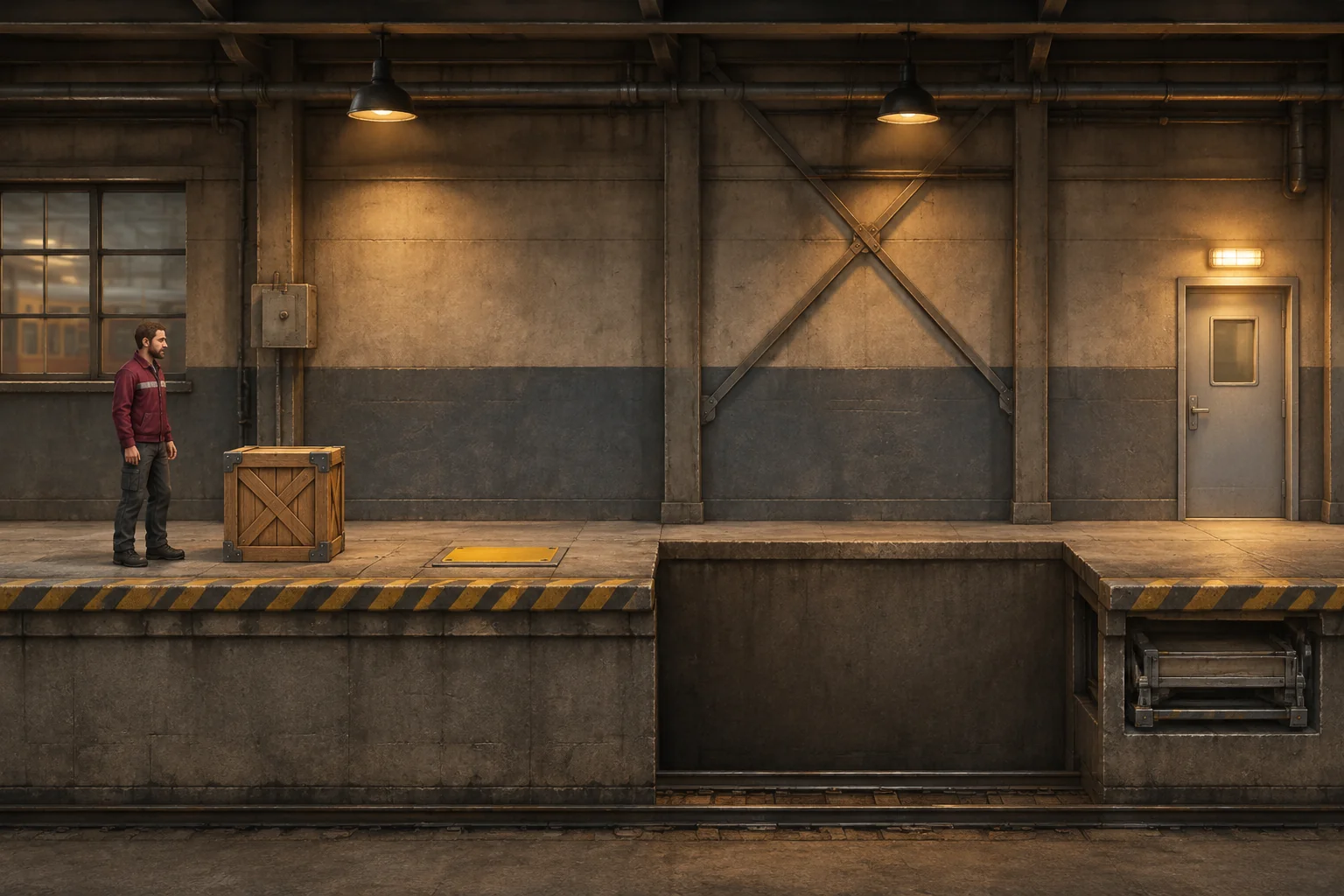
To make a merge puzzle game with AI, start with a short recipe and a tray with room for only a few extra parts. Let two matching parts become one higher-tier part. The upgrade gets the player closer to the target and frees a cell for the next piece.
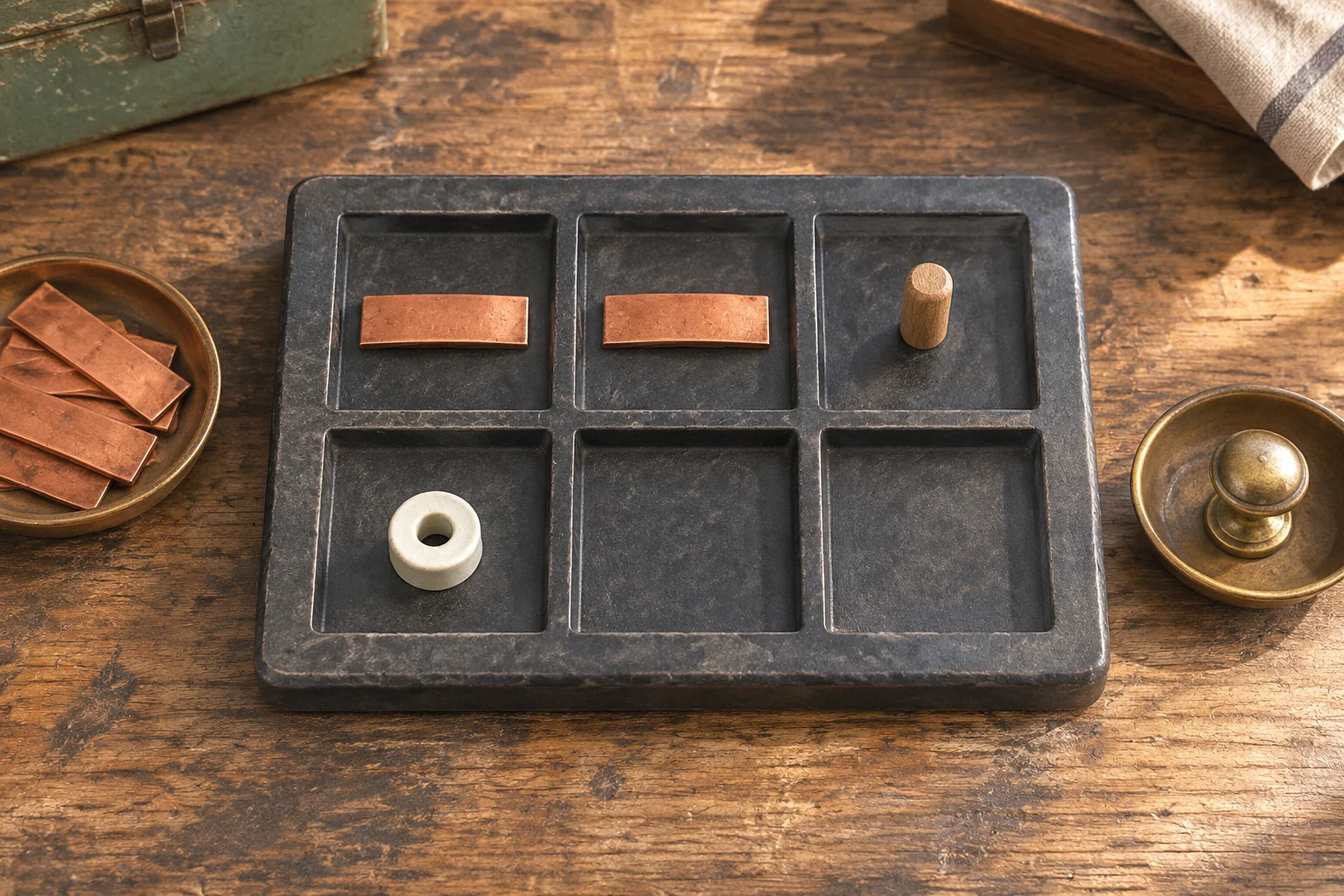
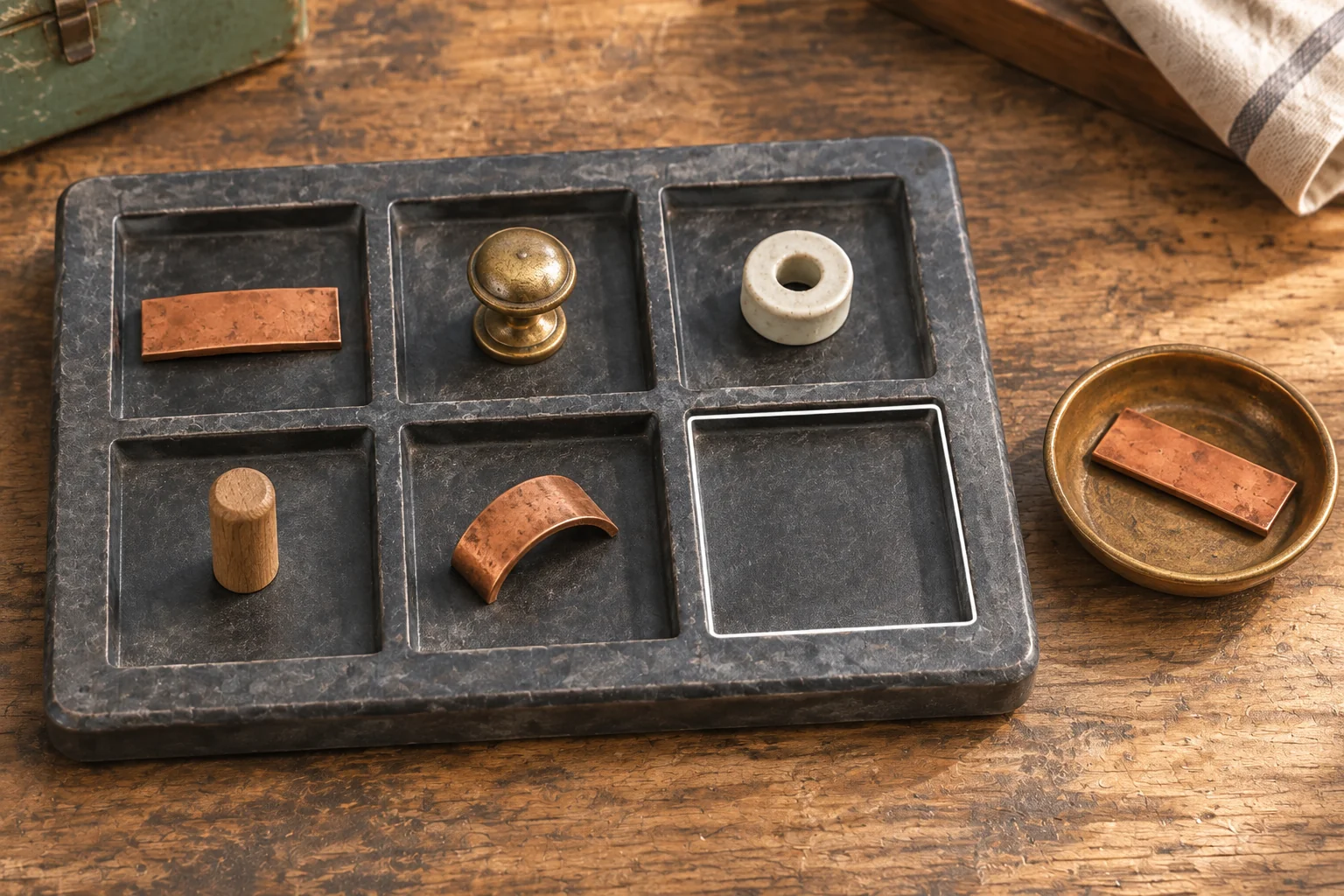
In this fictional workshop puzzle, the player has a six-cell tray and needs one lantern bracket. Two copper strips make a clasp, and two clasps make the bracket. Supplies offer more strips and optional salvage. Space in the tray determines which pieces the player can take.
Make the result land in a predictable cell
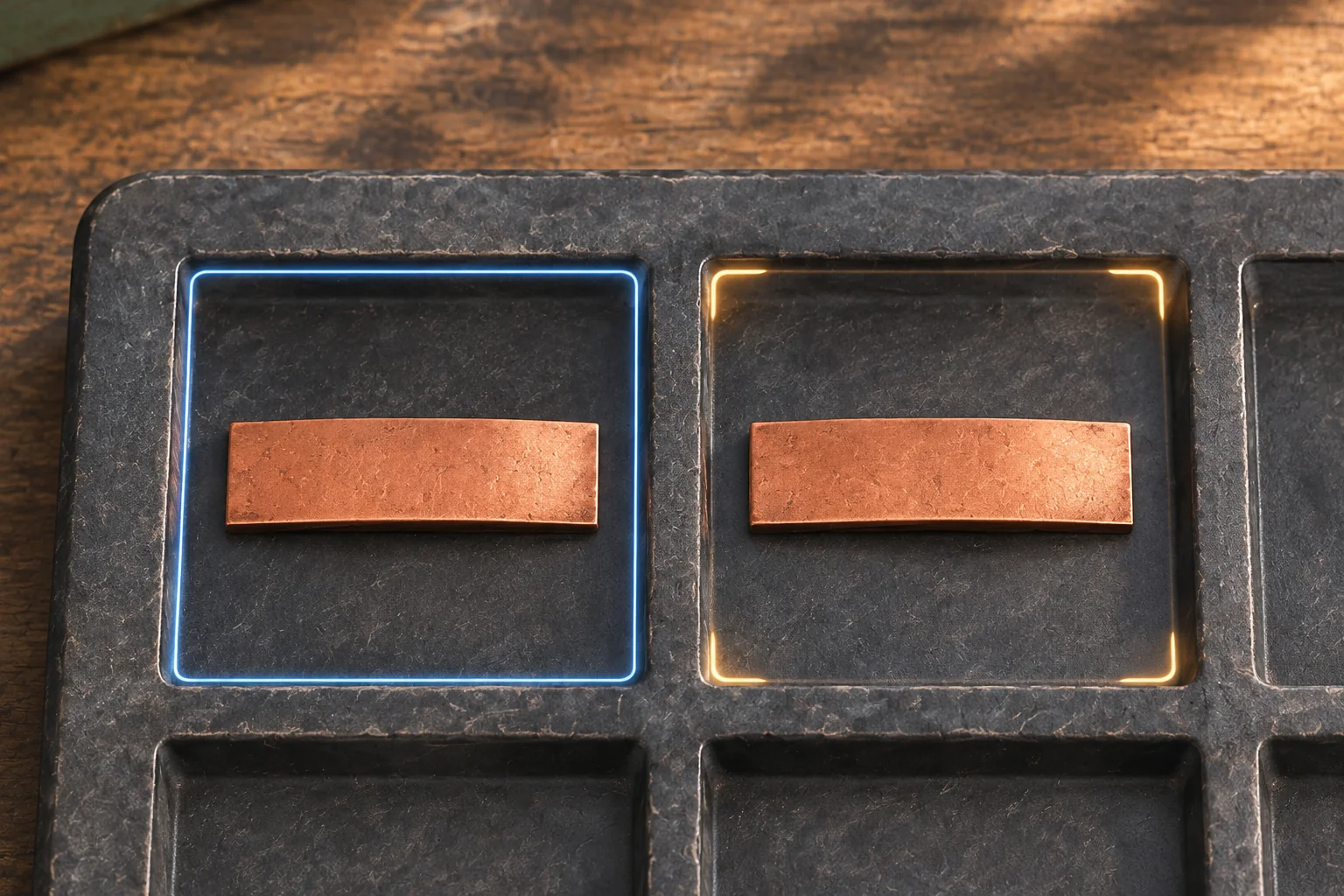
Let the player select one occupied cell and then another. If both cells contain the same eligible tier, clear the first cell and replace the piece in the second with the next tier. The two cells can be anywhere in the tray. There is no need to line up a row or wait for new items to fall into place.
| Inputs | What remains | What changes |
|---|---|---|
| Two copper strips | One clasp | Free one cell and move one step up the recipe. |
| Two clasps | One lantern bracket | Free one cell and complete the order. |
Work backward from the order. A bracket needs two clasps, so it takes four copper strips in all. The tray does not need space for all four strips at once. Merging the first pair leaves a clasp in one cell and gives you another place to put incoming copper. Reject a mismatched pair or a selection of the same cell without changing the tray or supplies.
Leave room for the parts you still need
Start with two strips, a wood peg, a ceramic spacer, and two empty cells. Put exactly two more strips in the copper supply. A separate salvage dish offers a brass knob followed by a steel spring. Those extra pieces have no recipe for this order. Show the next piece from each source so players can tell what they are taking.
Each draw goes into the first empty cell, reading left to right across the top row and then the bottom. Only advance the supply when its piece lands. If there is no empty cell, leave its next piece in place and let the player look for a merge.
| Plan | Occupied cells | Result |
|---|---|---|
| Merge the opening pair, draw both strips, then merge the strips and the clasps. | 4 → 3 → 4 → 5 → 4 → 3 | Two clasps become the bracket and complete the order. |
| Draw both salvage pieces, merge the opening pair, then draw one strip. | 4 → 5 → 6 → 5 → 6 | Only one strip is on the tray, with no pair left. The last strip is still in supply. |
Notice the difference between the two times the second plan reaches six occupied cells. After both salvage draws, the original strips still form a pair and the game should allow the merge. After the first copper draw, the tray holds one clasp, one strip, the peg, the spacer, the knob, and the spring. There is nowhere to put the remaining strip and nothing to combine. That is the jam.
Ask AI for a playable rule before adding more recipes
SEELE's puzzle game maker gives you a prompt-led starting point for a small puzzle with a rule and visible feedback. Give it the board state, the two supply queues, and the exact difference between a blocked action and an end state.
Create a small browser merge puzzle on a 2-row, 3-column parts tray.
Put copper strips in the first two cells, a wood peg in the third,
and a ceramic spacer in the fourth. Leave the last two empty.
Provide two supply controls: copper has two more strips, and salvage
has a brass knob followed by a steel spring. Preview the next piece.

Select one occupied source cell and then one occupied destination.
Allow a matching pair anywhere on the tray. Two strips make a clasp
and two clasps make a lantern bracket. Clear the source and replace
the destination with the result. An invalid pair or a repeated cell
does not change the tray or supply. Do not move or swap items.

On a draw, place the offered item into the first empty cell in row order.
Advance only that source and only after the item is placed. If the tray
is full, keep the offer and explain the blocked draw. Allow a merge
on a full tray. Jam only when the tray is full, no recipe pair exists,
and the order is unfinished.

Win once when the bracket appears. Jam and win stop board actions
until restart. Restart restores all six cells, both queues, and the
initial selection and result states. Use distinct shapes for strips,
clasps, and the bracket. Leave out cascades, points, timers and discards.
Check the action and the resulting state
- Select a copper strip and the ceramic spacer. Both pieces stay put and no supply advances.
- Merge two strips and inspect their original positions. The source is empty and the destination contains one clasp.
- Draw both salvage pieces, then try a copper draw. The same copper offer remains visible and the tray still allows the original pair to merge.
- After that merge, draw one copper strip. The tray reports a jam and the last strip stays in supply.
- Run the winning sequence. The bracket completes the order once. Restart from a win and a jam, then compare the tray and supplies with the opening state.
Clarify the useful supply before changing the puzzle
Suppose players understand that two strips make a clasp, but still fill their open cells with both salvage pieces. Try marking the copper supply with a small symbol that also appears on the order. Keep the recipes, item offers, cell count, and existing icons unchanged.
Compare opening choices from the same starting tray with and without the mark. See whether the player identifies a source that helps build the bracket and can explain why. Run both sequences again to confirm the mark leaves the win and jam unchanged. If players already know which source helps but cannot work out the number of strips, review the recipe display separately.
Frequently asked questions
How is this merge puzzle different from match-3?
In this design the player combines a pair and keeps a higher-tier object that matters to the next recipe. A match-3 puzzle typically asks players to form a group of three or more. Here the question is what the pair becomes and where it stays.
How many cells should the first board have?
Use just enough space to make an opening decision matter. In this example six cells leave two open at the start. That is enough to take the required pieces, but a careless draw can use up space needed later in the recipe.
Does a full board always mean the player has lost?
No. Check for a legal pair before declaring a jam. The two original strips can still merge on a full tray and open a cell. A failed draw should keep the same supply offer available so the player can try again.
When should I add another supply source?
Add another source when it offers a decision a player can understand. Show the next item and which orders can use it. If the new source merely hides the pieces needed for the main recipe, test whether the choice is legible before expanding the board.
Build the tray and one order first
Start with the four strips needed for one bracket and verify where each merged piece lands. Once you can win, jam, and reset the tray predictably, you have a recipe you can build on. Start a small merge puzzle with SEELE.