To make a puzzle platformer with AI, start with one room where the player can see the exit but cannot reach it yet. Give them a way to change the room. In this fictional tram station, pushing a crate onto a pressure plate extends a bridge across a gap.
The goal is to see the connection between the object and the route. Make the jump over the crate short and give it a solid landing. The gap itself should remain too wide to jump while the bridge is retracted.
Set up a gap that movement alone cannot solve
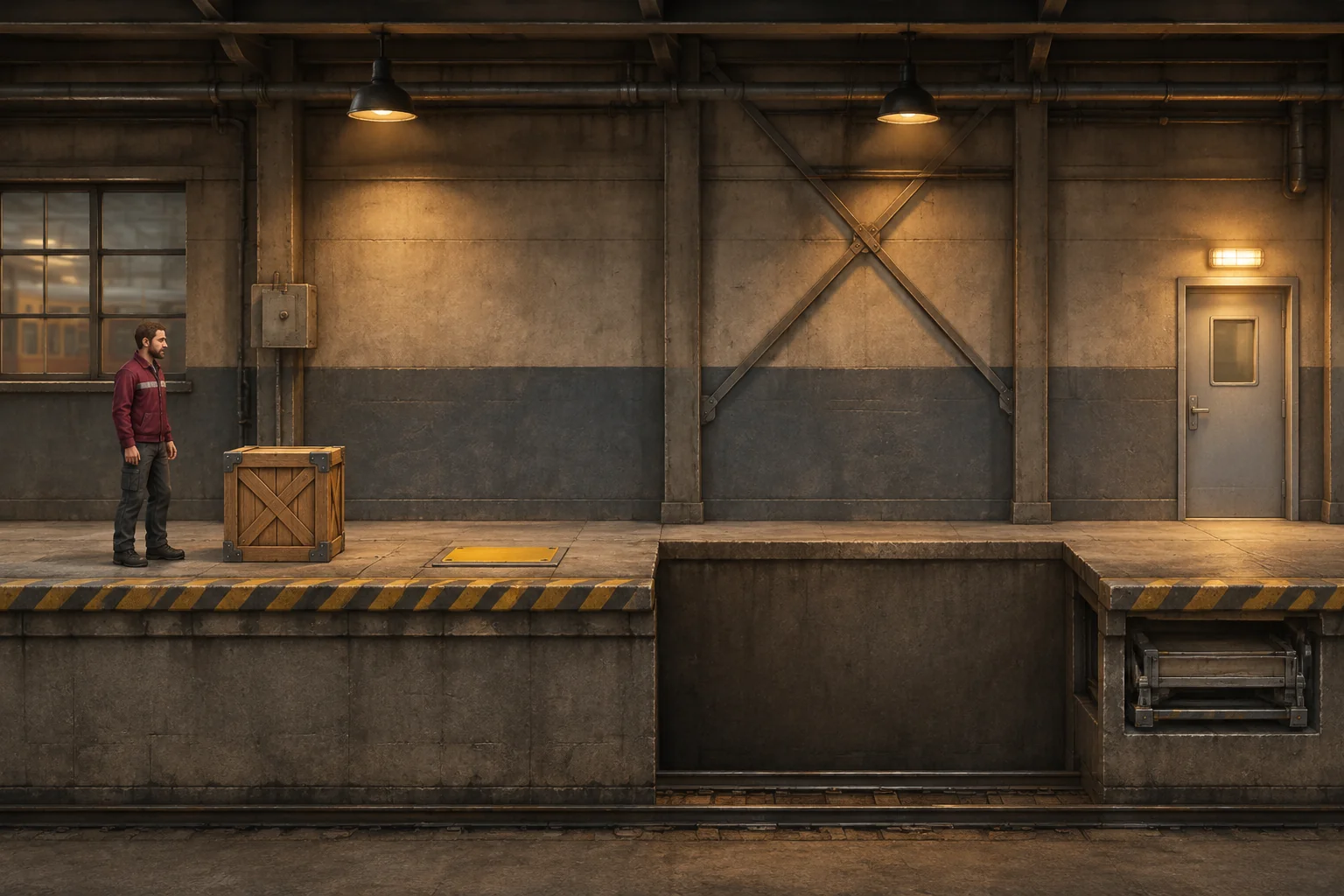
Use a fixed side view with the player, crate, and pressure plate on the left and the exit on the right. Leave a three-cell gap between the two platforms. Put the crate two cells to the left of the plate, with the player behind it. Keep at least one solid landing cell between the plate and the gap.
The crate is a short obstacle one cell wide. The player can hop over it while it holds the plate and land on the last solid cell. Check the jump from the actual crate position and the actual gap edge. The crate hop needs room to land, and the same jump should fall short of the far side of the gap.
Make the plate read the crate's position
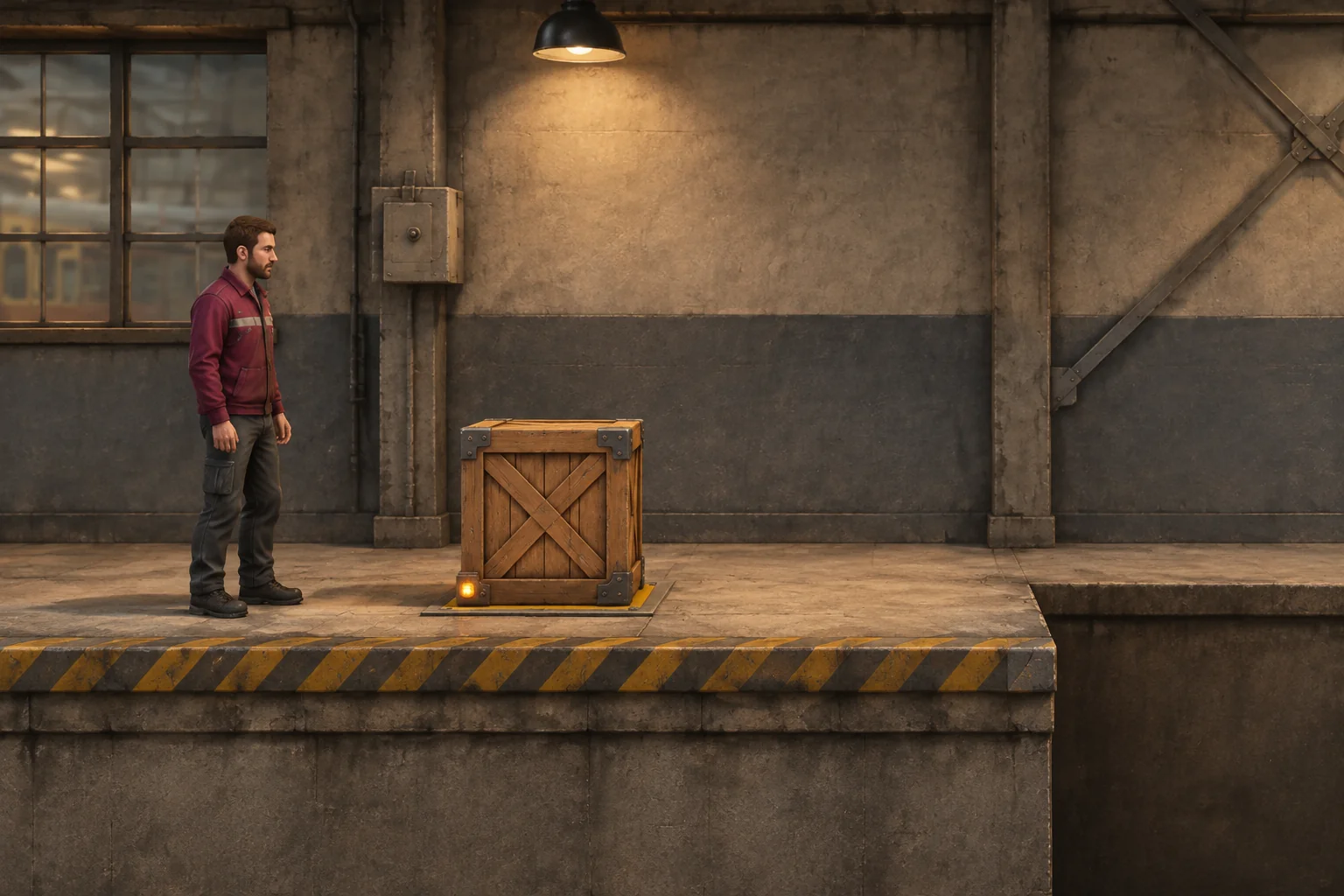
Use the crate's center to decide whether it is on the plate. A nearby crate or a player standing on the plate leaves the bridge retracted. When the crate is centered, the plate depresses and the bridge extends. The crate holds the plate after the player releases it.
| Room state | Plate and bridge | What the player can do |
|---|---|---|
| Player stands on the plate without the crate. | Plate stays up. Bridge is retracted. | Return to the crate and move it into position. |
| Crate moves one cell toward the plate. | Plate stays up. Bridge is retracted. | Move the crate one more cell. |
| Crate is centered on the plate. | Plate depresses. Bridge spans the gap with solid collision. | Release the crate, hop onto the solid landing, and cross. |
| Crate is pulled back one cell. | Plate rises. Bridge retracts and its collision disappears. | Restore the crate position to reopen the route. |
Update what the player sees and what the player can stand on together. A bridge that looks extended but has no collision turns a correct solution into a fall. A hidden collision surface over a retracted bridge lets the player skip the puzzle.
Walk the two pushes and the crossing
Approach the crate from the left, hold its handle, and push it right twice. Release it when the plate goes down. The bridge should stay out while the player hops over the crate and lands before the gap. From that landing, walk across the bridge and touch the exit.
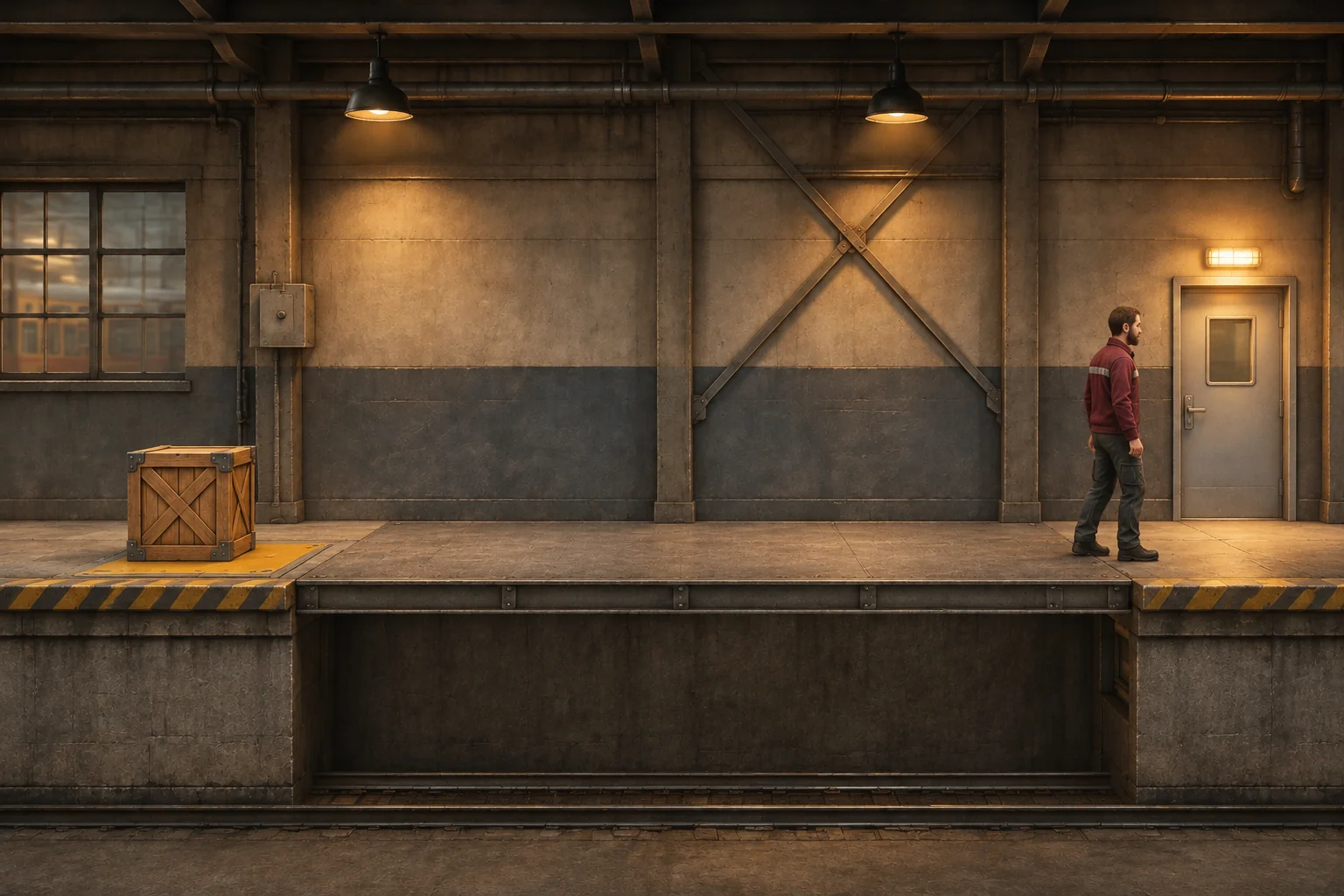
Try the reverse before crossing. Pull the crate one cell to the left and watch the route disappear. Push it back to restore the crossing. Keep the crate inside a marked set of floor positions so a player can undo an extra push. If they jump into the gap while it is closed, show a retry state and let them reset the room.
Give AI the geometry and the dependency together
SEELE's puzzle game maker provides a prompt-led starting point for a small puzzle with a visible rule. Describe the room positions, object behavior, and the checks the build should pass before adding another room.
Create a side-view puzzle platformer in one tram maintenance room.
Use a fixed camera. Put the player, a short one-cell crate, and a
pressure plate on the left platform. Start the crate two cells left
of the plate and the player behind it. Leave at least one solid
landing cell beyond the plate. Put a three-cell gap before the right
platform and a touch-to-finish exit on that platform.

Use left and right movement, jump, and a held handle to push or pull
the crate in one-cell steps from an adjacent position. Keep the crate
inside its marked floor positions. Reject movement outside that range.
The crate cannot be lifted. With the handle released, walking and
jumping do not move it. Tune the jump so it clears the short crate
and lands on solid floor but cannot cross the three-cell gap alone.

Only the crate centered on the plate activates it. A player standing
there or a crate one cell off leaves the bridge retracted. While the
plate is active, extend a continuous bridge flush with both platforms.
Update visuals and collision together. Pulling the crate away retracts
the bridge immediately. No timers or alternate path around the gap.

Falling into the gap shows a retry state. Touching the exit wins once.
Restart restores the player, crate, inactive plate, retracted bridge
with no collision, and unfinished exit. Use simple shapes first.
Verify both the opened and closed routes
| Try this | What should happen |
|---|---|
| Stand on the empty plate, then try a jump from the gap edge. | The plate stays up, the bridge stays in, and the jump falls short. |
| Restart and push the crate once, then again. | The first push leaves the route closed. The second depresses the plate and creates a solid bridge. |
| Pull back one cell, then push onto the plate again. | The bridge first retracts with its collision removed, then returns with collision restored. |
| Release the handle, hop over the crate, and cross. | The crate stays on the plate. The hop lands before the gap, and both bridge seams are walkable. |
| Touch the exit, then restart. | Victory registers once. Restart restores the original crate position, player start, and closed route. |
Make the link between the plate and bridge easier to see
Suppose players see the plate and the exit but cannot tell what the plate controls. Try adding one static conduit line from the plate toward the bridge housing. Keep camera framing, existing status lights, object positions, and rules the same.
From the opening view, ask a tester which object they expect to move when the plate goes down. Compare answers with and without the conduit. Then repeat the closed-gap and open-bridge checks to make sure the visual addition does not change collision or create a new route.
Frequently asked questions
How large should the first puzzle room be?
Start with one view containing the obstacle, the object that changes it, and the exit. Add another room once the player can explain how the first one works and you know what new decision the next room is meant to teach.
What if a player cannot make the jump over the crate?
Check crate height and the landing before adjusting the jump. Give the player solid space beyond the crate. Test the closed gap again after any jump change, since making the hop easier can also make it possible to skip the bridge.
How do I prevent the crate from trapping the player?
Keep its legal positions on solid ground and allow it to be pulled back. Test the furthest legal position from both sides. Give the player a restart that restores the crate and bridge together if the room enters a failed state.
Why test bridge collision separately from the animation?
An extended bridge needs solid collision, including at both seams. A retracted bridge needs none across the gap. Check by walking and attempting the closed jump so you can catch a mismatch even when the artwork looks correct from the camera.
Build the missing route first
Block out the gap, crate, plate, and exit. Test the room with the crate off and on the plate before you spend time on the scenery. Start a small environmental puzzle with SEELE.