A bakery chain becomes a strategy game when each shop depends on the same limited ingredients and delivery routes. If every store has its own stock, opening a second location adds bookkeeping without changing the decisions. A shared network makes purchasing, allocation and service compete for the same resources.
Start with two bakeries, one central pantry, two ingredients and a delivery limit. A morning demand spike at one shop should change what the other can bake. This guide uses a small deterministic allocation model so the supply rule can be inspected before adding staff, recipes or expansion.
Make every order draw from one network
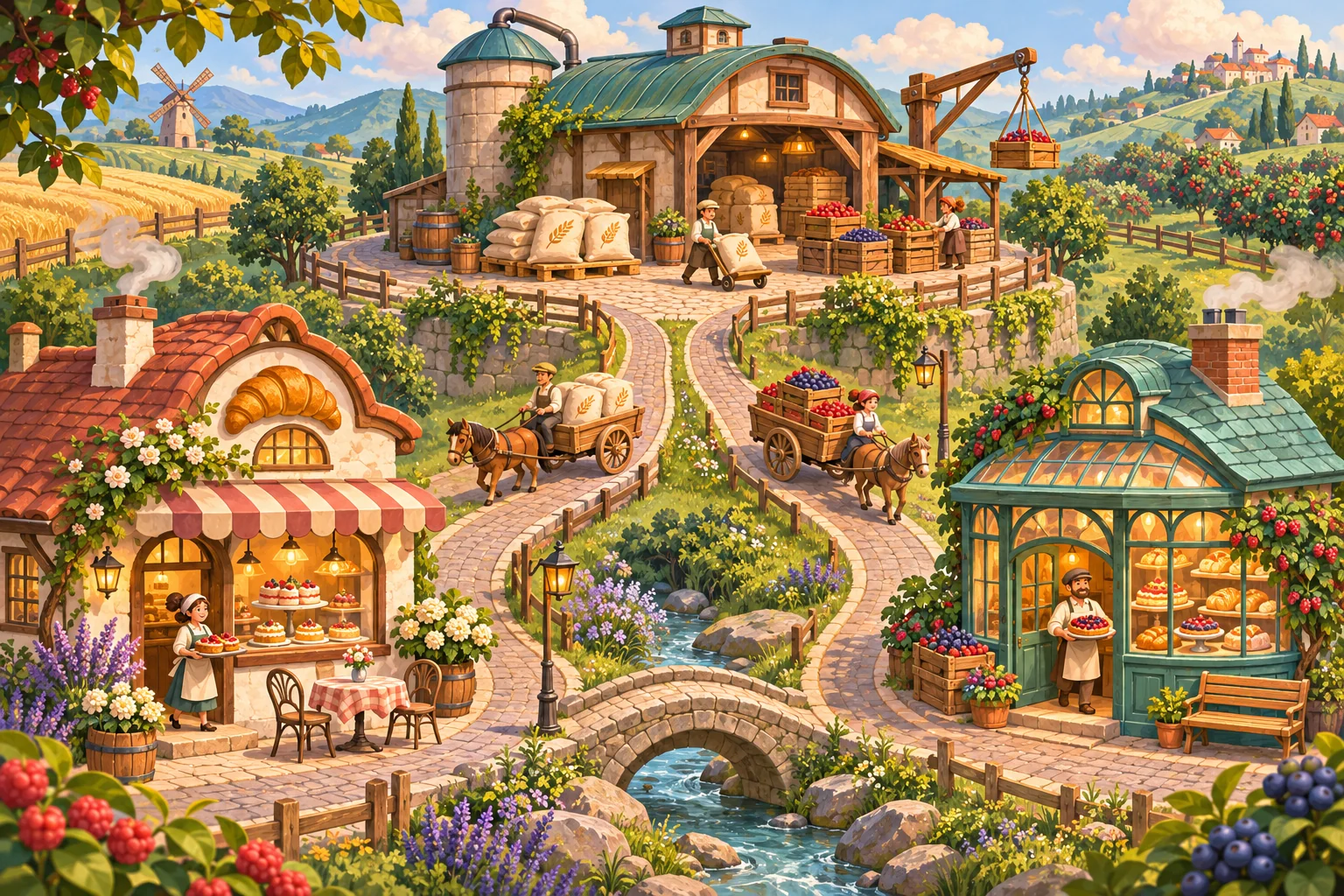
Represent flour and fruit as shared stock, not duplicated store inventories. Each bakery submits a forecast; the network allocates ingredients against available quantity and delivery capacity. Keep the rule visible: priority can follow submitted orders, fixed store rank or a player-set allocation.
Treat delivery capacity as another shared resource. A shop may receive enough ingredients in the pantry but still miss its order if the morning route cannot carry the crates. Show requested, allocated and delivered quantities separately so a shortage has a traceable cause.
For a first prototype, use two shops and one delivery route. Freeze recipes and stock, then change only one store’s demand. Add purchasing uncertainty or spoilage after the allocation decisions are understandable.
Change one order, keep the network fixed
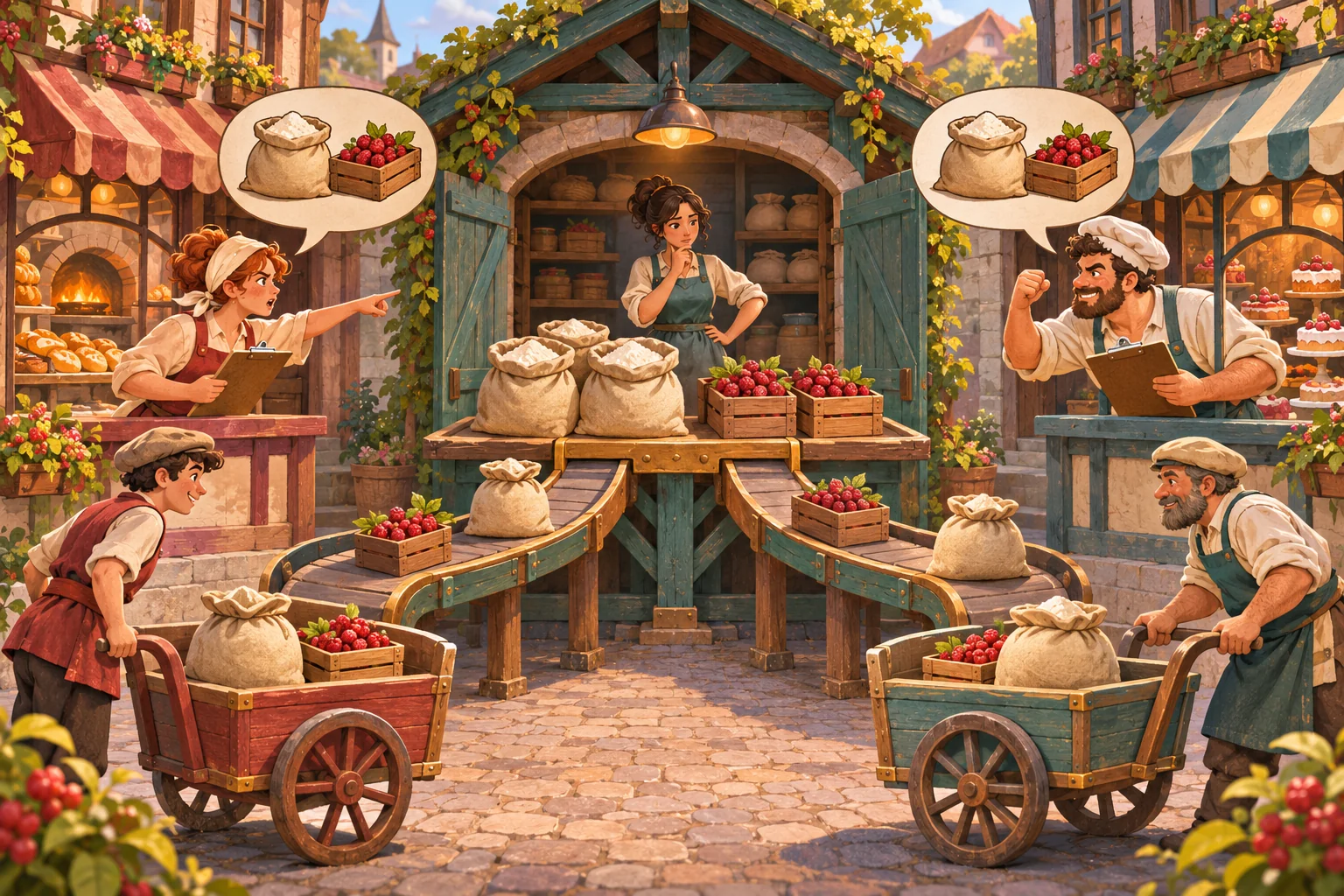
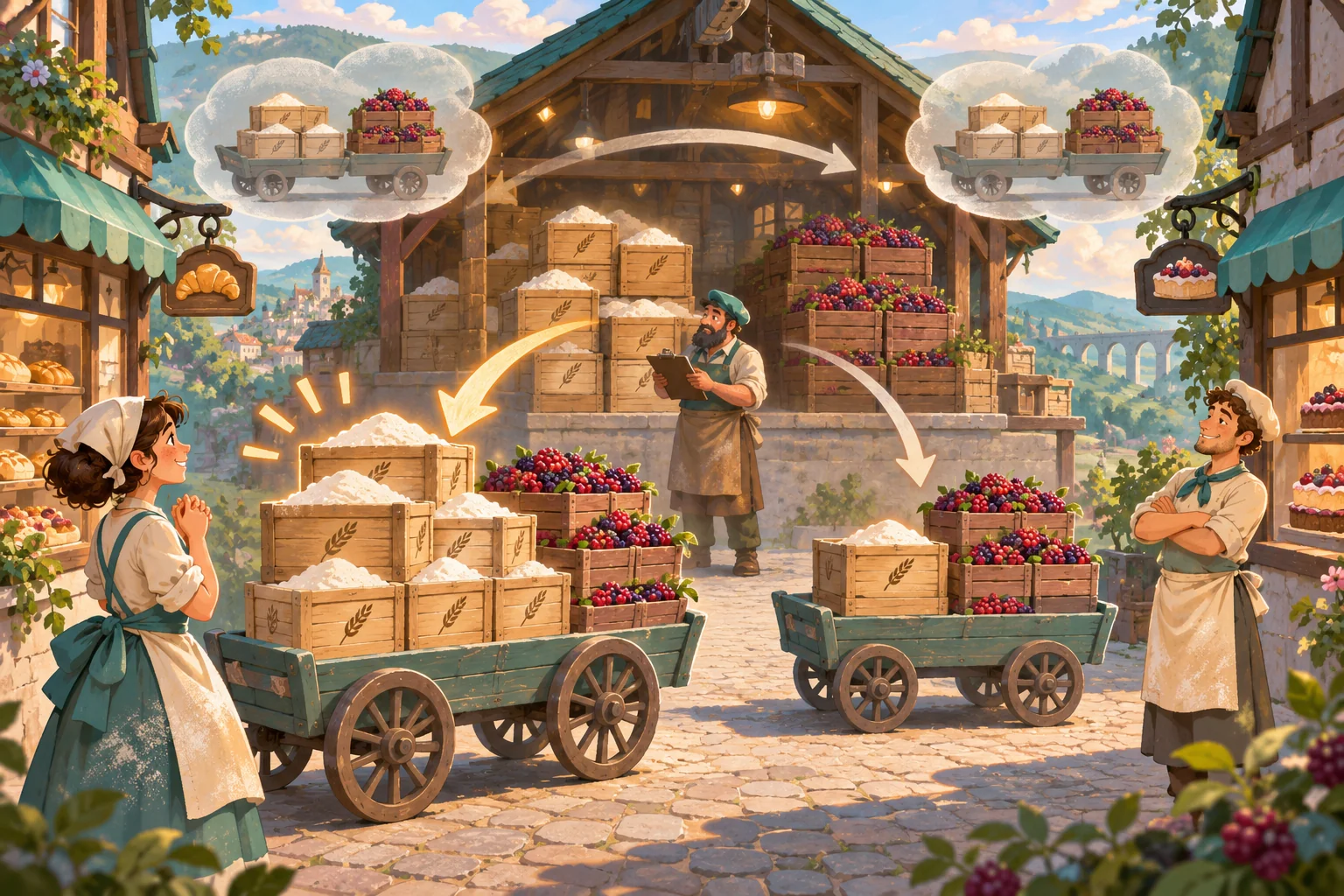
Set the pantry to 12 flour crates and 8 fruit crates. Bakery A requests 8 flour and 2 fruit; Bakery B requests 6 flour and 5 fruit. The route can carry 14 crates. Total demand exceeds flour stock by 2 and route capacity by 7.
Increase only Bakery A’s flour request from 8 to 10. If allocation follows submitted order priority, Bakery B receives less flour. If the rule is proportional, both shops share the shortage. This isolates how the allocation policy changes the outcome.
This deterministic model checks arithmetic and allocation rules only. It does not measure player comprehension, staffing pressure, customer satisfaction or economic balance. Test those in a playable prototype.
Ask AI for an inspectable supply loop
Name each store, ingredient, request, allocation and delivery limit.
Keep initial stock and recipes fixed while comparing allocation policies.
Create a small original bakery management prototype with two neighborhood bakeries supplied by one central pantry and one delivery route. Track flour and fruit as shared inventory. Bakery A requests 8 flour and 2 fruit; Bakery B requests 6 flour and 5 fruit. The pantry has 12 flour and 8 fruit, and the route carries 14 crates. Show each request, allocation and delivered amount. Compare submitted-order priority with proportional allocation while keeping all inputs fixed. Do not add staffing, spoilage or price changes yet.
Tune allocation before expanding the chain
A shared supply network gives each new bakery a meaningful relationship to the existing stores. Keep the first version small enough to see how demand, stock and delivery capacity interact. When players can explain why one shop received less, expand the network with suppliers, routes and changing demand.
Start a shared-supply bakery prototype with SEELE’s AI game maker
Frequently asked questions
How do I make shared inventory matter?
Let one store’s order change what another store can produce. Keep the stock pool visible and show requests next to allocations. If stores always have enough, the network is only a display layer. Introduce a controlled shortage so players must choose a priority rule or accept an unmet order.
Should delivery capacity be separate from ingredient stock?
Yes, when transportation creates a distinct decision. A pantry can hold enough ingredients while a route lacks room to deliver them before opening. Report stock shortage and route capacity separately so players understand whether to buy more or expand delivery.
Does the arithmetic model prove the game is balanced?
No. It verifies quantities and allocation outcomes under fixed inputs. It cannot show whether the rule feels fair, whether players understand it or whether prices and demand create a viable economy. Use a playable prototype with representative scenarios to assess those questions.