A cleaning company becomes a network-management game when teams travel to jobs with supplies drawn from the same depot. A new office contract may use disinfectant, cloths and vacuums another crew planned to take. Shared inventory turns contract selection and preparation into decisions across multiple teams.
Start with two crews, two supply types and one depot delivery. Give each crew a fixed job request and show how many supplies the depot can prepare. This deterministic allocation example isolates the shared-stock rule before introducing travel time, staff availability or contract pricing.

Prepare multiple teams from one depot
Represent each cleaning job as a supply list and each crew as a separate demand request. The depot allocates chemicals and equipment from shared stock, then confirms what each team can load. Keep requested and packed quantities visible.
Give equipment a limited carry capacity. A team may receive enough detergent but still leave a vacuum behind if the van is full. Separate stock shortage from vehicle capacity so players know whether to reorder, change the job plan or send another vehicle.
Begin with two crews and two jobs. Hold team skills, duration and vehicle size constant while increasing only one job’s disinfectant need. Add staff schedules and contract renewals after supply preparation is clear.
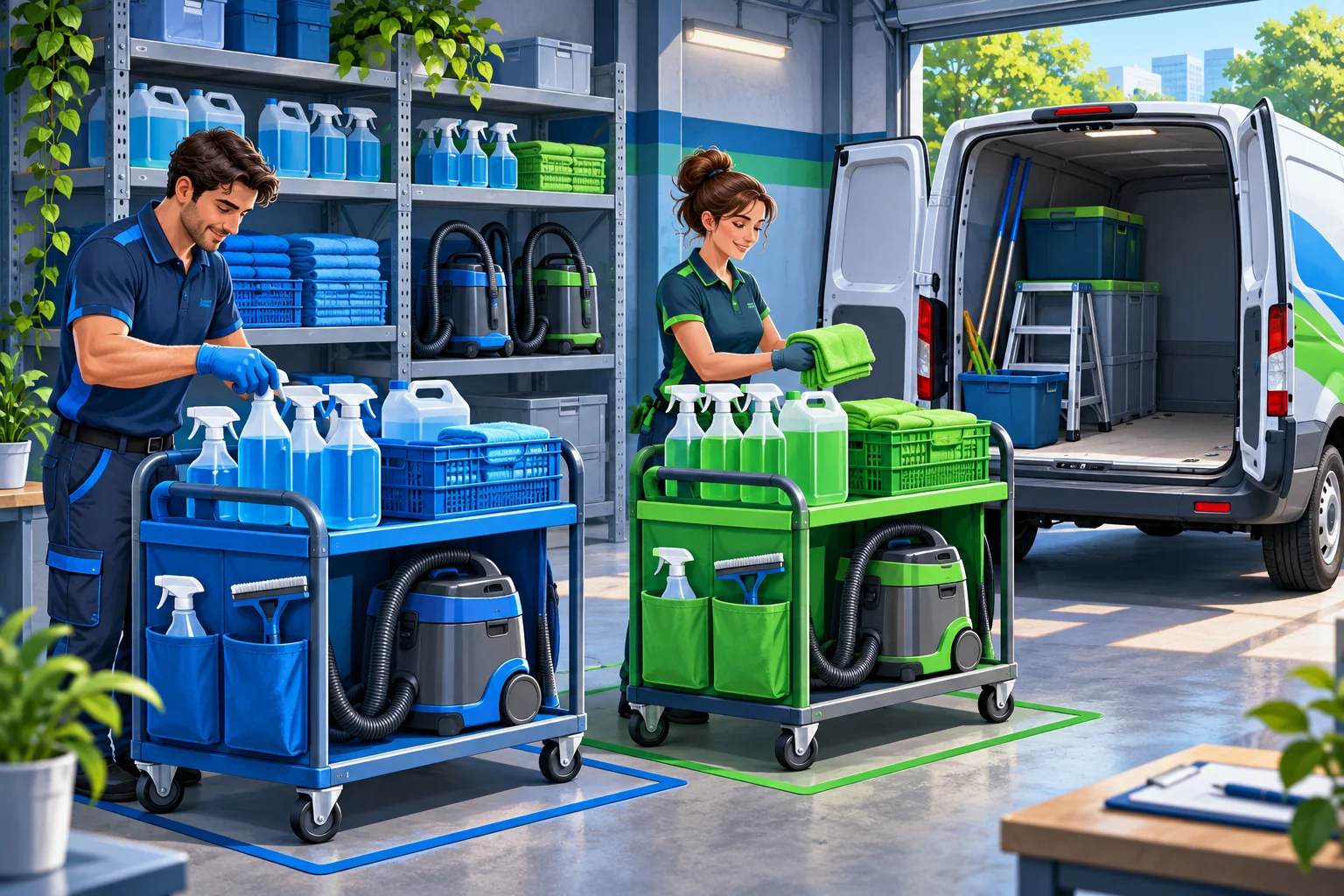
Increase one job’s supply need
The depot has 12 disinfectant bottles and 8 vacuum units. Crew A needs 8 bottles and 2 vacuums; Crew B needs 6 bottles and 5 vacuums. Bottle requests exceed stock by 2, while total items exceed the van limit of 16 by 5.
Increase only Crew A’s disinfectant request by 2 bottles. Under job-priority packing, Crew B receives fewer bottles; proportional allocation spreads the shortage. Keep equipment requests, van capacity and job duration fixed to see the effect of one demand change.
This deterministic model checks quantities and packing rules only. It does not measure cleaning quality, route planning, staff fatigue, contract profitability or perceived fairness.
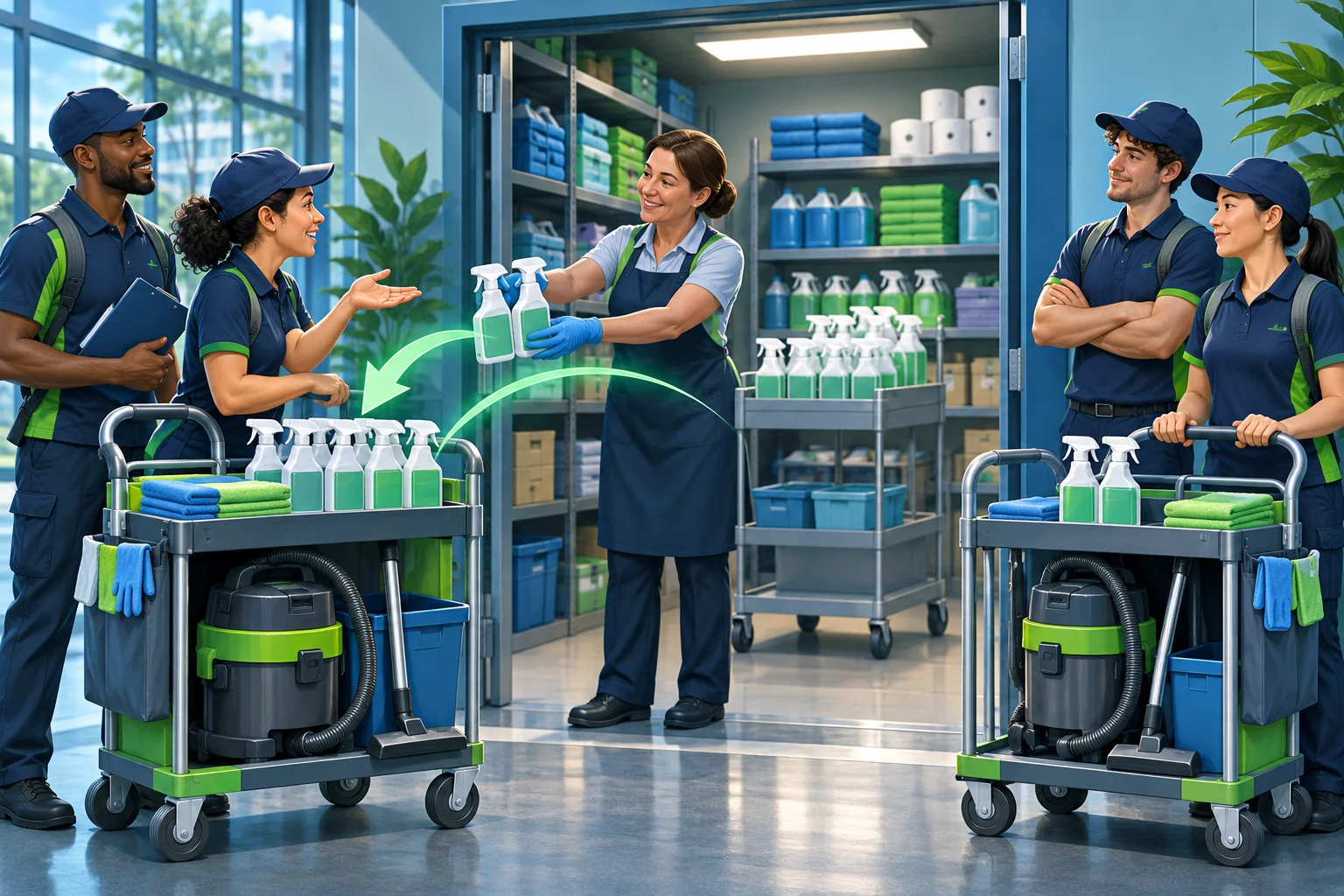
Ask AI to prototype depot preparation
Separate stock, packed supplies and vehicle capacity in the interface.
Change one job request while holding teams and vehicle fixed.
Create an original cleaning-business management prototype with two crews, one shared depot and one supply van. Track disinfectant bottles and vacuum units. Depot stock is 12 bottles and 8 vacuums; van capacity is 16 items. Crew A requests 8 bottles and 2 vacuums, Crew B requests 6 bottles and 5 vacuums. Show each job list, requested quantities, packed quantities and unfulfilled demand. Compare job-priority packing with proportional allocation, then increase only Crew A disinfectant by 2. Keep staff, routes and prices unchanged.
Tune supply preparation before scheduling crews
Shared depot stock makes each contract affect the crews that follow. Keep supply requests, packed kits and van capacity visible so players can explain why a team left without an item. Once this loop is clear, add job travel and employee schedules as separate systems.
Start a shared-supplies cleaning prototype with SEELE’s AI game maker
Frequently asked questions
How should the depot handle shared supplies?
Show each crew’s request, the depot allocation and what actually fits in its vehicle. These are separate stages: inventory can be available but left behind when capacity is limited. Keeping each quantity visible helps players trace an incomplete kit to stock or transport.
Should I add staff scheduling in the first version?
Start with fixed crews and job lists while testing supply allocation. Scheduling introduces another constraint that can obscure why a team lacks materials. Once the player can predict how depot stock affects both jobs, add work hours and travel as separate decisions.
Does the supply model prove contract balance?
No. It verifies fixed quantities and packing rules. It does not simulate cleaning quality, employee fatigue, customer satisfaction or profitability. Test those in a playable prototype with varied job mixes and depot stock levels. Test representative job mixes before changing prices or staffing.