A cafe group becomes more than a collection of shops when its locations draw from the same suppliers and delivery capacity. A sudden rush at one counter can use the milk or coffee another cafe expected to serve. The shared network turns purchasing and menu planning into decisions across the whole business.
Start with two cafes, one supplier, two ingredients and a limited morning delivery. Give each location a forecast before opening and show which requests the network can fulfill. This guide uses a deterministic allocation example to isolate how a demand change affects both menus before introducing recipes, staff schedules or prices.

Connect each cafe’s forecast to shared stock
Represent coffee beans and milk as shared stock delivered from one supplier. Each cafe requests quantities for its expected customers; the network allocates available stock against a fixed delivery limit. Show the forecast, request and final allocation together.
Make unmet orders visible as menu consequences. If one cafe receives less milk, it can serve fewer milk-based drinks or switch to a fixed alternative. Keep that consequence explicit so the player can trace a busy hour back to the shared allocation rule.
Keep the first model to two cafes and two ingredients. Hold menu recipes and staffing constant while changing one demand forecast. Add spoilage or supplier delays after players understand the stock tradeoff.
Increase one forecast, keep the supplier fixed
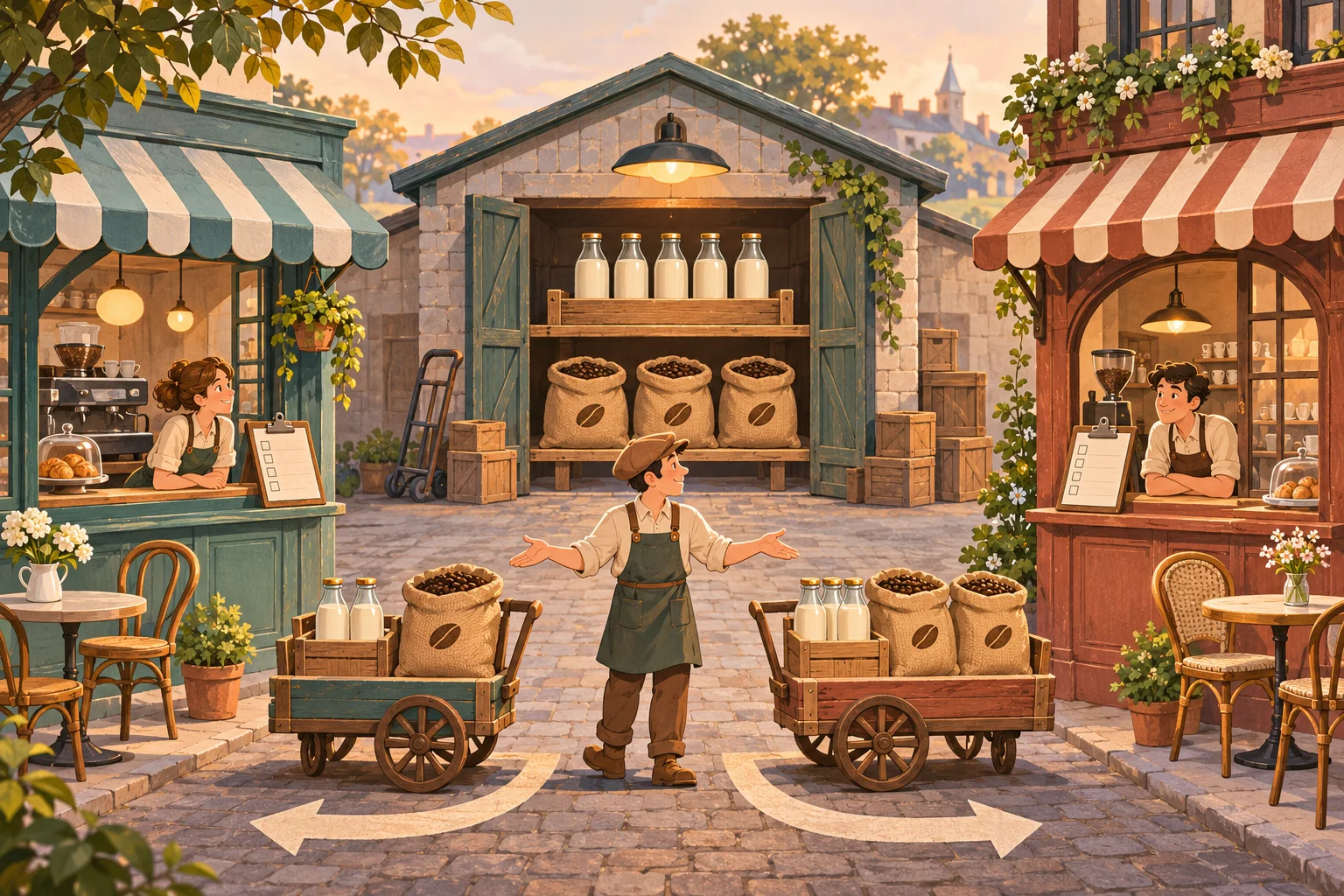
The supplier has 10 milk crates and 12 coffee crates; its van can carry 18 crates. Cafe A requests 7 milk and 6 coffee, while Cafe B requests 6 milk and 4 coffee. Total requests exceed milk stock by 3 and van capacity by 5.
Increase only Cafe A’s milk forecast by 2 crates. Under first-come priority, Cafe B loses two milk crates. Under proportional allocation, both cafes share the shortfall. Keep customer counts, recipes and van capacity unchanged to isolate the policy effect.
This deterministic model checks stock and allocation arithmetic only. It does not test drink popularity, service speed, customer satisfaction or business balance. Those require a playable cafe prototype and representative demand patterns.

Ask AI to prototype shared cafe ordering
Keep customer forecast, ingredient request and allocation as separate visible values.
Compare priority and proportional rules with one changed forecast.
Create an original cafe management prototype with two cafes sharing one supplier and morning delivery van. Track milk and coffee as shared inventory. The supplier has 10 milk crates and 12 coffee crates; van capacity is 18 crates. Cafe A requests 7 milk and 6 coffee, Cafe B requests 6 milk and 4 coffee. Show each forecast, request, allocation and menu consequence. Compare first-come priority with proportional allocation. Then increase only Cafe A milk demand by 2 crates. Keep recipes and staffing fixed; do not add prices or spoilage yet.
Tune the supply rule before expanding the menu
A shared supplier makes each cafe’s forecast matter to the others. Keep stock, delivery capacity and menu effects visible so players can understand why locations receive different quantities. Once the allocation rule reads clearly, add recipes and staffing as separate decisions.
Start a shared-supply cafe prototype with SEELE’s AI game maker
Frequently asked questions
How can shared stock change a cafe’s decisions?
Let one cafe’s customer forecast affect the stock another location can use. Show each request next to the allocation and translate a shortage into a clear menu or service consequence. If every cafe always receives its full order, the shared network will not create a meaningful choice.
Should recipes be part of the first prototype?
Use a small fixed menu to explain how ingredients map to drinks, but avoid changing recipes while testing allocation. If both the supply rule and recipe costs change together, it becomes difficult to tell why a cafe could not fulfill demand. Expand recipe choices after the shared-stock loop is clear.
Does this model prove the business simulation is balanced?
No. The arithmetic checks fixed stock, delivery capacity and allocation outcomes. It does not test drink demand, queue time, customer satisfaction, fair allocation or profitability. Use a playable prototype with varied rush patterns before drawing balance conclusions. Track outcomes across several different rush patterns.