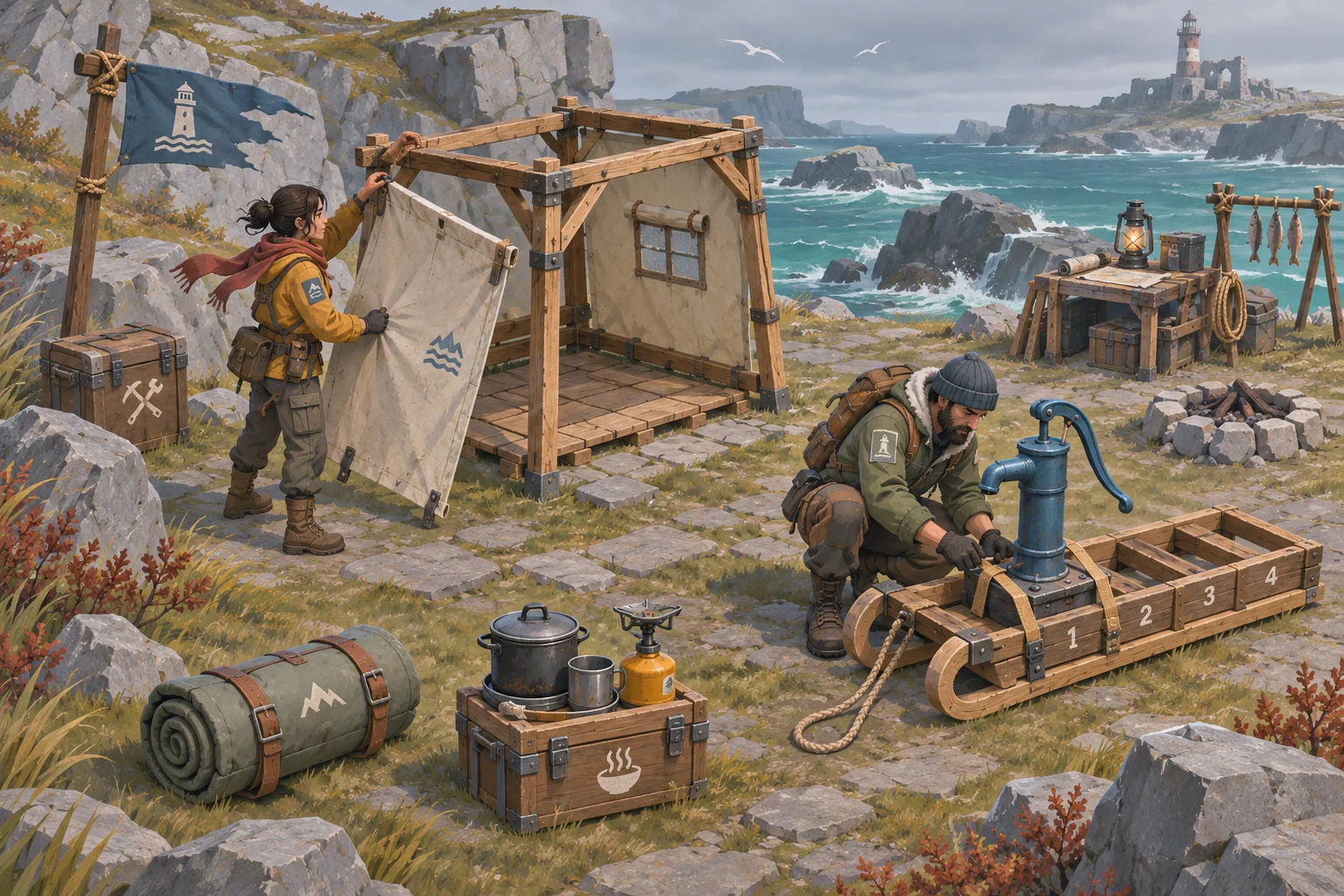
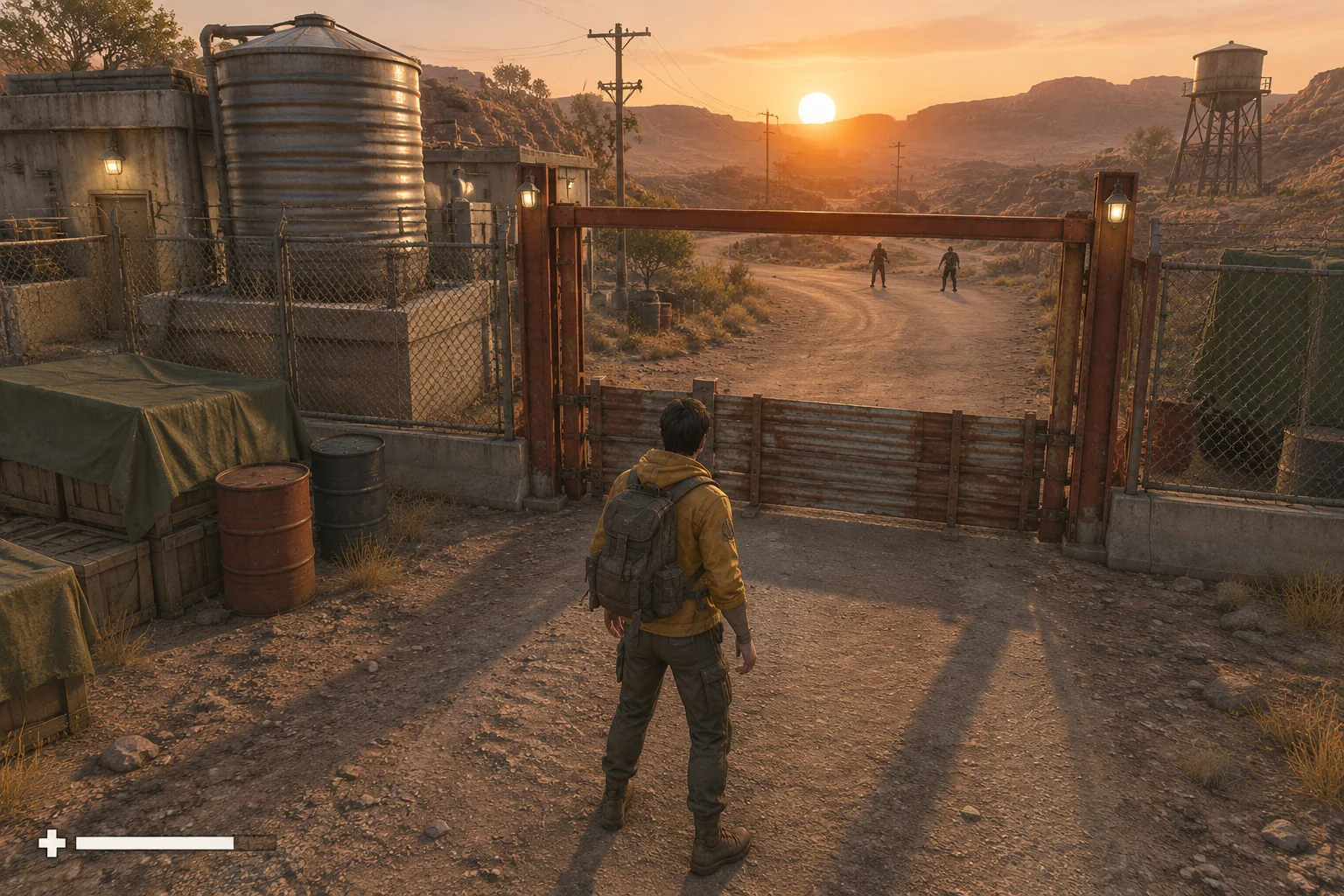
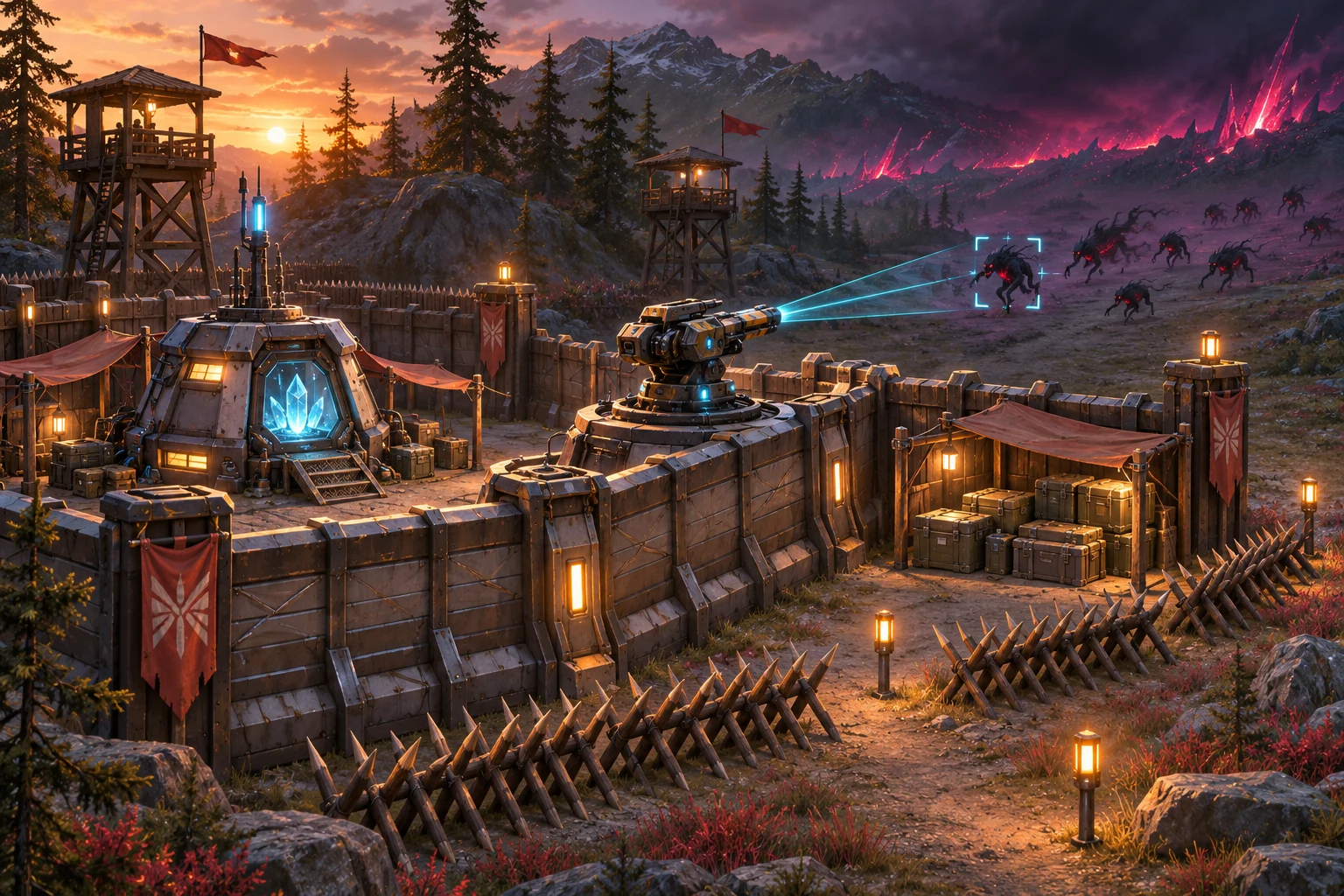
In fictional Emberline, a fixed defense base cannot protect two outposts at once. Before an expedition, the player dismantles its core, wall, turret, and supply cache, carries the modules along a route, and rebuilds at the next site before nightfall. The loop makes base defense part of travel planning: leaving the old base active is not an option if the next outpost needs protection. A small fixture can check whether every module moves once and whether the rebuilt turret reduces enemies that pass the defense line.
Make the base a set of movable defense modules
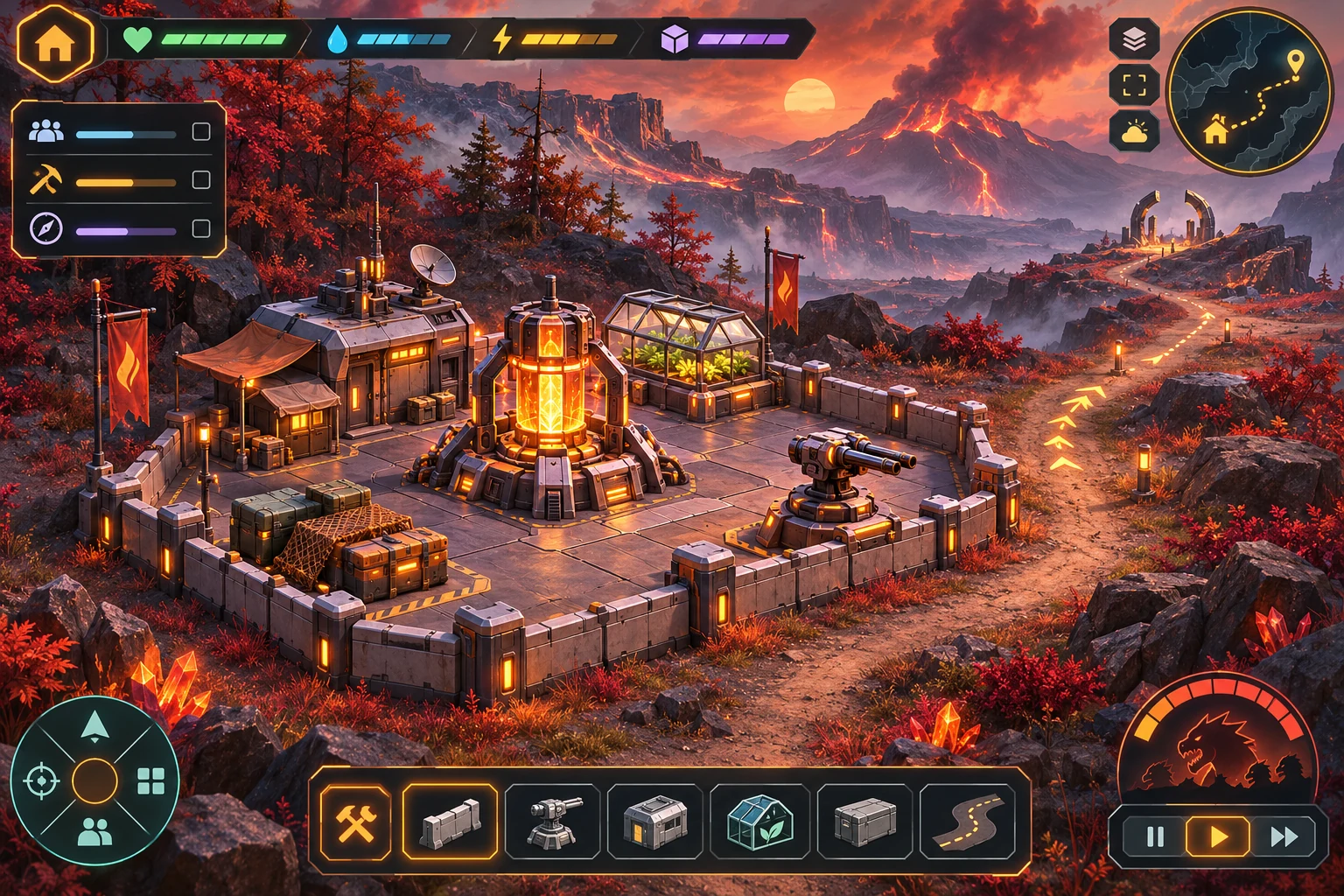
Start with four named modules: a core, a wall, a turret, and a supply cache. The first outpost map shows each module in an active base. At departure, the player must dismantle the complete base before the expedition begins. Keep module identity and condition when packed so the rebuilt outpost uses the same pieces rather than generating replacement buildings.
Show the old site as empty after teardown and the new site as awaiting construction. The route, materials, wave size, and action budget should be visible before the player commits. This makes the tradeoff clear: packing takes time, but carrying the defense kit prepares the next outpost.
Dismantle and transport each module exactly once
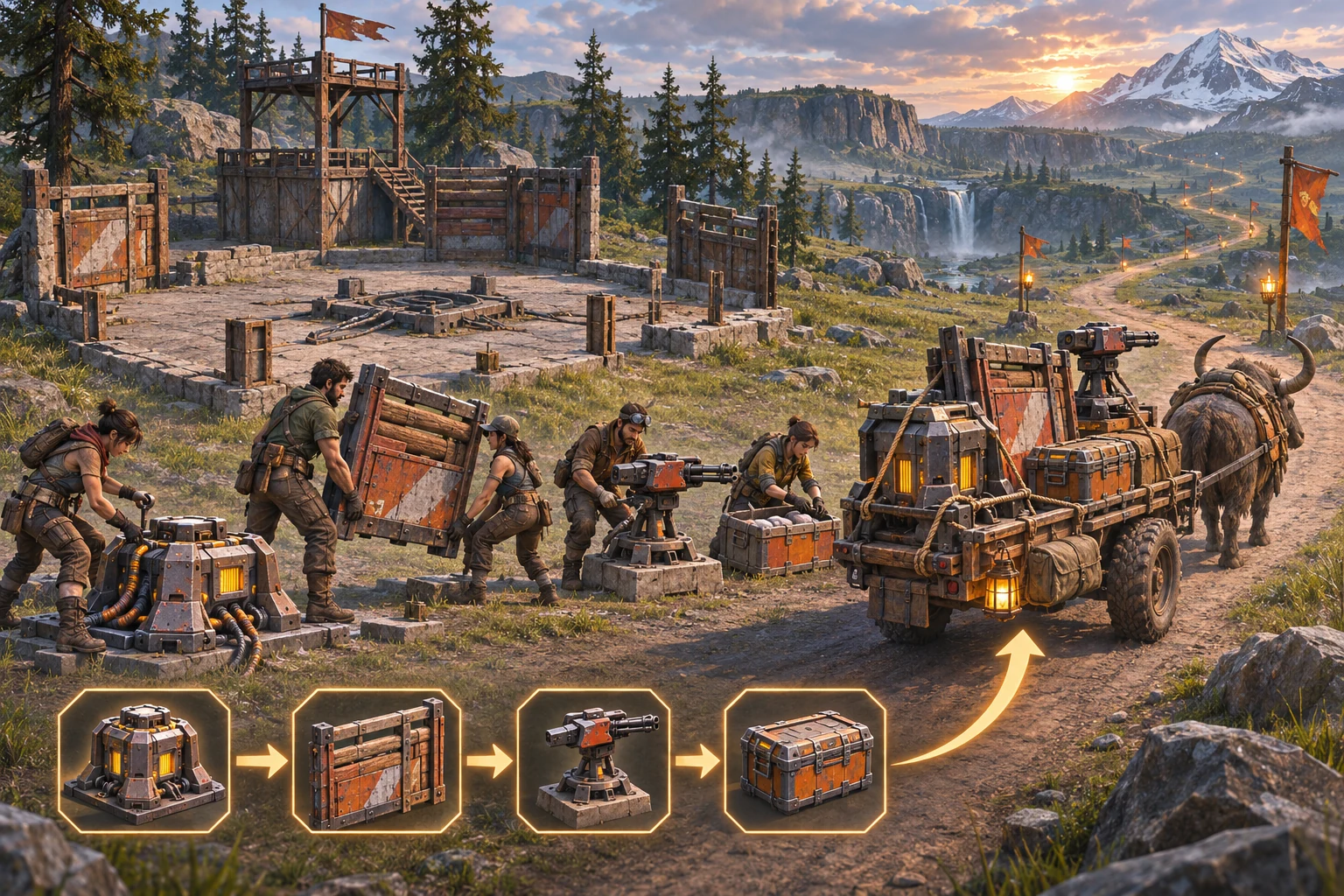
Use one action to dismantle and pack all four modules, then move them together along the fixed route. Track the packed list separately from structures still built at a site. A module cannot remain active at the old outpost after it enters the transport list. At arrival, check that the cargo contains one core, one wall, one turret, and one supply cache before allowing the rebuild action.
Godot Resources can store authored module data such as type, cost, and defense values. The current location and packed-or-built state belong to the active game state. Keeping definitions separate from instance state helps prevent a base module from being copied when the expedition changes locations.
Rebuild before the next night defense wave
Rebuild the same four modules at the next outpost before a fixed wave of six enemies arrives. In the local test, leaving the first base behind means the second site has no active defense and all six enemies pass the line. Packing and rebuilding activates the turret and wall in time; two enemies pass the line. Keep the same route and wave so the result reflects base relocation, not a smaller attack.
Compare module count and condition before and after travel, active structures at each site, and enemies leaked past the defense. The fixture expects four modules total, an empty first site, four rebuilt modules at the second site, and two leaks. These fictional results check the relocation loop only; they do not establish survival balance for a complete game.
Give the AI a fixed mobile-base defense test
Create a survival base-defense game in fictional Emberline. The player has one core, one wall, one turret, and one supply cache at the first outpost. Before an expedition, require all four modules to be dismantled and transported along a fixed route. Rebuild the same modules at the second outpost before a night wave of six enemies. Compare a baseline that leaves the first base behind with a revised run that packs and rebuilds the modules. Keep route, materials, wave size, and action budget fixed. Report modules before and after travel, structures at each site, and enemies that pass the defense line. The expected revised result is four modules rebuilt and two enemies leaked.
If a module is duplicated, lost, or active at both sites, restore one core, wall, turret, and cache and rerun. Confirm the first site is empty, the second has the same four modules, and two of six enemies pass the defense line.
FAQ
How can a survival game make a base mobile?
Treat the base as named modules that can be dismantled, packed, transported, and rebuilt. Preserve each module’s identity and condition during the move. Show which site is empty and which structures are active so players can understand the cost of moving their defense.
What should carry over when a base is rebuilt?
Carry the same module instances, their condition, and any relevant upgrades. Keep the old location empty after dismantling, and do not create replacements during construction. A clear packed-versus-built state prevents one turret or wall from defending two outposts at once.
How do I test a base relocation mechanic?
Use a fixed route, module set, action budget, and enemy wave. Compare leaving the first base behind with packing and rebuilding at the next site. Count modules before and after, verify active structures by location, and measure enemies that pass the defense line.