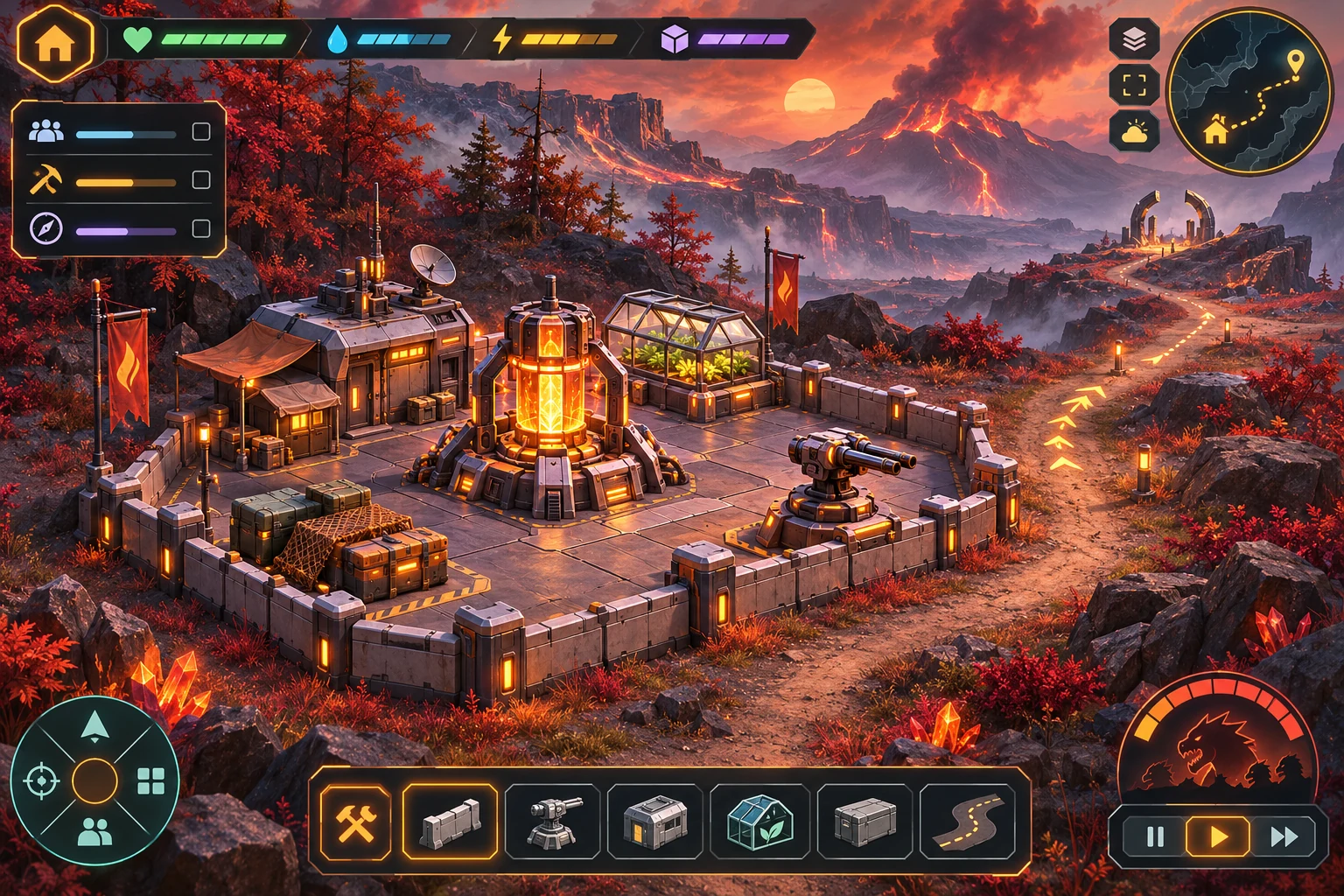
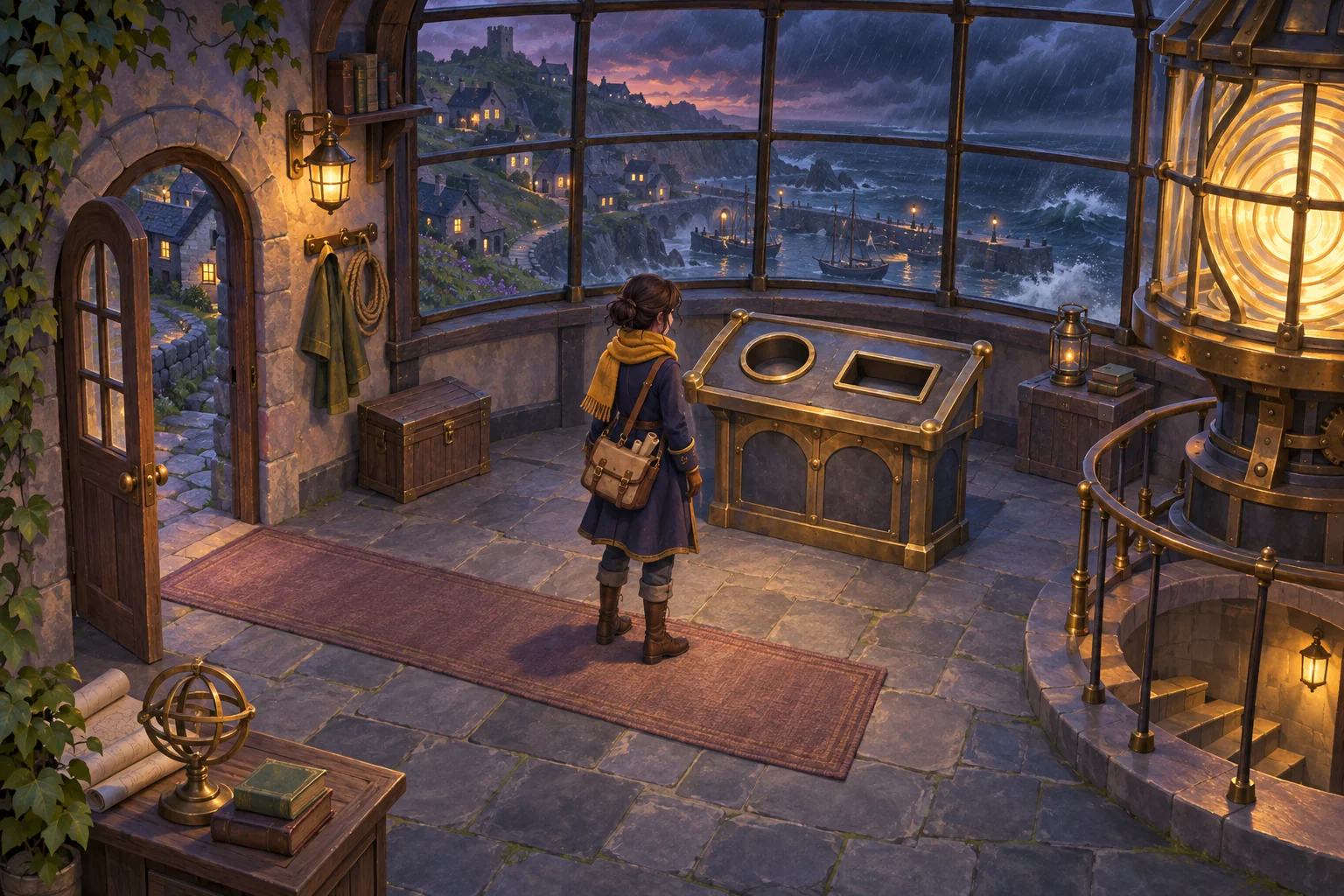
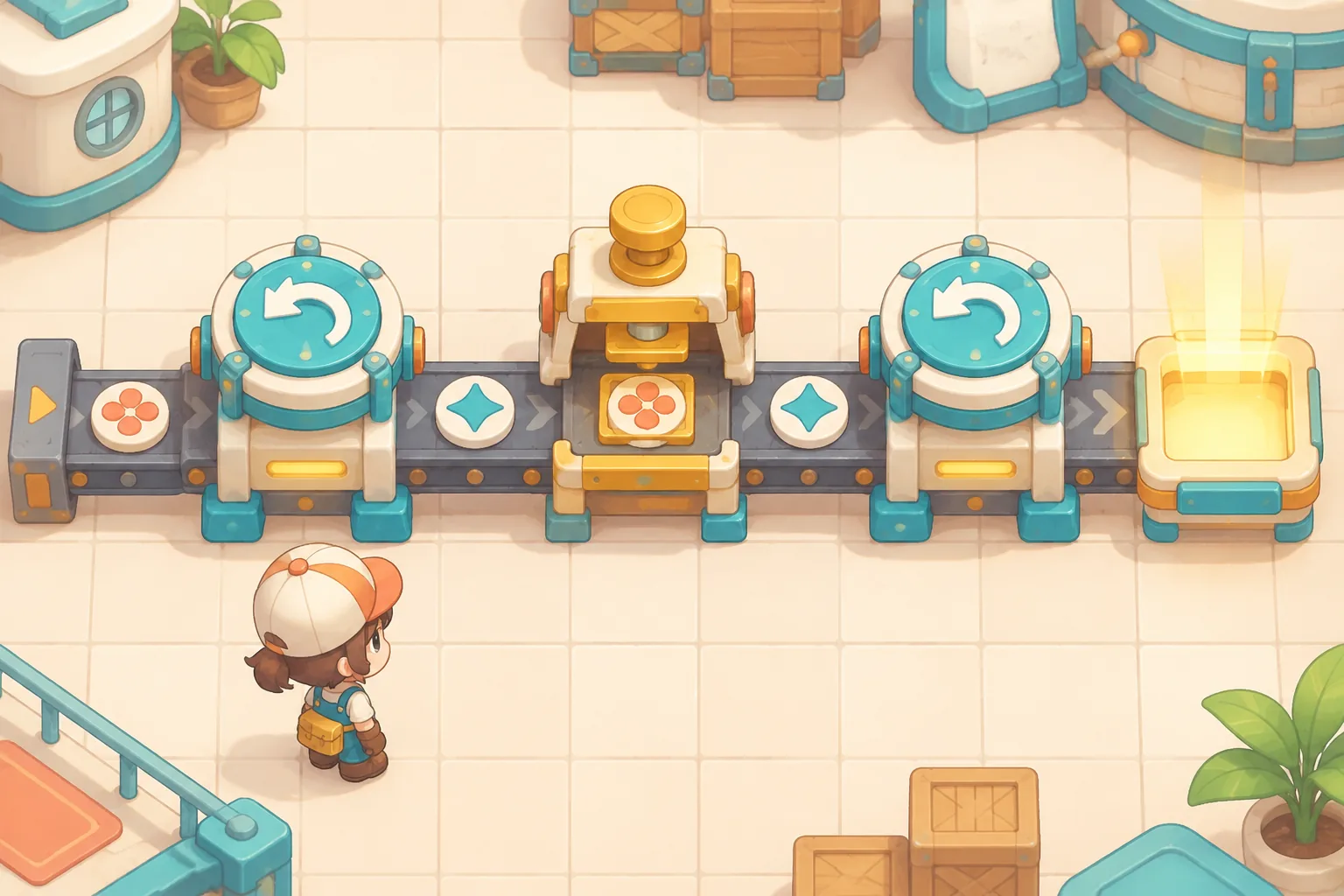
The tide is rising at Breakwater Camp. Two explorers can carry four modules on their sled, but the next inlet needs shelter, water and a place to sleep. Packing up should force a choice about what to leave and how to rebuild. In this fictional survival game, the team dismantles each placed module into a shared inventory, then spends the same limited capacity to set up at the next site.
Make packing a real decision
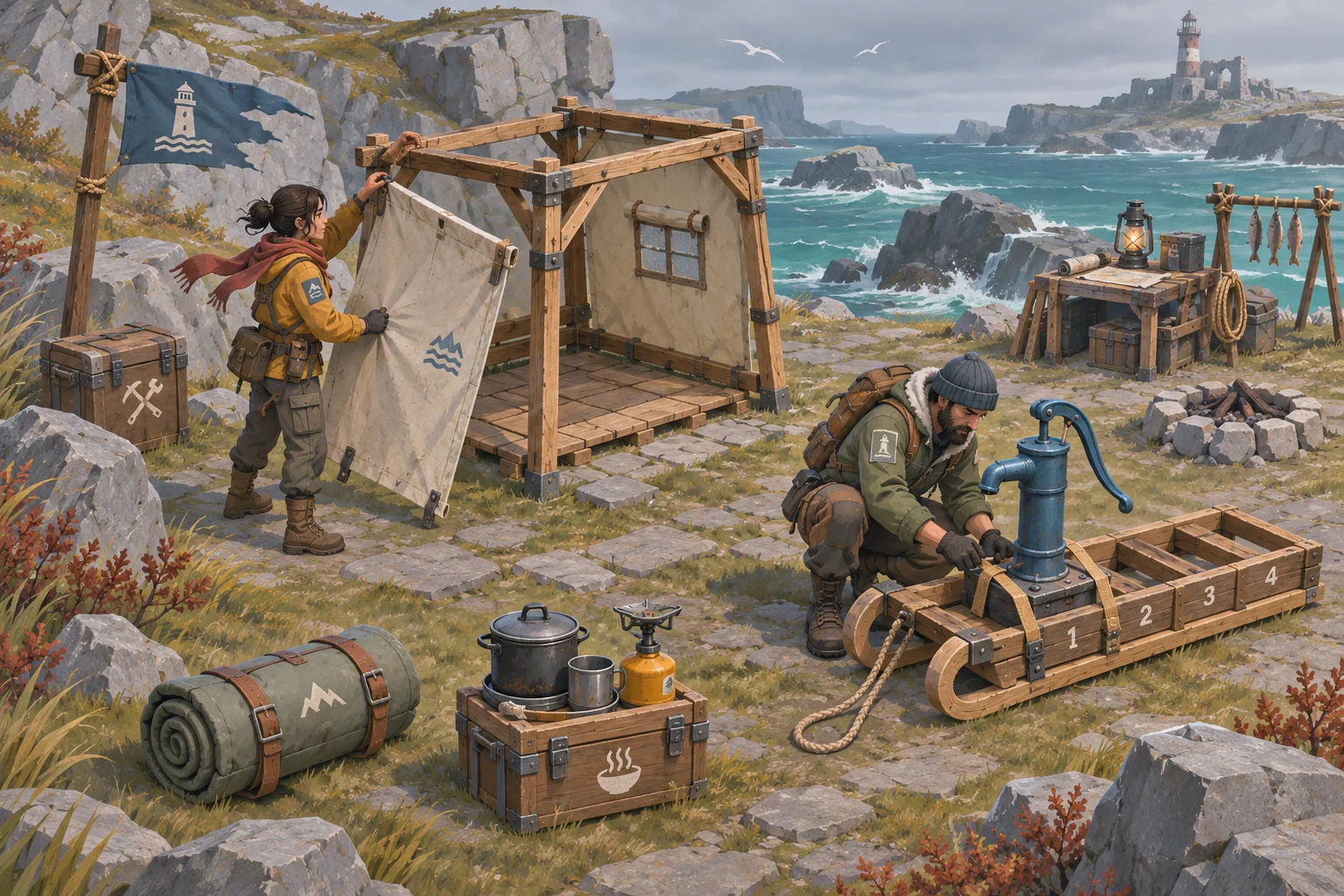
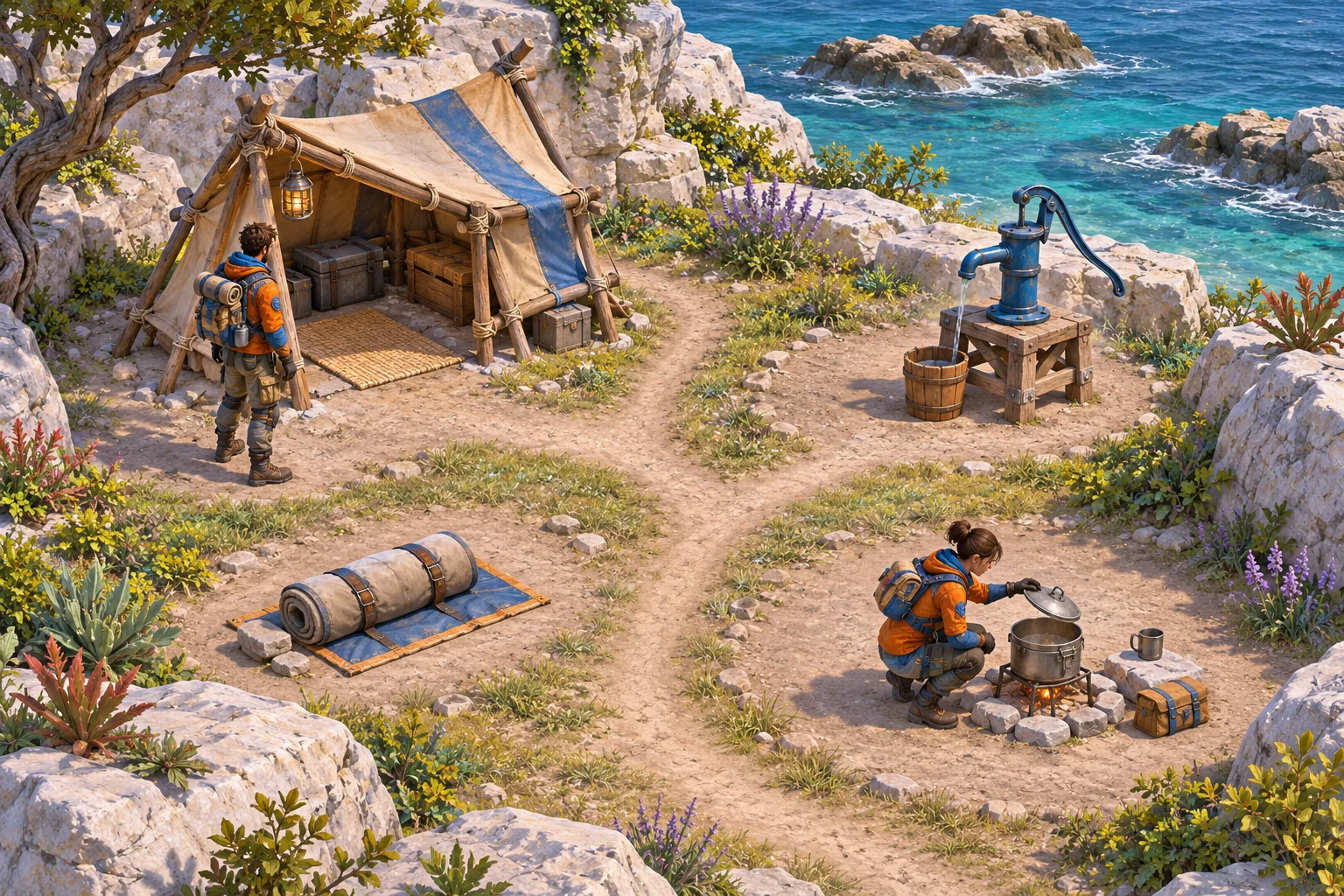
Start with a shelter, water pump, bedroll and cook kit. Let either player select a placed module and transfer it to the sled. The campsite should visibly lose that object. The sled should visibly gain it. Use a four-slot limit. Before confirming the departure, show which essential modules the next site supports. A pump needs a marked freshwater point. The cook kit needs a safe hearth surface.
| Module | Rebuild use | Site requirement |
|---|---|---|
| Shelter | Rest and weather cover | Flat ground |
| Pump | Drinkable water | Freshwater marker |
| Bedroll | A second rest place | Dry ground |
| Cook kit | Prepare food | Safe hearth area |
Allow the players to preview the new site while they pack. A warning that says “no water” should point to the unserved need before departure. It should not secretly supply a spare pump.
Transfer ownership before placement
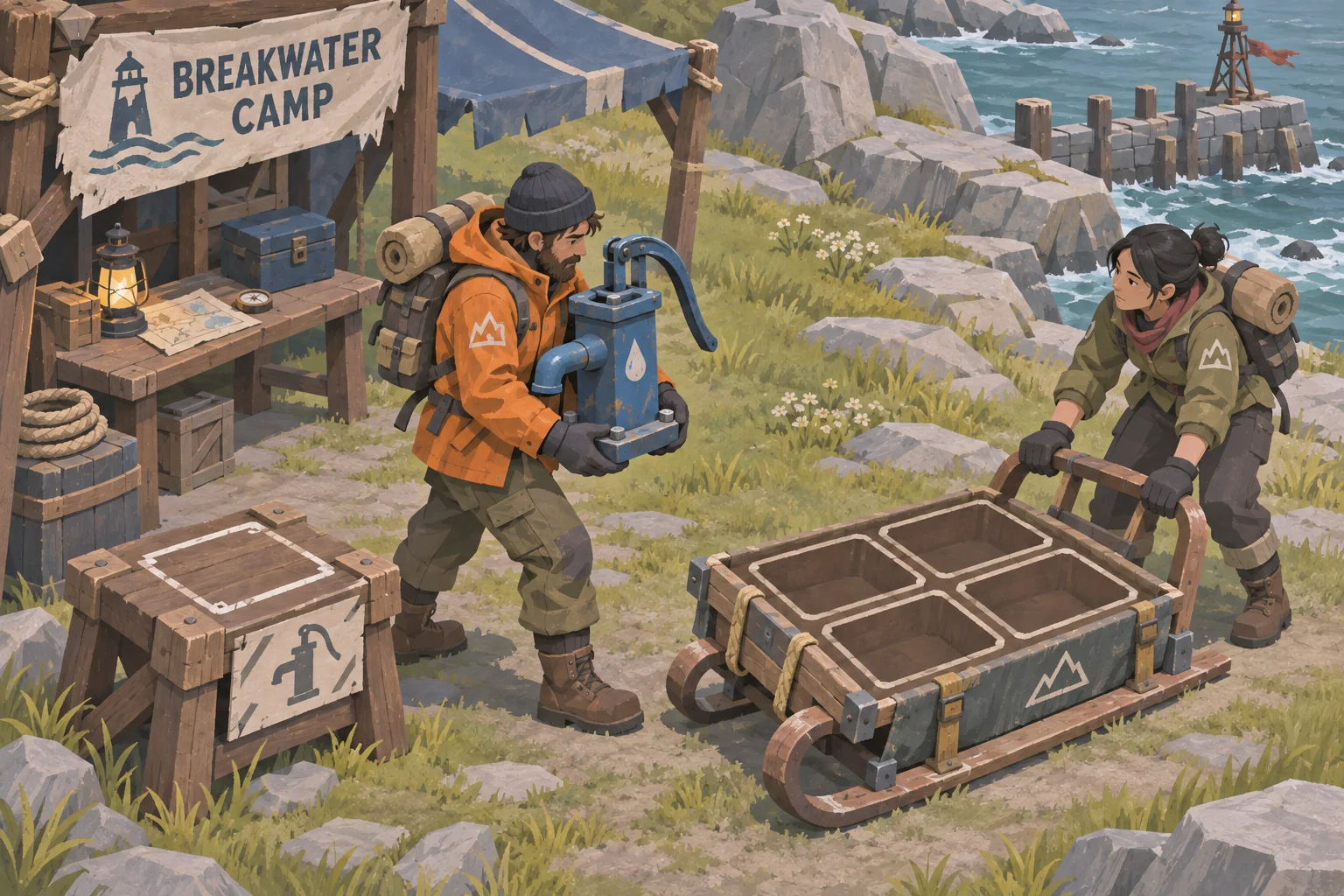
Represent each object with one persistent module ID. Removing it from the old camp changes its state from placed to carried. Placing it changes from carried to placed at the new coordinates. Never clone an object on a failed placement. If a surface is too steep, keep the module in inventory and explain why it cannot be placed. The team can then choose another spot without returning to the first site.
Replay the same departure
In a local rules replay, we packed the same four modules. The first version had no capacity check and let the rebuild create a second pump. The revised rule enforced four slots and one instance of each module.
| Case | Unrestricted rule | Four-slot ownership rule |
|---|---|---|
| Pack the four modules | Accepted | Accepted |
| Add a fifth item | Accepted | Rejected |
| Build a second pump | Accepted | Rejected |
| Rebuild without the pump | Accepted | Rejected |
| Place a module on steep ground | Duplicated | Stays carried |
After a failed placement, the revised rule preserved the kit. A reset restored one of each module. These results verify ownership and inventory rules. Test weather and survival pressure separately after the team understands the packing decision.
Start with two camps and one sled
SEELE AI supports prompt-led browser prototypes and follow-up edits. Ask for transfer, preview and rebuild in one focused loop. Check that the module count stays constant across a failed placement before expanding the map.
Make a co-op survival crafting prototype called Breakwater Camp. Two players share a sled with four module slots. The camp has one shelter, pump, bedroll and cook kit. Removing a placed module puts that same object in the sled and empties its old site. Preview a second inlet with freshwater, flat ground and a safe hearth. Let players place carried modules. Reject a duplicate pump and keep an object carried after an invalid placement. Show unmet shelter, water, rest or cooking needs before confirming departure. Add a shared reset.
Start your co-op survival prototype in SEELE
Frequently asked questions
Can either player move a module?
Yes. Let either player select and transfer an object, then show the shared sled changing for both. For the first test, let only one placement happen at a time. That keeps the inventory trace readable. Keep the shared inventory visible after each transfer so both players can see the same item count and avoid conflicting choices.
What if the next site has no freshwater?
Let the team see that requirement before leaving. They can pack another water source if the rules include one or choose a different inlet. Do not make the pump work without a freshwater marker. Show the freshwater marker during the preview, then explain which need remains unmet before either player confirms departure.
Should a failed rebuild consume the module?
Keep it carried if placement is blocked. Show the reason and allow another attempt. This preserves the team's choice and avoids losing a unique object to a placement error. Keep the item's unique ID in the sled and show the blocked surface so players can try another position without losing it.