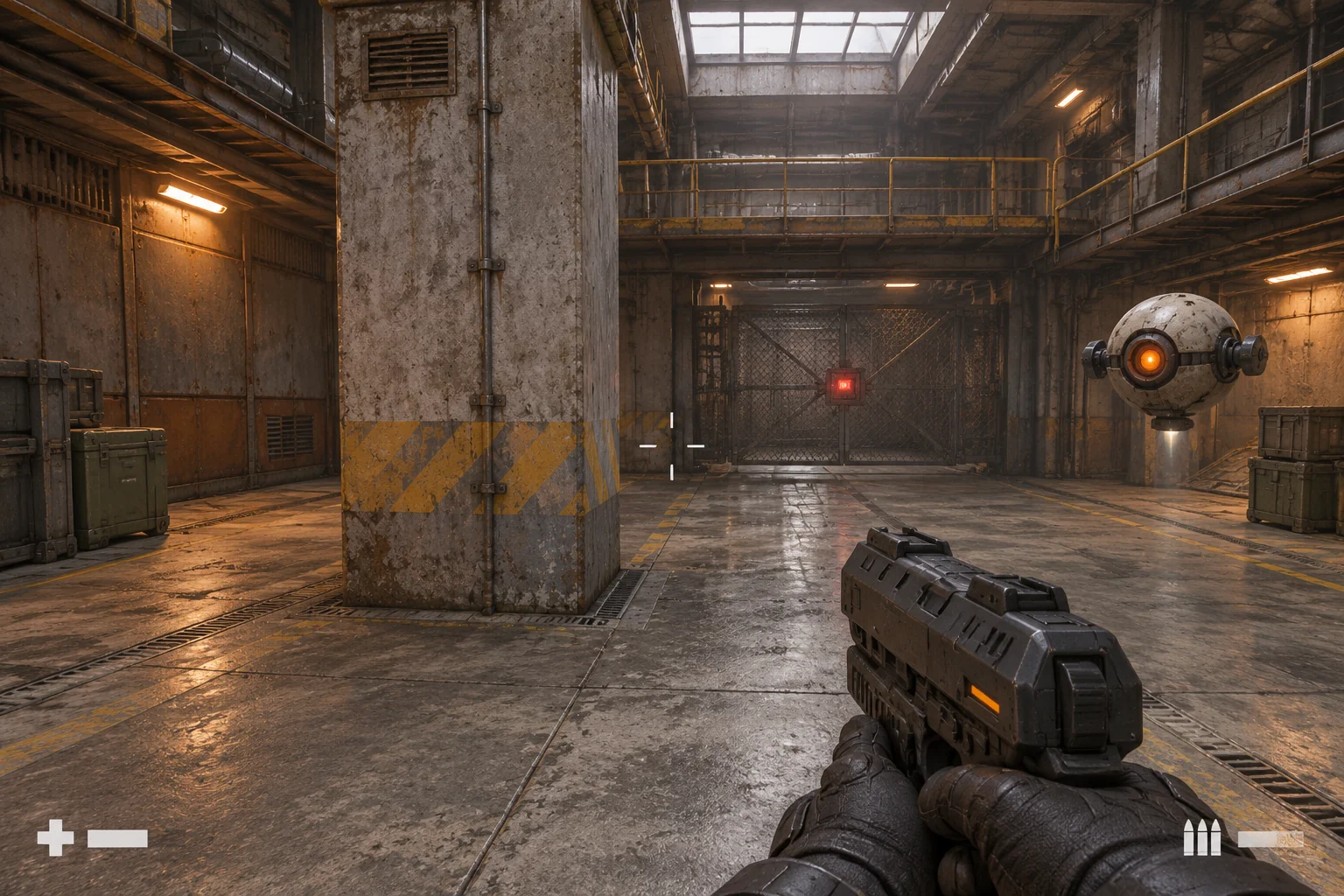
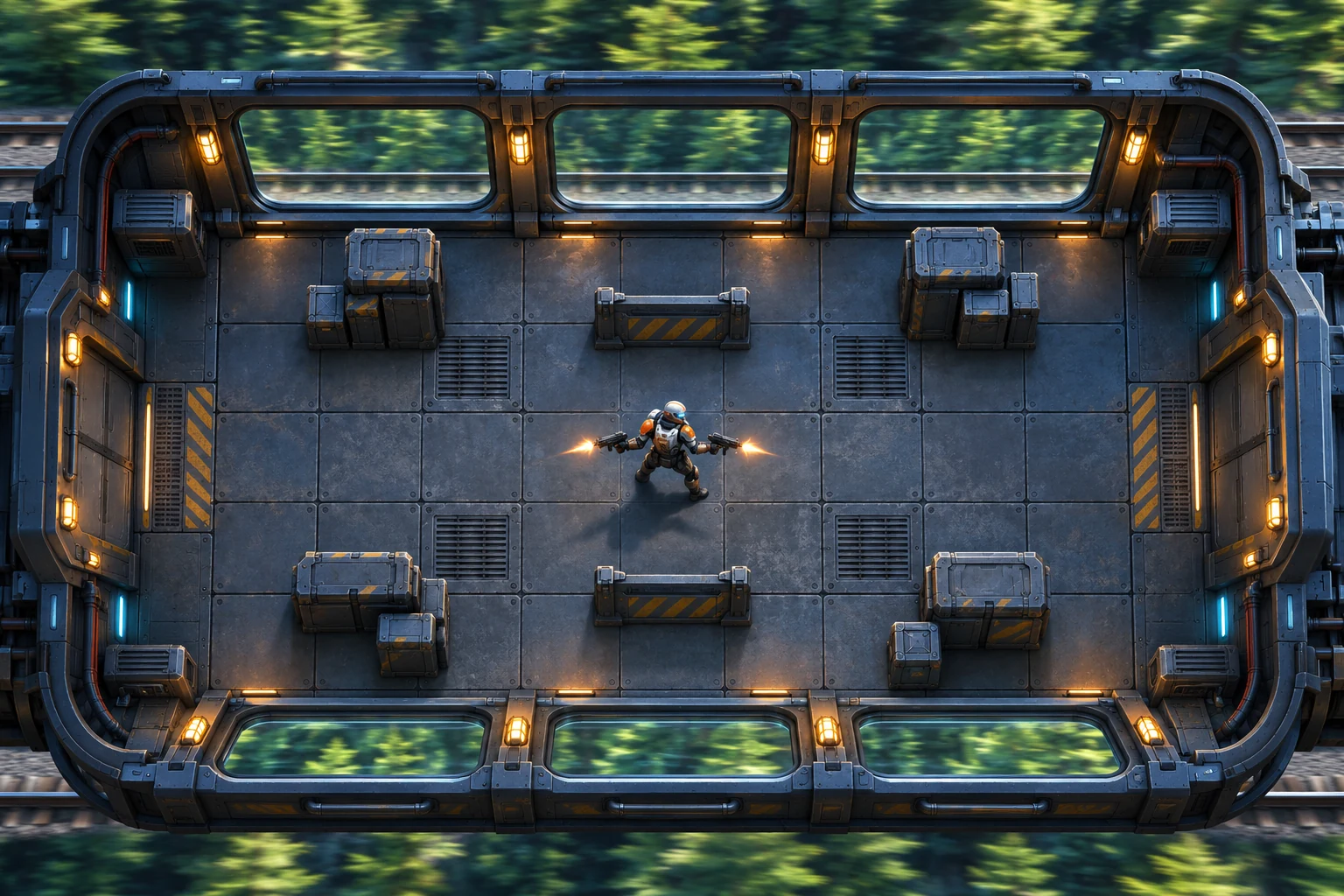
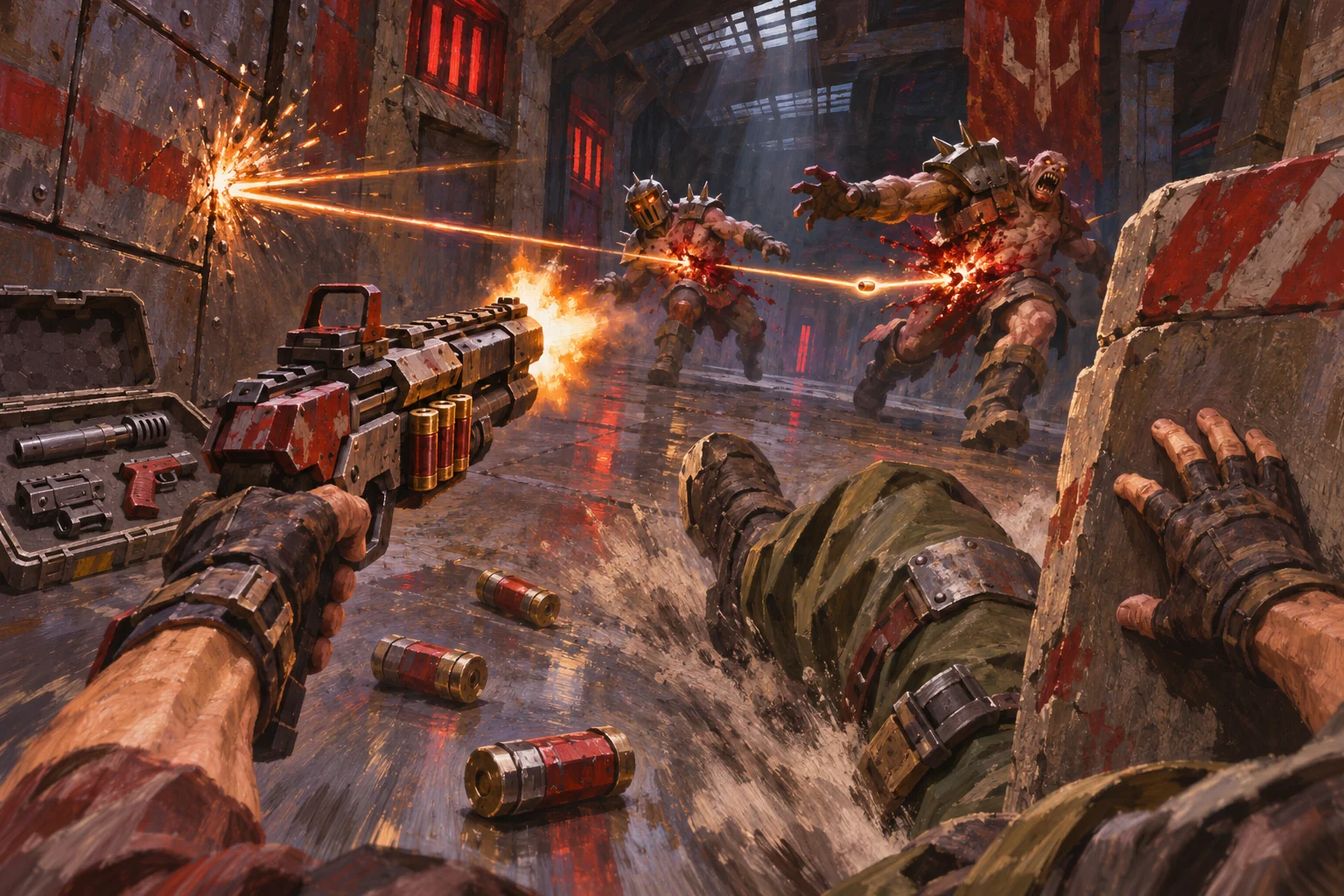
In the Rustworks, a shotgun has two sockets: barrel and power core. A forked barrel sends a tight pair of slugs that can ricochet once from metal; a choke barrel keeps a wide close-range spread. A kinetic core adds stagger, while a plasma core leaves a short burn on the first target. The player can swap one dropped part at a field rack, but the change interrupts firing for one second.
That cost makes assembly part of a fast shooter rather than a pause-screen inventory puzzle. The player must read the corridor, choose a projectile shape and impact effect, and decide whether to risk the rack during a fight. Start with two barrels and two cores. Replay the same corridor with a ricochet slug versus a close-range plasma spread, keeping movement and enemy positions fixed.
Make each weapon socket change a different combat property
Define the barrel as projectile geometry and the core as impact behavior. The forked barrel fires two narrow slugs; metal surfaces return each slug once at a shallow angle. The choke barrel fires a wider cone that loses damage quickly with distance. A kinetic core staggers a hit enemy; a plasma core burns the first target for two seconds. These are readable trade-offs: lane control versus close-range crowd damage.
Let the player carry one spare barrel and one spare core. A field rack swaps only one socket and disables firing for one second; it does not pause enemies or refill ammunition. Show the assembled weapon name, current ammo and both socket effects before confirming. A spare part should invite a tactical choice, not create a second full gun or a free reload.
Tie part collection to movement and ammunition
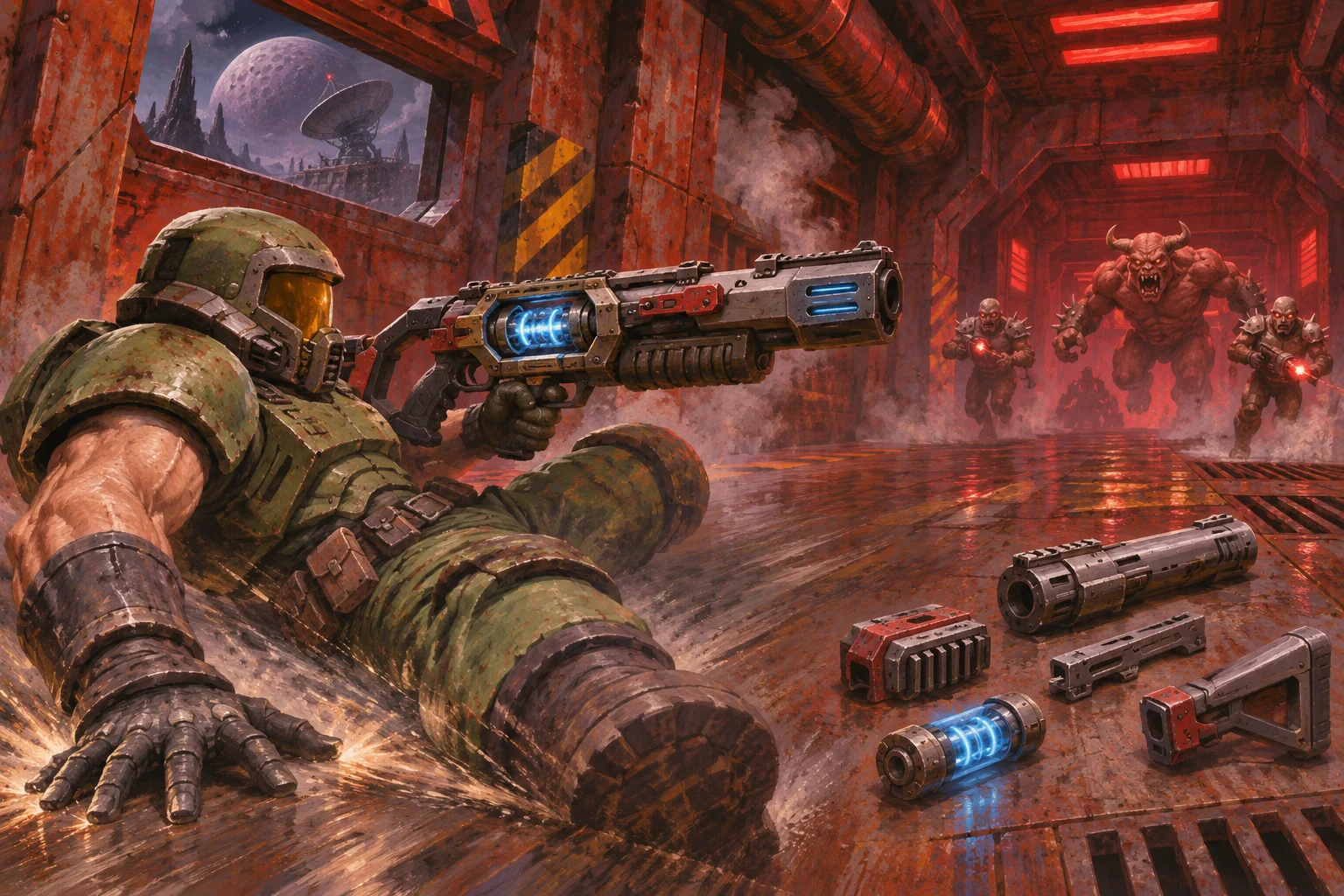
Enemies drop parts only on marked waves, and each pickup appears on the floor. The player must reach it without stopping movement for long. Ammo remains shared by the shotgun frame, so switching from forked slugs to a choke spread does not refill the magazine. The rack sits behind a short side alcove: it is safer than the corridor but costs route distance and one second of firing time.
A fast run therefore has three linked decisions: which part to pick up, when to visit the rack, and how much ammunition to spend before switching. Keep the HUD to two socket icons, one spare-part slot per type and a clear reload count. Add more modules only after players can explain why they changed a barrel or core.
Replay one corridor with ricochet and plasma builds
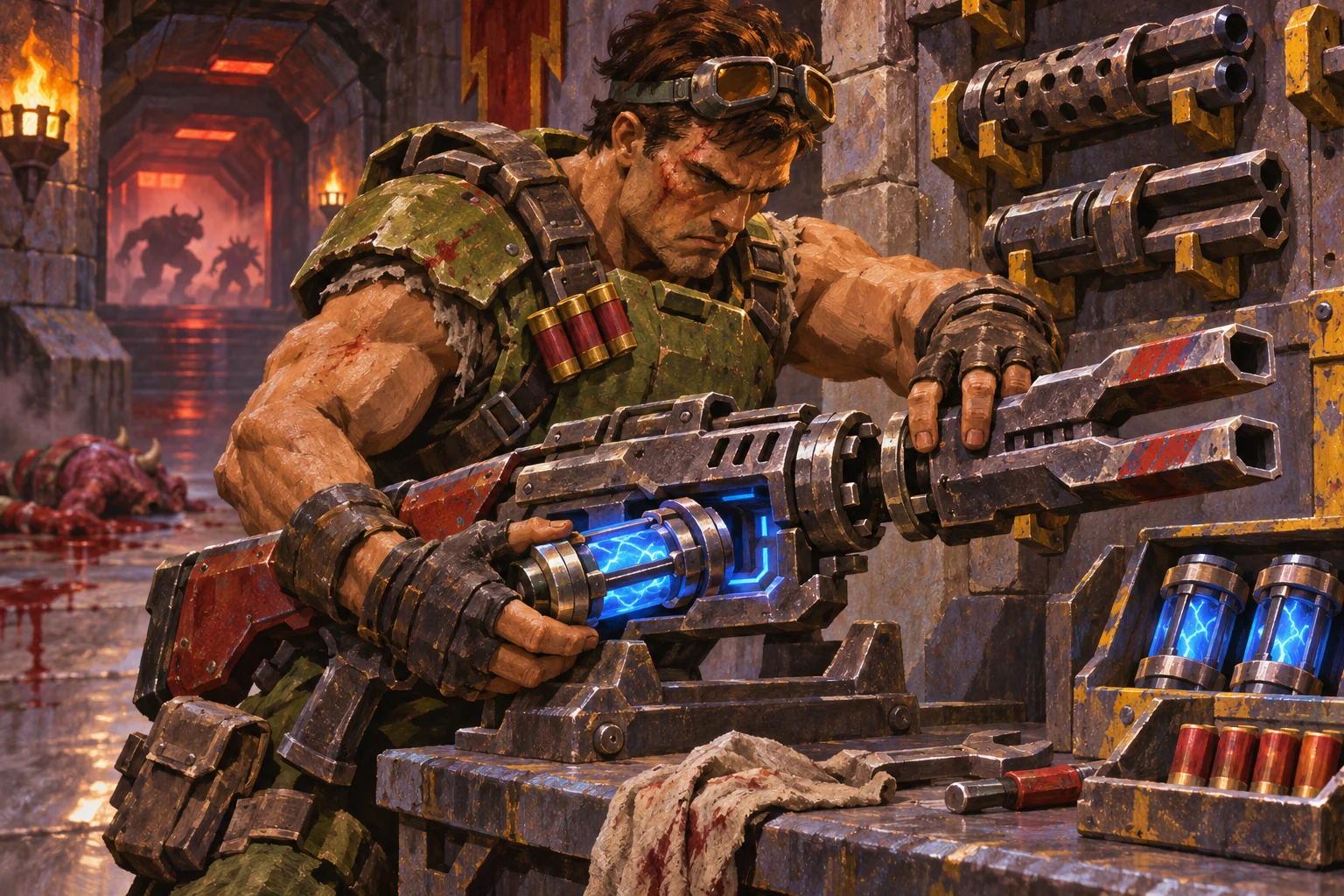
Fix the Rustworks corridor, player route, ammo count and three pursuers: two raiders behind a metal corner and one bruiser ahead. In the baseline build, the choke barrel and kinetic core fire at the bruiser at close range. The hit staggers it, but the two raiders stay behind cover; the player takes one flank hit while crossing toward the exit.
Reset to the same positions. At the field rack, fit the forked barrel and kinetic core, then bank one slug pair off the metal wall. The returning slug staggers both raiders behind the corner; the player reaches the exit without a flank hit and spends two shells. This paper-simulated replay changes only the barrel, route through the rack and resulting shot, while the seed and enemy positions stay fixed. Record swap time, shells spent, enemies staggered, hits and exit time. If ricochets solve every corridor, limit the bounce surface or reduce the spare-part supply.
Prompt a compact modular-weapon shooter
Build one shotgun frame, two barrel types, two cores and a single field rack. Verify that swaps preserve shared ammo and cost firing time before adding more weapons or part rarities.
Create a compact fast-moving boomer shooter in a rusted industrial corridor. Give the shotgun one barrel socket and one power-core socket. The forked barrel fires two narrow slugs that can ricochet once from metal; the choke barrel fires a wide close-range cone. The kinetic core staggers the hit target; the plasma core burns the first target for two seconds. Let the player carry one spare barrel and one spare core. A field rack swaps one socket and disables firing for one second without pausing enemies or refilling shared ammo. Add reset and a fixed corridor encounter with two raiders behind a metal corner and one bruiser ahead. Compare choke+kinetic against forked+kinetic using the same seed and player route. Log swap time, shells, staggered enemies, hits and exit time.
SEELE's official AI Game Maker page describes creating a playable first version from a text prompt, testing it in a browser and refining it with follow-up prompts. Use that general flow to check swap timing and shared ammunition; the shooter and weapon rules are fictional design guidance.
Build the modular-weapon shooter in SEELE
Frequently asked questions
How do interchangeable weapon parts work in a boomer shooter?
Give sockets distinct jobs. A barrel changes projectile shape or range, while a power core changes hit behavior. Let the player swap a limited spare part at a field rack, then keep ammo and combat pressure consistent so the build has a real cost.
How do I keep weapon assembly fast during combat?
Limit the first prototype to two sockets and one spare part of each type. Use a nearby rack with a short, visible firing interruption rather than a large inventory screen. Keep enemies moving and show ammo shared across all configurations.
What should I measure in a modular-weapon replay?
Hold corridor, enemy positions, seed and player route fixed, then compare two builds. Record swap time, ammunition spent, enemies staggered, hits taken and exit time. If the part choice does not change movement or target order, revise its combat effect.