Introduction
A branded skill game gives players one clear action that reflects a campaign theme. The challenge is to connect a brand idea to a fair, enjoyable interaction without turning the experience into a logo screen. Start with a small fictional workshop scenario, an editable game brief and one action the player can understand immediately.
This guide uses Orbit Grove, a fictional brand concept for a marketing-team exercise. The game, campaign, team and results are invented. No real brand, customer, campaign performance or playable build was tested, and the example makes no advertising or conversion claims.
Choose the skill the game should express
A skill game should have one central action: match, sort, time or sequence. Describe what the player learns in the first seconds, how a round ends and what counts as a result. Make the brand idea part of the action or visual language rather than an interruption.
Prompt 1 — campaign-game brief
Design a fictional branded skill game for the invented Orbit Grove campaign. Choose one original player action, one short round and a simple success rule. Define audience assumption, theme, input, feedback, difficulty, end state and reset. Keep the concept independent of real logos, customer data or performance claims. List untested assumptions.
A useful brief separates what the player does from the campaign message. State which game element carries the theme and where any call to action appears.
Make the interaction and visual identity fit
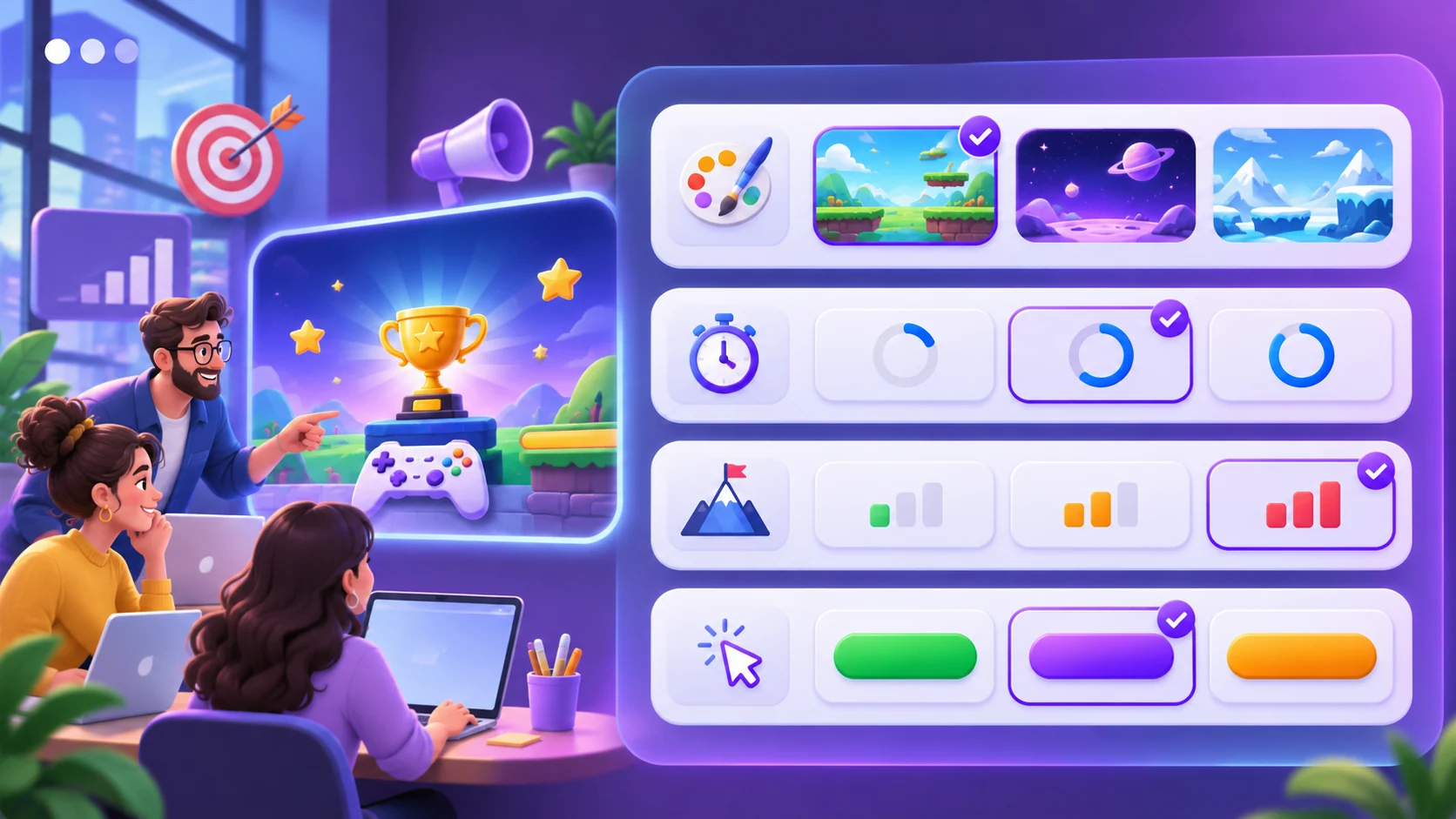
Use a small palette, a few original shapes and one recurring visual cue. The player should still understand the challenge if campaign copy is removed. Keep instructions short and show the action before the first round begins.
Prompt 2 — visual direction and first screen
Create an original visual direction for Orbit Grove using a fictional nature-and-orbit theme, geometric leaves and a restrained color palette. Draft a first screen that explains one matching challenge, the control and the round length. Do not imitate an existing brand or use real trademarks, logos or product claims.
| Element | Game role | Check |
|---|---|---|
| Theme shape | Connects the campaign concept to the playfield | Does not obscure the target |
| Color cue | Helps distinguish matchable items | Remains distinct in every state |
| Instruction | Explains the player action | Fits on the first screen |
| Brand message | Provides campaign context | Does not interrupt play |
These are design checks for a fictional concept, not brand-lift research findings.
Make the skill loop readable and fair
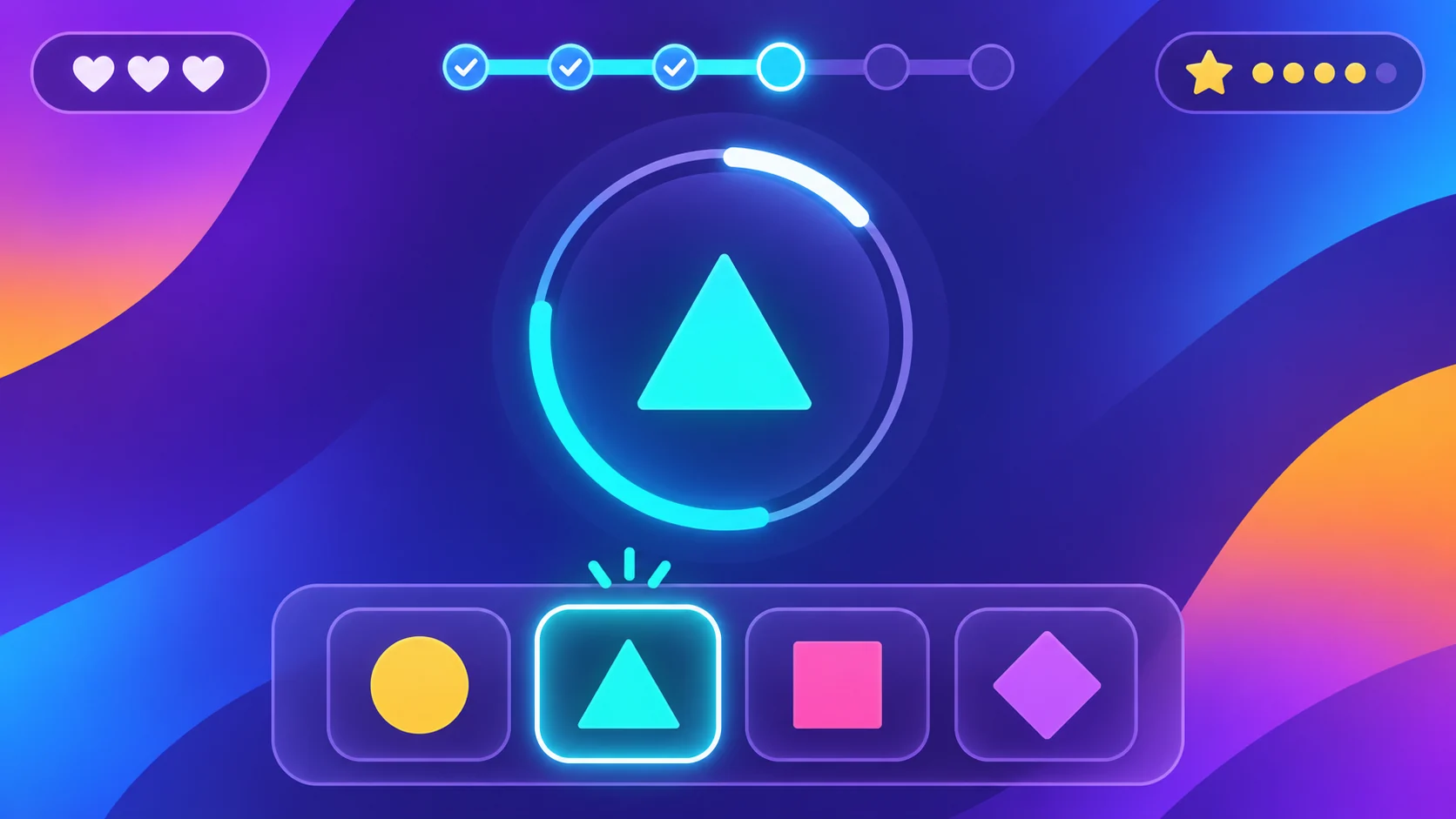
A short loop can show a target, let the player select or move an item, provide immediate feedback and explain the score. If speed matters, show the timer before the round starts. If accuracy matters, state what counts as a match and how a miss is handled.
Prompt 3 — round rules
Specify one Orbit Grove matching challenge with a target pattern, player input, round timer, success condition, miss feedback and a simple score. Define one easy and one harder variation without changing the core rule. Make outcomes deterministic and use fictional values. Do not claim that the game measures real skill or predicts campaign response.
Players should be able to understand why an action succeeded. Avoid hidden scoring multipliers unless the interface explains them before play.
Add difficulty and replay choices
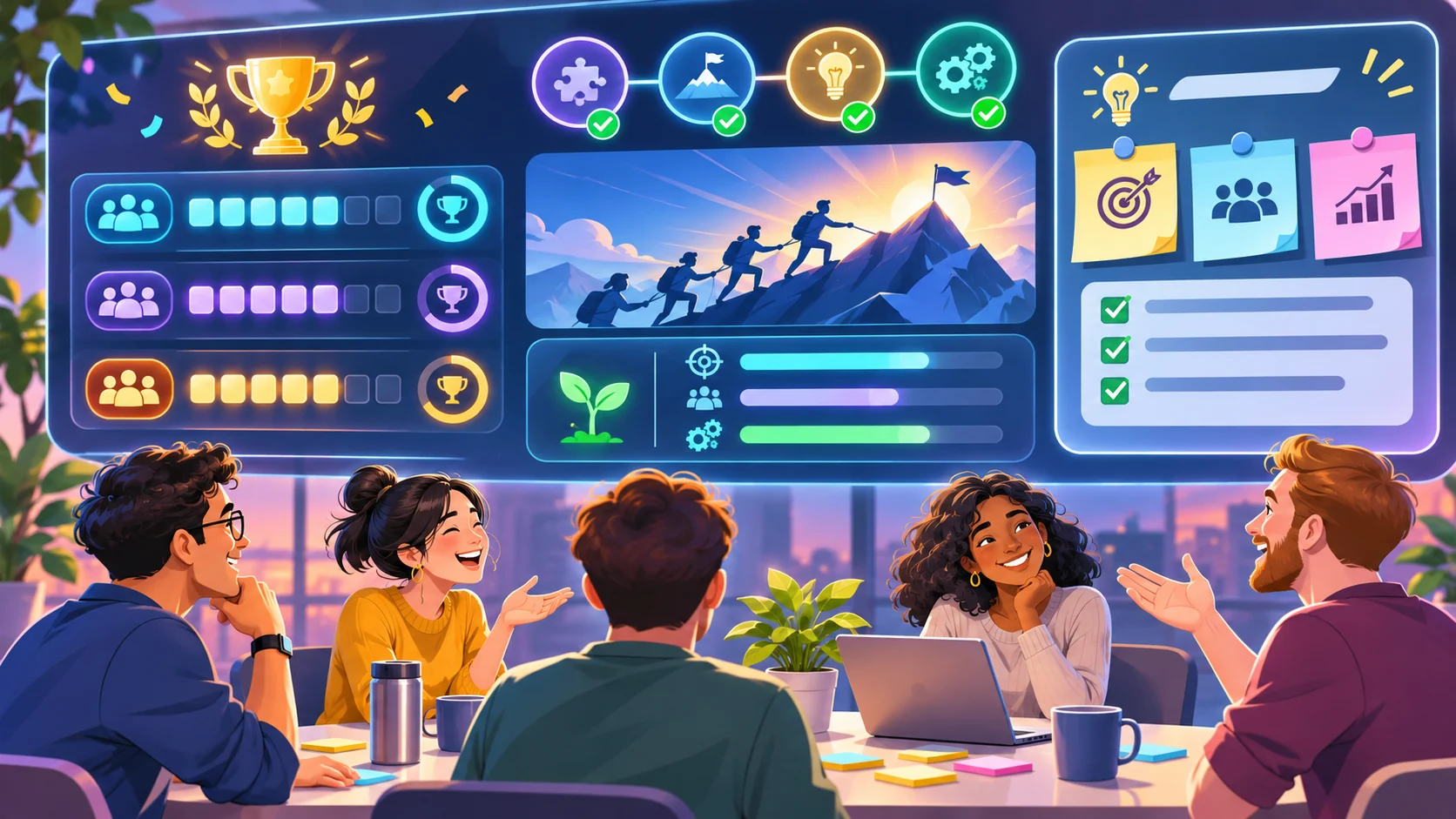
A replay can change one variable, such as pattern length or the number of choices. Keep the core action stable so players can learn the loop. Let the player see the next round’s change and decide whether to replay or finish.
Prompt 4 — progression and replay
Design three short Orbit Grove rounds that vary one challenge parameter at a time. Show how the player advances, replays, pauses and finishes. State whether a score carries over and how reset works. Keep the progression understandable and avoid claiming it has been playtested.
A short debrief can explain the player’s result and offer another round. It should not suggest that one score proves product knowledge, preference or purchase intent.
Provide an editable campaign template
A team needs to change the campaign theme, instruction, target pattern, timer, feedback and call to action without changing the basic game loop. Keep the fields plain and use fictional example content until a real campaign owner supplies approved brand assets and copy.
{
  "campaignName": "Orbit Grove — fictional workshop demo",
  "brandIdea": "small steps connect into a larger pattern",
  "gameAction": "match the target leaf-and-orbit pattern",
  "instruction": "Select the shapes that match the preview",
  "roundSeconds": 25,
  "difficultySteps": ["3-shape pattern", "4-shape pattern", "same rule with shorter preview"],
  "feedback": {"success": "Pattern matched", "miss": "Compare the target and try again"},
  "callToAction": "Explore the fictional campaign concept",
  "evidenceLabel": "fictional planning template; no campaign or game test"
}
Replace the campaign name, theme, instruction, difficulty, feedback and CTA with approved material. The example is a local customization plan, not a live campaign demonstration.
Request a small playable skill-game slice
A first build could include an instruction screen, one matching action, immediate feedback, a visible timer, three difficulty steps, a result view and reset. Specify what must work: show the target, accept input, resolve match or miss, update the score and end the round. Static campaign art is not a playable game.
Prompt 5 — first playable slice
Build a small fictional Orbit Grove skill game with one matching action, clear instructions, visible timer, immediate match/miss feedback, three short difficulty steps, result view and reset. Keep campaign copy and art editable. At handoff, list working interactions, static screens and untested behavior. Do not claim campaign performance, conversion or real brand approval.
No playable build or campaign test was run for this article.
Prompt 6 — simulated team customization
Adapt the editable template to a fictional “Northwind Notes” stationery campaign workshop. Change only campaign name, theme, target pattern, instruction and CTA. Preserve the same match action and score rule. Label the campaign as fictional and performance as unmeasured. This is a simulated customization, not a real client project.
This example demonstrates which template fields can change while preserving the game loop. It does not describe a real marketing-team workshop.
Prompt 7 — observed-output review
Review the running local skill-game prototype for first-screen instructions, input, match/miss feedback, score rule, timer, difficulty steps, result view, editable campaign fields and reset. Mark each present, missing or unclear from observed interactions. Record concise evidence and one smallest next change. Do not infer campaign lift or user preference.
Fictional campaign-game snapshot
| Field | Orbit Grove workshop example |
|---|---|
| Theme | Shapes joining into a larger pattern |
| Action | Match a target sequence |
| Round | One short timed challenge |
| Customization | Campaign name, palette, instruction and CTA |
| First milestone | One input produces clear success or miss feedback |
| Evidence | Fictional plan only; no client, player or campaign test |
The snapshot separates editable campaign details from the skill loop. It is not a performance case study.
Conclusion
A branded skill game should connect one clear player action to an original campaign theme while keeping instructions, feedback and results understandable. Orbit Grove and Northwind Notes are fictional; no live campaign, brand approval, playable build or performance test is claimed. Use the editable template to plan a bounded interaction, then verify the running game before describing it as playable.
You can take a scoped concept into the Free AI game maker, then compare the result with the review checklist.
FAQ
What is a branded skill game for marketing teams?
It is a short game concept that connects an original theme to a clear player action, feedback and result.
How can a campaign idea become a game mechanic?
Choose one action that expresses the theme, then explain how input, success, misses and replay work.
Can one game score demonstrate campaign performance?
No. A fictional score is a game result and does not establish awareness, conversion or preference.
What should an editable branded-game template contain?
Include campaign theme, player action, instruction, timer, difficulty, feedback and call to action fields.
Does concept art prove a branded skill game is playable?
No. Verify the player input, scoring, round progression, customization and reset in the running build.