Introduction
A festival challenge game can connect activities through a shared theme and give visitors an optional way to explore an event. For festival teams, the prototype should be easy to understand, flexible when schedules change and usable without requiring every visitor to join. It can organize activities, but it cannot replace venue planning or staff decisions.
This guide uses Lantern Harbor, a fictional community festival with invented stations and schedules. No real festival or playable experience was tested.
Define a theme and an optional visitor goal
Choose a theme that can connect the festival activities without forcing every station into the same task. State who can participate, how long a challenge takes and whether visitors can skip it. A visitor should be able to enjoy the event without completing the game or sharing personal information.
Prompt 1 — festival game brief
Plan a fictional Lantern Harbor festival challenge game. Define the theme, visitor goal, intended audience, activity duration, start and finish, optional participation path and what the prototype will not control. List event details that organizers must verify before use.
The game goal should support the event’s purpose. Avoid incentives that pressure visitors to move quickly, purchase something or disclose personal information.
Connect activities through a route or open choice
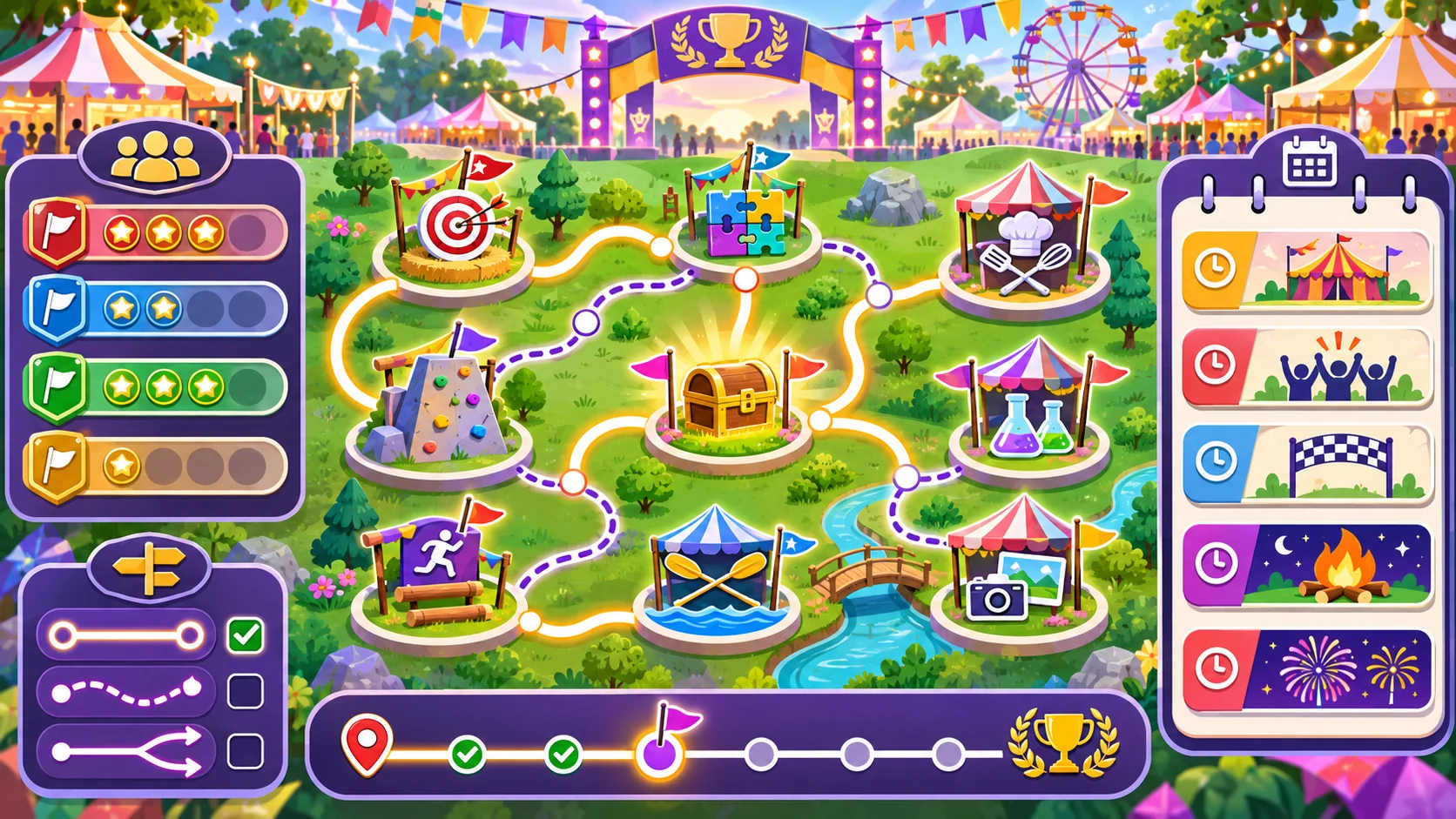
A route can guide visitors between activity stations, while an open-choice design lets them select any available activity. Show estimated time, prerequisites and optional alternatives. Keep the route editable so organizers can respond to actual event layout and program changes.
Prompt 2 — activity map
Map three fictional Lantern Harbor stations: a lantern-pattern activity, a community story wall and a music discovery booth. For each, define its theme connection, participation choice, estimated time placeholder, accessible alternative, completion marker and organizer review note. Allow visitors to skip or choose a different order.
| Station placeholder | Challenge idea | Optional participation |
|---|---|---|
| Lantern pattern | Notice or create a repeated shape | Observe, draw or skip |
| Story wall | Respond to a fictional festival memory prompt | Write, discuss privately or pass |
| Music booth | Match a rhythm card to a sound sample | Listen, read a description or skip |
These station concepts are fictional and should be adapted to the actual program, venue and visitor needs.
Keep challenge instructions clear and low pressure
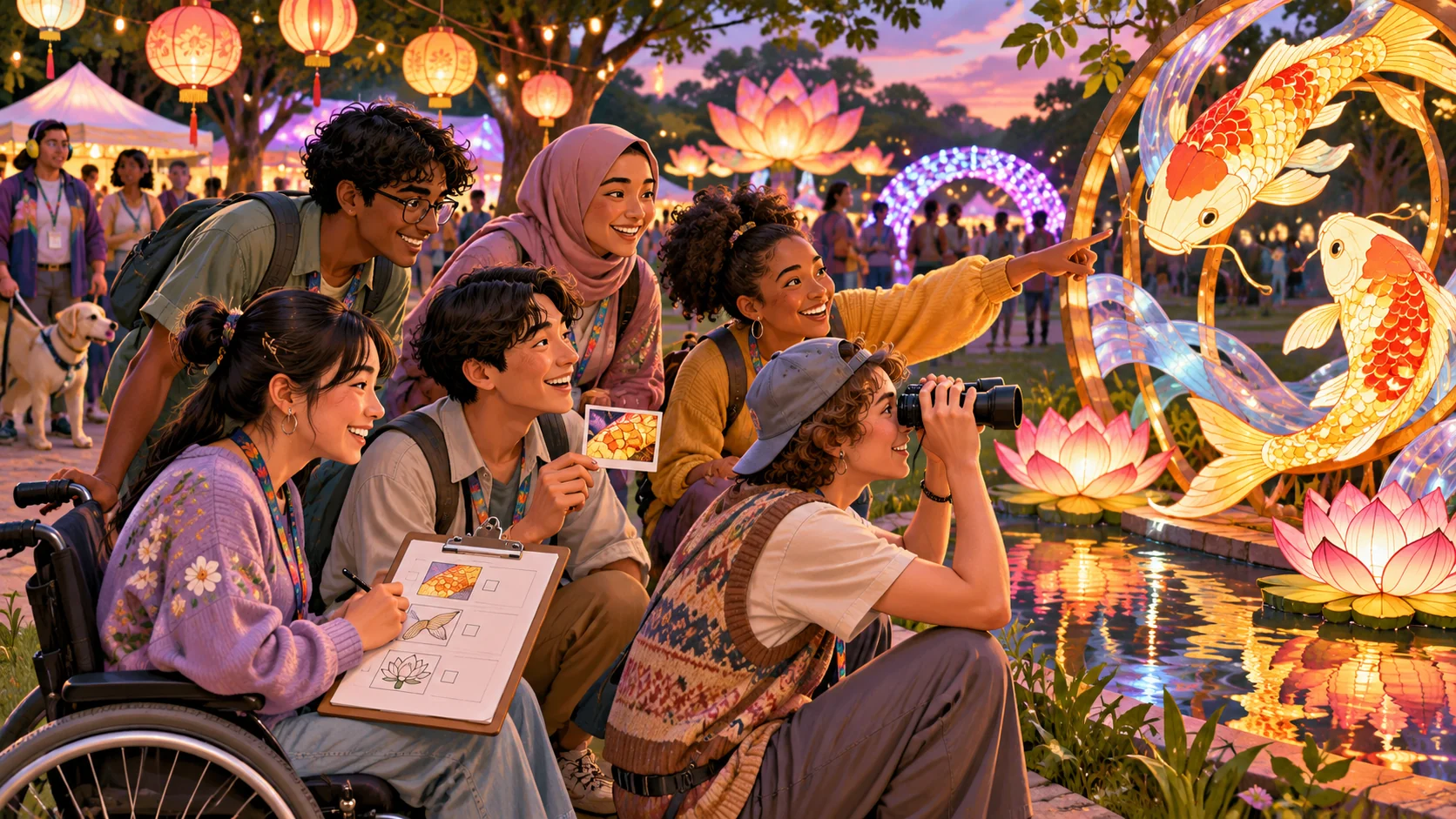
A challenge should tell visitors what to do, how to finish and what happens next. Avoid time pressure unless organizers have a clear reason and review its effect on the event. Provide a way to pause, leave or rejoin without losing the whole experience.
Prompt 3 — station interaction
Design one Lantern Harbor challenge with a short instruction, an optional action, a clear completion state, a skip choice, a pause-and-return path and a non-digital alternative. Do not require a purchase, personal data or interaction with an unreviewed physical installation.
Use plain language and avoid relying only on color, sound or small printed details. An organizer should review the final wording and actual station setup.
Make team progress visible without tracking people
A team can use a paper stamp card or local device state to remember completed stations. Make it clear what is stored and offer a no-tracking path. The prototype can demonstrate progress without collecting names, contact details or location histories.
Prompt 4 — progress and privacy model
Specify a Lantern Harbor progress card that records only fictional station-completion flags on the visitor’s device or on paper. Explain what is not collected, how a visitor resets the card and how the experience works when a visitor declines tracking. Keep progress optional.
Keep the event template editable
The JSON below separates theme, stations, route choices, alternatives, progress and organizer review. Replace the sample with approved event information. It is a planning artifact, not an event operations plan or evidence of a tested festival.
{
  "gameName": "Lantern Harbor — fictional festival challenge",
  "theme": "shared stories and creative discovery",
  "visitorGoal": "choose optional activities and reflect on the theme",
  "participation": {"optional": true, "skipAllowed": true, "noPurchaseRequired": true},
  "stations": [
    {"id":"lantern-pattern","task":"notice or create a repeated shape","alternatives":["observe","draw","skip"],"timeEstimate":"organizer to set","review":"pending"},
    {"id":"story-wall","task":"respond to a fictional memory prompt","alternatives":["write","discuss privately","pass"],"timeEstimate":"organizer to set","review":"pending"},
    {"id":"music-booth","task":"match a rhythm card to a sound sample","alternatives":["listen","read a description","skip"],"timeEstimate":"organizer to set","review":"pending"}
  ],
  "routeOptions": ["suggested route", "choose any order", "paper activity card"],
  "progressData": "optional completion flags only; no identity or location history",
  "reset": "clear local flags or use a fresh paper card",
  "organizerReview": ["verify event layout", "review access alternatives", "confirm station details"]
}
Keep time estimates as placeholders until organizers review the actual program. Do not use a prototype to make operational promises about staffing, capacity or venue access.
Plan for changes and organizer review
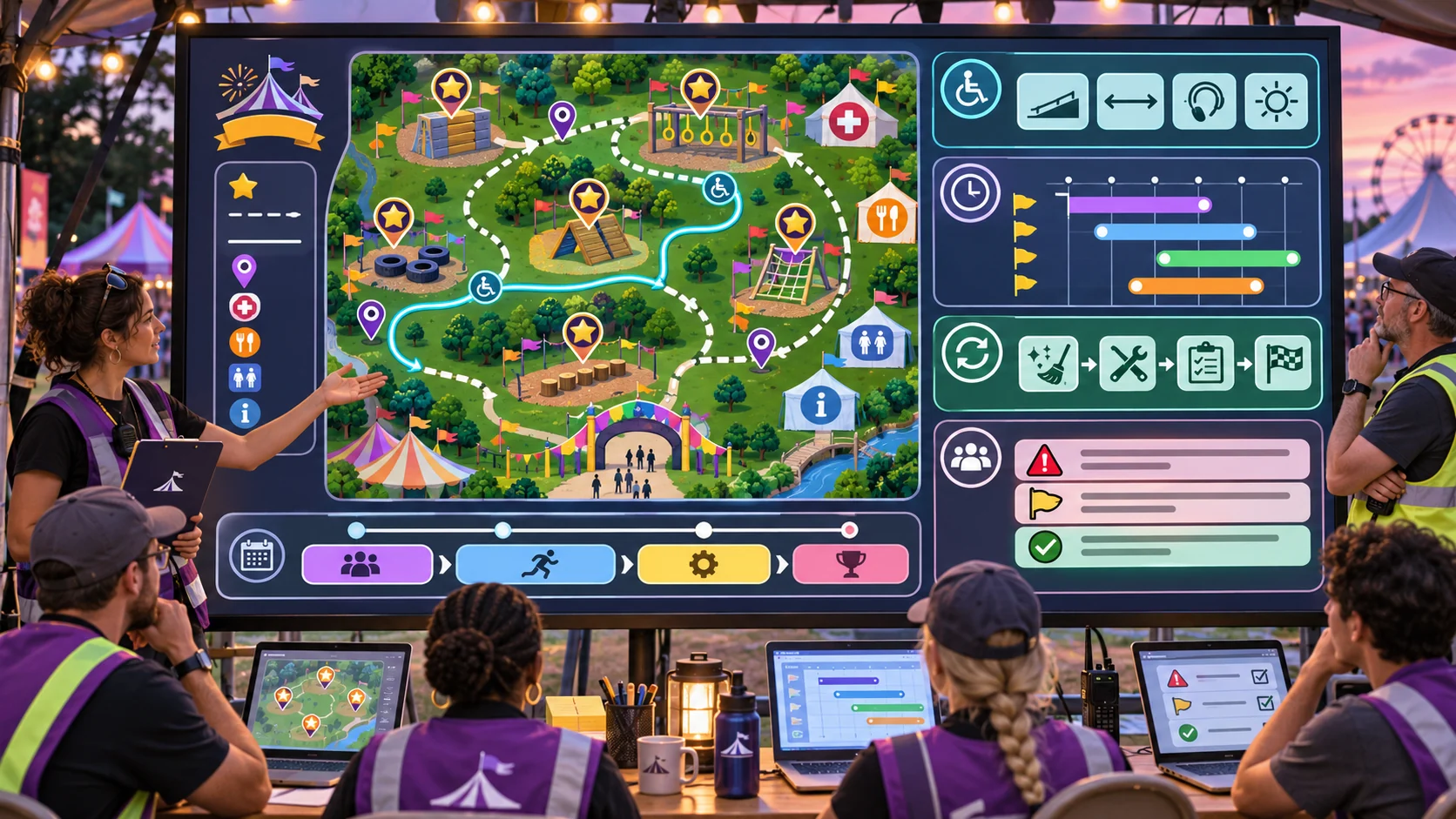
A festival schedule can change. Make stations individually editable, show which details are placeholders and provide a way to hide a station or update its status. Any safety, accessibility, crowd-flow or venue guidance should come from qualified event staff reviewing the real location.
Prompt 5 — organizer update view
Build an editable organizer view for the fictional Lantern Harbor challenge. Let the team update station status, schedule placeholder, route availability and review notes. Keep visitor progress optional and local. Show clearly when an activity is paused or unavailable; do not invent venue procedures.
Simulate an event customization
For a fictional customization, adapt the structure to Maple Night Market, an invented evening market with craft and storytelling stations. Replace the theme and activity prompts, keep the route flexible and identify what requires organizer approval. This example is simulated, not a real festival collaboration.
Prompt 6 — fictional event customization
Adapt Lantern Harbor to a fictional Maple Night Market. Create three optional activities, alternative participation modes, editable time placeholders, local-only progress and organizer review fields. Label all event facts fictional and untested. Do not imply real venue approval.
Prompt 7 — local prototype review
Review the local festival prototype for clear instructions, optional participation, skip and reset paths, no-purchase design, privacy explanation, editable station status and alternatives. Report only behaviors observed locally. Mark venue operations, event safety and real visitor usability as untested and requiring organizer review.
Fictional visitor-flow snapshot
| Moment | Intended experience | Evidence boundary |
|---|---|---|
| Arrival | See the optional game and choose whether to join | Fictional screen concept |
| Activity | Try, observe, pass or use an alternative | No visitor trial conducted |
| Progress | Keep an optional station marker | No personal data collected in sample |
| Finish | Leave, reset or continue enjoying the festival | No event was run |
The snapshot helps plan the experience. It does not show that the route, station timing or event operations work at a real festival.
Conclusion
A festival challenge game can connect activities through a theme while keeping participation optional and progress simple. Start with an editable station map, offer alternatives and leave event details for organizer review. Lantern Harbor and Maple Night Market are fictional; no festival or playable prototype was tested. Confirm the real venue, access and operations with qualified event staff before using a challenge at an event.
You can take a scoped concept into the Free AI game maker, then compare the result with the editable station checklist.
FAQ
What should a festival challenge game include?
Include a theme, optional visitor goal, activity stations, route choices, clear instructions, alternatives, progress and reset.
How can a festival game connect activities?
Use a shared theme and show how each station relates, while letting visitors choose an order or skip an activity.
Should a festival challenge game collect visitor data?
It can work without personal data. If any data is considered, event organizers must review the purpose, notice and handling before use.
How can festival teams make challenges more inclusive?
Offer clear instructions, flexible participation, skip options and alternatives that do not rely on a single sensory or physical interaction.
Does a prototype confirm a festival route is safe or accessible?
No. Actual venue conditions and event operations need review by qualified staff in context.