In fictional Neon Rift, three pilots dodge the same incoming bullet pattern and draw special actions from one team energy pool. A laser costs 40 points, a shield costs 30, and a dash costs 20. A second laser costs 25, so the team must coordinate instead of treating every player as if they had a separate reserve. A small deterministic test can show which actions fit in the shared pool, what remains, and whether an unaffordable action is rejected cleanly.
Give the whole team one visible energy reserve
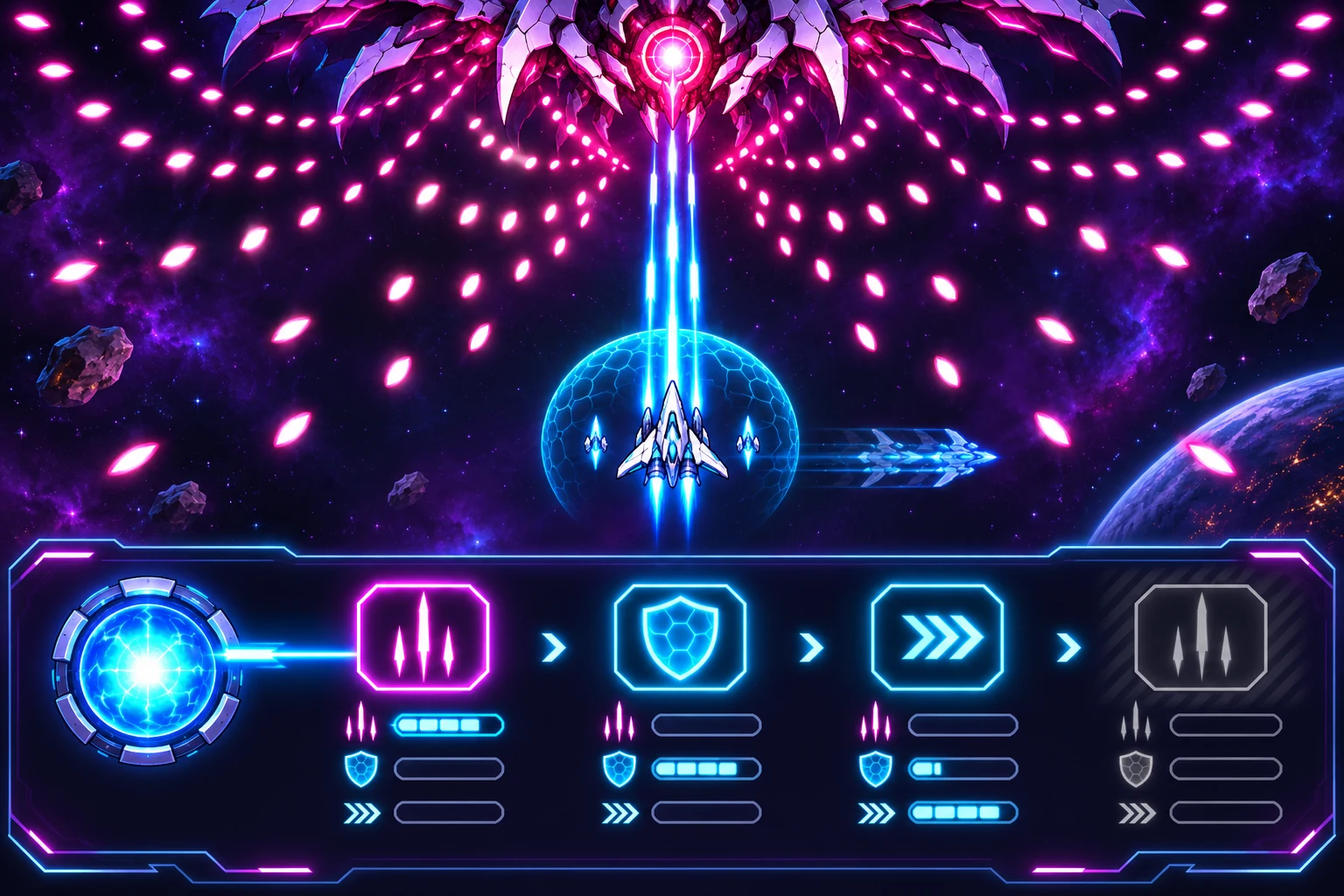
Show three pilots, one incoming pattern, and a single 100-point energy meter. Keep ordinary movement free so the shared resource is used for special actions rather than basic survival. Put each action’s cost beside its icon and show the pool changing as the team commits to a laser, shield, or dash.
The shared pool creates a planning decision: one pilot’s powerful attack leaves less energy for teammates. Keep the player count, starting energy, and action order fixed in the first comparison. That makes it clear whether the pool encourages coordination without also changing the wave or number of players.

Resolve special-action costs in a stable order
Use a fixed sequence: player one spends 40 on a laser, player two spends 30 on a shield, and player three spends 20 on a dash. The accepted actions use 90 points, leaving 10. A later 25-point laser request should be rejected because it exceeds the remaining pool. Show the reason and keep the balance at 10 rather than allowing negative energy.
Godot Resources can store authored action data such as cost and effect. Keep the current team balance in active game state, and process each action once in the declared order. This separates reusable action definitions from the pool consumed during one wave and prevents a repeated input from charging or firing twice.
Compare shared energy with separate player reserves
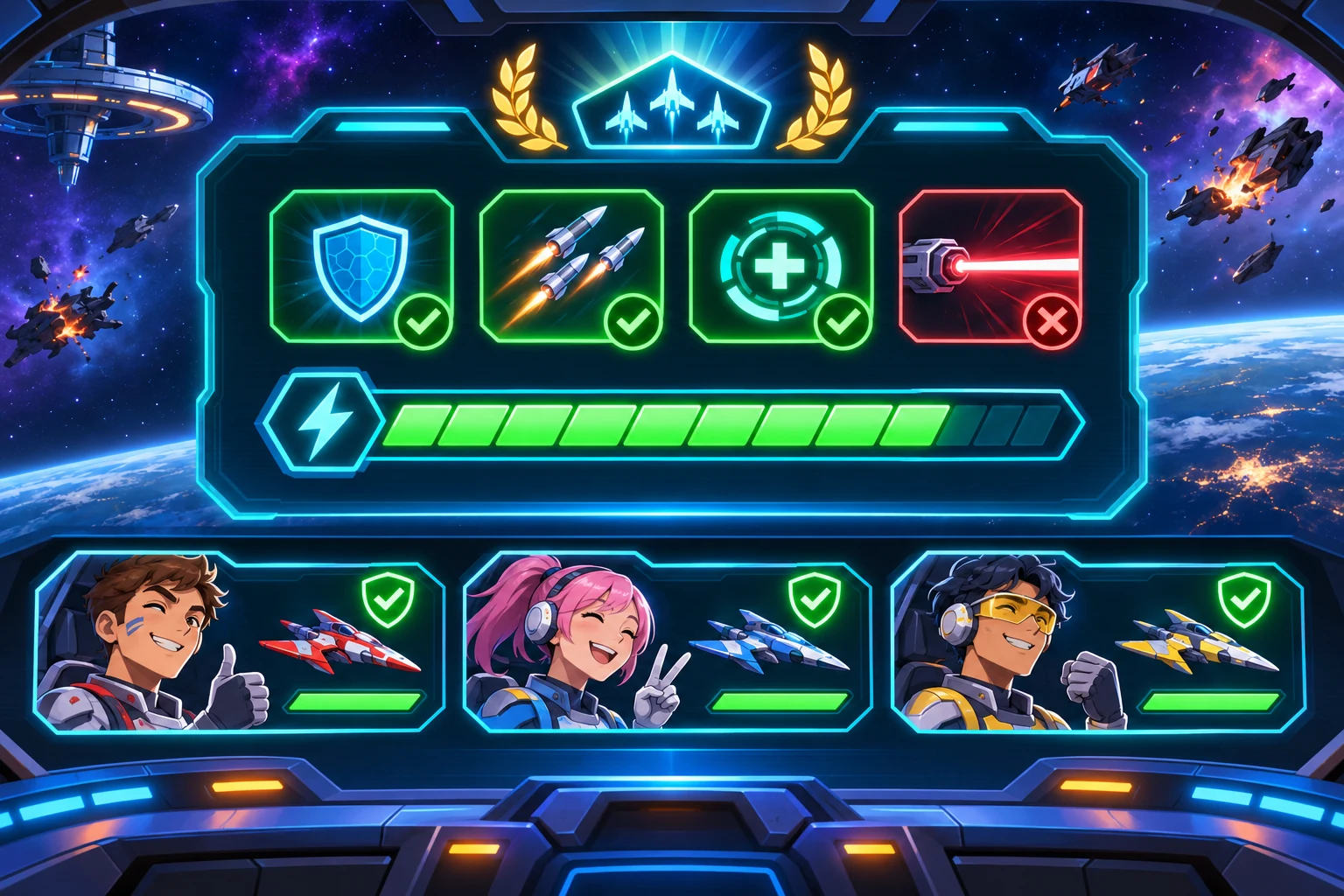
Replay the same wave with three players and identical action requests. In a separate-reserve baseline, each pilot spends from an individual meter. In the shared version, the first laser, shield, and dash consume 90 of the team’s 100 points; the second laser is denied and 10 points remain. Keep the incoming pattern fixed so survival results do not distract from the resource rule.
Report accepted and rejected actions, each cost, final shared energy, and any negative balance separately. The fixture expects three accepted actions, one rejected action, 10 points remaining, and no overdraw. This checks cooperative resource bookkeeping, not whether the cost values are balanced for every stage or team composition.
Give the AI a fixed shared-energy test
Create a three-player bullet-hell shooter in fictional Neon Rift. Give the team one shared 100-point special-action pool. Keep player count, action order, and incoming pattern fixed. Player one requests a laser costing 40, player two a shield costing 30, and player three a dash costing 20. Then request a second laser costing 25. Accept the first three actions in order, reject the last because only 10 points remain, and never allow a negative balance. Report action costs, accepted and rejected moves, and final energy separately.
If the team pool goes below zero or the last laser fires, restore a 100-point shared reserve and replay the same action order. Confirm that 40, 30, and 20 are accepted, 25 is rejected, and 10 points remain.
FAQ
How does a shared energy pool change a co-op shooter?
Every special action draws from the same team reserve, so players must weigh their own attack against what teammates may need next. Keep the shared meter visible and show costs before commitment. This makes cooperation legible without changing the basic movement or incoming attack pattern.
How should a shared team resource be spent?
Resolve requests in a clear order and subtract each accepted cost once. If the remaining balance is too small, reject the action and explain why. Keep the displayed balance at zero or above so players can trust that an unaffordable move will not silently overdraw the team.
What should I measure in a shared-energy prototype?
Track the requested actions, accepted and rejected moves, each cost, and the final pool balance. Keep player count and action order fixed during the first test. This checks resource bookkeeping and coordination rules before you tune costs across different waves or team sizes.