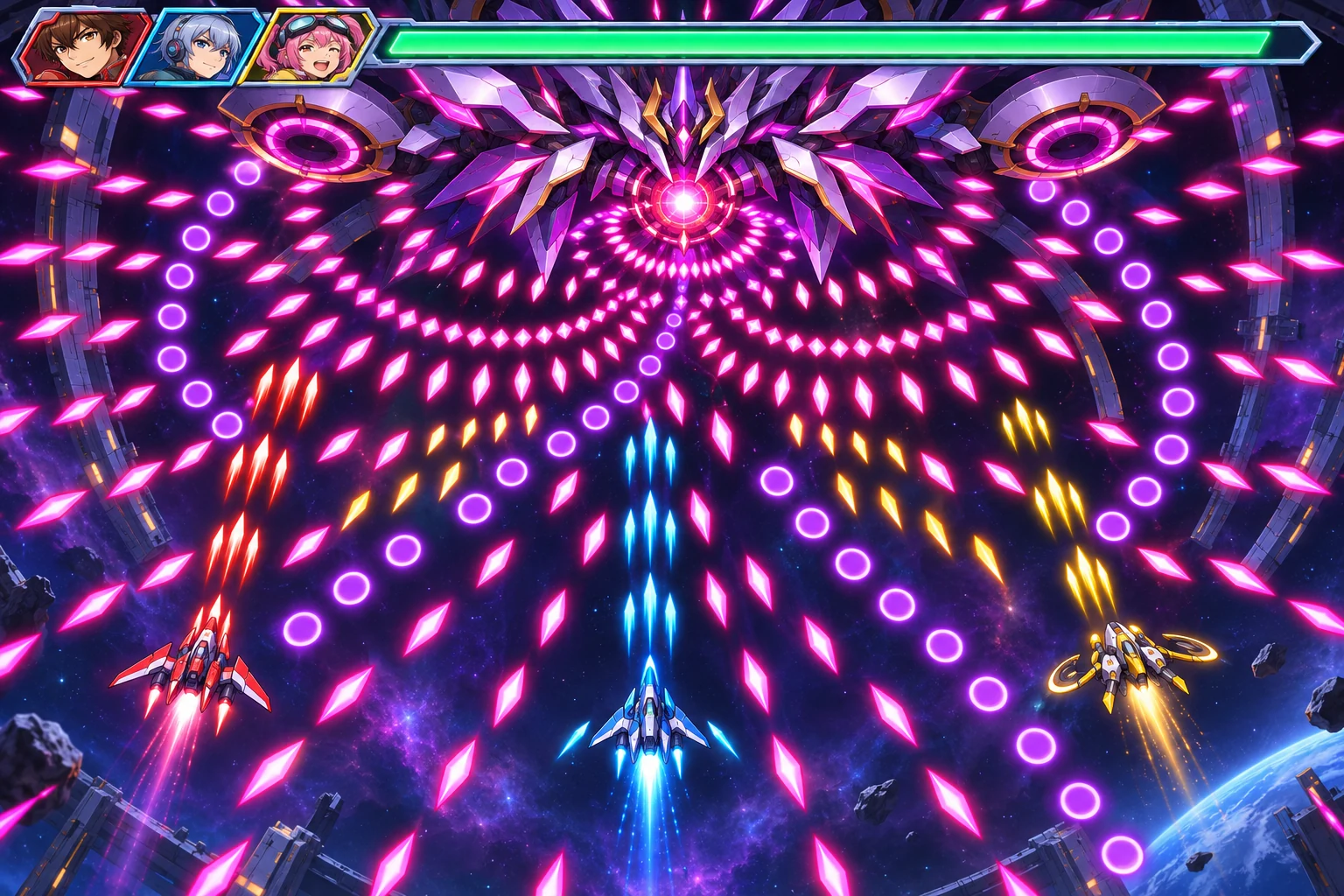
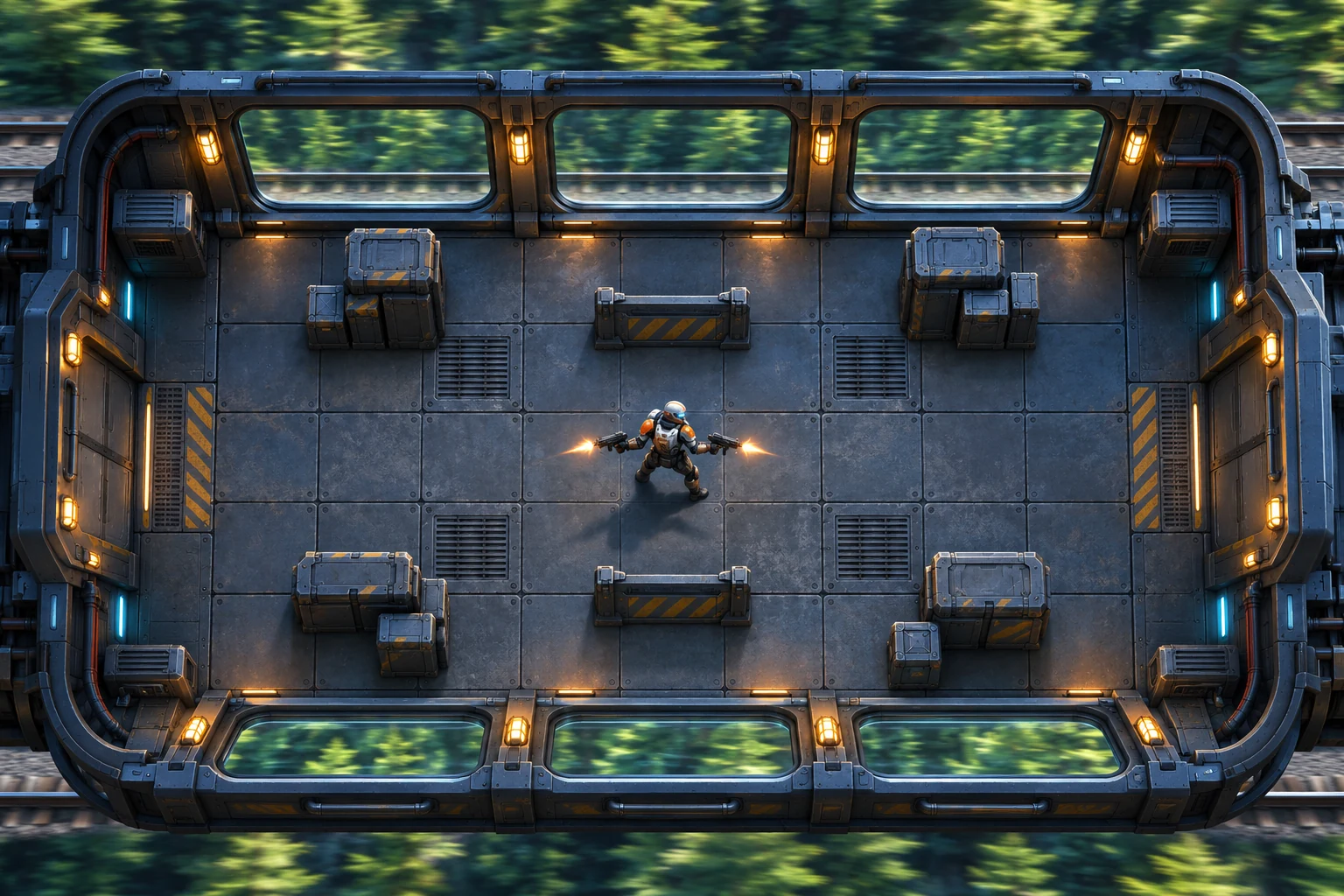
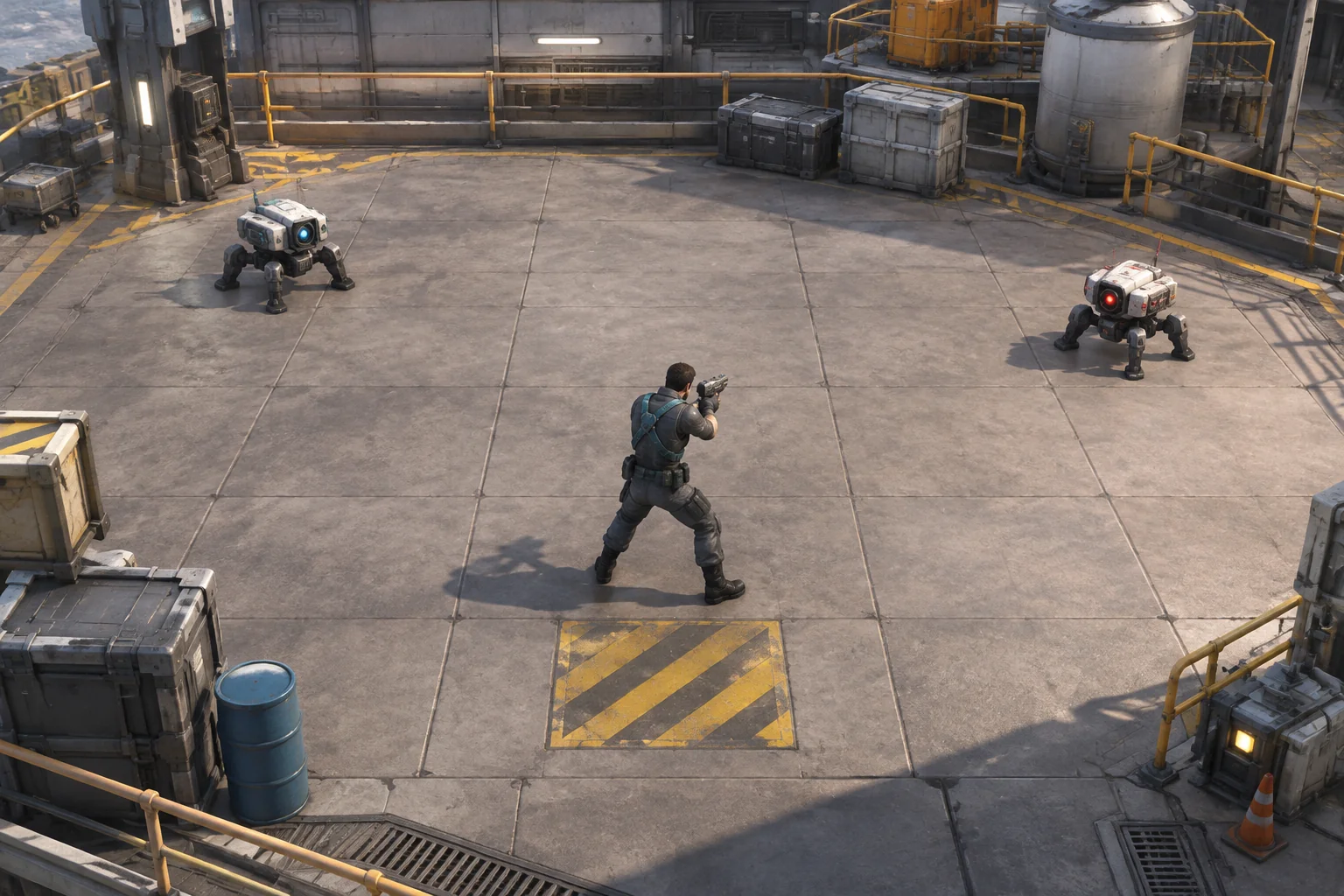
In Shared Charge, teammates aim and move independently, but their dash and charged-shot abilities draw from one energy pool. Ordinary fire remains free. The shared reserve creates a cooperative decision: spend now to cross a dangerous lane, save energy for a charged shot, or wait for both players to coordinate. A short reservation window lets the team see requests before the pool commits energy.
Make energy a team decision
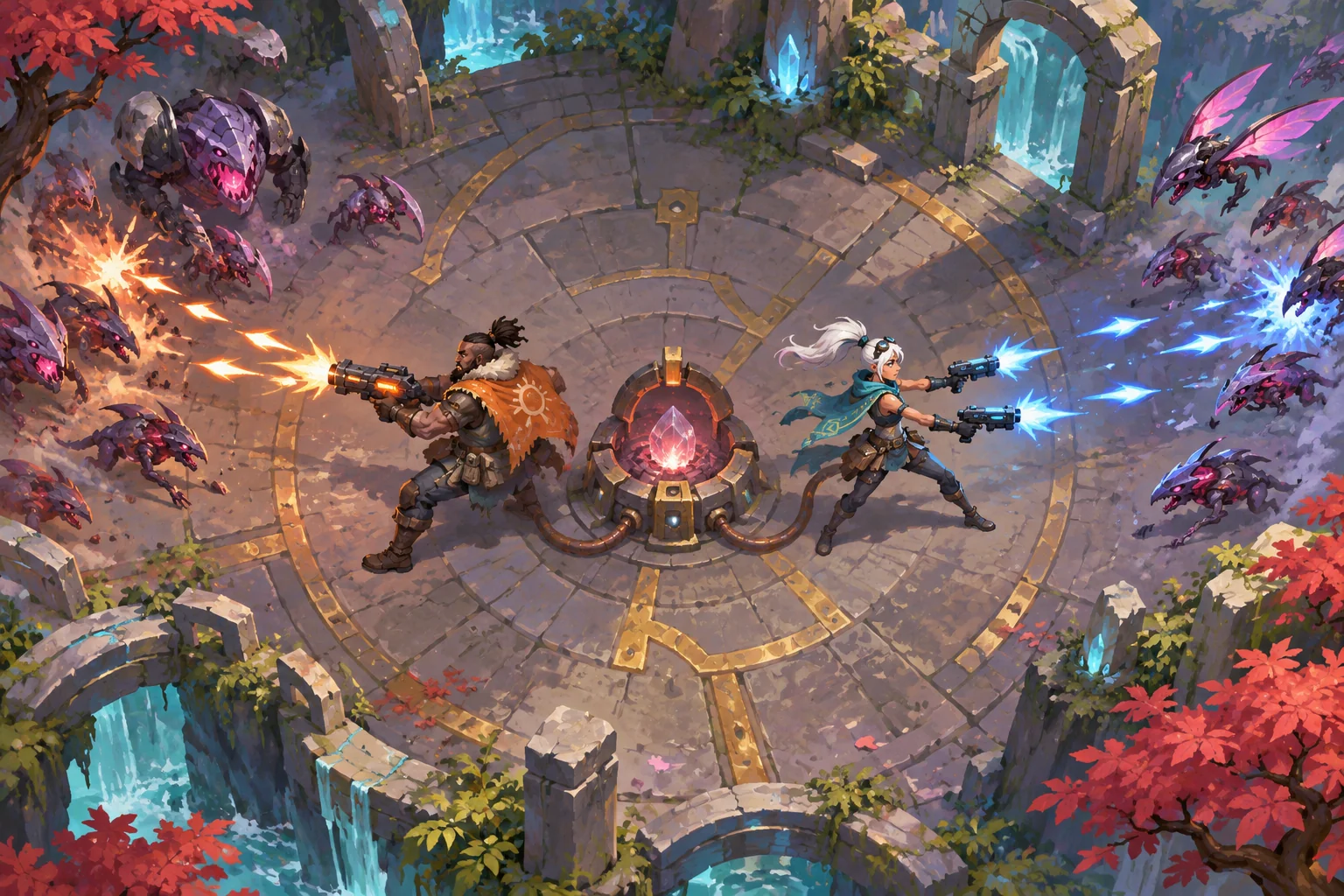
Show the pool, ability costs and pending requests in one place. Each player keeps independent movement and aim, so the energy rule does not take away twin-stick control. Give the team a short window to confirm actions before spending. Ordinary fire should never consume the shared reserve; otherwise a scarce ability pool can make players feel unable to respond.
| Action | Example cost | Team consequence |
|---|---|---|
| Ordinary shot | 0 | Continues while energy is saved |
| Dash | 11 units | One player crosses a dangerous lane |
| Charged pulse | 9 units | Teammate clears or staggers a threat |
Let players see whether both requests fit before committing. If the combined cost is too high, reject the set atomically and return a clear explanation. Do not spend the first request just because it arrived earlier; order-dependent allocation can make one teammate feel favored.
Reserve simultaneous requests fairly
At each short decision window, gather pending abilities and total their cost. If the total fits, reserve energy for all of them and apply the actions together. If it does not fit, reject the batch without partial spending, then let players choose again. A stable preview should show the available amount, combined cost and result before the window closes.
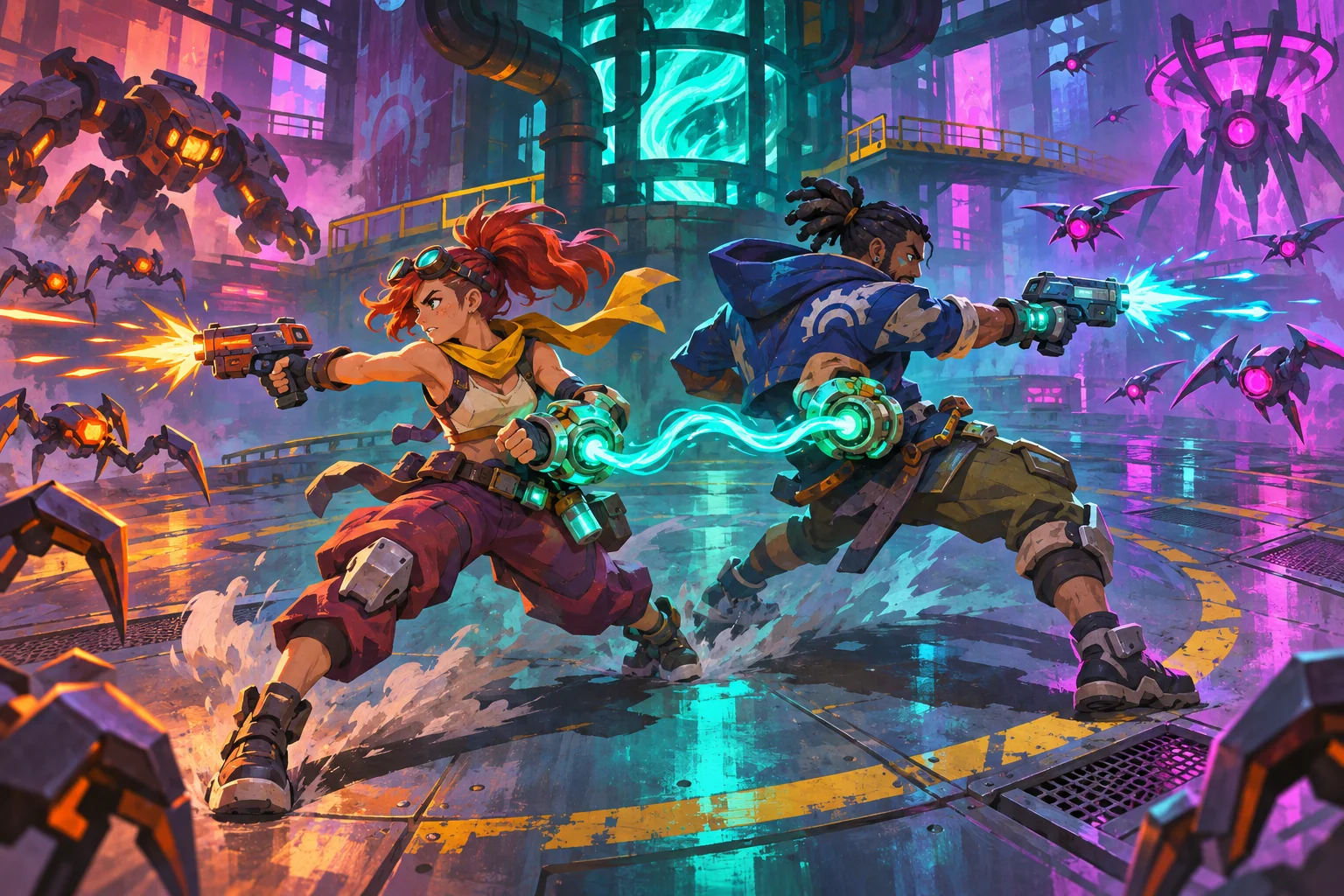
Keep the rules small for the first arena. Pair one dash and one charged pulse, then add energy pickups only after players understand that abilities share a budget. If a pickup refills the pool, show who collected it and how much was restored so teammates can coordinate their next window.
Replay the energy-cost adjustment
The deterministic local replay starts with a 20-unit pool. The initial dash cost of 12 and pulse cost of 9 total 21, so the pair is rejected. Revising the costs to 11 and 9 uses exactly 20; both requests are accepted. Reversing their order produces the same accepted pair. A 19-unit pool rejects the batch atomically and remains unchanged. This checks accounting only, not network delay or combat balance.
| Pool and requests | Initial costs 12 + 9 | Revised costs 11 + 9 |
|---|---|---|
| 20 units | Batch rejected; 20 remain | Both accepted; 0 remain |
| Request order reversed | Order may decide denial | Same two accepted |
| 19 units available | Reject without partial spend | Reject without partial spend |
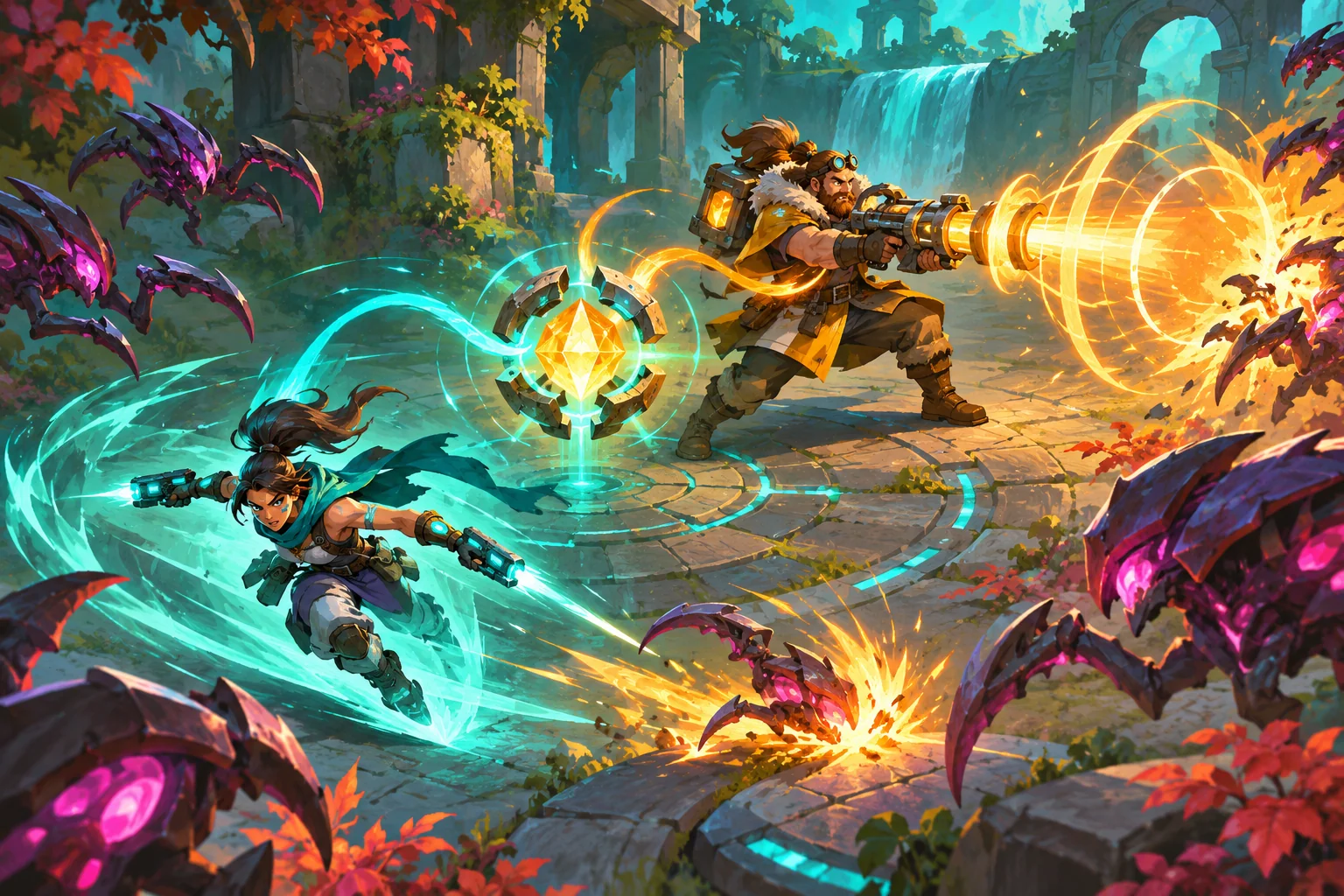
Test the reservation window in a playable build with real input timing and network delay. Check that players can read pending costs and recover from a rejected batch without losing control. The local arithmetic test cannot show whether the window feels fair in co-op.
Start with a two-player arena
Ask an AI game maker for a compact arena with two players, separate aim controls, free ordinary shots, one shared energy meter, a dash and a charged pulse. Show pending requests and accept both only when their combined cost fits. Keep rejected batches atomic, add a clear retry cue and place an energy pickup after the first encounter. Add more abilities after the team understands the shared budget.
Create Shared Charge, a cooperative twin-stick shooter prototype. Let two players move and aim independently. Ordinary shots are free, while dash costs 11 energy and charged pulse costs 9 from one shared 20-unit team pool. Collect both ability requests during a short visible reservation window. If total cost fits, accept both together regardless of request order; otherwise reject the batch without spending any energy. Show pending costs, remaining energy and a clear retry message. Add a safe restart and one energy pickup after the first arena.
Start a twin-stick shooter prototype in SEELE
Frequently asked questions
How does a shared energy pool create co-op decisions?
It connects individual ability timing to team resources. One player may dash while the other saves a charged shot, or both can coordinate when the combined cost fits. Keep ordinary fire free and show pending costs so players make informed choices instead of losing basic control.
How should simultaneous ability requests be handled?
Collect requests during a short visible window and resolve them as a batch. Accept all when the combined cost fits; otherwise reject them together without partial spending. A deterministic result independent of request order helps both players understand the shared rule.
What should I test for a shared energy system?
Replay fixed ability requests with different orders and pool sizes. Verify remaining energy and that rejected batches do not spend partially. A local accounting check confirms the rule, but only co-op play can reveal input timing, network delay and whether the reservation window feels fair.