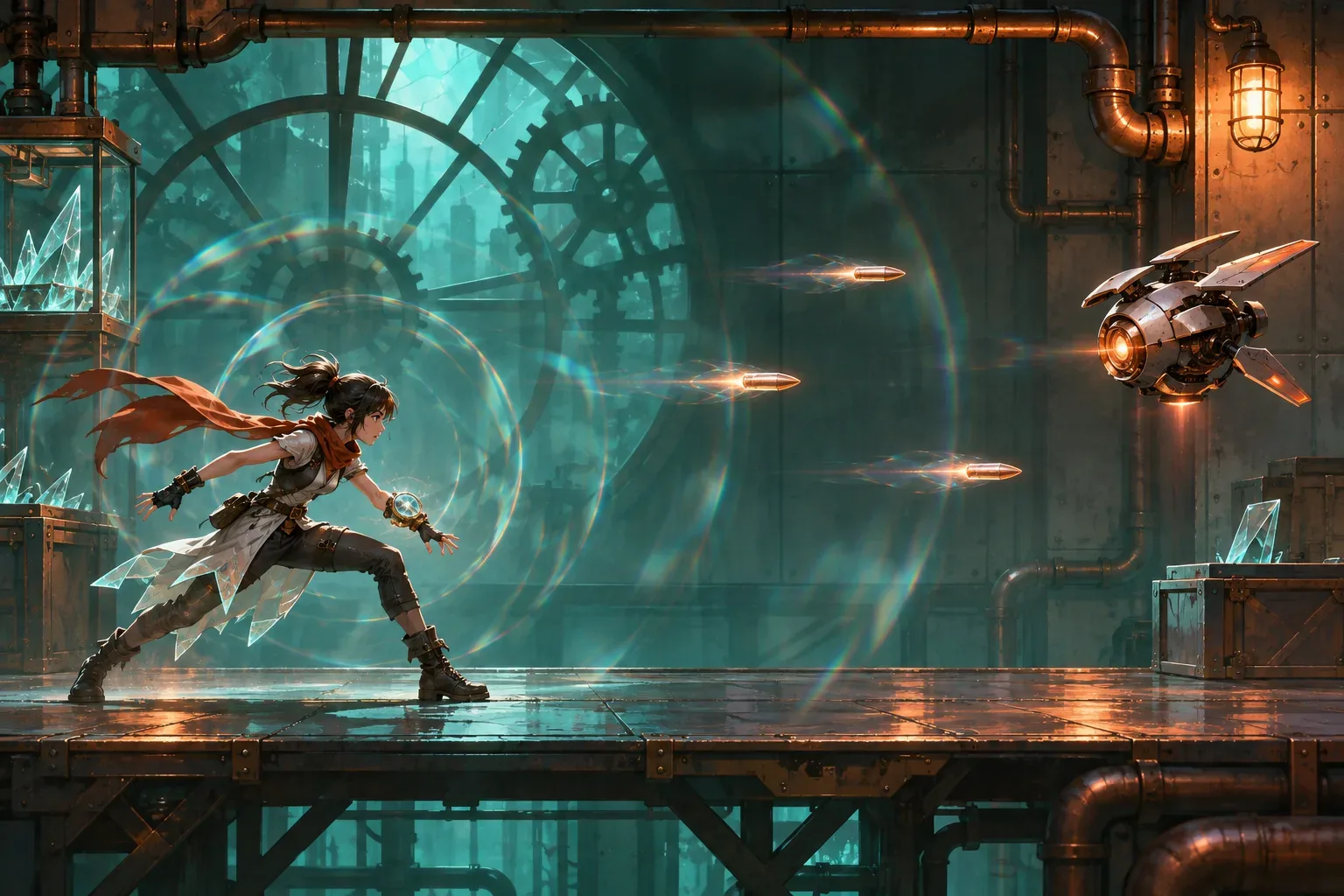
A bullet-time campaign can focus on one boss whose attack modules change between rematches. In fictional action game Secondhand, Veyra is one rival whose Blade Fan, Echo Wing and Anchor Pulse modules alter attack timing and shape. The player learns its telegraphs over several encounters, while each campaign choice changes which pattern comes next.
Focus makes the warning window playable. A normal turn grants one action. Spending one Focus grants one extra action before a telegraphed strike resolves. Focus starts at one, caps at three and increases when an attack misses within one tile. Show the cue, danger area, Focus pool and action timing before the player commits.
Build the campaign around one boss that changes modules
Keep one named boss across the campaign. Between rematches, choose one module to add or swap. Blade Fan marks a row, Echo Wing marks an adjacent row one beat later, and Anchor Pulse marks a small area after a delay. The boss stays recognizable while the player studies a new pattern.
Make each campaign choice affect the next fight. A module can change the warning shape, resolution beat or recovery window. Track modules encountered so players can connect preparation to the next telegraph and see how earlier choices shaped a rematch.
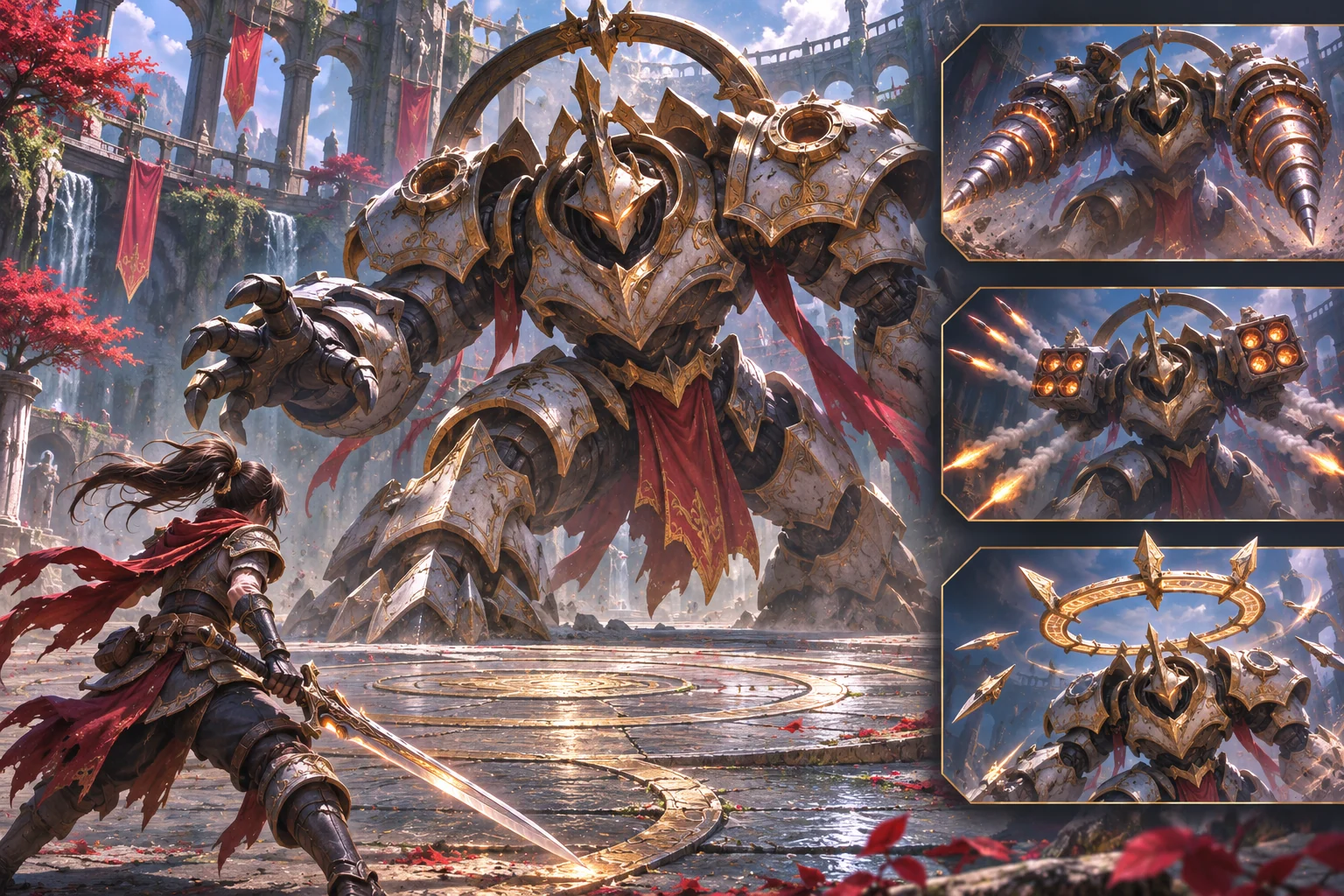
Make Focus buy one clear action inside a warning window
A normal turn gives one action: move one tile or attack. Focus starts at one and caps at three. When a boss attack misses by one tile, gain one Focus. Before a marked strike resolves, spend one Focus to enter bullet time and take one extra action.
The extra action happens after the normal action but before the marked strike. It can move the player out of danger or interrupt the boss if an attack is legal. Display cost, remaining Focus, action order and danger area so the advantage is visible.
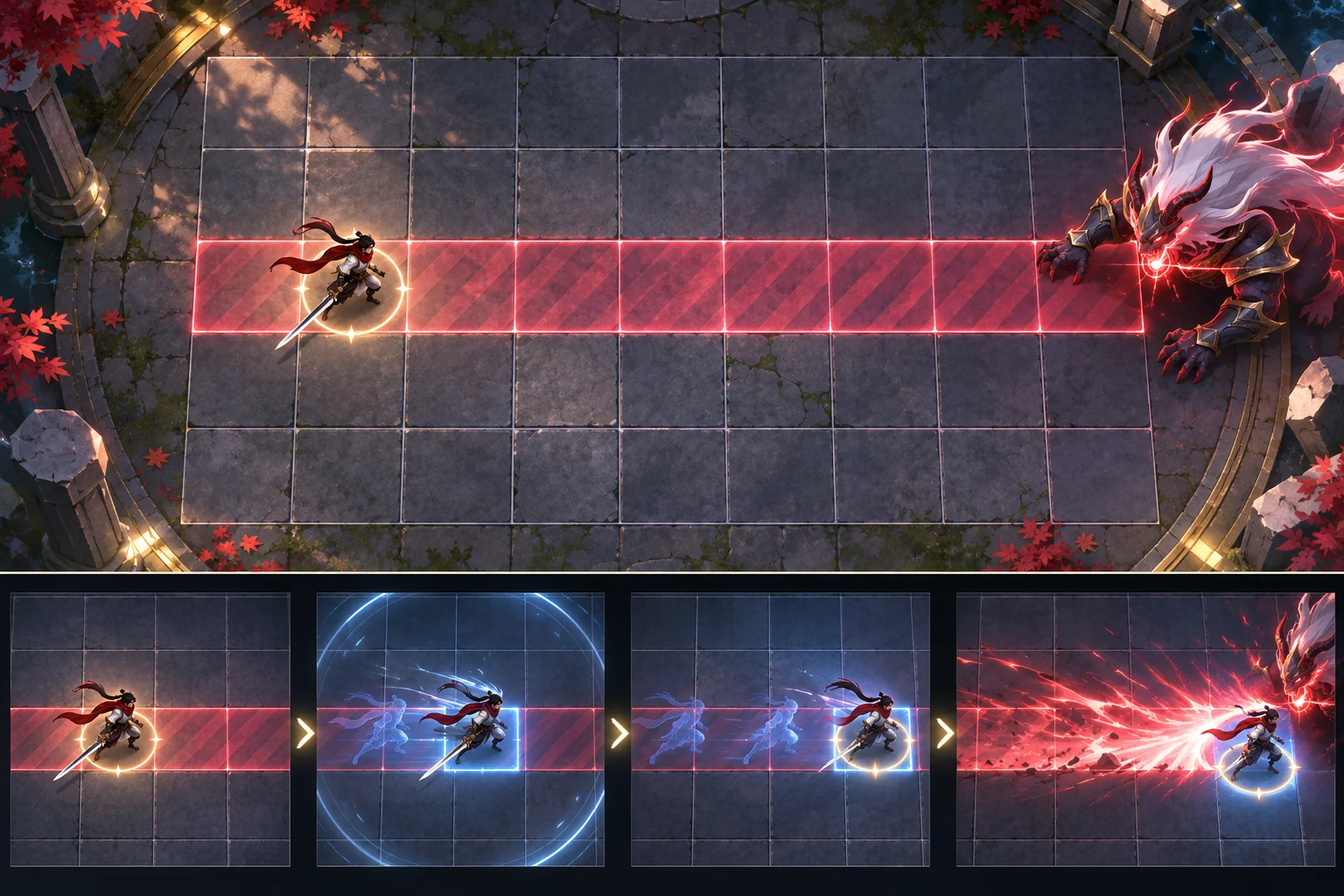
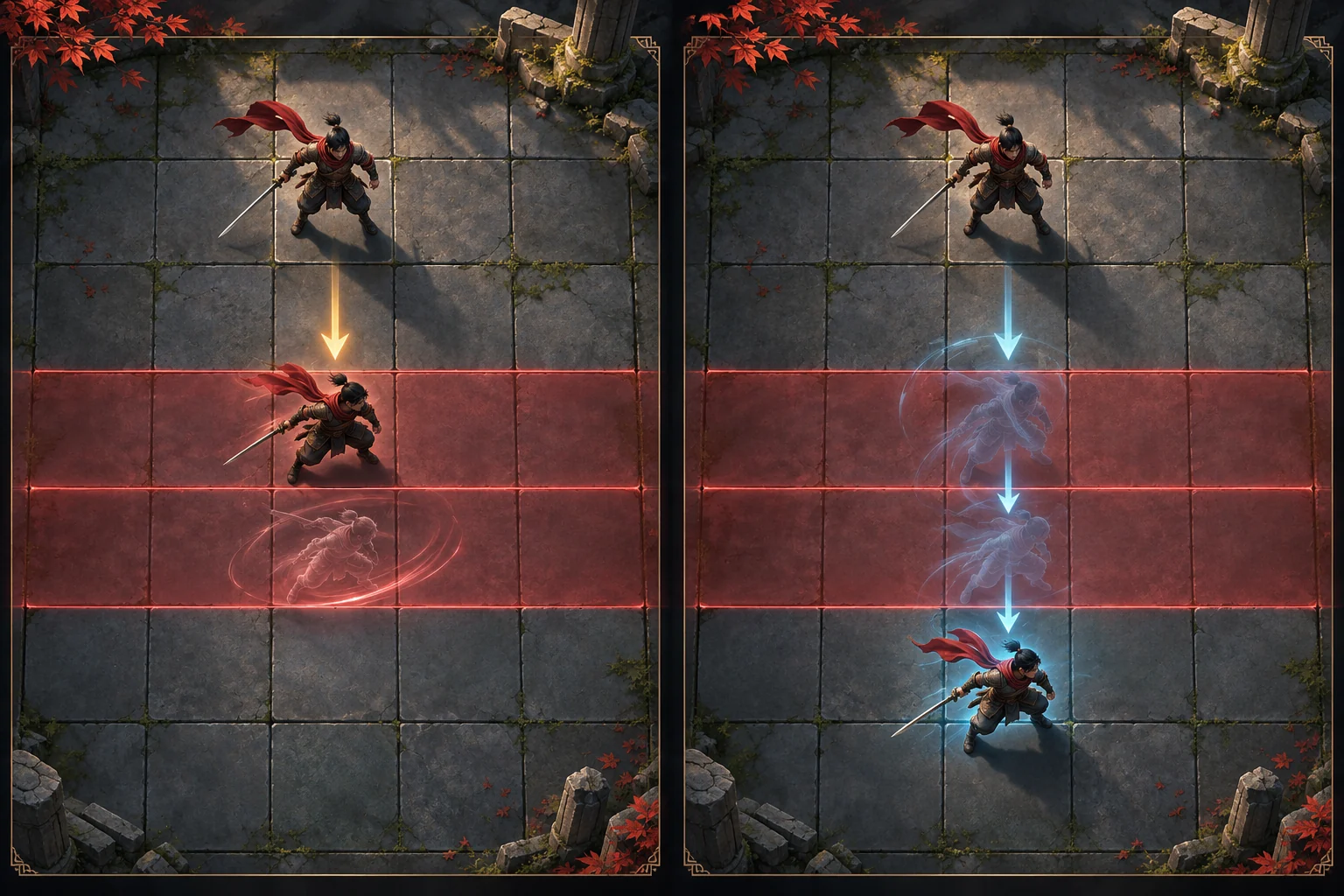
Replay two boss telegraphs with and without Focus
Use a 7×7 arena. The player is at (3,4). Veyra’s Blade Fan targets row 4 next beat; Echo Wing targets row 3 one beat later. The normal action moves to (3,3), leaving the first danger row but entering the second. Without another action, the marked strike catches the player.
Reset with one Focus. Move to (3,3), then spend Focus for bullet time and move to (3,2) before Blade Fan resolves. The player avoids row 4 and is outside row 3 for Echo Wing’s later beat. This is a rules-based paper simulation, not a measured encounter. Track Focus spent, hits, telegraphs read and modules that change choices.
Prototype telegraphs and timing before adding bosses
Build one arena, one player, Veyra, three modules, Focus and the normal/bullet-time action order. Add a resettable two-telegraph sequence to compare one action with two. Show danger area and resolution beat before movement. Add other bosses only after players can explain why Focus changed the outcome.
Create Secondhand, a bullet-time action campaign around customizable boss Veyra. Use a 7×7 arena. A normal turn grants one action: move one tile or attack. Focus starts at 1, caps at 3 and increases by 1 when a boss attack misses within one tile. Spending 1 Focus grants one extra action after the normal action but before a telegraphed strike resolves. Blade Fan targets a row next beat; Echo Wing targets an adjacent row one beat later; Anchor Pulse marks a small delayed area. Let the player change a module between rematches. Show cue, danger area, beat, action order and Focus. Include a resettable example and track Focus, hits, cues and module-driven choices.
SEELE's official page describes a general workflow: generate a playable first version from a prompt, test it in a browser and refine it with follow-up prompts. Use it to inspect attack previews, action timing and boss rematches; Secondhand and its rules are fictional design guidance.
Build the bullet-time boss campaign in SEELE
Frequently asked questions
How can one boss sustain an action-game campaign?
Keep the same rival recognizable while changing its attack modules between rematches. Each module can alter a telegraph, danger shape or recovery window. Campaign choices then change how the next encounter plays instead of introducing a new boss each time.
How should bullet time work in a combat system?
Define what resource it costs, how that resource is gained and exactly when the extra action occurs. Show the attack cue and danger area before the player spends it. This makes slow time a tactical choice with a visible tradeoff.
What should I measure in a bullet-time boss test?
Replay the same telegraph sequence and record Focus spent, hits taken, cues read and modules that change the player’s response. Compare runs with one module changed. If Focus is always saved or always spent, tune its gain, cap or action timing.